
When shopping for a new bed in the Philippines, the brand emma sleep frequently tops the list of recommendations due to its focus on pressure relief and body contouring. However, the tropical heat and high humidity of the Philippine climate raise an important question: does an Emma Sleep mattress sleep too hot?
The direct answer is nuanced: traditional memory foam naturally retains more body heat than other mattress types, which can pose a challenge during warm, humid nights. Whether an Emma Sleep mattress feels too warm for you depends heavily on the specific model you choose, your bedroom’s ventilation, and your personal sensitivity to heat.
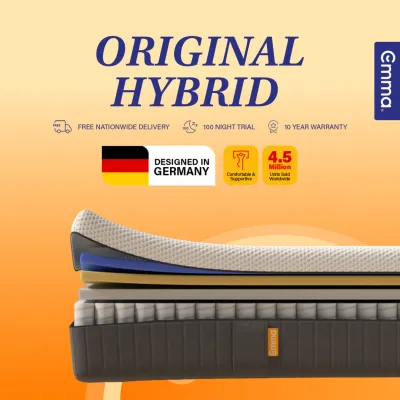
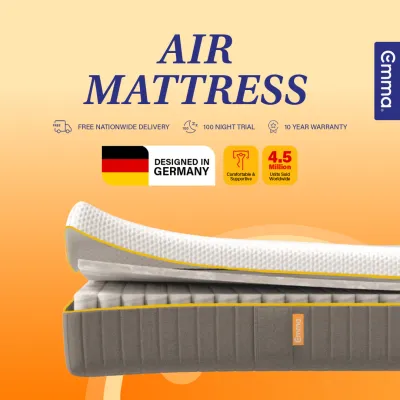
For example, an all-foam mattress like the Emma Original relies entirely on polyurethane layers, which inherently restrict airflow more than pocket springs do. Conversely, hybrid models that combine foam with pocketed coils allow air to circulate more freely through the mattress core.
Products mentioned in this guide
Prices are valid at publication and may change. Please refer to the product page for the latest price.
In the Philippines, investing in a quality mattress is a major financial decision, with premium models often ranging from ₱15,000 to over ₱40,000. To ensure you get the best value for your money, it is vital to understand how these materials perform under local weather conditions.
If you sleep in an air-conditioned bedroom and use breathable bedding, an Emma Sleep mattress can provide a comfortable, supportive sleep surface. However, if you rely solely on a wall fan or live in a highly humid area without climate control, you will need to evaluate the mattress construction and your cooling setup carefully before committing to a purchase.
Why Memory Foam and Tropical Weather Often Clash
To understand how an emma sleep mattress behaves in tropical conditions, it helps to look at how memory foam interacts with ambient temperature and body heat. Standard memory foam is a dense, viscoelastic material that reacts to both weight and temperature to contour around your body.
While this contouring provides excellent pressure relief for your shoulders and hips, it also creates a physical cradle. As your body sinks deeper into the foam, more of your skin surface comes into direct contact with the material, leaving less room for ambient air to circulate around you.
The dense cellular structure of traditional polyurethane foam behaves like an insulator. Instead of letting heat dissipate, the material traps your body heat within its core, slowly warming up throughout the night and radiating that heat back toward you.
In the Philippines, this heat retention is compounded by high relative humidity. When the air is saturated with moisture, sweat cannot evaporate efficiently from your skin, which is the body’s natural way of cooling down.
When a mattress traps heat and prevents airflow, the moisture from your sweat becomes trapped against your body and the bedding. This creates a clammy, sticky sleeping environment that can disrupt your sleep cycle and make you feel much hotter than the room’s actual temperature.
Modern mattress manufacturers try to address these inherent limitations by modifying the foam’s structure. Open-cell foam structures, for instance, feature tiny interconnected pathways that allow air to move more freely than in closed-cell foam.
Some foam layers are also infused with gel particles or other conductive materials designed to absorb heat and transfer it away from the sleeping surface. While these innovations help mitigate heat retention, they do not completely eliminate the physical reality of foam insulation, making environmental factors and product selection critical.
Evaluating Emma Sleep Mattress Construction for Tropical Climates
When evaluating different models from Emma Sleep for a tropical home, you should inspect the specific layers and materials listed on the product tag or official specifications. Not all foam mattresses are constructed the same way, and small design differences can significantly affect temperature regulation.

First, examine the top cover material. A high-quality mattress cover should be highly breathable and moisture-wicking to help manage sweat. Look for covers made with polyester blends designed for high breathability, or specialized fabrics that feel cool to the touch. Avoid heavy, tightly woven synthetic covers that block air from reaching the foam layers beneath.
Next, look closely at the comfort and transition layers directly below the cover. Emma mattresses often feature proprietary foams, such as Airgocell foam, which is designed to have an open-cell structure to promote better ventilation than standard memory foam. Check whether the model you are considering uses these aerated layers or incorporates gel infusions to help dissipate initial body heat.
The base support layer also plays a massive role in overall airflow. All-foam models use a dense polyurethane support core, which offers excellent motion isolation but provides very little space for air to travel. In contrast, hybrid models feature a layer of pocketed springs beneath the comfort foam.
These steel coils create a large, open chamber where air can move freely. This pocket-spring design allows heat to escape downwards and out through the sides of the mattress, making hybrid models a much more suitable choice for hot sleepers in the Philippines.
Finally, consider the firmness level and how much you are likely to sink into the mattress. Softer mattresses allow for deeper sinkage, which wraps more foam around your body and traps heat. A medium-firm or firm mattress keeps your body positioned more on top of the sleeping surface, maximizing the skin area exposed to room airflow and keeping you cooler.
How to Keep Your Memory Foam Mattress Cool and Dry
If you decide to buy an emma sleep mattress, or if you already own one and want to improve its temperature performance, several practical adjustments can make a substantial difference in your sleeping comfort. Managing the surrounding environment and using the right accessories will help mitigate the natural heat-retaining properties of foam.
Your choice of bedding is your first line of defense against sleeping hot. Always pair a memory foam mattress with highly breathable, lightweight sheets made from natural fibers. Cotton, bamboo-derived rayon, and Tencel (lyocell) are excellent choices for the Philippine climate because they naturally wick moisture away from your skin and allow air to pass through easily.
Avoid synthetic sheets, such as cheap polyester or microfiber, which act as a barrier to airflow and trap heat and sweat directly against your body. Even the most advanced cooling mattress will feel hot if it is covered by a non-breathable synthetic sheet.
Optimizing your bedroom’s climate control is equally essential. In highly humid regions of the Philippines, running an air conditioner not only lowers the temperature but also removes excess moisture from the air, making the foam feel less clammy. If you prefer using a fan, position a ceiling fan or a powerful floor fan to keep air moving constantly across the bed to assist with evaporative cooling.
Additionally, using a dehumidifier in your bedroom can help maintain comfortable humidity levels, which protects both your sleep quality and the integrity of the mattress materials.
Protecting your mattress from moisture is vital for its longevity, but you must choose your mattress protector carefully. Look for a thin, breathable, waterproof protector that uses a membrane designed to let air molecules pass through while blocking liquid water. Avoid cheap, thick vinyl or plastic protectors, as they completely block ventilation and will turn your mattress into a heat trap.
Establishing a routine for airing out your bed is also highly beneficial. Every few weeks, strip the sheets and mattress protector completely and let the bare mattress sit in a well-ventilated room with a fan running or the air conditioner on for a few hours. This allows any accumulated moisture from sweat or humidity to evaporate fully, keeping the internal foam layers dry and fresh.
When to Consider Alternative Mattress Materials
While memory foam offers exceptional pressure relief, it may not be the ideal choice for every sleeper in a tropical environment. If you are highly sensitive to heat, sweat heavily at night, or live in a home without consistent air conditioning, you should consider alternative mattress materials before making your final decision.
Innerspring and hybrid mattresses are traditionally the most reliable options for hot climates. Because the bulk of their support core consists of open steel coils, air can circulate freely throughout the entire mattress. This continuous airflow prevents heat from building up in the center of the bed, keeping the surface significantly cooler than an all-foam alternative.
Another excellent alternative is natural latex. Derived from the sap of rubber trees, natural latex has an inherent open-cell structure and is often manufactured with ventilation pinholes throughout the comfort layers. This design allows it to breathe much better than synthetic memory foam, and latex does not rely on body heat to contour, meaning it responds instantly without creating a deep, heat-trapping cradle.
Furthermore, natural latex is highly resilient and naturally resistant to dust mites and mold, which is a major advantage in the humid Philippine climate.
To help you decide between these options, consider this simple framework:
- Choose an All-Foam Memory Foam Mattress if: You prioritize maximum pressure relief and motion isolation, sleep in a consistently air-conditioned room, and are willing to invest in breathable natural bedding.
- Choose a Hybrid Mattress if: You want the contouring feel of foam but need the active cooling and airflow provided by a pocket-spring base, or if you sleep in a room with only fan cooling.
- Choose a Natural Latex Mattress if: You prefer a responsive, bouncy feel, want maximum natural breathability without synthetic chemicals, and require a material that naturally resists mold and dust mites in high humidity.
Frequently Asked Questions (FAQ)
Does the Emma mattress need a special bed frame for better airflow in the Philippines?
Yes, using the right bed frame is highly recommended to ensure adequate ventilation. In a hot and humid climate, you should place your mattress on a slatted bed frame rather than a solid platform or a flat floor. Slatted frames allow air to circulate freely beneath the mattress, which helps dissipate heat and prevents moisture from accumulating at the base. Ensure the slats are spaced according to the manufacturer’s guidelines to maintain proper support and prevent the foam from sagging.
Will high humidity in the Philippines cause my Emma mattress to develop mold?
High humidity can increase the risk of mold growth on any organic or synthetic material if moisture becomes trapped. To prevent this, never place your mattress directly on the floor where air cannot circulate. Use a breathable, waterproof protector to keep sweat from soaking into the foam layers, and keep your bedroom well-ventilated. Running a dehumidifier or air conditioner periodically will also help keep the indoor relative humidity at a safe level, protecting your mattress from mold.
How long does it take for an Emma mattress to off-gas in a hot climate?
New foam mattresses often release a temporary odor, known as off-gassing, when first unpacked. In a warm climate like the Philippines, the higher ambient temperature can actually accelerate this process, allowing the volatile organic compounds (VOCs) to escape more quickly. To clear the odor, unbox the mattress in a well-ventilated room with the windows open and a fan running. The smell typically dissipates within 24 to 72 hours, after which the mattress is completely ready for use.

Community discussion
Share your experience or ask a question. Comments are reviewed before publication.