
Shopping for an aergonomic chair in the ₱3,000 to ₱15,000 price range requires a clear understanding of what your money actually buys. In this budget spectrum, every price jump translates directly to better material durability, more precise adjustability, and enhanced safety mechanisms. Instead of searching for a single perfect model, your goal should be matching your specific daily physical demands with the structural features available at your target price point. By knowing what to look for, you can avoid common pitfalls like sagging mesh, unstable bases, or rigid frames that fail to support your posture.
Defining Your Non-Negotiables Before Setting a Budget
Before browsing online marketplaces or visiting local showrooms, you must establish your personal baseline requirements. Start by calculating your average daily usage. If you sit for only two to three hours a day, a basic model with fixed support may suffice; however, intensive eight-hour workdays demand highly adjustable components to prevent physical fatigue. Your primary tasks also dictate your chair’s ideal configuration, as active typing requires different armrest support than relaxed reading or video conferencing.
Physical dimensions are equally critical. Measure your desk height and compare it to the chair’s seat height range to ensure your forearms can rest parallel to the floor. Check the seat depth to confirm your thighs will be fully supported without the front edge pressing against the back of your knees. Additionally, verify the manufacturer’s stated weight capacity against your own requirements, keeping in mind that operating close to a chair’s maximum limit can accelerate mechanical wear.
Products mentioned in this guide
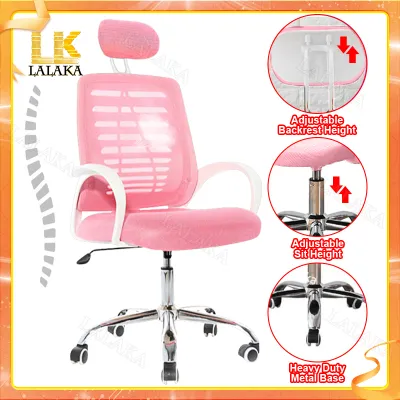
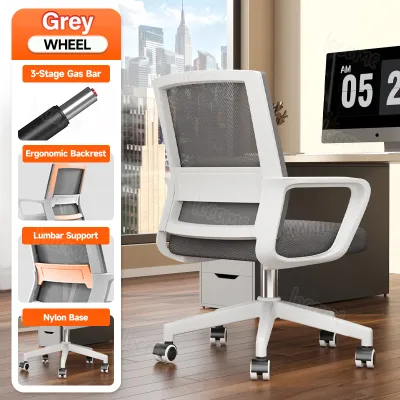
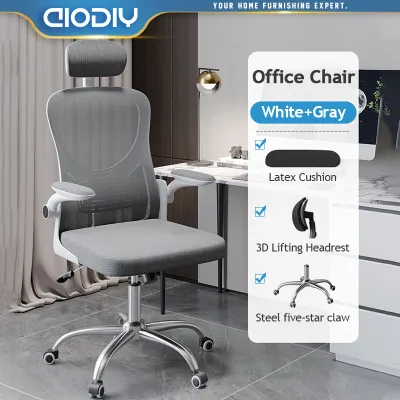
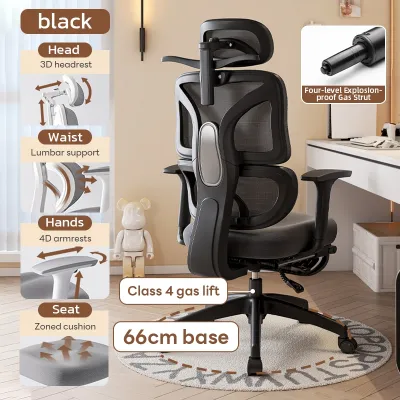
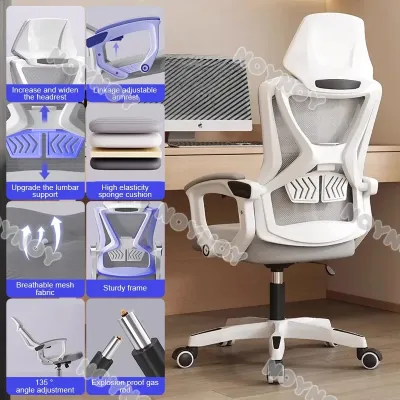
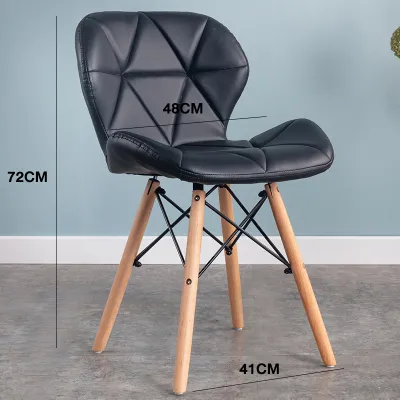
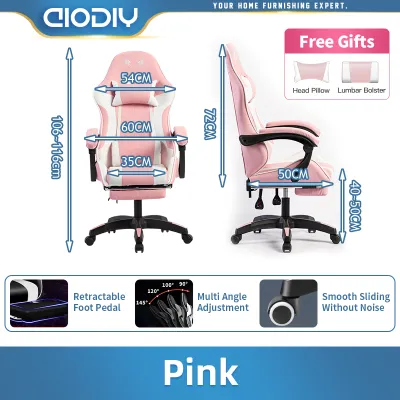
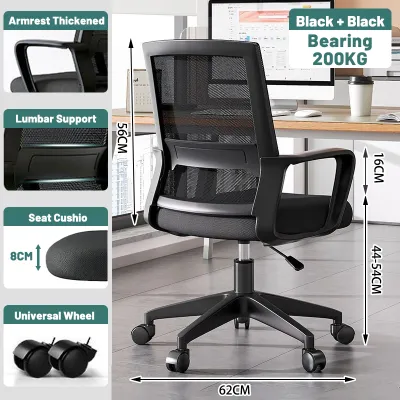
Prices are valid at publication and may change. Please refer to the product page for the latest price.
Finally, distinguish between your absolute needs and optional upgrades. For most users, adjustable lumbar support is a non-negotiable feature to maintain natural spinal curvature. On the other hand, features like multi-directional armrests, deep reclining angles, or integrated footrests are secondary comfort additions that you can prioritize based on what remains of your budget.
Entry-Level Tier (₱3,000 – ₱6,000): Basic Support and Safety Checks
The ₱3,000 to ₱6,000 price bracket represents the entry point for an aergonomic chair. At this level, manufacturers focus on essential functionality, meaning you will primarily find chairs with nylon frames, fixed or simple flip-up armrests, and basic mesh backs paired with foam seat cushions. While these models offer a significant upgrade over standard dining chairs or basic stools, you must carefully inspect their build quality to ensure safety and longevity.

Your absolute priority in this tier is verifying the safety of the gas lift cylinder. Because budget chairs are produced under tight cost constraints, you must look for recognized certification stamps, such as SGS or BIFMA, engraved directly onto the metal cylinder. Avoid any model that lacks clear, verifiable safety labeling on its pneumatic lift, as a low-quality gas cylinder poses a genuine safety risk over time.
Mechanically, expect simple tilt functions rather than advanced reclining systems. Most chairs in this range utilize a basic tension-knob mechanism beneath the seat, allowing you to adjust the resistance when rocking back, but they rarely feature multi-position tilt locks. The armrests are typically fixed to the frame or designed to flip up out of the way, offering no height or angle customization.
Material quality also requires close inspection. In the warm, humid climate of the Philippines, low-density foam cushions tend to flatten rapidly, leading to bottoming out where you feel the hard wooden or plastic support plate underneath. Look for high-density resilient foam cushions and inspect the mesh backrest for tight, consistent tension. Loose or overly soft mesh will sag within a few months of daily use, completely neutralizing any ergonomic benefits.
Mid-Range Tier (₱6,000 – ₱10,000): Upgraded Adjustability and Mechanisms
Stepping up to the ₱6,000 to ₱10,000 range introduces a noticeable leap in adjustability and structural reinforcement. This tier is ideal for professionals who spend long hours at their desks and require a chair that adapts to their movements throughout the day. Here, the plastic components feel sturdier, the mechanical joints operate with less play, and the overall stability of the base is significantly improved.
One of the most significant upgrades in this bracket is the introduction of multi-dimensional armrests, often referred to as 2D or 3D armrests. These allow you to adjust the height, slide the pads forward or backward, and sometimes pivot them inward or outward to support your forearms properly while typing. Additionally, lumbar support modules in this tier are usually independent of the main backrest frame, allowing you to adjust their height or depth to target your lower back precisely.
The chassis construction also undergoes a major upgrade. Instead of thin metal plates, mid-range chairs feature thicker, explosion-proof steel chassis plates that protect the underside of the seat. You will also begin to see basic synchro-tilt mechanisms, where the backrest reclines at a greater ratio than the seat cushion, keeping your feet flat on the floor and maintaining proper spinal alignment as you lean back.
Furthermore, chairs in this price bracket often include adjustable headrests that can be tuned for height and angle, providing essential neck support during rest breaks. The overall weight capacity limits are generally higher and more reliable in this tier, backed by reinforced nylon or aluminum alloy star bases that offer better stability and smoother rolling casters.
Premium Tier (₱10,000 – ₱15,000): Advanced Ergonomics and Material Quality
In the ₱10,000 to ₱15,000 premium tier, your investment shifts toward advanced materials, sophisticated mechanical engineering, and comprehensive long-term durability. This bracket is characterized by full-mesh designs, where both the backrest and the seat cushion are constructed from high-tensile mesh. This setup is highly prized in tropical environments because it maximizes airflow, keeping you cool and dry during long working sessions without air conditioning.
The mesh used in these premium models is vastly superior to that of entry-level chairs. It features high-elasticity polymer blends that distribute your body weight evenly across the seat, reducing pressure points on your hips and thighs. This material is engineered to retain its tension and shape over years of continuous use, preventing the sagging common in cheaper alternatives.
Mechanically, premium chairs feature advanced wire-controlled chassis systems. Instead of reaching down to turn awkward knobs, you can adjust seat height, tilt tension, and tilt locks using convenient levers or buttons integrated into the armrests or the side of the seat. These systems often include multi-position tilt locks, allowing you to secure the backrest at several precise angles depending on whether you are focusing, reading, or resting.
Finally, manufacturers in this tier stand behind their products with more robust warranties and higher verified weight capacities. A premium aergonomic chair often comes with a multi-year warranty covering the gas lift, the mesh integrity, and the mechanical chassis. This long-term coverage justifies the higher upfront cost, transforming your purchase from a temporary convenience into a durable, multi-year investment in your physical well-being.
Hidden Costs and Pre-Purchase Checks for Online Orders
When purchasing an aergonomic chair online, the price tag on the screen rarely represents your final expenditure. Shipping fees can vary significantly, especially for heavy, bulky items. If you live in provincial areas outside Metro Manila, delivery surcharges can add a substantial amount to your total cost. Always calculate these shipping fees before finalizing your budget.
Assembly is another critical factor to consider. Most chairs ordered online arrive flat-packed, requiring you to assemble them yourself. While basic tools like Allen wrenches are usually included, some models may require additional tools or a second pair of hands to align the heavy steel chassis with the seat. If you prefer not to handle the setup, check if the seller offers an optional assembly service, which may incur an extra fee.
Before checking out on any online marketplace, carefully read the return and refund policies. Returning a bulky item like an office chair can be incredibly difficult and expensive if you discover it does not fit your body or your desk. Verify who covers the return shipping costs for non-defective items and check if there are restocking fees. Additionally, inspect the specific terms of the warranty; some brands offer a blanket warranty, while others have separate, shorter coverage periods for the mesh and fabric compared to the steel frame and gas lift.
Frequently Asked Questions (FAQ)
Is an entry-level chair safe for eight hours of daily use?
An entry-level chair can be safe for extended daily use, provided you verify its core safety certifications before buying. Always check that the gas lift cylinder has a recognized certification stamp, such as SGS or BIFMA, to ensure its structural integrity under pressure. However, even with a certified gas lift, budget chairs often feature lower-density foam and basic mesh that can degrade quickly under continuous eight-hour daily use. As the cushioning flattens and the mesh sags, the chair will lose its supportive qualities, potentially leading to discomfort. To mitigate this, make a conscious effort to stand up, stretch, and take regular movement breaks every hour to compensate for the chair’s limited dynamic adjustability.
Should I prioritize an adjustable headrest or 3D armrests?
Your choice between an adjustable headrest and 3D armrests should depend on your primary physical discomforts and daily tasks. If you frequently experience neck strain, shoulder tension, or enjoy reclining during phone calls and video meetings, an adjustable headrest is a highly beneficial upgrade. Conversely, if your daily routine involves intensive typing, writing, or precise mouse work, 3D armrests are far more valuable. They allow you to align the armrest height and angle with your desk surface, preventing your shoulders from hunching and reducing strain on your wrists. Before choosing, measure your desk’s clearance height to ensure that highly adjustable armrests can slide cleanly under the tabletop when the chair is not in use.

Community discussion
Share your experience or ask a question. Comments are reviewed before publication.