
Investing in an ergonomic chair with lumbar support is one of the most impactful decisions you can make for your home office or study space, especially when spending long hours working in the tropical heat of the Philippines. With a budget ranging from ₱3,000 to ₱15,000, you can find highly functional seating that protects your spine, but the features, durability, and adjustability vary significantly across this price spectrum. Navigating online marketplaces requires a clear understanding of what each price bracket actually delivers, allowing you to avoid common marketing traps and select a chair that fits your body shape.
To make an informed purchase, you must look beyond aesthetic designs and focus on structural integrity, material breathability, and the specific mechanics of the lumbar support system. This guide breaks down the realistic expectations for entry-level, mid-range, and premium chairs within your budget, outlines the critical technical specifications to verify before checking out, and highlights the logistical factors that can affect your total investment.
What to Expect From Lumbar Support Across Budget Tiers
When shopping for an ergonomic chair lumbar support system, understanding the limitations and advantages of your budget tier prevents post-purchase regret. The ₱3,000 to ₱15,000 range is highly competitive, but the engineering behind the backrest support changes dramatically as you move up the price ladder.
Products mentioned in this guide
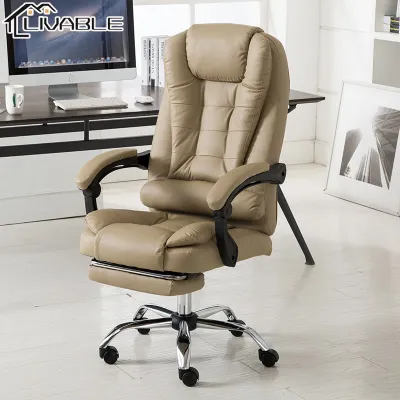
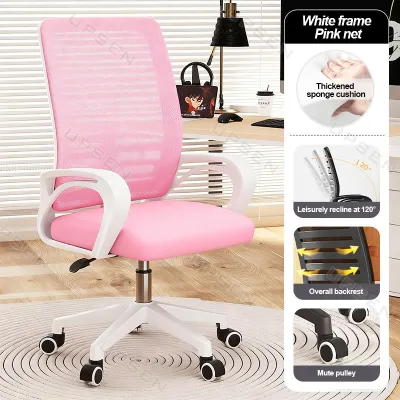
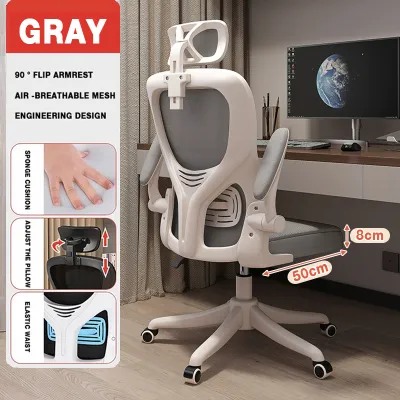
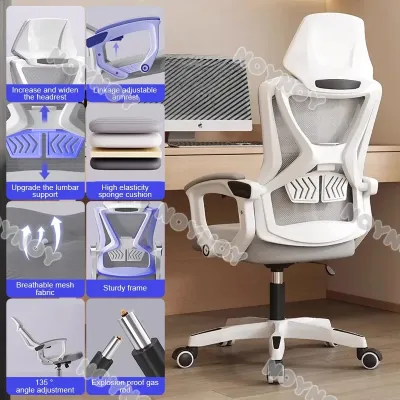
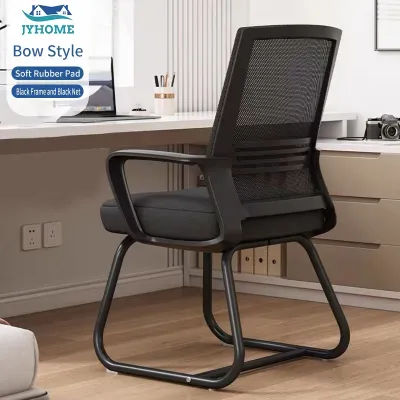
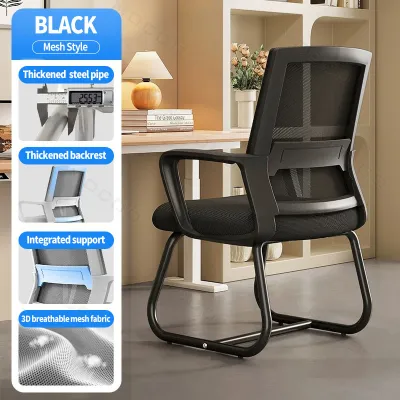
Prices are valid at publication and may change. Please refer to the product page for the latest price.
Entry-Level Tier (₱3,000–₱5,000): Static Curves and Basic Mesh
In the entry-level bracket, chairs typically feature a fixed lumbar curve molded directly into the plastic frame of the backrest. This design relies on static mesh tension to support your lower back. Because these chairs lack height or depth adjustments for the lumbar region, they are highly dependent on your height; if your torso is longer or shorter than the average design template, the curve may press against your mid-back or pelvis instead of your lumbar spine. When considering this tier, it is vital to check the physical height of the backrest and compare it to your sitting torso length to ensure the static curve aligns naturally with your spine.
Mid-Range Tier (₱5,000–₱10,000): Adjustable Lumbar Pads and Enhanced Customization
Stepping up to the mid-range bracket introduces dedicated lumbar adjustment mechanisms. These chairs usually feature a separate lumbar pad mounted on a track behind the mesh backrest, allowing you to slide the support up or down to target your lower back precisely. Some models in this range also offer basic depth adjustment, letting you control how firmly the pad presses against your spine. Additionally, mid-range chairs often include improved tilt tension controls, which let you adjust the resistance of the backrest when reclining, and basic seat depth adjustments to ensure your thighs are fully supported without cutting off circulation behind your knees.
Premium Tier (₱10,000–₱15,000): Dynamic Tracking and Superior Materials
At the top of this budget spectrum, you transition into premium ergonomic territory, where chairs feature dynamic or adaptive lumbar tracking. Instead of a manual pad that stays in a locked position, these systems use spring-loaded or flexible frames that automatically pivot and adjust their angle as you shift, lean, or recline throughout the day. This continuous support reduces pressure points during long working sessions. Furthermore, this tier prioritizes multi-dimensional armrests (often adjustable in height, depth, and angle) and utilizes high-density molded foam for the seat cushion, which retains its supportive shape far longer than the cut foam found in cheaper models.
Essential Specifications to Verify Before Checkout
Online product listings on e-commerce platforms are often filled with generic buzzwords like “orthopedic” or “maximum comfort.” To ensure you are buying a safe, durable, and genuinely ergonomic chair, you must verify the technical specifications provided by the seller.

First, distinguish between a “built-in backrest curve” and an “adjustable lumbar pad.” If a listing claims to have ergonomic lumbar support but does not explicitly mention height or depth adjustability, look closely at the product photos. A true adjustable lumbar pad will have visible tracks, knobs, or levers on the back of the frame. If these are absent, the chair relies on a fixed curve, which may not suit your body type.
Second, verify the safety and stability ratings of the core structural components. The gas lift is the most critical safety component of any office chair; look for listings that explicitly specify a Class 3 or Class 4 gas lift certified by international testing bodies. These classes indicate thicker steel walls and higher pressure resistance, ensuring the chair can safely support weight over years of daily use. Additionally, examine the base material. While reinforced nylon bases are common and highly durable in the mid-range tier, premium models often feature heavy-duty steel or aluminum bases, which provide a lower center of gravity and reduce the risk of tipping when reclining.
Finally, do not overlook the dimensions of the seat pan and armrests. Proper ergonomic alignment requires your feet to rest flat on the floor while your knees form a 90-degree angle. If the seat depth is too long, the edge of the cushion will press against the back of your knees, forcing you to slide forward and lose contact with the lumbar support entirely. Measure your current favorite chair or your body dimensions, and compare them against the seller’s detailed sizing chart before placing your order.
Navigating Hidden Costs and E-commerce Return Policies
Purchasing a bulky item like an office chair online involves logistical considerations that can quickly inflate your total expenses or lead to frustration if the product arrives damaged or does not fit your body.
Shipping fees are a major variable when ordering furniture in the Philippines. Because ergonomic chairs are heavy and packed in large, volumetric boxes, shipping costs can add a significant premium to the base price, especially if you reside outside major metropolitan areas. Before finalizing your purchase, add the item to your cart and check the calculated shipping fee to ensure the total cost remains within your ₱3,000 to ₱15,000 budget.
Assembly is another factor to consider. Most chairs in this price range are shipped flat-packed to reduce shipping volume. While manufacturers include basic tools like Allen keys, assembling a chair alone can be challenging and requires a clean, flat surface to prevent scratching the plastic or tearing the mesh. Check if the seller provides clear, step-by-step video guides or offers pre-assembly services for an extra fee if you prefer to avoid the manual labor.
Lastly, thoroughly review the seller’s return policy and warranty terms. A reputable seller should offer a warranty of at least one to three years covering structural defects in the gas lift, mechanism, and base. Be sure to distinguish between warranties that cover manufacturing defects and those that cover normal wear and tear of the mesh or fabric. Because returning a fully assembled, bulky chair is incredibly difficult and expensive, it is wise to carefully inspect all parts for damage upon delivery before beginning the assembly process.
Frequently Asked Questions (FAQ)
Can I add an external lumbar pillow to a budget chair?
Adding an aftermarket external lumbar pillow to an entry-level chair is a common modification, but it must be done with caution. External pillows are often thick and can significantly reduce the effective depth of your seat pan. If the pillow pushes your hips too far forward, your thighs will lack proper support, and your knees may extend too far past the seat edge, leading to poor circulation and increased pressure on your tailbone. If you decide to use an external pillow, choose a slim, adjustable model and ensure your chair’s backrest is wide enough to hold the pillow securely without it sliding out of alignment.
Is a mesh back necessary for proper lumbar support?
While mesh backrests are highly popular in the Philippines due to their excellent breathability and heat dissipation in humid weather, a mesh back is not strictly necessary for proper lumbar support. The support itself comes from the underlying frame structure and the shape of the lumbar mechanism, not the surface material. High-quality foam backrests with a well-designed internal curve can offer exceptional pressure distribution and spinal alignment. However, if you work in a non-air-conditioned room, a high-tension mesh backrest is often preferred to prevent sweat buildup, provided the mesh is tightly woven and does not sag over time.

Community discussion
Share your experience or ask a question. Comments are reviewed before publication.