
Finding the right office chair within the ₱3,000 to ₱15,000 price range requires balancing your physical comfort needs with realistic manufacturing limitations. In this budget spectrum, every additional peso spent generally translates to greater adjustability, more durable materials, and mechanisms designed to support your body through long hours of sitting. While an entry-level chair provides basic height adjustments and standard support, moving toward the upper-mid-range unlocks highly customizable features like seat depth adjustment, multi-dimensional armrests, and dynamic lumbar support.
Navigating this market in the Philippines means understanding how local factors, such as high humidity and warm temperatures, interact with chair materials. A chair that looks comfortable in an air-conditioned showroom might feel entirely different after several hours in a home office. By learning what features are standard, optional, or unavailable at each price tier, you can make an informed decision that protects both your posture and your budget.
Setting Realistic Expectations for Your Budget
When shopping for an office chair, it is easy to confuse “ergonomic styling” with true ergonomic functionality. Many budget-friendly chairs feature aggressive curves, bright accents, or racing-style designs that mimic high-end ergonomic models. However, true ergonomics is not about how a chair looks, but how well it adjusts to fit your unique body proportions. A chair with fixed components forces your body to adapt to its shape, which can lead to discomfort over extended periods of use.
Products mentioned in this guide
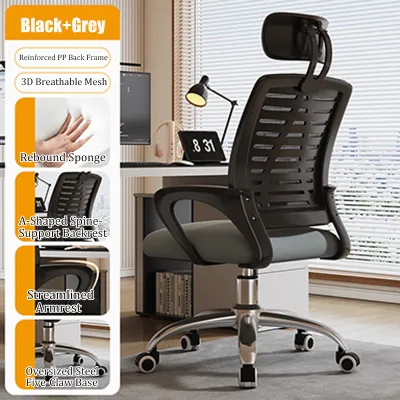
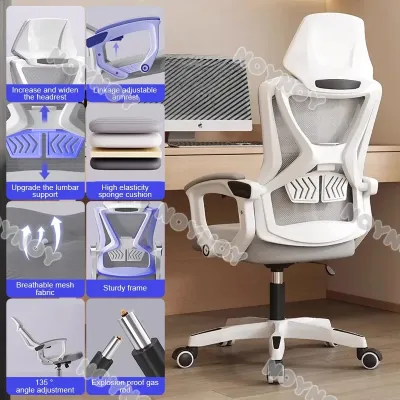
![Ergonomic Office Chair Reclining Computer Chair Home Office Swivel Chair Gaming Chair Pink [COD]](https://img.lazcdn.com/g/p/e7c620ea9cbf7a9e26d107ec76845250.png_400x400q80.png_.webp)
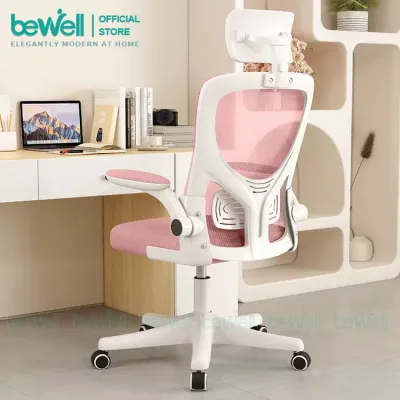
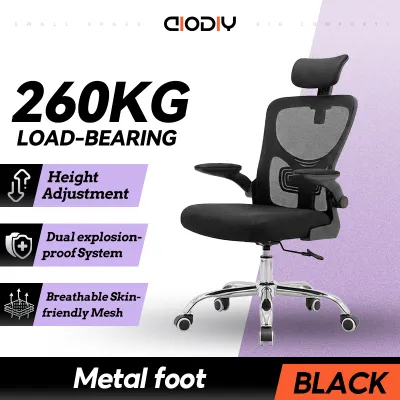
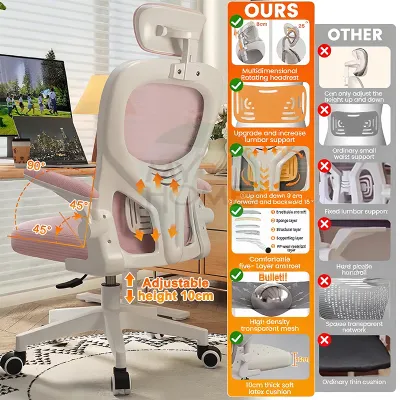
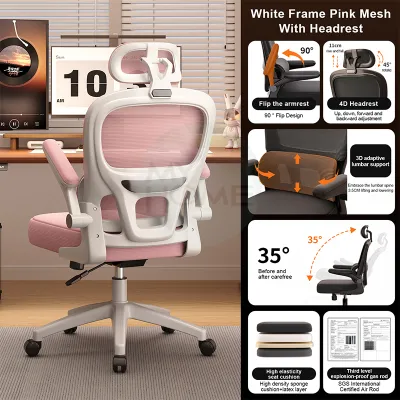
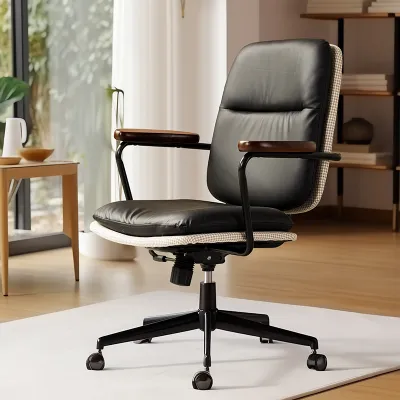
Prices are valid at publication and may change. Please refer to the product page for the latest price.
At the lower end of the ₱3,000 to ₱15,000 range, you should expect static support systems. These chairs rely on pre-molded frames and fixed curves to guide your posture. As you move up the price scale, these static elements are replaced by active, adjustable mechanisms. Instead of a fixed plastic backrest, a mid-range or premium chair allows you to alter the height of the lumbar support, tilt the backrest independently of the seat, and slide the seat pan forward or backward.
Material selection also shifts dramatically across these price points. Lower-cost chairs often utilize standard foam and basic polyester mesh, which may lose their resiliency and tension over time. Higher-priced models introduce high-density molded foam and high-tensile elastomeric mesh that distribute weight more evenly and retain their shape for years. In tropical climates, the quality of this mesh is particularly critical, as breathable materials prevent heat buildup and moisture accumulation during long working sessions.
Weight capacity and overall structural longevity are other critical factors that do not always scale linearly with price. While a higher price tag often correlates with sturdier nylon or steel bases, you should never assume a chair’s weight limit based solely on its cost. Always verify the manufacturer’s official specification sheet to confirm the maximum weight capacity and the recommended daily usage hours. A well-built entry-level chair with a verified weight rating is often a safer choice than a feature-rich mid-range chair with vague structural specifications.
Entry-Level Ergonomic Chairs (₱3,000 – ₱6,000)
Chairs in the ₱3,000 to ₱6,000 tier represent the entry point for dedicated home office seating. At this level, manufacturers focus on essential utility, meaning you will receive basic pneumatic height adjustment via a standard gas lift. The backrest is typically constructed from a lightweight nylon frame covered in standard mesh, paired with a molded foam seat cushion covered in fabric. The lumbar support in this category is almost always static, consisting of a fixed plastic curve built directly into the backrest frame.

Armrests in this price bracket are generally fixed to the seat pan or the backrest, offering no height, width, or angle adjustments. While these fixed armrests provide a basic resting place for your elbows, they may not align perfectly with your desk height, potentially causing you to shrug your shoulders or slouch. The recline mechanism is usually a simple center-tilt system, where the backrest and seat tilt backward together at a fixed ratio. This mechanism often features a basic tilt-lock that only secures the chair in an upright position, along with a tension knob to adjust the resistance of the tilt.
The trade-offs in this entry-level tier are primarily found in the customization options and the long-term durability of the components. Seat depth adjustment is virtually non-existent at this price point, meaning shorter or taller users may find the seat pan either pressing against the back of their knees or failing to support their thighs adequately. Additionally, the caster wheels provided are typically basic nylon wheels designed for low-pile carpets or hard floors, which may feel stiff or scratch delicate flooring over time.
When purchasing an entry-level chair, it is vital to inspect the product label for the maximum recommended daily usage hours, which is often rated for three to five hours of continuous use. Exceeding these recommendations can accelerate the wear of the seat foam and cause the mesh to sag prematurely. To maximize the lifespan of a chair in this bracket, prioritize models with simple, robust designs over those that attempt to pack too many low-quality adjustable parts into a low price point.
Mid-Range Ergonomic Chairs (₱6,001 – ₱10,000)
Stepping up to the ₱6,001 to ₱10,000 range introduces a noticeable upgrade in both adjustability and material quality. The most significant improvement in this tier is the transition from fixed components to adjustable interfaces. Armrests in this category are typically 2D, allowing you to adjust their height and sometimes rotate them inward or outward. This adjustability helps you align the armrests with your desk surface, reducing strain on your neck and shoulders during long typing sessions.
Lumbar support also becomes more sophisticated in this mid-range bracket. Instead of a fixed plastic frame, you can expect separate lumbar pads that can be adjusted vertically to target the specific curve of your lower back. Some models in this range feature tension-adjustable lumbar bands that allow you to customize the firmness of the support. The seat cushions are often upgraded to high-density molded foam, which offers a firmer, more supportive sit and resists flattening out after months of daily use.
The recline mechanism in mid-range chairs often transitions from a basic center-tilt to a synchronous tilt mechanism. A synchronous tilt allows the backrest to recline at a faster rate than the seat pan (typically a 2:1 ratio), which keeps your feet flat on the floor and maintains a comfortable angle between your torso and thighs as you stretch. This mechanism is usually accompanied by a multi-position tilt lock, allowing you to secure the backrest at several different angles rather than just the upright position.
When evaluating chairs in this mid-tier, pay close attention to the quality of the mesh and the base construction. Look for tighter, more resilient mesh weaves that offer firm support without sagging under your weight. The base of the chair is more likely to be made of heavy-duty nylon or reinforced aluminum rather than basic plastic, providing better stability and a higher overall weight capacity. Always verify these mechanical specifications on the product sheet to ensure the upgrades justify the higher cost.
Upper-Mid-Range Ergonomic Chairs (₱10,001 – ₱15,000)
At the ₱10,001 to ₱15,000 level, chairs begin to incorporate advanced ergonomic mechanisms that closely mimic premium commercial office seating. One of the most valuable features introduced in this tier is adjustable seat depth, often referred to as a seat slide. This mechanism allows you to slide the seat pan forward or backward independently of the backrest. Adjusting the seat depth ensures that users of different heights can maintain proper circulation in their legs while keeping their lower back firmly supported against the backrest.
Armrests in this upper-mid-range category are frequently upgraded to 3D or 4D configurations. These armrests adjust not only for height and angle but also for depth (sliding forward and backward) and width (moving closer to or further from your body). This level of customization ensures that your elbows are supported directly beneath your shoulders, regardless of your body frame or desk setup. Additionally, the lumbar support systems in this tier are often dynamic, meaning they pivot or flex automatically to maintain contact with your lower back as you shift your posture throughout the day.
Many chairs in this price bracket also include adjustable headrests as a standard feature, providing essential neck support during reclined tasks or phone calls. The caster wheels are typically upgraded to polyurethane (PU) or rubber-coated wheels, which glide smoothly and quietly across both hard floors and carpets without causing scratches. The overall build quality is characterized by heavier frames, polished aluminum bases, and premium elastomeric mesh that offers superior breathability and tension retention.
When investing in a chair near the ₱15,000 mark, the warranty terms become a crucial differentiator. While cheaper chairs may only offer a six-month or one-year warranty on basic parts, chairs in this upper-mid-range tier often feature extended warranties covering the gas lift, tilt mechanism, and frame for several years. Be sure to cross-reference these warranty terms with the retailer, as a longer warranty period is a strong indicator of the manufacturer’s confidence in the chair’s long-term durability.
How to Evaluate and Test Chairs Before Buying
Whether you are shopping in a physical showroom or browsing online marketplaces, verifying the build quality of an office chair is essential before making a purchase. If you have the opportunity to test chairs in person, start by checking the operation of the gas lift. The height adjustment should feel smooth and responsive, without any sudden drops or sticking points. Sit in the chair and lean back slowly; there should be no squeaking, creaking, or excessive play in the tilt mechanism.
Another critical physical check is the clearance between the front edge of the seat pan and the back of your knees. Ideally, you should be able to fit two to three fingers in this gap when your back is fully supported by the backrest. If the seat pan presses against the back of your knees, it can restrict blood flow over time. Ensure the front edge of the seat has a rounded, “waterfall” design to minimize pressure on your thighs.
If you are shopping online, you must rely on detailed specification sheets and user feedback rather than marketing claims. Look for exact measurements of the seat width, seat depth, backrest height, and armrest adjustment ranges, and compare them to your current seating setup. Check the retailer’s return policy to see if they offer a comfort trial period, which allows you to test the chair in your home office and return it if it does not suit your body shape.
Be highly skeptical of vague marketing terms like “orthopedic approved,” “medical grade,” or “ergonomic certified” unless these claims are backed by specific, adjustable features shown in the product diagrams. A truly ergonomic chair will clearly list its adjustable components—such as adjustable lumbar height, seat slide, or armrest dimensions—in its technical specifications. Relying on verifiable physical adjustments rather than marketing buzzwords is the best way to ensure you get a chair that supports your body.
Hidden Costs and Warranty Considerations
When budgeting for an office chair, the price tag on the showroom floor or online listing is not always the final cost. Heavy ergonomic chairs, particularly those in the mid-to-high price ranges with heavy steel or aluminum bases, can incur significant shipping fees due to their weight and bulk. Additionally, some retailers charge extra for professional assembly services. If you choose to assemble the chair yourself, ensure you have the necessary tools and space, as complex tilt mechanisms can be challenging to align and secure properly.
Understanding the details of the manufacturer’s warranty can save you significant expenses in the future. A standard warranty in this price range typically covers the core structural components, such as the gas cylinder, the nylon or metal base, and the mechanical tilt housing. However, warranties often exclude wear-and-tear items like the fabric upholstery, mesh sagging from normal use, and cosmetic scratches on the armrests or caster wheels. Always read the warranty fine print to understand what is covered and who pays for shipping replacement parts.
Finally, it is highly recommended to keep the original packaging, including the box and protective foam inserts, for at least a few weeks after your purchase. If you decide to return the chair under a retailer’s comfort guarantee or return policy, most companies require the product to be shipped back in its original packaging to prevent damage during transit. Disassembling a gas lift and packing a large chair back into its box can be difficult, but keeping the packaging intact simplifies the process if the chair does not meet your ergonomic expectations.
Frequently Asked Questions (FAQ)
Is a gaming chair a good ergonomic alternative in this price range?
While gaming chairs are popular and fall within this price range, they are designed with different priorities than dedicated ergonomic office chairs. Gaming chairs typically feature a high-back bucket seat design inspired by race cars, which can restrict shoulder movement and force your shoulders forward. They also rely on external strap-on pillows for lumbar and neck support, which rarely align perfectly with every user’s spine. Dedicated ergonomic office chairs prioritize breathable mesh, integrated adjustable lumbar support, and mechanisms that encourage natural movement, making them a better choice for long hours of desk work.
How long should an office chair in the ₱3,000 to ₱15,000 range last?
The lifespan of an office chair in this price range depends heavily on daily usage hours, user weight, and how well the moving parts are maintained. An entry-level chair used for a few hours a day may last two to three years before the foam compresses or the mesh begins to sag. A high-quality mid-range or upper-mid-range chair, built with high-density molded foam and reinforced bases, can easily last five years or more with proper care. To get a realistic estimate of a chair’s expected durability, look at the manufacturer’s warranty period; a longer warranty on core components is a reliable indicator of a longer-lasting product.

Community discussion
Share your experience or ask a question. Comments are reviewed before publication.