
Finding a reliable ergonomic office chair within a budget of ₱3,000 to ₱7,000 requires a practical understanding of what features are realistic at this price point. In the Philippine market, this price range represents the entry-level tier for ergonomic seating. While you will not find high-end, highly customizable mechanisms, you can secure a chair that offers essential physical support, basic adjustability, and breathable materials suitable for tropical climates. Navigating this bracket successfully means prioritizing structural stability and core comfort over advanced, multi-axis adjustments.
By focusing on verified component standards and understanding the physical trade-offs of budget materials, you can avoid common purchasing pitfalls. A well-chosen chair in this range will provide a stable base, reliable height adjustment, and targeted lower-back support. This guide breaks down the exact features you can expect, the materials you will encounter, the premium options you will need to bypass, and how to safely verify product specifications before making an online purchase.
Core Ergonomic Adjustments You Can Expect
Within the ₱3,000 to ₱7,000 price range, ergonomic adjustments focus on the essentials. The most critical feature is the lumbar support system. At the lower end of this budget, lumbar support is typically a fixed plastic curve molded directly into the backrest frame. As you approach the ₱7,000 mark, you can expect basic adjustable lumbar pads. These pads usually slide vertically along a track on the back of the chair, allowing you to align the support with the natural curve of your lower spine. When evaluating these adjustable pads, check user feedback to ensure the mechanism holds its position firmly under pressure without sliding down during use.
Products mentioned in this guide
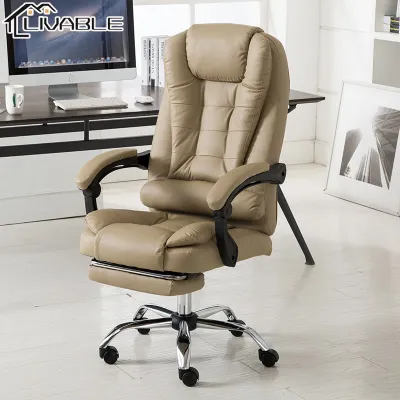
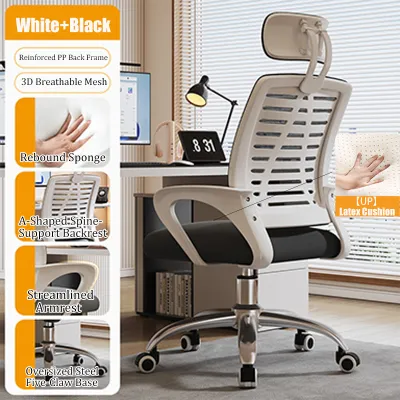
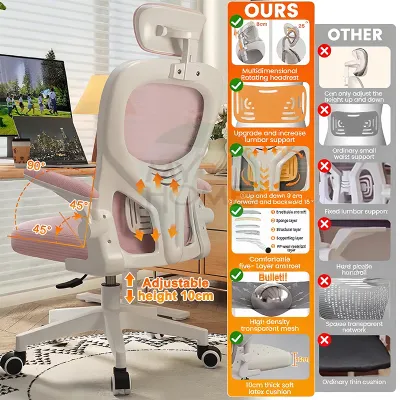
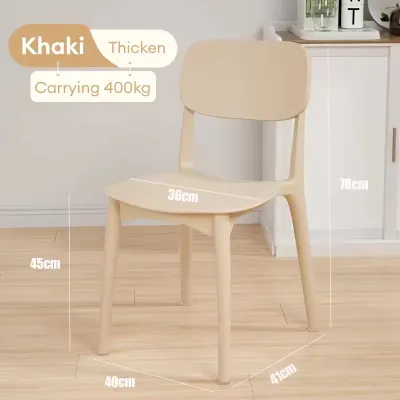
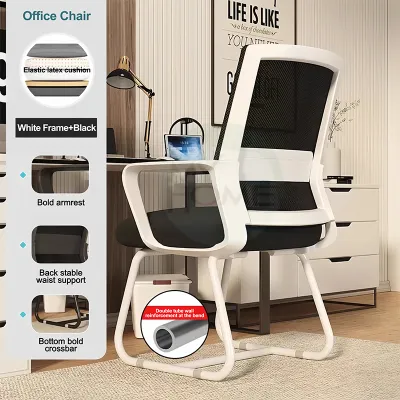
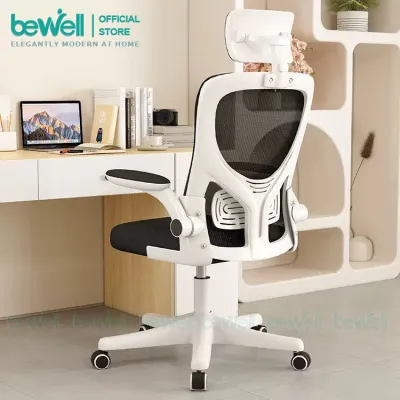
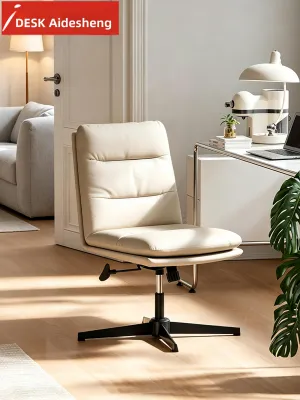
Prices are valid at publication and may change. Please refer to the product page for the latest price.
Tilt and recline mechanisms in this category are functional but straightforward. You will primarily encounter standard tilt-and-lock systems, which allow the chair to rock backward and lock only in the upright, vertical position. A tension control knob, located underneath the seat pan, adjusts the resistance of the tilt. Tightening the knob increases resistance for heavier users, while loosening it makes reclining easier for lighter individuals. Some mid-range models closer to ₱7,000 may offer a two-position lock, allowing you to secure the backrest at a slight recline, but fully customizable tilt-lock angles are rare.
Armrest designs in this budget tier vary significantly. The most common configuration is the fixed armrest, which connects the seat pan to the backrest. While stable, fixed armrests do not adjust to different desk heights or arm lengths. Alternatively, many space-saving models feature flip-up armrests that rotate upward by 90 degrees. This design is highly practical for compact home offices in the Philippines, as it allows you to slide the chair completely under the desk when not in use. At the upper limit of this budget, you may find basic height-adjustable armrests that move up and down, helping you align your elbows comfortably with your desk surface.
Material and Build Quality Trade-Offs
Material selection in budget office chairs involves clear trade-offs between breathability, cushioning, and structural longevity. Mesh backrests are standard in this price bracket and are highly practical for humid tropical environments. Mesh allows continuous airflow, preventing heat buildup during long working hours. However, the quality of the mesh varies. Budget mesh can stretch and sag over time, reducing back support. To counter this, look for chairs with tightly woven, double-layered mesh. For the seat pan, you will choose between a mesh seat and a foam cushion. While mesh seats offer maximum ventilation, budget mesh seats can put pressure on the thighs if the front frame lacks sufficient padding. A high-density foam cushion wrapped in fabric often provides more consistent, long-term support without bottoming out.

The structural base of the chair is another critical area where materials differ. You will generally choose between a reinforced nylon (plastic) base and a chrome-plated steel base. A high-quality, thick nylon base with internal reinforcing ribs is exceptionally durable, lightweight, and resistant to the rust issues that can affect metal components in high-humidity coastal regions. Steel bases offer a heavier, more traditional feel, but budget chrome plating can chip or rust if exposed to moisture. Ensure the caster wheels are made of polyurethane or nylon; polyurethane casters glide quietly and are less likely to scratch hard flooring surfaces like tile or wood laminates.
The gas lift cylinder is the most important safety and functional component of any office chair. In the ₱3,000 to ₱7,000 range, you should look for chairs equipped with a Class 3 or Class 4 gas lift cylinder. These cylinders are rated for higher weight capacities and offer smoother height adjustments over years of use. Manufacturers should clearly state the cylinder class and the maximum weight capacity, which typically ranges from 100 kilograms to 120 kilograms in this price tier. Avoid products that do not specify the gas lift class, as lower-grade cylinders are prone to gradual sinking over time.
Premium Features You Will Likely Need to Skip
To keep your expectations realistic, it is helpful to know which premium features are generally unavailable in the ₱3,000 to ₱7,000 price range. Complex tilt mechanisms, such as synchro-tilt, are absent. Synchro-tilt allows the backrest to recline at a faster rate than the seat pan (usually a 2:1 ratio), which keeps your feet flat on the floor and maintains proper ergonomic alignment during a deep recline. Budget chairs use center-tilt mechanisms where the seat and back tilt together at the same angle, which can lift your thighs and put pressure on the back of your knees.
Highly adjustable armrests, often referred to as 3D or 4D armrests, are also out of reach. These premium armrests allow you to adjust height, slide the pads forward and backward, pivot them inward and outward, and adjust their width. In the budget tier, armrests are strictly fixed, flip-up, or simple height-adjustable designs. Attempting to find 3D or 4D armrests in this price bracket often results in purchasing chairs with flimsy plastic joints that wobble or break easily under daily use.
Additionally, seat depth adjustment is a feature you will need to skip. A seat slider mechanism allows you to move the seat pan forward or backward to accommodate different thigh lengths, ensuring proper support without cutting off circulation behind the knees. Budget chairs have a fixed seat depth, meaning users with exceptionally long or short legs must carefully check the static seat dimensions before buying. Finally, while some budget chairs include headrests, they are usually basic plastic attachments with limited height adjustment, lacking the multi-axis articulation and plush padding found on premium ergonomic models.
How to Verify Specs and Seller Reliability Online
When shopping on ecommerce platforms in the Philippines, verifying product specifications is crucial to ensuring you receive a safe and durable chair. Always look for detailed product descriptions that explicitly state the gas lift cylinder class and the maximum weight capacity. If a listing only mentions “heavy duty” without providing a specific weight limit or cylinder class, ask the seller directly for these specifications. Reliable sellers should be able to confirm if the chair uses a Class 3 or Class 4 lift.
Carefully review the warranty terms and return policies before finalizing your purchase. In this price range, reputable sellers typically offer a 6-month to 1-year warranty covering essential moving parts, such as the gas lift cylinder, caster wheels, and tilt mechanism. Be aware of the return conditions; because office chairs are bulky and heavy, return shipping fees can be expensive if you receive a defective item or if the chair does not fit your space. Checking if the seller offers local warranty support or replacement parts within the Philippines can save significant hassle later.
Before checking out, take precise measurements of your workspace. Measure your desk height and compare it to the minimum and maximum armrest heights listed for the chair to ensure it can slide under your desk. Consider the overall width of the chair base to confirm it fits comfortably within your floor space. Additionally, verify the delivery conditions; bulky furniture items may require assembly, so check if the package includes clear instructions and all necessary tools, and ensure your doorways or stairwells can accommodate the shipping box.
Frequently Asked Questions (FAQ)
Is a budget office chair safe for eight-hour workdays?
A budget office chair can be safe and supportive for an eight-hour workday, provided you verify that its weight capacity matches your needs and that the gas lift is certified as Class 3 or Class 4. However, because budget chairs have simpler cushioning and fewer adjustment options than premium models, it is essential to incorporate regular movement breaks. Standing up, stretching, and walking for a few minutes every hour will help maintain healthy circulation and reduce physical fatigue, regardless of the chair you use.
Should I choose a mesh back or a cushioned seat?
For most users in the Philippines, a combination of a mesh backrest and a high-density foam cushioned seat offers the best balance of comfort and durability. The mesh backrest is crucial for airflow and heat dissipation in warm, humid weather. Meanwhile, a high-density foam seat cushion provides reliable, long-term support for your hips and thighs, as budget mesh seats can sometimes stretch out quickly or press uncomfortably against the back of your legs.

Community discussion
Share your experience or ask a question. Comments are reviewed before publication.