
Finding a reliable office chair that supports your body without breaking the bank is a common challenge for remote workers and students in the Philippines. With a budget of ₱5,000, you are positioned in a highly competitive segment of the home furniture market. At this price point, manufacturers frequently use the term “ergonomic” as a broad marketing label, making it essential to separate genuine physical support from empty advertising claims. You can indeed find a chair that promotes healthy posture, but you must know which features are functional and which are merely cosmetic.
An office chair under ₱5,000 can provide critical structural support, including a dedicated lumbar pad, pneumatic height adjustment, a breathable mesh backrest, and a sturdy five-star base. However, to stay within this budget, you must accept compromises on premium features like multi-directional armrests, synchro-tilt mechanisms, and high-end elastomeric materials. Understanding these trade-offs allows you to select a chair that protects your back and neck during long working hours while avoiding common post-purchase regrets.
Setting Realistic Expectations for Budget Office Chairs
When browsing online marketplaces or local furniture showrooms, the word “ergonomic” is applied to almost every chair with a curved back. In high-end furniture, ergonomics involves dynamic engineering where the chair actively adapts to your micro-movements. In the sub-₱5,000 category, the term is simplified to mean static postural support. The chair is designed to hold your body in a neutral sitting position, but it requires you to make manual adjustments to find your optimal setup.
Products mentioned in this guide
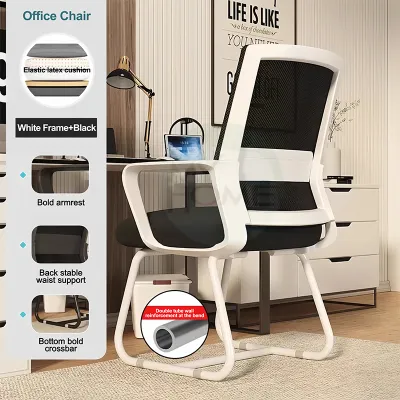
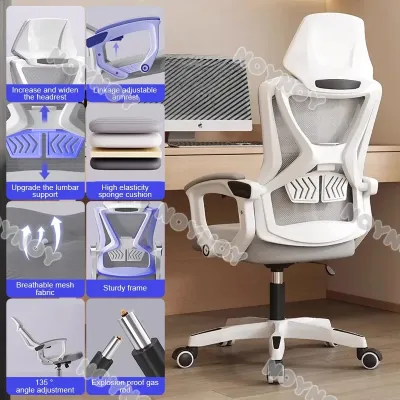
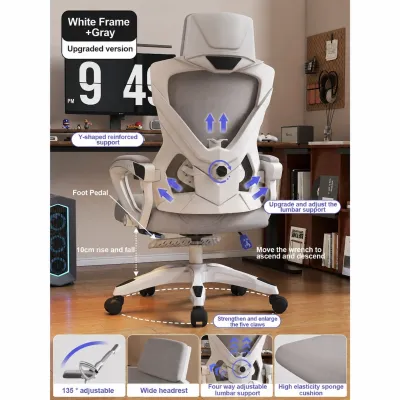
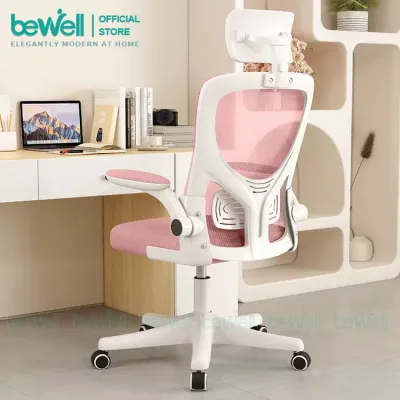
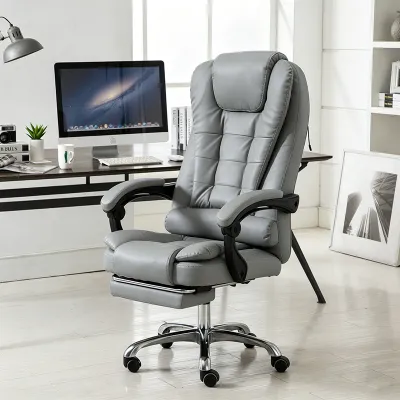
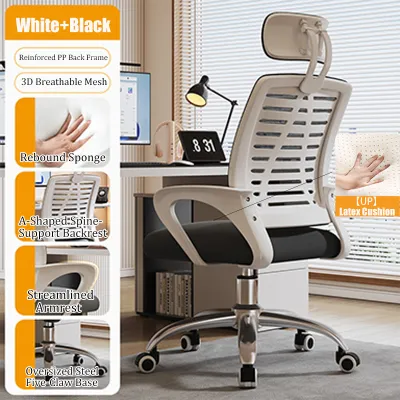
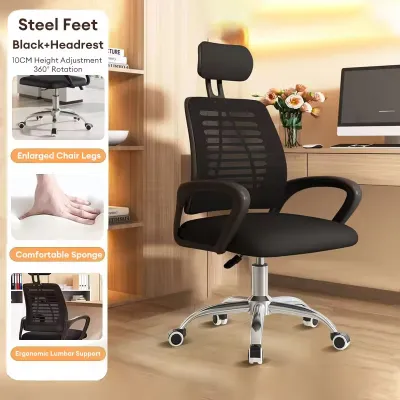
Prices are valid at publication and may change. Please refer to the product page for the latest price.
At this budget, manufacturers must allocate their production costs carefully. To deliver a chair at an accessible price, they prioritize basic comfort and core structural stability over complex mechanical adjustments. This means you will see simple, reliable mechanisms rather than multi-axis customization. Expecting a budget chair to perform like a premium executive model often leads to disappointment when the plastic components or thin foam layers begin to wear down.
Your primary goal when shopping in this price range should be finding a stable, well-constructed foundation. A solid frame, a reliable gas lift, and a high-density seat cushion are far more valuable than flashy additions like built-in massage vibrators, cheap footrests, or highly adjustable but flimsy plastic armrests. These secondary features often act as distractions from poor overall build quality and are typically the first components to break under daily use.
Choosing a budget office chair is an exercise in strategic compromise. By accepting that you cannot have every premium adjustment, you can focus on verifying the quality of the few features that matter most for your physical well-being. This realistic approach ensures that your ₱5,000 investment goes toward a durable tool that actively reduces physical fatigue during your daily tasks.
Core Ergonomic Features Available Under ₱5,000
Lumbar Support and Backrest Design
A healthy spine maintains a natural S-curve, and a proper office chair must support this shape to prevent slouching and lower back strain. In the under-₱5,000 price bracket, you will generally find backrests with a fixed S-curve design built directly into the frame. This structural curve provides continuous support to your lumbar region, though it cannot be adjusted to match different torso lengths.

Some budget models offer a basic adjustable lumbar support system, which typically consists of a plastic pad or strap mounted behind the backrest mesh. This pad can be slid upward or downward by a few centimeters to align more closely with the curve of your lower spine. While these plastic inserts lack the plush padding or spring-loaded tension of premium chairs, they are highly effective at preventing your lower back from flattening against the backrest.
The material of the backrest is another critical factor, especially in the warm and humid climate of the Philippines. Mesh backrests are the dominant choice in this price range and offer significant advantages over solid fabric or PU leather. The open weave of the mesh allows air to circulate freely around your back, preventing heat buildup and sweat accumulation during long afternoons in a home office without continuous air conditioning.
Fabric-upholstered foam backrests are also available but require careful evaluation. While they can feel softer initially, they tend to trap body heat and absorb moisture in humid environments. Over time, this trapped sweat can lead to fabric staining, unpleasant odors, and the gradual breakdown of the internal foam. If you choose a fabric backrest, ensure the material is breathable and easy to spot-clean.
Basic Adjustability (Height and Tilt)
Safe and reliable height adjustment is a standard feature you should expect in any functional office chair. This is controlled by a pneumatic gas lift cylinder located beneath the seat pan. When evaluating budget chairs, it is crucial to look for a Class 3 or Class 4 gas lift rating. These classes indicate that the cylinder has thicker steel walls and can safely support daily height adjustments and heavier weight loads over several years, whereas cheaper Class 2 lifts are prone to losing pressure and sinking unexpectedly.
Tilt and recline mechanisms in this price segment are straightforward but functional. Most chairs under ₱5,000 feature a basic center-tilt mechanism, where the backrest and the seat pan tilt backward together at the same angle. This movement is controlled by a large tension knob located under the front of the seat, allowing you to adjust how much resistance you feel when leaning back.
These budget mechanisms generally include a simple tilt lock lever. In almost all cases at this price point, the lock only secures the chair in the upright, 90-degree working position. When you unlock the lever, the chair can rock freely, but you cannot lock it at a specific reclined angle for resting. This basic functionality is sufficient for shifting your weight and relieving pressure on your spine, but it lacks the customized positioning of more expensive mechanisms.
Seat Cushion and Material Quality
The seat cushion is the most critical component for daily comfort, as it bears the majority of your body weight. In budget office chairs, you will encounter two primary types of foam: high-density molded foam and standard cut polyurethane (PU) foam. Molded foam is shaped in a dedicated mold, resulting in a dense, supportive cushion that retains its elasticity and shape over years of heavy use.
Standard cut PU foam, by contrast, is sliced from large blocks of low-density foam. While it feels incredibly soft and plush when brand new, it lacks the structural integrity to support your weight long-term. Within a few months of daily eight-hour use, cut foam often flattens completely, causing you to bottom out against the hard wooden or plastic seat pan beneath. Always prioritize high-density molded foam to ensure your chair remains comfortable past the first few months.
The base of the chair provides the foundation for its stability and mobility. At this price point, you will typically choose between a heavy-duty nylon base and a basic chrome-plated steel base. A well-engineered nylon base with internal reinforcing ribs is exceptionally durable, lightweight, and resistant to scuffs. Chrome-plated steel bases offer a premium look but can be susceptible to rust in high-humidity areas if the plating is thin or scratched.
Mobility is handled by standard dual-wheel casters, usually made of hard nylon or polyurethane. Hard nylon casters glide smoothly on low-pile carpets but can scratch delicate hardwood or vinyl tile floors. If your home office has tiled or wooden flooring, look for casters with a softer polyurethane outer coating, or consider purchasing a protective floor mat to prevent surface wear and reduce rolling noise.
Ergonomic Features You Will Need to Compromise On
To stay under the ₱5,000 threshold, manufacturers must eliminate advanced mechanical parts and premium materials. The most prominent compromise is in the design of the armrests. At this price, you should expect either fixed armrests—which are bolted securely to the seat and backrest—or basic height-adjustable armrests that move up and down. Multi-directional (3D or 4D) armrests that slide forward, pivot inward, or adjust in width are not available; attempting to find them in this price range often results in flimsy, rattling plastic parts that break easily.
Advanced tilt mechanisms, such as synchro-tilt, are also absent from budget chairs. In a synchro-tilt system, the backrest reclines at a faster rate than the seat pan (usually a 2:1 ratio), which keeps your feet flat on the floor and maintains proper ergonomic alignment as you stretch. Budget chairs rely instead on the simpler center-tilt or knee-tilt, which lifts your thighs and tilts your entire body backward as a single unit, occasionally putting pressure on the backs of your legs.
Premium materials are another casualty of the budget ceiling. High-end ergonomic chairs use proprietary, highly elastic elastomeric mesh that cradles the body without losing tension over a decade of use. Budget chairs use standard polyester mesh, which is breathable but will gradually stretch and sag over time. Similarly, you will not find polished aluminum bases, premium top-grain leather, or advanced stain-resistant fabrics in this price category.
Furthermore, you must compromise on highly specific customization features. Features like a seat depth slider—which adjusts the distance between the backrest and the front of the seat cushion to accommodate different leg lengths—are virtually non-existent under ₱5,000. Adjustable headrests in this tier are often loose and unstable, and backrests are typically rigid rather than flexible or responsive to lateral movements.
If you suffer from chronic shoulder pain, severe lower back issues, or have body proportions that fall far outside the average range, these compromises can impact your physical health. In such cases, it may be wiser to save your budget and target a higher-tier chair in the ₱8,000 to ₱15,000 range. Investing more allows you to secure features like 3D armrests to relieve shoulder strain and a seat depth slider to protect your circulation.
How to Evaluate Specs and Quality Before Buying
When shopping for an office chair online, you cannot physically test the seat comfort or check the frame stability, making it essential to read the technical specifications carefully. Start by verifying the gas lift class; look for product descriptions that explicitly state “Class 3” or “Class 4” certification. If the class is not mentioned, ask the seller directly, as a cheap, uncertified gas lift represents both a safety hazard and a common point of mechanical failure.
Next, check the maximum weight capacity and compare it to your body weight. Most budget chairs are rated for a maximum capacity of 100 kg to 120 kg. For long-term durability and safety, it is best to leave a safety margin of at least 20%; if you weigh 90 kg, a chair rated for 100 kg will operate close to its mechanical limits, accelerating the wear on the foam, joints, and gas lift.
Checking the physical dimensions of the chair is critical to ensure it fits both your body and your workspace. Measure the seat width and depth to confirm you will have comfortable clearance on either side of your thighs. Crucially, check the maximum height of the armrests from the floor and compare it to the clearance under your desk. If the armrests are too high, you will not be able to push the chair fully under the desk when it is not in use, which can waste valuable space in smaller rooms.
User reviews on local ecommerce platforms provide invaluable clues about how a chair performs after the initial assembly. Ignore the five-star reviews written on the day of delivery; instead, filter for reviews that are several months old or search for keywords like “flattened,” “squeak,” “loose,” or “sagging.” These real-world reports will tell you whether the seat cushion foam holds up over time and whether the joints remain quiet under daily movement.
Finally, review the seller’s return and exchange policies before finalizing your purchase. Bulky furniture is expensive and difficult to ship back if you find that the chair is uncomfortable or does not fit your body. Verify who covers the cost of return shipping for non-defective items; some platforms require the buyer to pay return logistics fees, which can easily cost a significant portion of the chair’s original ₱5,000 purchase price.
Hidden Costs and Post-Purchase Considerations
The initial purchase price of a budget office chair is rarely the final cost of ownership. Shipping fees for bulky, heavy items can be substantial, especially if you live outside Metro Manila or major provincial hubs. When budgeting your ₱5,000, ensure you check the estimated delivery fee at checkout, as shipping a 15-kilogram box to regional areas can add several hundred pesos to your total expense.
Most budget office chairs are delivered flat-packed and require self-assembly. While manufacturers typically include basic tools like an Allen wrench and a simple instruction sheet, the quality of these tools and guides can vary. Plan to spend 30 to 60 minutes assembling the chair, and ensure you have a flat, clean surface to work on. Tighten all bolts securely, and inspect the joints after a week of use to retighten any screws that may have settled.
Warranty coverage in the sub-₱5,000 price range is often limited in both duration and scope. Many budget sellers offer warranties lasting only 3 to 6 months, and these warranties typically cover only major structural components like the gas lift cylinder or the nylon base. Wear-and-tear items, such as the peeling of synthetic leather, the flattening of the seat foam, or the tearing of the mesh backrest, are almost never covered under budget warranties.
Once your warranty expires, the availability of replacement parts becomes crucial for extending the life of your chair. Fortunately, many budget chairs use standard industry-size fittings for components like casters and gas lifts. Before buying, verify if the chair uses standard 50mm caster stems and a standard gas lift diameter, which allows you to purchase inexpensive replacement parts online rather than discarding the entire chair if a single component fails.
Frequently Asked Questions (FAQ)
Is a ₱5,000 office chair durable enough for 8 hours of daily use?
A ₱5,000 office chair can support 8 hours of daily use, but its materials will degrade faster than those of premium models. The standard foam cushion may begin to flatten and the mesh may lose some tension within 12 to 18 months of continuous full-time use. To extend the lifespan of both the chair and your body, it is highly recommended to take regular standing breaks and avoid dropping your full weight heavily onto the seat.
Can I upgrade the armrests or add a headrest to a budget chair later?
Upgrading or adding components to a budget office chair is generally difficult because these models use proprietary or non-standard mounting points. The armrests are often bolted directly into pre-drilled holes in the seat pan or backrest frame, meaning aftermarket ergonomic armrests will not align. It is always best to purchase a chair that has your required configuration out of the box rather than planning for future modifications.
What is the most important feature to prioritize if I have back pain?
If you experience back pain, your absolute priority should be a firm, high-density molded foam seat cushion paired with a structured, supportive backrest that features a dedicated lumbar pad. Avoid chairs that prioritize aesthetic features, thick but soft plush padding, or deep rocking mechanisms at the expense of structural back support. If your back pain is severe or chronic, consult a medical professional, as you may require a specialized ergonomic chair that exceeds the ₱5,000 budget.

Community discussion
Share your experience or ask a question. Comments are reviewed before publication.