
Finding the perfect dining table for a large family in the Philippines means balancing daily space-saving needs with the capacity to host extended relatives during Sunday lunches, birthdays, and holiday feasts. An extendable rattan table offers a beautiful, tropical aesthetic that fits naturally into local homes while providing the flexibility to expand from a cozy 6-seater to a spacious 10-seater. However, choosing the right table requires careful consideration of spatial dimensions, mechanical durability, and material resilience against the local climate. This guide provides a comprehensive framework to help you select, verify, and maintain an extendable rattan dining table that will serve your family for years to come.
Quick Answer: Space and Sizing Requirements for 6 to 10 Seats
To accommodate a large family comfortably, you must understand the physical footprint of both the collapsed and fully extended table. A standard 6-seater dining table typically requires a length of 150 to 180 centimeters. When extended to seat 10 people, the table length must expand to at least 240 to 300 centimeters to prevent guests from bumping elbows. The width of the table should ideally remain between 90 and 110 centimeters; anything narrower makes it difficult to place serving platters down the center, while anything wider makes conversation and passing dishes across the table awkward.
Beyond the table itself, you must calculate the clearance space required for comfortable movement. A minimum of 90 centimeters of open space is necessary between the edge of the table and the nearest wall or piece of furniture to allow chairs to be pulled out easily. If you want a clear walking path behind seated guests, increase this clearance to 120 centimeters. This ensures that family members can carry heavy serving bowls from the kitchen to the dining area without squeezing past seated relatives.
Products mentioned in this guide
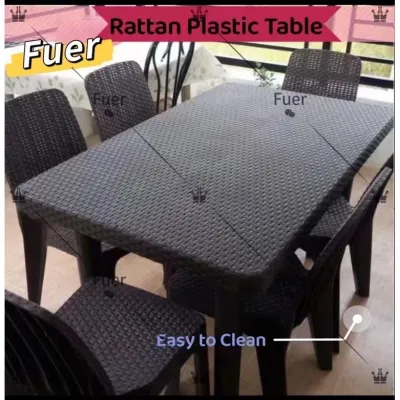
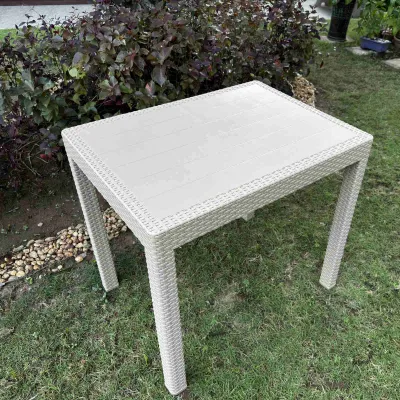
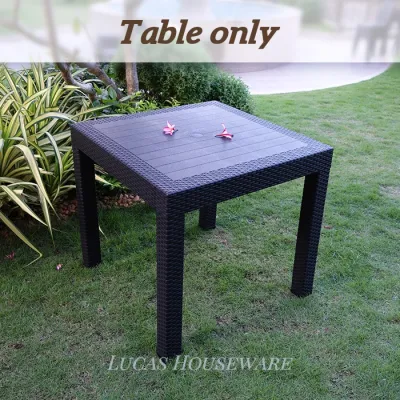
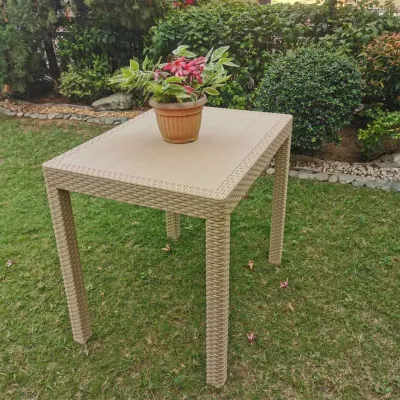
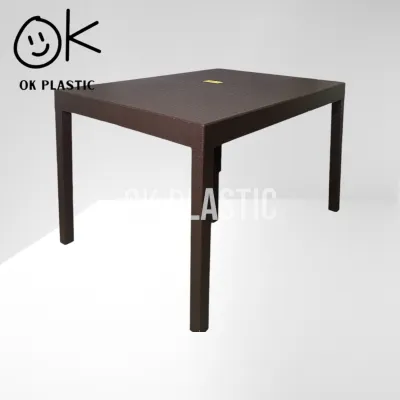
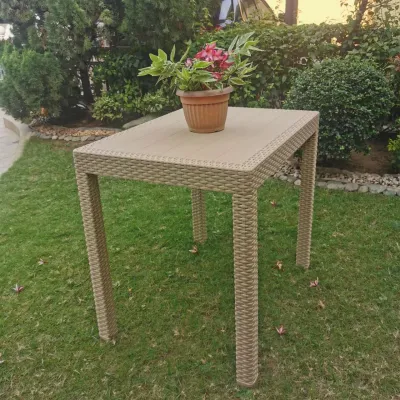
Prices are valid at publication and may change. Please refer to the product page for the latest price.
Before finalizing any purchase, measure the physical path the table must travel to reach your dining room. Many homeowners buy large furniture only to find it cannot clear tight corners, low ceilings, or narrow doorways. Measure the height and width of your main entrance, hallway turns, stairwells, and elevator doors. If you live in a condominium, check the elevator’s interior height and diagonal clearance. Ensure the manufacturer’s packaged dimensions or the collapsed frame dimensions can safely navigate these spaces without damaging your walls or the furniture itself.
Evaluating Extension Mechanisms and Rattan Materials
The longevity of an extendable dining table depends heavily on its mechanical design and the quality of its materials. Extension mechanisms generally fall into three categories: butterfly leaves, drop-leaves, and sliding tracks with removable inserts. Butterfly leaves are highly convenient because the extension panels are stored built-in beneath the tabletop, folding out like wings when the table is pulled apart. Drop-leaf tables feature hinged sections that hang down when not in use, which is simple but can limit legroom at the ends of the table. Sliding tracks with separate insert leaves offer great stability but require you to store the extra panels in a closet or under a bed when they are not in use.

When evaluating the rattan itself, you must distinguish between natural rattan and synthetic alternatives. Natural rattan is harvested from climbing palms and is prized for its organic warmth, unique grain variations, and lightweight strength. However, it is highly sensitive to moisture and temperature fluctuations. Synthetic polyethylene (PE) rattan, on the other hand, is engineered from high-density plastics to mimic the look of natural weave while offering superior resistance to water, spills, and humidity. For indoor dining rooms with consistent climate control, natural rattan provides unmatched character; for semi-outdoor dining areas like patios, lanais, or dirty kitchens, synthetic PE rattan is the practical choice.
Regardless of the rattan weave used on the exterior, the underlying frame must be exceptionally robust to support both the heavy extension hardware and the weight of daily family meals. Avoid tables that rely solely on rattan or thin plywood for structural support. Look for frames constructed from solid hardwoods like mahogany, teak, or acacia, which hold screws securely and resist warping. Alternatively, a powder-coated steel or aluminum sub-frame provides excellent structural integrity, especially when paired with synthetic rattan, ensuring the table remains perfectly level and rigid even when fully extended.
Verifying Structural Stability and Weight Capacity
An extendable table must be able to handle the physical demands of a large family gathering, where multiple heavy serving dishes, clay pots, and tableware are concentrated in the center. Always check the manufacturer’s specifications for the maximum weight capacity, paying close attention to how that weight must be distributed. A high-quality extendable table should support at least 75 to 100 kilograms of evenly distributed weight. Be cautious of tables that do not list a weight rating, as this often indicates the piece is designed primarily for decorative use rather than heavy-duty dining.
The design of the table legs and base plays a critical role in preventing tipping and wobbling when the table is fully extended. Trestle bases or pedestal designs with wide, sprawling feet offer excellent stability because they keep the support structure centralized while allowing maximum legroom. If the table uses traditional four-leg construction, ensure the legs are positioned at the absolute corners of the extended frame rather than staying clustered toward the center. Cross-bracing—such as horizontal wooden or metal bars connecting the legs—greatly reduces lateral sway and prevents the frame from loosening over time due to constant shifting and sliding.
When inspecting a table in a physical showroom, perform a few simple physical checks to identify potential structural weaknesses. Fully extend the table and apply firm downward pressure on the far outer edges and the center seam; any noticeable sagging, flexing, or creaking is a major red flag. Shake the table gently from side to side to check for loose joints or play in the extension tracks. Examine the underside to ensure the metal tracks are thick, securely bolted to the wooden frame, and do not bend under pressure. Any unsupported overhang exceeding 30 centimeters past the legs should be viewed with caution, as it can easily tip if a guest leans heavily on the edge.
Caring for Rattan Furniture in Tropical Climates
The tropical climate of the Philippines, characterized by high humidity and intense heat, presents unique challenges for furniture maintenance. To keep your rattan table looking pristine, establish a consistent cleaning routine. Dust and food crumbs easily get trapped in the intricate woven crevices of the rattan. Use a soft-bristled brush or a vacuum cleaner with a brush attachment to gently sweep out debris at least once a week. For deeper cleaning, wipe the weave with a soft microfiber cloth slightly dampened with a mixture of mild dish soap and warm water, taking care not to saturate the natural fibers.
Moisture management is critical for natural rattan. Excessively high humidity can encourage mold and mildew growth in the tight spaces of the weave, while extreme dry heat can cause the natural fibers to dry out, become brittle, and split. Keep your dining room well-ventilated, and use air conditioning or dehumidifiers during the peak of the rainy season to maintain a stable indoor environment. Avoid placing natural rattan tables in direct sunlight near large windows, as prolonged UV exposure will fade the natural color and weaken the fibers over time.
If you choose a synthetic PE rattan table, check the product care label to verify its specific resistance ratings. High-quality synthetic tables are treated with UV inhibitors and moisture-resistant coatings during manufacturing, allowing them to withstand direct sunlight and occasional rain without cracking or fading. Even with these protective coatings, it is wise to use coasters, placemats, and heat-resistant pads under hot serving dishes to protect both natural and synthetic surfaces from heat damage and discoloration.
Pre-Purchase Checklist for Large Family Dining Tables
Before making your final decision on an online marketplace or at a local showroom, use this step-by-step checklist to ensure the table meets all your family’s practical needs:
- Measure Twice: Verify the exact dimensions of the table when fully collapsed (for daily use) and fully extended (for gatherings) against your dining room floor plan.
- Check Clearance: Ensure there is at least 90 to 120 centimeters of clearance around the table when it is at its maximum length.
- Confirm Delivery Access: Measure all doorways, hallways, stairwells, and elevators to guarantee the delivery team can safely transport the table into your home.
- Inspect the Frame: Verify that the underlying frame is made of solid hardwood or powder-coated metal, not cheap particleboard.
- Test the Mechanism: If shopping in person, operate the extension mechanism yourself multiple times to ensure it slides smoothly without sticking or grinding.
- Review Assembly and Fees: Confirm whether the table arrives fully assembled or requires professional installation. Factor in any delivery fees, assembly charges, or potential costs for carrying the item up multiple flights of stairs.
- Understand the Warranty: Check the manufacturer's warranty terms, specifically looking for coverage on the extension tracks, mechanical parts, and structural frame.
- Evaluate Seating Configurations: Consider how your chairs will fit around the extended table. While individual dining chairs offer personal comfort, combining them with a long bench on one side can maximize seating capacity for children and save space when tucked completely under the table when not in use.
Frequently Asked Questions (FAQ)
Is Natural Rattan Suitable for Outdoor Dining in the Philippines?
Natural rattan is highly vulnerable to the elements and is generally not recommended for open outdoor dining in the Philippines. The combination of heavy monsoon rains, high humidity, and intense tropical sunlight will quickly degrade untreated natural fibers, leading to mold growth, warping, and structural failure. If you want the organic look of rattan for an outdoor patio or garden space, opt for synthetic PE rattan woven over a rust-resistant aluminum frame. If you must use natural rattan outdoors, ensure it is placed in a fully covered, well-ventilated semi-outdoor area like a deep veranda, and bring it indoors during severe weather.
What to Do If the Extension Mechanism Gets Stuck?
If your table’s extension mechanism becomes difficult to slide or gets completely stuck, do not force it, as this can bend the metal tracks or strip the mounting screws. First, look underneath the table with a flashlight to check for any trapped debris, dust buildup, or loose screws that might be obstructing the path. Clean the tracks gently with a dry brush or compressed air. If the manufacturer’s instructions permit, apply a small amount of dry silicone spray lubricant to the metal tracks; avoid using heavy oils or WD-40, which can attract dust and create a sticky residue over time. If the mechanism remains jammed, stop immediately and contact the manufacturer or a professional furniture repair technician to avoid voiding your warranty.

Community discussion
Share your experience or ask a question. Comments are reviewed before publication.