
Selecting an extendable stainless steel dining table for a large family of 6 to 10 people in the Philippines requires balancing daily space efficiency with the structural stability needed for fully extended festive meals. In many Filipino households, the dining table serves as the ultimate gathering hub, hosting everything from daily family dinners to large weekend salu-salo celebrations. Finding a table that can seamlessly transition from a compact six-seater to a spacious ten-seater involves evaluating structural engineering, material grades, and spatial dynamics.
Because specific product availability and pricing fluctuate across local showrooms and online marketplaces, the key to a successful purchase lies in understanding how to verify material quality and mechanical reliability. By focusing on robust construction and precise spatial planning, you can select a dining centerpiece that withstands both tropical humidity and the physical demands of large family gatherings.
Key Selection Criteria for Large Extendable Tables
To comfortably accommodate a fluctuating group of 6 to 10 diners, you must first understand the physical dimensions required for comfortable seating. For a standard gathering of six people, a table length of 1.5 to 1.8 meters is generally sufficient to prevent diners from bumping elbows. However, when extending the table to host up to ten people, the fully extended length must reach between 2.4 and 3 meters. This dramatic increase in length places immense physical stress on the table’s center and joints, making structural integrity your primary concern.
Products mentioned in this guide
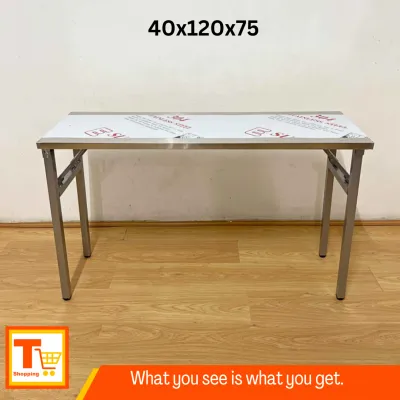
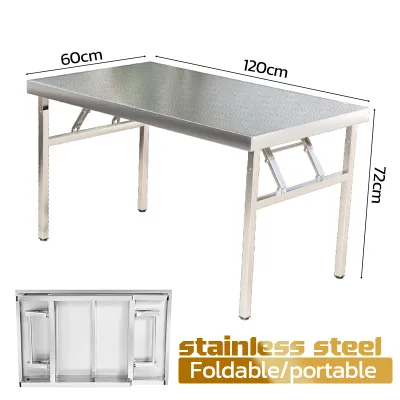
Prices are valid at publication and may change. Please refer to the product page for the latest price.
Beyond length, table width and legroom clearance dictate the overall comfort of your guests. A width of at least 90 to 100 centimeters is highly recommended for large family meals, as it leaves ample room for central serving platters, rice bowls, and individual place settings. Legroom is equally critical; check the design of the table legs to ensure they do not obstruct seating when the table is fully extended. Corner legs that slide outward with the extension mechanism are often the most practical choice, as they keep the corners clear and maximize the usable space underneath.
The structural base and leg placement must be engineered to support the weight of both the stainless steel top and the heavy dishes placed upon it. When evaluating a table, inspect the underside to see how the frame supports the extended sections. A high-quality extendable table should feature reinforced steel crossbeams or a heavy-duty central pedestal that prevents the center from sagging under load. If the table wobbles or flexes when light downward pressure is applied to the extended ends, the frame may lack the structural reinforcement necessary for safe, long-term use.
Extension Mechanisms and Space Requirements
The type of extension mechanism you choose directly impacts how easily you can transition your dining room from daily family use to hosting larger gatherings. Butterfly leaves are a popular and highly convenient option, featuring hinged panels that fold and store neatly within a compartment hidden beneath the tabletop. This design eliminates the need to find separate storage space for the extension leaves, protecting them from accidental damage or warping in humid environments.

Alternatively, drop-leaf designs and track-sliding systems with separate extension boards offer different functional advantages. Drop-leaf tables feature hinged sides that hang down when not in use, making them highly space-efficient for tight dining areas, though they may offer less structural support at the far ends. Track-sliding systems, which pull apart from the center to allow the insertion of separate leaf boards, provide a highly stable and flat dining surface. However, these separate boards must be stored elsewhere in your home, requiring dedicated closet space free from extreme temperature and moisture fluctuations.
Before finalizing your purchase, carefully plan your dining room layout to ensure the table can actually be used at its maximum capacity. A fully extended table measuring 3 meters in length requires a significant amount of surrounding clearance to remain functional. You should maintain at least 90 centimeters of open space on all sides of the table, measured from the edge of the table to the nearest wall or piece of furniture. This clearance allows guests to pull out their chairs comfortably and permits safe, unobstructed foot traffic around the room during busy meals.
Additionally, consider the physical effort required to operate the extension mechanism, especially given the inherent weight of stainless steel. High-quality track systems utilize ball-bearing glides or smooth gear mechanisms that allow a single person to extend the table with minimal exertion. If possible, test the mechanism in a showroom or check user reviews to verify that the tracks slide smoothly without binding or requiring excessive force, which can strain the frame over time.
Evaluating Stainless Steel Quality and Maintenance
Stainless steel is highly valued for its modern aesthetic and hygienic properties, but not all steel is created equal. When shopping for a dining table, always check the product specifications or ask the manufacturer to verify the specific grade of stainless steel used. For indoor residential furniture, 304-grade stainless steel is highly recommended due to its excellent resistance to corrosion and rust, which is particularly important in the humid tropical climate of the Philippines. Lower grades, such as 201-grade steel, are more susceptible to tea staining and localized oxidation when exposed to moisture or salty air.
The surface finish of the tabletop also plays a major role in both the visual appeal and the daily maintenance of your dining set. Brushed and matte finishes are highly practical for busy households, as their textured surfaces help to diffuse light, effectively hiding fingerprints, water spots, and minor surface scratches. In contrast, mirrored or highly polished finishes offer a striking, reflective look but require constant maintenance to keep free of smudges, oils, and dust, making them less practical for daily family dining.
Maintaining a stainless steel table requires adhering to specific care boundaries to preserve its protective outer layer. Avoid using harsh abrasive pads, steel wool, or stiff-bristled brushes, as these can create deep scratches that harbor dirt and compromise the metal’s rust resistance. Similarly, steer clear of strong acidic or alkaline cleaning agents, such as bleach or chemical descalers, which can chemically strip the steel’s passive protective layer. For daily cleaning, a soft microfiber cloth dampened with warm water and mild dish soap is highly effective, always wiping in the direction of the metal’s brushed grain to prevent streaking.
Checklist for Measuring and Verifying Before Purchase
Before committing to a large extendable dining table, you must perform a thorough physical audit of your home’s entryways and delivery paths. A table designed to seat ten people often features a massive, heavy frame that may not easily navigate tight spaces. Measure the width and height of all doorways, hallways, stairwells, and elevator cabins that the delivery team must pass through to reach your dining room. Confirming these dimensions beforehand prevents the frustration of a delivery that cannot physically enter your home.
Next, verify the manufacturer’s assembly conditions and the specific fastening methods required for installation. Because extendable stainless steel tables are heavy and feature complex mechanical tracks, professional assembly is highly recommended to ensure all components are aligned correctly. If you choose to assemble the table yourself, verify that all necessary hardware is included and check that the joints are secured with high-quality, corrosion-resistant bolts rather than simple wood screws or weak adhesive joints.
Finally, carefully review the retailer’s return policy, structural warranty terms, and the long-term availability of replacement parts. A reliable warranty should cover the structural integrity of the frame and the smooth operation of the extension mechanism for at least one to two years. Additionally, inquire whether the retailer stocks replacement parts, such as extra track glides, alignment pins, or matching extension leaves, ensuring that your investment remains fully functional for years to come.
Frequently Asked Questions (FAQ)
Is a stainless steel table suitable for outdoor dining?
While stainless steel is highly durable, its suitability for outdoor dining depends entirely on the specific grade of steel and the local environment. High humidity, direct rainfall, and salt exposure in coastal areas can cause lower-grade stainless steel to rust over time. Before placing a table outdoors or on a semi-outdoor patio, verify the manufacturer’s explicit outdoor rating and follow their specific care and protective coating instructions to prevent premature weathering.
How do I prevent the extension mechanism from jamming?
To keep your table’s extension mechanism operating smoothly, perform routine inspections to clear away dust, food crumbs, and debris from the tracks. Periodically check for loose hardware or misaligned pins along the sliding rails, tightening them gently as needed. If the tracks begin to stick, apply a light coat of dry silicone lubricant according to the manufacturer’s guidelines, and always stop and consult a professional if you encounter significant mechanical resistance to avoid damaging the frame.
Can I use regular dining chairs with an extendable table?
Yes, you can use regular dining chairs, but you must first measure the clearance from the floor to the lowest point of the table’s underside. Extendable tables often feature thicker aprons or metal housings beneath the tabletop to conceal the sliding tracks and stored leaves. Ensure that your existing chairs, including any armrests, can slide fully underneath this lower clearance limit so that guests can sit comfortably and the chairs can be tucked away neatly when the table is closed.

Community discussion
Share your experience or ask a question. Comments are reviewed before publication.