
Choosing the right wardrobe cabinet with sliding doors is one of the most effective ways to maximize a compact bedroom. Unlike traditional wardrobes with swinging doors that require dedicated clearance space, a sliding door system operates entirely within its own footprint, allowing you to place other furniture items nearby without blocking access. In the humid, tropical climate of the Philippines, selecting the right materials and hardware is just as critical as finding the perfect dimensions to ensure your storage remains functional and durable for years to come.
This comprehensive guide walks you through the spatial benefits of sliding doors, how to measure your room accurately, what technical specifications to verify before purchasing, and how to organize the interior layout for maximum storage capacity.
Why Sliding Doors Save Space in Compact Bedrooms
Traditional swing-door wardrobes require a significant amount of open floor space directly in front of them. Typically, you must leave at least 50 to 60 centimeters of clear space just to allow the doors to swing open fully, plus additional room for you to stand and browse your clothes. In a small bedroom, this clearance zone often conflicts with the placement of the bed, nightstands, or walking paths, forcing awkward room layouts.
Products mentioned in this guide
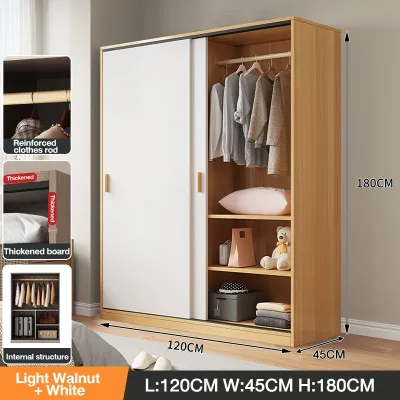
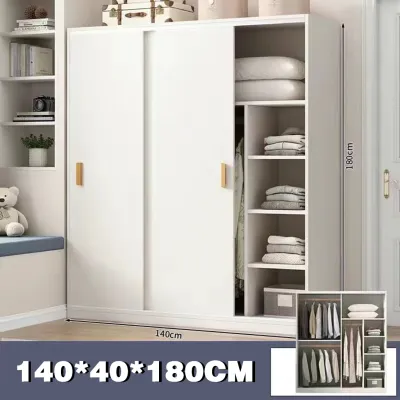
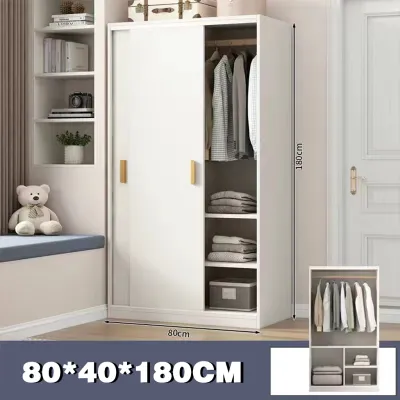
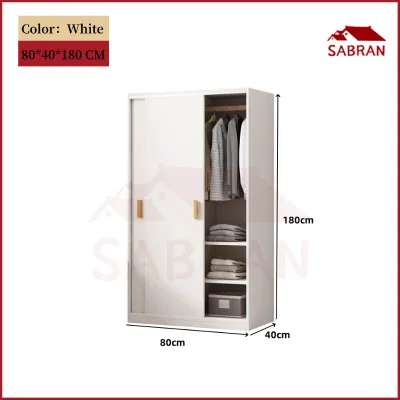
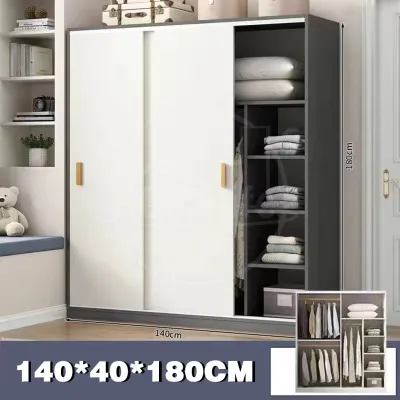
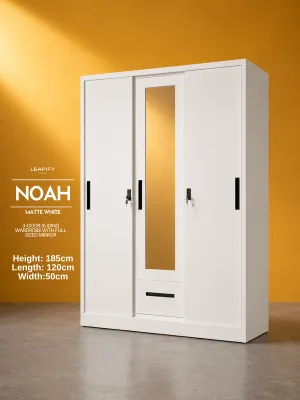
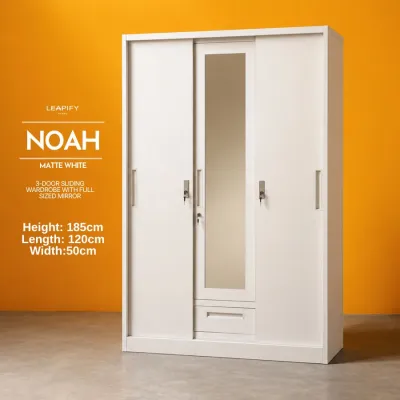
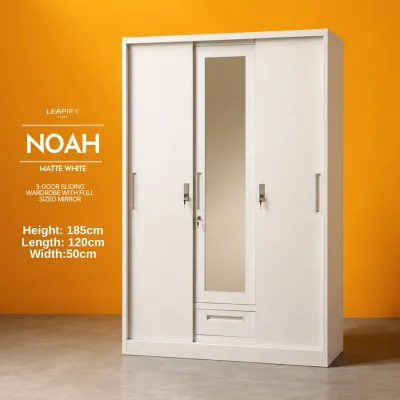
Prices are valid at publication and may change. Please refer to the product page for the latest price.
A wardrobe cabinet with sliding doors eliminates this clearance requirement entirely. Because the doors glide horizontally along parallel tracks, the front of the wardrobe can sit mere centimeters away from the edge of your bed frame or bedroom door entry. This allows for a much more flexible furniture arrangement, enabling you to utilize floor space that would otherwise be wasted as a door-swing clearance zone.
Beyond physical space savings, sliding doors offer distinct visual advantages in compact rooms. Large, solid doors can make a small room feel cramped and heavy. Replacing those solid panels with mirrored sliding doors reflects both natural and artificial light, instantly creating the illusion of a larger, more open space. This visual trick is highly effective in urban condominiums and townhouses where window space and natural light may be limited.
Furthermore, the streamlined, flush exterior of a sliding wardrobe contributes to a clean, minimalist aesthetic. With fewer handles protruding into the room and no visible hinges, the wardrobe functions almost like a secondary wall. This seamless integration reduces visual clutter, which is a key design principle for making small spaces feel organized and serene.
Measuring Your Room and Planning Wardrobe Dimensions
Before browsing online marketplaces or visiting local furniture showrooms, you must take precise measurements of your bedroom. The most critical dimension to consider first is depth. Standard hanging clothes require an internal wardrobe depth of at least 55 to 60 centimeters so that hangers and clothing sleeves do not rub against the sliding doors or obstruct their movement. If your room can only accommodate a shallower unit, look for wardrobes designed with pull-out, front-facing hanger rods rather than traditional lateral rails.

Width is another crucial factor because sliding door mechanisms require a minimum horizontal span to function correctly. A sliding wardrobe typically needs to be at least 120 centimeters wide to accommodate two functional doors. If a wardrobe is too narrow, the individual doors will be tall and thin, making them unstable, prone to wobbling, and highly susceptible to derailing from their tracks during daily use.
Height should be maximized to take full advantage of vertical space, but you must plan for assembly clearance. If you are purchasing a flat-pack wardrobe that must be assembled lying down on the floor and then raised upright, you need to calculate the diagonal height of the unit. If your ceiling is too low, you will not be able to stand the assembled wardrobe up. For tight spaces, look for modular systems that are assembled upright from the ground up, or ensure you leave at least 10 centimeters of clearance between the top of the wardrobe and your ceiling.
Finally, map out your delivery route to avoid logistical headaches. Measure the height and width of your apartment building’s elevator doors, stairwell turns, front door frame, and bedroom entryway. Sliding door panels are often large, single pieces of glass, mirror, or engineered wood that cannot be bent or disassembled. Verifying these clearances beforehand ensures the delivery team can actually transport the wardrobe into your bedroom.
Evaluating Track Systems and Material Durability
The longevity of a sliding wardrobe depends almost entirely on the quality of its track system and structural materials. Sliding mechanisms generally fall into two categories: top-hung and bottom-rolling systems. Top-hung systems suspend the doors from an upper track, which keeps the bottom guide free of dust and debris, but they require a highly rigid top frame to support the heavy weight. Bottom-rolling systems place the door weight on the lower track, offering excellent stability, but the tracks must be cleaned regularly to prevent dirt from clogging the wheels.
When evaluating panel materials, keep the local climate in mind. High humidity levels in the Philippines can cause low-grade particle board or untreated medium-density fiberboard (MDF) to absorb moisture, swell, and warp over time. To prevent this, check that the wardrobe features high-quality moisture-resistant laminates, sealed back panels, and robust edge-banding on all exposed sides. If you choose glass or mirrored door panels, verify that they are equipped with a safety shatterproof backing film to prevent dangerous shards from scattering in the event of an accidental impact.
Inspect the hardware components closely before finalizing your purchase. High-quality sliding wardrobes feature anti-jump mechanisms on the rollers, which prevent the doors from jumping out of the tracks if they are opened too quickly. Soft-close dampers are also highly recommended, as they gently slow the door down as it approaches the side panel, preventing loud slams, reducing wear on the frame, and protecting fingers from getting pinched.
Lastly, assess the overall structural rigidity of the wardrobe frame. The side panels should be thick enough to support the weight of the sliding doors without bowing. Look for reinforced joints, sturdy backboard connectors, and robust metal track profiles rather than thin plastic alternatives. A sturdy frame ensures the tracks remain perfectly parallel, which is essential for smooth, quiet door operation over the lifespan of the furniture.
Optimizing Interior Layouts for Maximum Storage
Because a sliding wardrobe occupies a fixed footprint, the internal layout must be highly optimized to accommodate your entire wardrobe. Start by balancing your hanging space with shelving. Double-tier hanging rails are incredibly efficient for shorter items like folded trousers, shirts, and skirts, effectively doubling your hanging capacity. Reserve single-tier, full-height hanging sections only for long dresses, coats, or traditional attire.
Maximize the hard-to-reach vertical space at the very top of the wardrobe. This “loft” area is ideal for storing bulky, seasonal, or infrequently used items such as extra bed linens, travel luggage, or holiday decorations. Keeping these items high up frees up the more accessible middle and lower zones for your daily wear.
In deep wardrobe units, items stored at the back of standard shelves can easily become lost or forgotten. To solve this, incorporate pull-out accessories such as shallow drawers, wire baskets, or dedicated trouser racks. These accessories pull completely out of the cabinet, allowing you to see and access items stored at the very back without rummaging through stacks of folded clothes.
When selecting a wardrobe, prioritize modular systems that offer adjustable internal components. Look for side panels with pre-drilled peg holes spaced at regular intervals. This adjustability allows you to reposition shelves, add extra drawers, or move hanging rails as your storage needs evolve over time, ensuring the wardrobe remains highly functional for years to come.
Sourcing Options and Pre-Purchase Verification
When sourcing a sliding door wardrobe in the Philippines, you generally have to choose between custom-built carpentry and ready-made modular units. Custom-built wardrobes can be tailored to fit awkward niches, sloped ceilings, or exact wall-to-wall dimensions, but they are permanent fixtures and represent a higher upfront investment. Ready-made modular units, available from local furniture retailers and online marketplaces, are more affordable, quicker to install, and can be disassembled and moved to a new home if you relocate.
Before making a purchase, carefully review the manufacturer’s warranty terms. Pay close attention to what parts are actually covered. A long warranty on the wooden structure is of little use if the moving parts—such as the tracks, rollers, and soft-close dampers—are only covered for a few months. Ensure the warranty specifically includes these high-wear hardware components.
Confirm the assembly and installation requirements before checking out. Sliding door wardrobes are notoriously difficult to assemble and align correctly for DIY beginners. If the doors are not hung perfectly straight, they will not slide smoothly and may damage the tracks. It is highly recommended to pay for professional assembly services if they are offered by the retailer.
Finally, always request the official technical specification sheet or product manual from the seller. Do not rely solely on promotional photos or general descriptions. Cross-reference the exact millimeter measurements of the wardrobe against your physical room measurements, leaving a safe margin for baseboards, light switches, wall outlets, and ceiling fixtures to ensure a perfect fit.
Frequently Asked Questions (FAQ)
Can I install a sliding door wardrobe on an uneven floor?
Sliding door wardrobes require a perfectly level base to operate correctly. If the floor slopes or is uneven, gravity will cause the doors to slide open on their own, drift to one side, or bind and jam within the tracks. This misalignment also puts uneven stress on the rollers, leading to premature wear and potential hardware failure.
During installation, you must use adjustable leveling feet or place heavy-duty plastic shims under the wardrobe base to compensate for minor floor variations. Use a spirit level to check both the horizontal and vertical planes of the frame as you adjust. If your bedroom floor has a severe slope or significant structural irregularities, you should consult a professional carpenter to build a custom, level plinth or base platform before attempting to install the wardrobe.
How do I maintain and clean the sliding tracks?
Regular maintenance is essential to keep your sliding doors gliding smoothly and quietly. Dust, hair, pet dander, and clothing fibers naturally accumulate in the bottom tracks over time, creating friction that can damage the roller wheels. You should vacuum the lower tracks weekly using a narrow crevice tool, or use a stiff-bristled brush to sweep debris out of the channels.
After vacuuming, wipe the metal rails with a dry or slightly damp microfiber cloth to remove any remaining grime. Avoid using harsh chemical solvents, abrasive scrubbing pads, or heavy lubricants like grease or WD-40 inside the tracks. These lubricants actually attract dust and lint, creating a sticky paste that will clog the wheel bearings and ruin the sliding mechanism. If a door becomes difficult to slide, do not force it; instead, inspect the tracks for physical obstructions and check if the roller height adjustment screws need to be calibrated.

Community discussion
Share your experience or ask a question. Comments are reviewed before publication.