
Selecting a white dining table set that expands from seating six to ten people is an excellent solution for homes that balance cozy daily living with large, festive gatherings. To make this investment successful, you must find a set that transitions smoothly between its collapsed and fully extended states without compromising on structural stability, spatial comfort, or the durability of its white finish. In the Philippines, where the dining room serves as the vibrant heart of family life, choosing the right set requires careful attention to spatial planning, durable surface treatments that resist tropical humidity, and reliable extension mechanisms.
By focusing on the physical dimensions of your space, the engineering of the extension hardware, and the protective coatings of the tabletop, you can find a set that accommodates your family comfortably for years to come. This guide breaks down the essential selection criteria to help you make an informed decision.
Quick Guide: Core Dimensions and Features for 6 to 10 Seats
To seat six to ten people comfortably, you must look closely at the physical dimensions of both the table and the surrounding space. On average, a single diner requires a minimum of 60 centimeters of width and 35 centimeters of depth to eat comfortably without bumping elbows.
Products mentioned in this guide
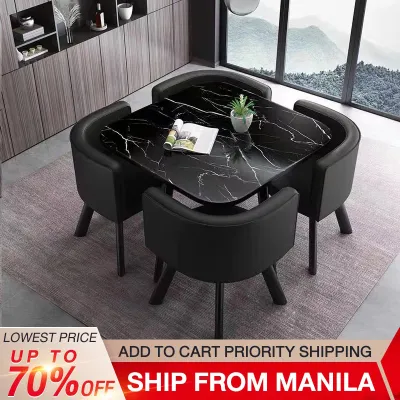
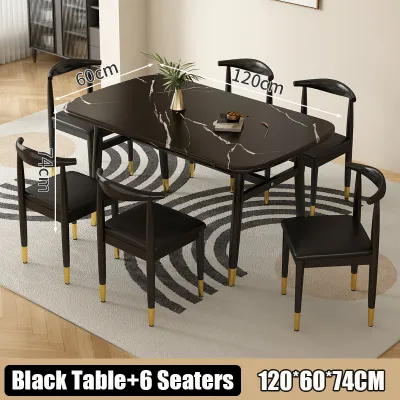
Prices are valid at publication and may change. Please refer to the product page for the latest price.
When collapsed for daily use by six people, a rectangular or oval table should measure at least 150 to 180 centimeters in length. When fully extended to accommodate ten people, the table length must expand to at least 240 to 270 centimeters.
Equally important is the width of the table. A width of 90 to 100 centimeters is standard, providing enough space for place settings, glassware, and central serving platters. Before committing to a purchase, always verify the exact collapsed and fully extended dimensions provided by the manufacturer. Do not guess the seating capacity based on promotional photos alone.
For large families, three priorities stand out:
- Structural stability: The table must remain perfectly level and wobble-free when fully extended, even under the weight of heavy serving dishes.
- Smooth mechanism operation: The extension hardware should slide or fold easily without requiring extreme physical exertion.
- Stain-resistant white finish: Because white surfaces easily reveal spills, the tabletop must feature a robust, non-porous protective coating that resists staining from dark sauces, coffee, or oil.
Space Planning: Measuring Your Room and Delivery Pathways
Purchasing a large white dining table set requires precise room measurements to avoid creating a cramped, unusable dining area. The general rule for room clearance is to maintain a minimum of 90 centimeters of open space between the edge of the table and the nearest wall, sideboard, or doorway. This clearance allows diners to pull out their chairs and sit down comfortably.

For a truly comfortable dining experience, aim for 110 to 120 centimeters of clearance. This extra space ensures that people can walk behind seated guests without forcing them to lean forward. When calculating this clearance, always use the table’s fully extended dimensions. If the extended table leaves only 50 centimeters of space against a wall, the room will feel restricted, and serving food will become difficult.
In the Philippines, many families live in high-rise condominiums or multi-story townhouses where narrow corridors, tight stairwells, and small elevator cabins are common. A table that extends to 270 centimeters often comes in a single, massive tabletop piece or a very large shipping box. You must measure every point along the delivery pathway before ordering.
Start by measuring the height and width of your front door and any interior doorways. Next, check the clearance of your building’s service elevator, including its interior height, diagonal depth, and door opening width. If you live in a townhouse, measure the turning radius of the stairwell landings. A long, solid tabletop can easily get stuck on a tight landing, forcing an expensive or impossible delivery return.
To mitigate these delivery challenges, check the packaging dimensions and assembly requirements listed by the manufacturer. Many large extendable tables are shipped flat-packed and require in-room assembly. This is often the safest option for tight spaces, as individual pieces can easily pass through narrow doors and elevators before being assembled directly in your dining room. Ensure you have the necessary tools or check if the retailer offers professional on-site assembly services.
Choosing the Right Extension Mechanism for Daily and Party Use
The longevity of an extendable white dining table set depends heavily on its expansion mechanism. The right choice balances ease of use, storage convenience, and structural integrity.
Butterfly and Drop-Leaf Extensions
Butterfly extensions feature a hinged leaf stored in a dedicated compartment directly beneath the tabletop. To extend the table, you pull the two main halves apart, lift and unfold the stored leaf, and lock the sections back together. Drop-leaf designs use hinged sections on the outer ends of the table that hang down when not in use and lift up to be supported by pull-out brackets.
The primary advantage of these built-in systems is convenience. You do not need to find extra closet space to store loose table leaves, and the risk of misplacing or damaging the extension parts is virtually non-existent. Many modern butterfly mechanisms use synchronized ball-bearing glides, allowing a single person to open the table with minimal effort.
However, you must inspect the quality of the alignment pins and locking hardware. Over time, cheap plastic or thin metal gears can wear out, leading to uneven seams where the leaves meet. Ensure the locking latches underneath are heavy-duty metal to keep the tabletop secure and prevent accidental separation during a meal.
Removable Center Leaves
A traditional removable leaf system requires you to pull the table halves apart and manually insert one or more separate extension panels into the center. These panels are secured with alignment pins and latches underneath.
This design offers excellent structural stability because the weight is distributed across a robust main frame, and you can often choose how many leaves to insert depending on the guest count. It allows for a highly customizable table length.
The downside is the physical effort required to lift and position heavy solid-wood or engineered-wood leaves. Furthermore, because these leaves are stored elsewhere—such as in a closet or under a bed—they are exposed to different environmental conditions. In the humid Philippine climate, wood can warp if stored improperly. You must ensure you have a dry, flat storage area where the leaves will not be subjected to extreme temperature shifts or physical damage.
Console and Folding Extensions
Console extendable tables are highly space-saving designs that look like a slim entryway console table when fully collapsed but can expand dramatically to seat up to ten people. They rely on heavy-duty telescoping aluminum or steel runners that slide out to accommodate multiple insert leaves.
These systems are ideal for studio apartments or compact open-plan living spaces. However, because they expand so drastically, you must carefully verify the weight capacity of the extended support legs. Most high-quality console tables include an adjustable, drop-down central support leg to prevent the middle of the table from sagging under load.
When evaluating these tables, check the stability of the telescoping runners at their maximum length. Any flexing or bowing when light pressure is applied indicates that the table may not safely support heavy serving dishes or hot pots during a large family gathering.
Evaluating Surface Finishes and Structural Materials
A white dining table set must withstand spills, scratches, and daily wear while maintaining its bright, clean appearance. Do not rely solely on generic material names like “solid wood” or “MDF” to judge durability. Instead, check the manufacturer’s product specifications for the exact surface treatments and finishes applied.
For a white tabletop, look for sealed finishes, UV-cured coatings, or high-pressure laminates. A UV-cured polyurethane finish or a high-quality lacquer provides a non-porous barrier that prevents liquids from penetrating and staining the core material. If you prefer an ultra-modern look, tempered glass tops or sintered stone surfaces in white marble patterns offer exceptional scratch and heat resistance, though they should still be handled with care to prevent edge chipping.
The structural base of the table must support both the weight of the tabletop and the downward pressure exerted by guests leaning on the edges. Solid hardwood frames (such as rubberwood, mahogany, or oak) and powder-coated metal legs offer the best stability. If the table uses engineered wood (like MDF or particleboard) for its base, verify that the joints are reinforced with metal brackets or solid wood corner blocks. Avoid bases made entirely of lightweight, low-density fiberboard, as they can warp under high humidity or shake when the table is fully extended.
Routine maintenance is key to preserving the pristine look of a white table. Always check the manufacturer’s care instructions before using any cleaning products. Avoid harsh abrasive cleaners, bleach, or solvent-based polishes, which can strip away the protective topcoat and cause the white paint to yellow or become sticky. For daily cleaning, a soft microfiber cloth slightly dampened with warm water and a mild, pH-neutral dish soap is usually sufficient. Always dry the surface immediately with a clean towel to prevent moisture from seeping into the seams of the extension joints.
Recommended Table Shapes and Configurations for Large Gatherings
The shape and base design of your extendable table directly impact how many people you can seat and how comfortable they will be.
Rectangular vs. Oval Extendable Tables
Rectangular tables are the most popular choice for large gatherings because they maximize surface area and align perfectly with standard rectangular dining rooms. They provide structured, formal seating arrangements and can easily be pushed against a wall when collapsed to save space.
Oval tables, on the other hand, offer a softer visual footprint. The rounded corners make a large table feel less imposing in a room, which is beneficial in smaller open-plan layouts. From a safety perspective, oval tables are highly recommended for households with young children, as there are no sharp corners to bump into. However, keep in mind that the curved ends slightly reduce the usable tabletop space for serving platters compared to a rectangular table of the same length.
Pedestal vs. Four-Leg Bases
The design of the table legs determines where your guests can sit comfortably. A traditional four-leg table provides exceptional stability, but the corner legs can severely limit chair placement, especially when you are trying to squeeze in extra guests. Diners seated near the ends may find themselves straddling a table leg, which is highly uncomfortable during a long meal.
Pedestal bases—whether a single central column or double pedestals—eliminate corner legs entirely. This design maximizes legroom and allows you to place chairs freely around the entire perimeter of the table without interference. This is particularly advantageous for extendable tables, as it ensures that the transition from six to ten seats does not result in anyone being forced to sit in an awkward, cramped position. When choosing a pedestal table, check that the base is sufficiently heavy and wide to prevent tipping when the table is fully extended.
Frequently Asked Questions (FAQ)
How do I prevent a white dining table from yellowing over time?
Yellowing is a common issue for white painted or lacquered furniture, often caused by exposure to ultraviolet (UV) light or chemical reactions with cleaning agents. To prevent this, check the product specifications for UV-resistant topcoats or finishes before buying. Position your dining table away from direct sunlight, or use sheer curtains to filter the harsh midday sun. Avoid using cleaning products containing ammonia, bleach, or heavy oils, as these can chemically degrade the lacquer. Instead, stick to mild, diluted soap and water, and wipe up spills of dark liquids like soy sauce, red wine, or coffee immediately to prevent permanent staining.
Can an extendable table support heavy dishes or appliances in the center?
An extendable table can support standard dining setups, but you must verify the manufacturer’s specified weight limit, especially for the extended sections. The center seam and the extension leaves are the most vulnerable parts of the table. Avoid placing exceptionally heavy items, such as large cast-iron pots, portable induction cooktops, or heavy decorative centerpieces, directly over the unsupported seams or leaf joints. Always distribute weight evenly across the entire surface. If you plan to host hotpot or buffet-style meals where heavy appliances sit in the center, look for a table with robust metal telescoping glides or an integrated central support leg to ensure safety and structural integrity.

Community discussion
Share your experience or ask a question. Comments are reviewed before publication.