
To fit a narrow condo entryway without blocking your main walkway, look for a slim shoe cabinet with an external depth of 15 to 24 centimeters for tipping-bucket designs, or 30 to 35 centimeters for traditional flat-shelf designs. For a typical urban household, a capacity of 9 to 18 pairs of shoes provides an ideal balance between daily storage needs and floor space preservation. Selecting the right dimensions ensures your entryway remains organized, welcoming, and easy to navigate.
Establishing Your Depth and Capacity Baseline
Finding the perfect balance between a clutter-free entryway and functional storage starts with understanding standard cabinet depths. Traditional shoe cabinets usually require a depth of at least 35 centimeters to store shoes flat. However, in a compact condominium unit where every centimeter of floor space counts, a standard cabinet can easily obstruct the front door or create a cramped bottleneck. Slim shoe cabinets solve this issue by reducing the external depth profile to a range of 15 to 25 centimeters, utilizing clever internal configurations to keep the unit as flush to the wall as possible.
To estimate the required pair capacity for your household, begin by auditing your daily footwear rotation. A single resident or a couple might only need to store 6 to 12 pairs of frequently used shoes near the door, including work shoes, casual sneakers, and indoor slippers. Larger households or avid shoe collectors may require a capacity of 18 to 24 pairs. It is best to reserve the entryway cabinet strictly for active daily wear, while storing seasonal, formal, or specialized athletic footwear in a bedroom closet or secondary storage area.
Products mentioned in this guide
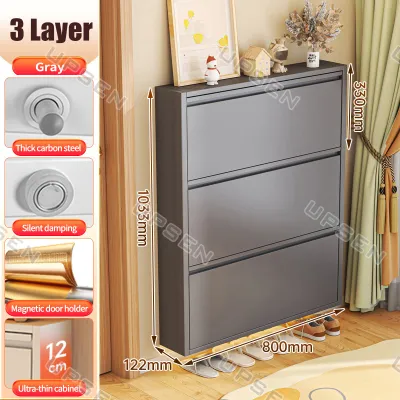
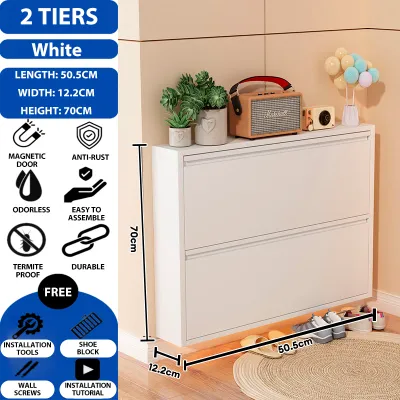
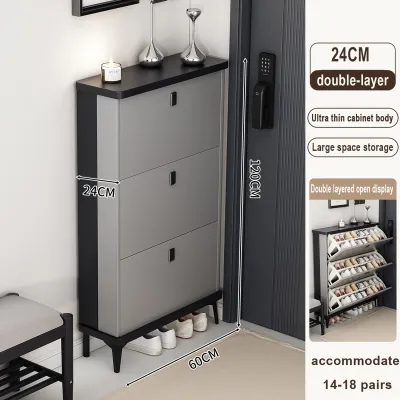
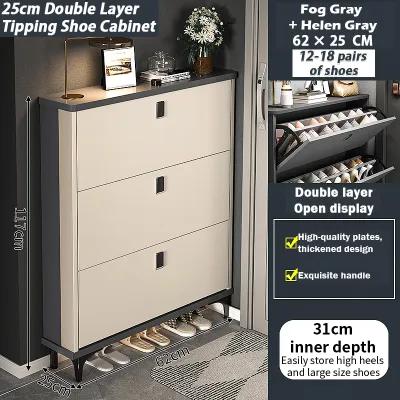
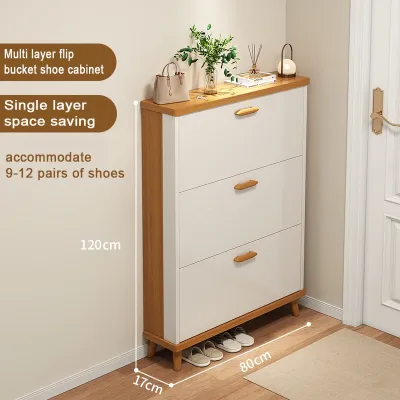
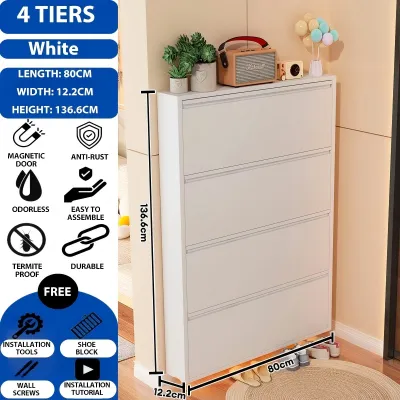
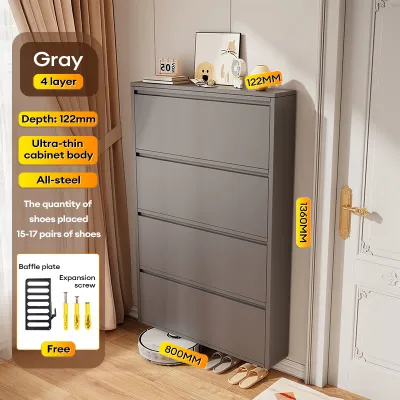
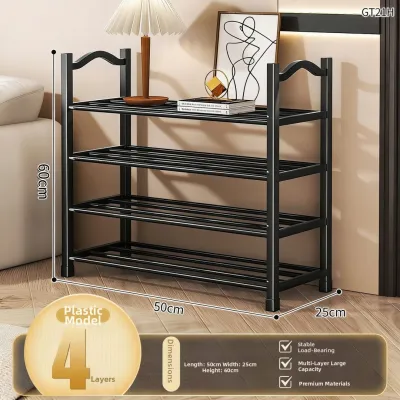
Prices are valid at publication and may change. Please refer to the product page for the latest price.
Choosing an ultra-slim cabinet involves a direct trade-off between depth and footwear compatibility. Units with an external depth of 15 to 18 centimeters almost exclusively use tipping bucket drawers, where shoes are stored vertically or at a steep angle. While highly efficient for flat sandals, canvas slip-ons, and low-profile dress shoes, these ultra-slim compartments may struggle to accommodate bulky running shoes, high heels, or ankle boots. If your collection consists primarily of structured or high-profile footwear, a slightly deeper cabinet of 24 to 30 centimeters with adjustable flat shelves will offer greater versatility.
Measuring Your Entryway for a Seamless Fit
Before purchasing any furniture, precise physical measurements of your condo entryway are essential to avoid door interference and tight walkways. Start by measuring the available wall width where the cabinet will stand, ensuring you account for any light switches, intercom systems, or electrical outlets that must remain accessible. Next, measure the floor depth from the wall to the edge of your natural walking path, keeping in mind that a comfortable hallway requires a clear, unobstructed passage.

Walkway clearance is a critical safety and comfort factor in high-traffic entryways. To maintain a comfortable flow of traffic, aim for a remaining walkway width of at least 70 to 90 centimeters after the cabinet is installed. This space allows residents to carry groceries, move utility carts, or walk side-by-side without bumping into the furniture. Additionally, map out the swing arcs of your main entry door, nearby closet doors, and adjacent bathroom doors to ensure they can open fully without striking the cabinet corners.
Do not forget to measure the path from the delivery point to your unit. In high-rise condominium buildings, large or pre-assembled furniture must fit through elevator doors, tight corridor corners, and standard door frames. If you are purchasing a tall, one-piece vertical cabinet, verify that its height and diagonal length can clear your building’s service elevator ceiling. Finally, check the height of your floor baseboards; some slim cabinets feature a recessed back design that allows them to sit flush against the wall over the baseboard, while others may require you to account for a small gap at the top.
Matching Your Footwear to Internal Cabinet Depths
To ensure your shoes actually fit inside a slim cabinet, you must align your footwear collection with the internal dimensions of the shelving. Standard flat shoes, slippers, and low-top sneakers typically require an internal depth of 30 centimeters to sit straight. If you select a cabinet shallower than this, the doors will not close properly unless the shelves are tilted or the cabinet utilizes a tipping drawer mechanism.
Tilted shelves and pull-down compartments are the primary design innovations that make slim shoe cabinets functional. In a tipping drawer system, shoes are inserted vertically into pockets attached to the door, which swings downward to open. This design allows a cabinet with an external depth of just 17 centimeters to hold shoes up to 30 centimeters in length. Many of these systems feature adjustable or removable internal dividers, allowing you to customize the pocket height to accommodate taller sneakers or flatter sandals.
Certain types of footwear naturally exceed the limits of ultra-slim cabinets and require alternative storage strategies. High-top sneakers, platform heels, and heavy work boots often cannot clear the rotating mechanism of tipping drawers without getting crushed. For these bulkier items, look for a cabinet design that includes an open bottom shelf or a raised gap beneath the unit. This open space is perfect for tucking away daily slippers, wet umbrellas, or heavy boots, keeping them off the main floor while avoiding internal cabinet constraints.
Maximizing Vertical Capacity Without Crowding the Floor
When horizontal floor space is limited, the most effective storage strategy is to utilize vertical wall space. A tall, narrow shoe cabinet that extends 100 to 130 centimeters upward can hold the same number of shoes as a wide, low console while occupying half the floor area. Tall units also provide a convenient top surface at chest height, which can serve as a drop zone for keys, mail, and small entryway decor.
Cabinet door mechanisms play a major role in how spacious your entryway feels during daily use. Traditional swing doors require clear floor space in front of the cabinet to open fully, which can temporarily block a narrow hallway. Sliding doors or tipping drawers are highly preferred for tight spaces because their opening mechanisms do not extend far into the walkway. Additionally, pay attention to the thickness of the cabinet frame and shelves; sturdy but thin engineered wood or metal panels maximize the usable internal volume without adding unnecessary bulk to the exterior dimensions.
If you anticipate your footwear collection growing over time, consider a modular or expandable storage system. Some slim cabinets are designed to be stacked vertically or lined up side-by-side. Starting with a single low-profile unit allows you to test the layout of your entryway, with the flexibility to add a matching upper module later if you require more capacity. This modular approach ensures your furniture can adapt to changing household needs without requiring a complete entryway redesign.
Ensuring Stability and Safety in Narrow Hallways
Because slim shoe cabinets have a very shallow footprint and a high center of gravity, securing them properly is a vital safety requirement. A tall, narrow cabinet filled with heavy shoes can easily tip forward when multiple drawers are opened simultaneously or if someone accidentally bumps into it. Wall-anchoring is highly recommended for any cabinet under 30 centimeters in depth, especially in high-traffic condo hallways.
Most slim cabinets come packaged with anti-tip hardware, which typically consists of brackets, straps, or screws designed to secure the unit directly to the wall. In concrete or masonry condo walls, which are common in modern high-rise developments, you will need a hammer drill and appropriate wall plugs (tox) to ensure a secure hold. If you are renting and cannot drill large holes into the walls, look for heavy-duty adhesive furniture anchors or choose a lower, wider cabinet model that offers greater natural stability.
Proper weight distribution and ventilation are also essential for maintaining the longevity of both your cabinet and your footwear. Always place your heaviest shoes, such as leather dress shoes or boots, in the bottom compartments to keep the unit’s center of gravity as low as possible. In tropical climates with high humidity, enclosed shoe storage can trap moisture, leading to mold growth and unpleasant odors. To prevent this, select a cabinet with slatted doors, open backs, or built-in ventilation grilles that promote continuous airflow, keeping your shoes dry and fresh.
Frequently Asked Questions (FAQ)
Can a slim shoe cabinet fit large men's shoes?
Yes, a slim shoe cabinet can accommodate larger men’s shoe sizes, but you must select the correct internal design. Traditional flat-shelf cabinets under 30 centimeters deep will not fit larger shoes straight on. Instead, look for cabinets featuring tipping bucket drawers or angled shelves, which allow shoes to sit diagonally or vertically. Always check the manufacturer’s specifications for the maximum supported shoe size, as some ultra-slim models are limited to size US 10 or 11, while others can accommodate up to size US 13 when the internal dividers are removed.
How do I prevent a tall, slim shoe cabinet from tipping over?
To prevent a tall, slim cabinet from tipping, you must secure it to the wall using anti-tip safety brackets or wall straps. For concrete condo walls, use a drill to insert plastic wall plugs before driving in the mounting screws. Additionally, practice smart weight distribution by placing your heaviest footwear on the lowest shelves and lighter items, like slippers and flats, in the upper compartments. Avoid pulling open multiple drawers at the same time, as this shifts the center of gravity forward.

Community discussion
Share your experience or ask a question. Comments are reviewed before publication.