
When accommodating a large family, a dining table must balance generous seating capacity with long-lasting durability. A heavy-duty stainless steel round table offers a practical solution for busy households, providing a resilient surface that withstands daily meals, heavy cookware, and frequent cleaning. Unlike rectangular tables that can isolate diners at the ends, a round configuration fosters shared conversations and easy access to communal dishes—a central aspect of Filipino dining culture. To find the right model, you must look beyond basic aesthetics and evaluate the specific grade of steel, the gauge of the metal sheets, the reinforcement of the under-table support, and the exact clearance of your dining area.
Selecting a table that can handle the daily rigors of a large household requires a clear understanding of material standards and structural engineering. By focusing on key build quality indicators, spatial mathematics, and base stability, you can invest in a piece of furniture that serves your family for decades. This guide outlines the essential criteria for choosing, sizing, and maintaining a robust round dining table that fits seamlessly into your home.
Essential Build Quality and Material Checks
The first step in assessing a heavy-duty stainless steel table is identifying the specific grade of the metal. In the Philippines, where high humidity and coastal air can accelerate corrosion, the grade of stainless steel is critical. Grade 304 is the industry standard for food-safe, highly durable furniture because it contains a high percentage of chromium and nickel, which form a self-healing protective barrier against rust. Grade 201 is a more budget-friendly alternative, but it contains less nickel and more manganese, making it more susceptible to surface tea-staining and pitting over time if not kept perfectly dry.
Products mentioned in this guide
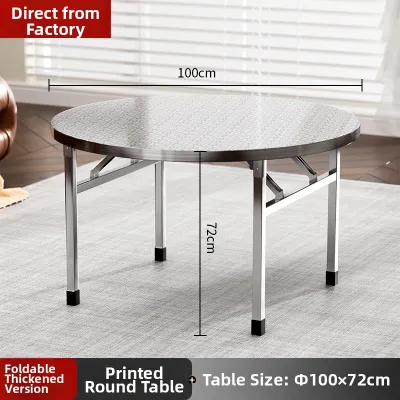
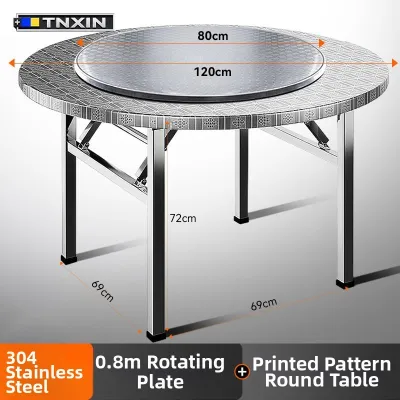
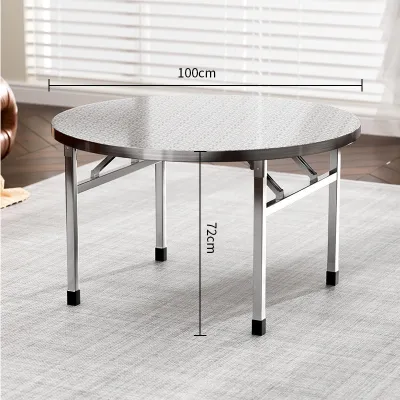
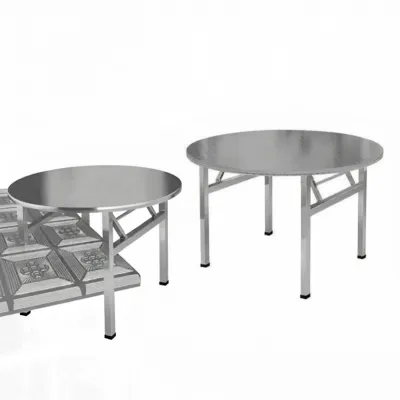
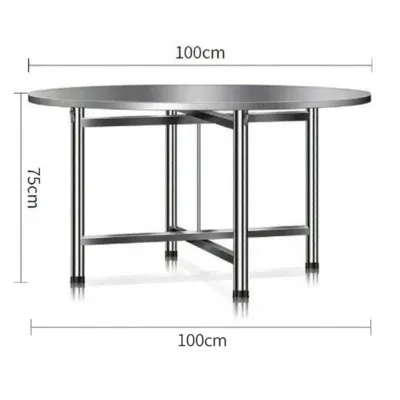
Prices are valid at publication and may change. Please refer to the product page for the latest price.
Beyond the chemical composition of the steel, you must evaluate the physical thickness of the metal sheets and frame tubes, commonly measured in gauges. A lower gauge number indicates thicker, stronger steel. For a heavy-duty dining table, look for a tabletop made from at least 16-gauge or 18-gauge stainless steel. Thinner metals, such as 22-gauge, are prone to flexing, denting, and producing a loud, hollow sound when items are placed on them. To prevent this “drumming” effect, high-quality tables feature a sound-dampening underlayment, such as a thick plywood backing or structural steel ribbing, bonded to the underside of the stainless steel sheet.
Examine the joints and welding quality to ensure the table can support heavy loads without structural failure. Fully welded joints, particularly those utilizing Tungsten Inert Gas (TIG) welding, offer superior strength and a cleaner finish compared to spot welding or bolt-together assembly. Look for smooth, continuous weld beads at all critical stress points, such as where the legs meet the tabletop frame. Any visible gaps, rough weld splatters, or loose bolts are warning signs of poor craftsmanship that could lead to structural instability under the weight of large family meals.
Finally, consider the surface finish of the tabletop, as this directly affects how the table ages in a busy home. A brushed or hairline finish is highly recommended for family dining because the directional grain naturally masks minor scratches, water spots, and fingerprints. In contrast, a mirror-polished finish reflects light intensely and highlights every smudge, requiring constant polishing to maintain its appearance. Matte or satin finishes also provide excellent glare reduction and a contemporary aesthetic while remaining easy to clean.
Sizing and Layout Planning for 6 to 10 Diners
Calculating the correct table diameter is essential to ensure all family members can dine comfortably without feeling cramped. For a family of six, a table diameter of 120 centimeters (approximately 4 feet) is the minimum required to provide adequate elbow room and space for individual place settings. If your household regularly seats eight people, you should scale up to a 150-centimeter (5-foot) table. For large gatherings of ten diners, a diameter of 180 centimeters (6 feet) is necessary to prevent crowding and accommodate the substantial volume of serving platters required for a large meal.

Spatial planning must also account for the physical footprint of the chairs and the clearance needed for movement around the dining room. Standard dining chairs require approximately 60 centimeters of depth when tucked in, and diners need at least 75 to 90 centimeters of clearance behind the table to pull their chairs out and stand up comfortably. To maintain a smooth traffic flow in your dining area, aim for a total clearance zone of 90 to 120 centimeters between the edge of the table and the nearest wall, sideboard, or doorway. This ensures that family members can walk behind seated diners without causing disruption.
If your dining room cannot permanently accommodate a massive 180-centimeter table, an extendable or foldable round table might seem like an attractive compromise. However, these mechanisms introduce structural trade-offs that must be carefully weighed. Extendable round tables rely on internal tracks, hinges, and alignment pins to support the extra leaves. While highly versatile, these moving parts can wear out over time, potentially creating a slight sag or misalignment in the center of the table. If you opt for an extendable model, ensure the extension slides are made of heavy-duty steel and feature robust locking latches to secure the table in both its compact and expanded states.
Evaluating Base Stability and Weight Capacity
The design of the table base plays a pivotal role in both stability and legroom. Central pedestal bases are highly popular for round tables because they eliminate corner legs, allowing you to maximize seating capacity and squeeze in extra chairs when guests arrive. However, a central pedestal must be engineered correctly to prevent the table from tipping when a diner leans heavily on the outer edge. Look for a pedestal design that features a wide, heavy base plate—often weighted with cast iron or thick steel—that extends outward to distribute the center of gravity.
Multi-leg configurations, such as four-legged frames or trestle bases, offer exceptional structural stability and weight distribution, making them ideal for very large round tables. The primary drawback of a multi-leg design is that the legs can interfere with chair placement, limiting where diners can sit comfortably. When evaluating a multi-leg table, check the distance between the legs to ensure your dining chairs can slide fully underneath the tabletop when not in use. This is especially important in smaller dining spaces where maximizing floor area is a priority.
To ensure the table remains stable on typical household floors, which may feature slightly uneven tiles or concrete, look for adjustable leveling glides on the bottom of the legs. These threaded feet allow you to adjust the height of each leg individually, eliminating wobbles and protecting your flooring from scratches. Before purchasing, perform a simple stability check by applying downward pressure on various points along the perimeter of the tabletop; a high-quality table should remain perfectly steady without any flexing or rocking.
Daily Maintenance and Surface Protection
Maintaining a hygienic and visually appealing stainless steel surface in a busy household requires a consistent, non-abrasive cleaning routine. For daily cleanups, a soft microfiber cloth dampened with warm water and a few drops of mild dishwashing liquid is usually sufficient to remove food residue and grease. Always wipe in the direction of the brushed metal grain to prevent micro-scratches and ensure a streak-free finish. To eliminate stubborn water spots caused by mineral-heavy tap water, you can use a diluted solution of white vinegar and water, followed by a thorough rinse and dry.
Protecting the protective passive layer of the stainless steel is vital for preventing long-term damage and rust. Avoid using abrasive cleaning tools, such as steel wool, wire brushes, or harsh scouring powders, which can scratch the surface and leave behind tiny iron particles that eventually rust. Similarly, steer clear of household bleach, chlorine-based sanitizers, or highly acidic cleaners, as these chemicals can chemically attack the chromium oxide layer and lead to localized pitting corrosion.
While stainless steel is highly heat-resistant, placing extremely hot cookware directly onto the tabletop can cause localized thermal expansion, leading to temporary warping or permanent discoloration of the metal. Always use trivets, silicone mats, or heat-resistant pads under hot pots, pans, and serving dishes. Additionally, although stainless steel is incredibly tough, it is not immune to denting from heavy impacts. Encourage family members to avoid dropping heavy metal utensils or sharp objects directly onto the surface to preserve its smooth, flat profile.
Purchasing Channels and Pre-Delivery Verification
When sourcing a heavy-duty stainless steel round table, you have several purchasing avenues to consider, each with its own advantages. Local metal fabricators in the Philippines are excellent options for custom-built tables, as they allow you to specify the exact steel grade, gauge, and dimensions to suit your family’s needs. Online marketplaces and specialized commercial kitchen suppliers also offer a wide range of pre-fabricated options, but you must carefully verify the product specifications, material certifications, and customer reviews before making a commitment.
Before finalizing your purchase, it is crucial to measure all delivery pathways to ensure the table can safely enter your home. Because large round tables—especially those with fully welded frames—cannot be easily tilted or disassembled, they require significant clearance. Measure the width and height of your front door, hallway corners, stairwells, and elevator cabins. A 150-centimeter or 180-centimeter tabletop may not clear tight turns or low ceilings, so plan the delivery route meticulously to avoid costly return fees.
Upon delivery, conduct a thorough inspection of the table before signing the receiving documents. Run your hands along the edges of the tabletop and frame to check for any sharp burrs, rough welds, or manufacturing defects. Place a level on the tabletop to verify that the surface is perfectly flat and that the frame is properly aligned. If you notice any structural damage, deep scratches, or unstable joints, document the issues with photographs and contact the seller or fabricator immediately to arrange for a replacement or repair.
Frequently Asked Questions (FAQ)
Does stainless steel rust in humid climates?
Yes, stainless steel can rust in highly humid environments if its protective chromium oxide layer is compromised. In the tropical climate of the Philippines, airborne moisture and salt particles—especially in coastal regions—can accumulate on the metal surface. If the table is not cleaned regularly, these deposits can break down the protective barrier, leading to surface rust or tea-staining. To prevent this, perform routine cleanings with mild soap and water, dry the surface thoroughly, and avoid using harsh chemical cleaners that strip the metal’s natural defenses.
Are extendable round tables as sturdy as fixed ones?
Generally, fixed round tables are structurally sturdier than extendable models because they feature a solid, continuous tabletop and fewer moving parts. Extendable tables rely on internal slides, hinges, and locking mechanisms to support the additional leaves, which can introduce slight flex and wear over years of heavy daily use. If you require the flexibility of an extendable table, look for models constructed with heavy-duty steel slides, robust alignment pins, and secure locking latches to ensure the table remains stable and level when fully extended.

Community discussion
Share your experience or ask a question. Comments are reviewed before publication.