
Choosing between a fixed 4-seater dining table set with chairs and an extendable 6-10 person table is a common dilemma for households balancing everyday convenience with occasional entertaining. The right choice ultimately depends on accurately measuring your available floor space, evaluating your actual hosting frequency, and aligning the purchase with your budget. In many homes in the Philippines, the dining area serves as a multi-functional hub for shared meals, remote work, and family gatherings, making this decision central to daily comfort.
By analyzing your spatial limits and lifestyle habits, you can avoid the frustration of a cramped dining room or an underutilized piece of furniture. This guide breaks down the practical trade-offs of both options to help you make a confident decision for your home.
Measuring Your Dining Space and Layout Constraints
Before purchasing any furniture, measuring the physical boundaries of your dining area is critical. You must account not only for the static footprint of the table but also for the dynamic space required when people are actively using it. A cramped dining room can make daily meals feel restrictive and uncomfortable.
Products mentioned in this guide
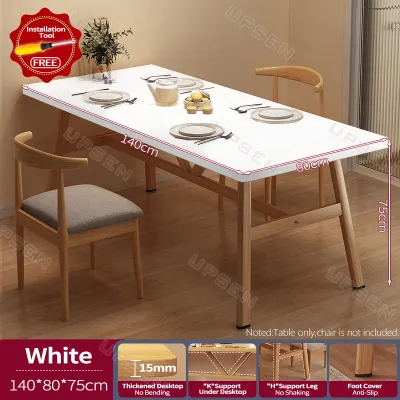
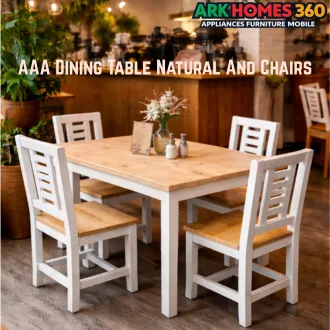
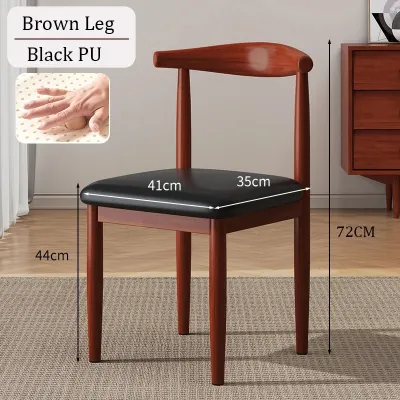
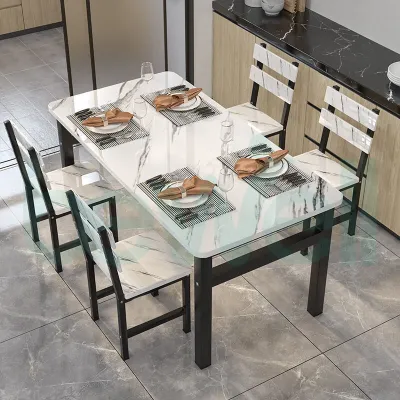
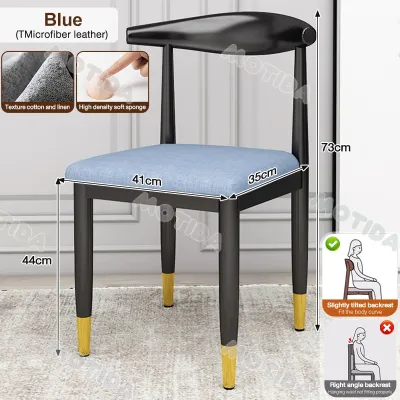
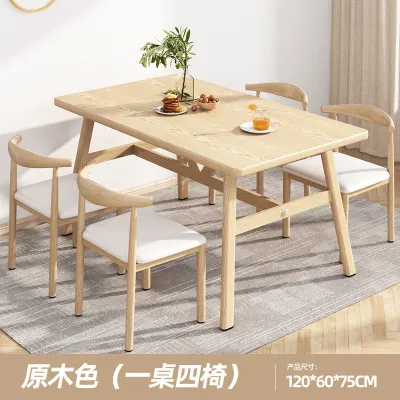
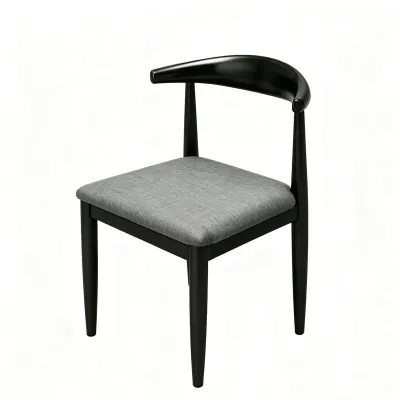
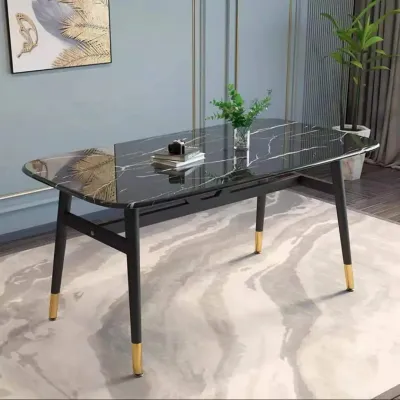
Prices are valid at publication and may change. Please refer to the product page for the latest price.
To ensure comfortable movement, measure the distance between the table edge and the nearest walls or adjacent furniture. This clearance allows diners to pull out their chairs and sit down easily, while leaving enough room for someone to walk behind them. If your dining area is part of an open-plan living space, these boundaries help define the room without blocking natural traffic flow.
For an extendable table, you must measure the room in two distinct states: its compact daily configuration and its fully expanded form. Mark these dimensions on your floor using painter’s tape to visualize how much walking space remains when the table is at its maximum length. If the expanded table blocks doorways or cuts off access to the kitchen, it may not be practical for your layout.
Delivery and assembly present another set of constraints. Extendable tables often feature heavy metal tracks, internal leaf storage, or robust central pedestals that make them significantly heavier and bulkier than a simple fixed 4-seater dining table set with chairs. Check the dimensions of your doorways, narrow hallways, elevator doors, and stairwells to ensure the delivery team can safely transport the components into your home.
Consider the visual weight of the furniture in your room. In smaller or open-plan layouts, a bulky extendable table with a thick base can dominate the space visually, making the entire area feel smaller even when the table is unextended. A streamlined, fixed 4-seater set maintains an airy, spacious feel that complements modern interior designs.
Matching the Table to Your Hosting Habits
Your dining table should primarily serve your daily household needs rather than occasional events. For a typical family of three or four, a fixed 4-seater dining table set with chairs provides a cozy, proportional setting for daily meals. It encourages intimate conversation and keeps the dining area uncluttered.

If your household rarely hosts guests, or if gatherings are limited to one or two visitors, a fixed set is highly efficient. It avoids wasting valuable floor space on unused seating capacity. You can enjoy a spacious dining area every day without the burden of managing a larger table.
However, if your home is the designated hub for Sunday family lunches, holiday feasts, or frequent dinner parties, a fixed 4-seater can feel restrictive. An extendable table that expands to accommodate 6 to 10 people allows you to host comfortably without permanently sacrificing your daily living space. This flexibility is particularly useful for growing families or those who love to entertain.
Evaluate how often you actually host these larger groups. If major gatherings only occur once or twice a year, the daily inconvenience of a larger, heavier table might not be justified. In these cases, keeping a fixed 4-seater and utilizing creative hosting alternatives is often more practical.
For occasional large gatherings, you can set up temporary folding tables, serve meals buffet-style, or transition guests to the living room area with casual seating options. If you host monthly or weekly, the convenience of a built-in extension mechanism becomes invaluable, eliminating the hassle of setting up temporary furniture.
Comparing Budget and Maintenance Requirements
Budget considerations extend beyond the initial purchase price of the table itself. A fixed 4-seater dining table set with chairs is generally more budget-friendly because it features a simpler structural design with fewer moving parts and includes a set number of chairs. This makes it an excellent option for first-time homeowners or those on a strict budget.
Extendable tables carry a higher price tag due to the complexity of their engineering. The cost increases further when you factor in the purchase of additional matching chairs to accommodate the table’s maximum capacity of 6 to 10 people. You must decide if the frequency of your gatherings justifies this additional investment.
Maintenance is another key differentiator between the two styles. Fixed tables require basic cleaning and occasional joint tightening, but they lack mechanical components that can wear out over time. This simplicity often translates to long-term durability with minimal effort.
Extendable tables rely on slides, hinges, locks, or gear systems to function. In humid tropical climates, wooden components can swell, and metal tracks may rust if not properly maintained, leading to jamming or misalignment. Regular inspection and cleaning of the internal tracks are necessary to keep the mechanism operating smoothly.
When shopping, inspect the stability of the table in both its closed and fully extended states. Check that the extension leaves align perfectly with the main tabletop without gaps or uneven edges. Verify that the joints remain rigid under downward pressure to ensure the table can safely support heavy serving dishes.
Final Decision: Which Dining Set Fits Your Home?
To make your final decision, weigh your spatial limits against your hosting frequency and budget. Opt for a fixed 4-seater dining table set with chairs if your dining area is compact, your daily household is small, and you prefer a straightforward, cost-effective solution. This choice ensures your home remains spacious and easy to navigate on a daily basis.
Select an extendable 6-10 person table if you have the physical floor space to accommodate its expanded footprint and you regularly host large gatherings. This option provides the ultimate versatility, adapting seamlessly to both quiet family dinners and lively celebrations. It allows you to maximize your space without compromising on hospitality.
Before finalizing your purchase, always verify the quality of the extendable mechanism. Ensure the extension leaves match the main table’s finish, the mechanism operates smoothly without sticking, and the entire structure remains stable and secure when fully extended. Taking these steps ensures your new dining set will serve your home beautifully for years to come.
Frequently Asked Questions (FAQ)
How much clearance is needed around a dining table for chairs?
To ensure comfortable seating and movement, aim for a minimum clearance of 90 centimeters between the edge of the dining table and the nearest wall or piece of furniture. This distance allows guests to pull out their chairs and sit down without difficulty. If you want to maintain a clear walking pathway behind seated guests, increase this clearance to 120 centimeters. Always check the specific dimensions of your chosen chairs and the height of the table apron to ensure there is adequate legroom.
Can I buy extra chairs later for an extendable table?
Yes, you can purchase extra chairs later, but doing so requires careful planning to maintain visual and functional cohesion. Furniture manufacturers frequently update their product lines, meaning matching chairs may be discontinued or undergo subtle design changes over time. To avoid mismatched seating, check with the retailer about the long-term availability of the specific chair model before buying the table. If exact matches are unavailable, look for compatible alternative chairs that share similar seat heights, materials, and design elements.

Community discussion
Share your experience or ask a question. Comments are reviewed before publication.