
Choosing between a standard fixed four-seater dining table and an extendable model is a balancing act between daily spatial comfort and occasional hosting capacity. The ideal choice depends on your household’s daily occupancy, the physical limits of your dining area, and how often you actually need to accommodate extra guests. For many homes, especially compact urban apartments or condominiums, a fixed four-seater offers a reliable, sturdy footprint that preserves precious floor space. Conversely, an extendable table provides the flexibility to transform a modest family dining area into a larger gathering space when hosting relatives or friends. Making the right decision requires looking beyond aesthetics to evaluate structural mechanisms, clearance zones, and the realistic frequency of your social gatherings.
Space and Layout Implications of Fixed vs. Extendable Designs
The permanent footprint of a fixed four-seater dining table provides a predictable layout that simplifies interior planning. Because its dimensions never change, you can arrange surrounding furniture, lighting fixtures, and rugs with absolute certainty. This predictability is highly beneficial in open-plan living and dining areas where traffic paths must remain clear. A fixed table also tends to have a lighter visual weight, especially if it features slender legs or a minimalist frame, which helps a small room feel more open and airy.
An extendable dining table, by contrast, introduces a dual-state footprint that demands careful spatial planning for both its collapsed and fully expanded configurations. When collapsed, it functions much like a standard four-seater, keeping daily traffic paths open. However, when fully extended to accommodate six to ten people, its physical and visual bulk increases significantly. This expansion can quickly overwhelm a small room, blocking walkways and making the space feel cramped.
Products mentioned in this guide
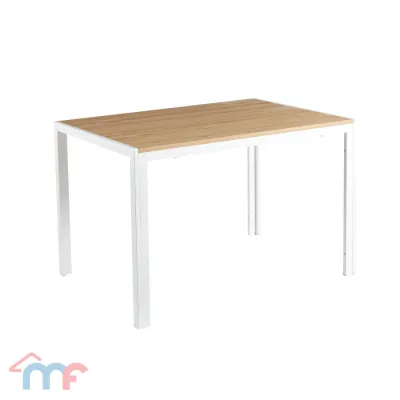
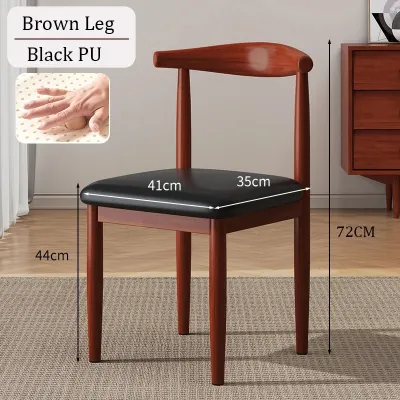
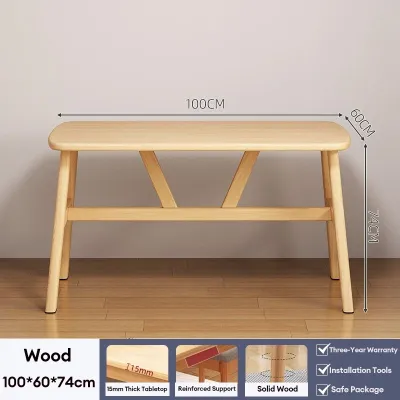
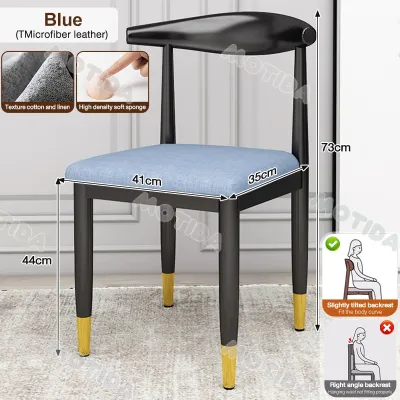
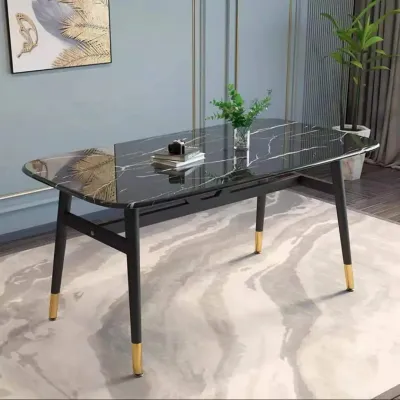
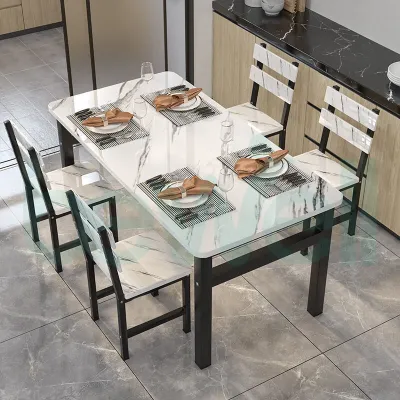
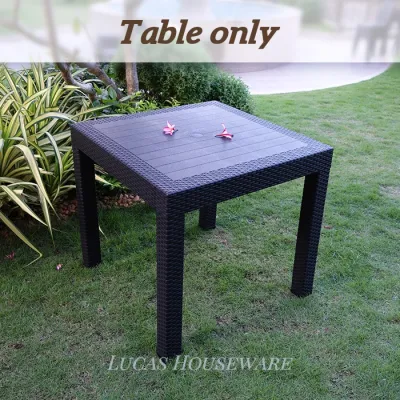
Prices are valid at publication and may change. Please refer to the product page for the latest price.
The design of the table’s base plays a critical role in both visual weight and actual legroom. Tables with a central pedestal base generally offer more flexibility for chair placement because there are no corner legs to obstruct knees or limit where guests can sit. However, pedestal bases must be exceptionally heavy to prevent tipping when the table is fully extended. Traditional four-legged tables provide excellent stability but restrict chair placement to the specific zones between the legs, which can limit how tightly you can pack extra seating during large gatherings.
In tropical environments like the Philippines, where indoor humidity levels fluctuate significantly between the wet and dry seasons, material behavior is a crucial layout consideration. Solid wood components can swell or contract with changes in moisture, which may cause tightly fitted extension leaves to stick or misalign. When planning your layout, you must account for these environmental factors by ensuring the table is positioned away from direct air conditioning drafts or damp walls that could exacerbate material movement.
Aligning Table Choice with Household Size and Hosting Frequency
To make a practical choice, you must honestly assess your daily household size against your actual hosting habits. If your household consists of two to four people who eat together daily, a fixed four-seater is highly efficient. It provides ample surface area for daily meals without consuming unnecessary floor space. Many homeowners buy a large table anticipating frequent dinner parties, only to find that they host major gatherings only once or twice a year. In such cases, a permanently large table or a complex extendable mechanism may not justify the loss of daily living space.

If you do host large family gatherings, Sunday lunches, or holiday dinners on a monthly basis, an extendable table becomes a highly practical investment. The key is to evaluate the physical effort and time required to operate the extension mechanism. Some tables feature smooth, synchronized gear systems that allow a single person to extend the top in seconds, while others require two people to pull the frame apart and manually insert heavy leaf inserts stored in a closet. If the mechanism is too cumbersome, you may find yourself leaving the table permanently extended or avoiding hosting altogether.
Beyond dining, consider how your household uses the table during the day. If your dining table doubles as a home office, a crafting station, or a homework zone for children, a larger surface area is highly beneficial. An extendable table allows you to keep the surface compact during casual meals, then expand it during the day to spread out documents, laptops, or school projects. This multi-purpose utility can make an extendable table a valuable asset even if you rarely host formal dinner guests.
Structural Checks and Maintenance for Extendable Mechanisms
Because extendable tables rely on moving parts, they require a higher level of structural scrutiny than fixed tables. When inspecting a table in a showroom or upon delivery, pay close attention to the sliding tracks and hinges. High-quality metal runners should glide smoothly without grinding or catching. If the table uses wooden slides, check that they are well-sanded and treated to resist swelling in humid climates. Butterfly leaves, which fold and store inside the table frame, should operate seamlessly without requiring excessive force to align.
Always verify the manufacturer’s specified weight limits and structural alignment when the table is fully expanded. Press down gently on the extended ends to check for sagging or flexing; a quality table should remain level and rigid even at its maximum length. Look for robust locking mechanisms, such as under-table latches or tension pins, that secure the leaves firmly in place to prevent accidental separation during a meal.
It is important to remember that material names alone do not guarantee durability or smooth operation. A table advertised as “solid hardwood” can still perform poorly if the joinery is weak or the extension hardware is cheap. Inspect the underside of the table to ensure that brackets, screws, and tracks are securely anchored into solid structural members rather than thin veneer or low-density fiberboard. Ask the retailer for specific care instructions regarding the mechanism, including whether the tracks require periodic lubrication or tightening.
Pre-Purchase Measurement and Clearance Checklist
To avoid the frustration of a table that does not fit your space, you must measure your dining area with precision before making a purchase. Begin by measuring the length and width of the room, noting the locations of walls, doorways, columns, and other furniture. For an extendable table, you must perform these measurements twice: once for the collapsed state and once for the fully expanded state to ensure the table fits comfortably in both configurations.
A critical step is calculating the required clearance zones around the table. To allow guests to pull out chairs and sit down comfortably, you need a minimum clearance of 90 centimeters between the edge of the table and the nearest wall or piece of furniture. If the area behind the chairs serves as a primary walkway or traffic path, increase this clearance to at least 120 centimeters. This ensures that family members can walk past seated guests without forcing them to squeeze forward.
Do not forget to measure the delivery route, especially if you live in a high-rise condominium or a multi-story home. Check the dimensions of your building’s service elevator, stairwells, corridors, and entry doorways to ensure the table frame and top can be safely transported to your unit, avoiding unexpected delivery fees in ₱ if the item must be returned. Many extendable tables are shipped partially assembled, but the main tabletop frame can still be exceptionally long and heavy, requiring adequate clearance for delivery personnel to maneuver.
Decision Framework: When to Choose Fixed or Extendable
To finalize your decision, compare your household’s specific needs against this practical decision framework.
Choose a fixed 4-seater if:
- Your dining area has strict spatial limits, such as a narrow condo layout or a combined living-dining room where every centimeter counts.
- Your household consists of one to three people, and you rarely host gatherings that require more than four seats.
- You prioritize maximum structural stability, minimal maintenance, and a clean, uninterrupted tabletop surface.
- You prefer a lightweight aesthetic and want to easily reposition the table for cleaning or layout changes.
Choose an extendable table if:
- Your daily household is small, but you host larger groups of six to ten people on a regular, recurring basis.
- You have a multi-purpose dining space that requires a compact footprint for daily traffic but a large surface for work or hobbies.
- You are willing to invest in high-quality hardware and perform occasional maintenance to keep the mechanism operating smoothly.
- Your dining room has enough clearance to accommodate the fully expanded table without blocking major walkways.
Verify first if:
- Your floors are uneven, as this can cause extendable mechanisms to misalign or wobble when fully opened.
- The delivery route to your dining room involves tight corners, narrow stairwells, or small elevator cabins.
- The local indoor climate is highly humid, which requires selecting materials and finishes that resist moisture-related warping and rust.
Frequently Asked Questions (FAQ)
Can a fixed 4-seater dining table be modified to seat more people later?
A standard fixed dining table cannot be structurally modified or extended because its frame and top are permanently joined. Attempting to alter the frame can compromise its structural integrity and void the manufacturer’s warranty. If you occasionally need to accommodate extra guests at a fixed table, consider using wide benches instead of individual chairs, as benches can comfortably seat more people in a pinch. Alternatively, you can keep a matching, fold-away utility table or a set of stackable stool chairs nearby to set up an adjacent dining zone for overflow seating during larger gatherings.
Do extendable dining tables wobble or feel less stable than fixed ones? (FAQ)
Extendable dining tables do not inherently wobble, but their stability depends heavily on the quality of their construction, base design, and assembly. Tables with heavy, solid wood or metal legs positioned at the outer corners generally offer excellent stability in both states. When evaluating an extendable table, test the locking mechanisms that secure the leaves; high-quality tables use heavy-duty latches or alignment pins to keep the surface rigid. Properly assembled tables with robust hardware will feel just as stable as a fixed table during normal daily use.

Community discussion
Share your experience or ask a question. Comments are reviewed before publication.