
Choosing the right dining table 6 seater set is one of the most significant furniture decisions you will make for your home. In the Philippines, where the dining room serves as a central hub for family meals, remote work, school projects, and festive gatherings, finding the perfect balance between daily comfort and hosting capacity is essential. The decision ultimately comes down to a choice between a fixed 6-seater dining table and an extendable 6-to-10-seater option. While a fixed table offers unmatched structural simplicity and a reliable, permanent footprint, an extendable table provides the flexibility to accommodate larger groups on demand without permanently sacrificing valuable floor space. By evaluating your physical room dimensions, daily household habits, and hosting frequency, you can select a dining set that enhances your home’s functionality and aesthetic appeal.
Assessing Your Dining Space and Household Needs
To make an informed decision, you must first conduct a thorough assessment of your dining area and household requirements. Begin by measuring the physical dimensions of the room where the dining table 6 seater set will be placed. It is not enough to simply measure the empty space; you must account for the clearance required to pull out chairs and walk around the table comfortably. A standard guideline is to allow at least 90 centimeters of clearance between the edge of the table and the nearest wall, cabinet, or doorway. This ensures that diners can sit down and rise from the table without feeling cramped or blocking traffic.
Next, differentiate between your daily household needs and your occasional hosting patterns. Count the number of people who sit down for meals on a typical weekday. If your household consists of four to six members, a standard 6-seater table will serve your daily needs perfectly. However, if you frequently host extended family for Sunday lunches, holiday dinners, or casual get-togethers, you must consider how often you require additional seating. If hosting occurs only once or twice a year, a fixed table paired with alternative seating arrangements might suffice. If you host guests on a monthly or weekly basis, the convenience of an extendable table becomes highly valuable.
Products mentioned in this guide
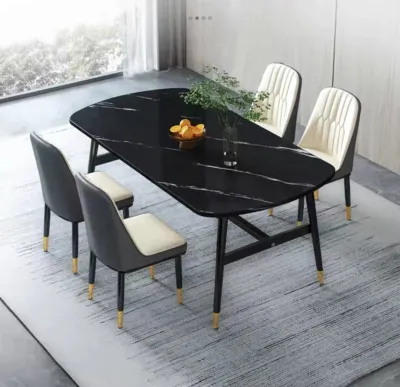
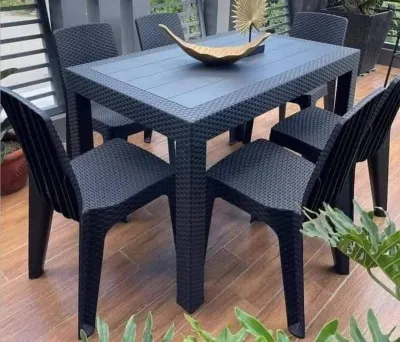
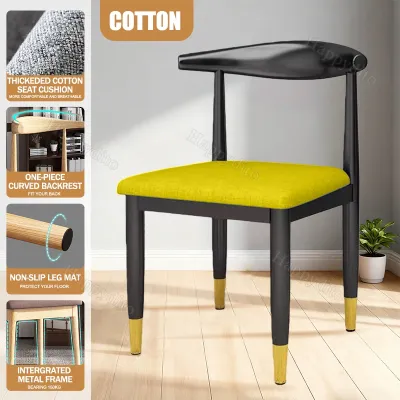
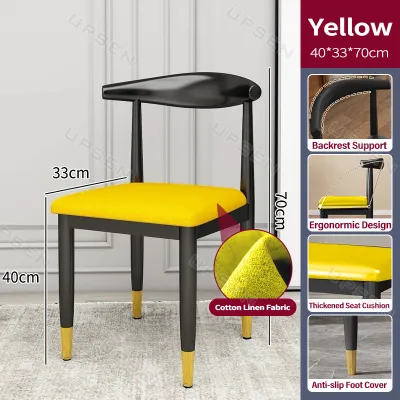
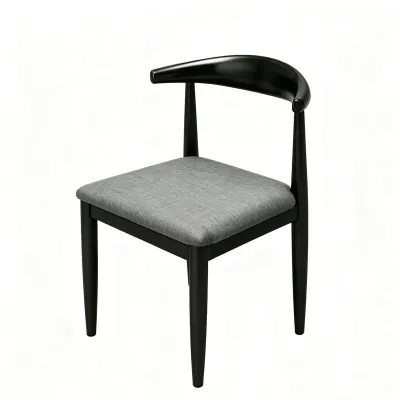
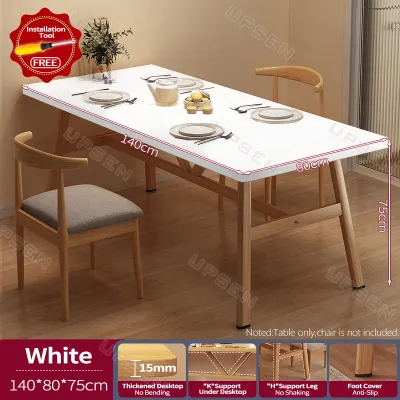
Prices are valid at publication and may change. Please refer to the product page for the latest price.
Finally, do not overlook the logistics of delivery and assembly. Before finalizing your purchase, measure the width and height of all doorways, hallways, stairwells, and elevator doors that the delivery team must navigate. Extendable dining tables are often heavier and come in larger, more complex packaging than fixed tables due to their internal mechanisms. Ensuring that the boxed furniture can safely clear every turn and entry point in your home prevents delivery-day headaches and potential damage to your walls or the product itself.
Fixed 6-Seater Tables: Stability and Permanent Footprint
Fixed 6-seater dining tables are celebrated for their structural stability and straightforward design. Because these tables are constructed without moving parts, hinges, or sliding tracks, they offer a highly robust and uniform surface. The joints are typically secured with heavy-duty bolts or traditional woodworking joinery, which minimizes the risk of wobbling or loosening over time. This structural simplicity makes fixed tables an excellent long-term investment, as there are no mechanical components that can wear out, misalign, or require specialized maintenance.

Another significant advantage of a fixed dining table 6 seater set is the uniform placement of its legs. In most designs, the legs are positioned at the outermost corners of the tabletop. This configuration maximizes the under-table clearance, allowing you to slide all six chairs completely underneath the table when they are not in use. This keeps your dining area looking neat and organized while preserving precious floor space in smaller homes. Furthermore, because the footprint of a fixed table is permanent, you can plan your room’s layout with absolute certainty, knowing that the table will never encroach on walkways or adjacent living zones.
Fixed tables are ideal for households with a consistent family size and a dedicated dining room where space does not need to be shared with other activities. If your home layout features a clearly defined dining area and you rarely host large groups, a fixed 6-seater table provides a reliable, elegant, and low-maintenance centerpiece. It allows you to focus on selecting high-quality materials and finishes that complement your interior decor without worrying about the mechanical complexities of expandable furniture.
Extendable 6-to-10 Seater Tables: Flexibility and Mechanisms
Extendable 6-to-10-seater dining tables offer a dynamic solution for homes that require spatial flexibility. These tables utilize various mechanical systems to expand their surface area when extra seating is needed. Common designs include butterfly leaf mechanisms, where the extension panels are folded and stored within a compartment beneath the tabletop, and removable insert leaves that must be stored separately in a closet or storage room. Understanding how these mechanisms operate is crucial, as some require two people to pull the table ends apart, while others feature smooth, single-handed gear systems.
When evaluating an extendable table, you must carefully assess both its compact daily footprint and its maximum expanded footprint. While the table may comfortably function as a 6-seater on a daily basis, extending it to accommodate 8 or 10 people will significantly alter the flow of your room. You must ensure that your dining space can accommodate the fully extended length while still maintaining the necessary clearance for additional chairs and guest movement. This temporary expansion is highly beneficial for multi-purpose rooms, such as open-plan living and dining areas, where you want to keep the space open and airy for daily life but need the capacity to host larger gatherings.
The primary appeal of an extendable dining table 6 seater set is its ability to adapt to your changing lifestyle. It is particularly well-suited for growing families, social households, and those who love to entertain. Instead of committing to a permanently massive table that crowds your room every day, an extendable model allows you to enjoy a compact dining area for daily family meals and quickly transform it into a grand banquet table for special occasions. However, this flexibility comes with the responsibility of operating and maintaining the extension hardware to ensure long-term functionality.
Side-by-Side Comparison of Key Dimensions
To help you make the best decision for your home, it is helpful to compare these two table types across several critical dimensions. The most obvious point of comparison is the footprint. A standard fixed 6-seater table typically measures between 150 and 180 centimeters in length. An extendable table, on the other hand, might start at a modest 150 centimeters but expand up to 220 or 240 centimeters when fully opened. This extra length requires careful spatial planning to ensure it does not block doorways or press against walls.
Long-term maintenance is another key differentiator. Fixed tables require very little upkeep beyond regular surface cleaning and the occasional tightening of leg bolts. Extendable tables demand more attention. The moving tracks, hinges, and alignment pins must be kept clean and free of dust and debris to prevent jamming. In the tropical climate of the Philippines, where high humidity levels can cause wood to expand and contract, it is important to check that the extension mechanisms operate smoothly throughout the year. Choosing tables with moisture-resistant finishes and high-quality metal hardware can help mitigate these environmental effects.
Weight, stability, and surface continuity also vary between the two styles. Extendable tables are inherently heavier than fixed tables because of the additional internal framing and mechanical hardware required to support the sliding leaves. When fully expanded, some extendable tables may experience a slight reduction in stability at the outer edges, especially if they lack center support legs. Additionally, extendable tables feature visible seams where the leaves meet. These seams can collect food crumbs and dust, requiring diligent cleaning to maintain a hygienic dining surface, whereas a fixed table offers a seamless, continuous tabletop.
| Feature | Fixed 6-Seater Table | Extendable 6-to-10 Seater Table |
|---|---|---|
| Daily Footprint | Permanent (typically 150–180 cm length) | Compact daily footprint, expands when needed |
| Maximum Footprint | Unchanged | Increases by 40–100 cm depending on leaves |
| Structural Joints | Solid, permanent joints with no moving parts | Moving tracks, hinges, and alignment pins |
| Maintenance Needs | Standard surface cleaning and joint tightening | Track lubrication, leaf storage, seam cleaning |
| Stability Profile | Highly stable, uniform weight distribution | Variable; depends on locking mechanisms and support legs |
| Best Suited For | Dedicated dining rooms, consistent daily use | Multi-functional spaces, frequent hosting |
How to Choose the Right Dining Table Set
Choosing the right dining table 6 seater set requires a realistic look at your daily habits and physical space constraints. If your dining room has a fixed layout, you prioritize structural simplicity, and you prefer a low-maintenance piece of furniture, a fixed 6-seater table is the most practical and reliable choice. It provides a stable, permanent anchor for your dining room and ensures that your daily room flow remains completely unobstructed.
Conversely, if you frequently host large family gatherings, holiday dinners, or weekend celebrations, and you are willing to manage the mechanical complexity of an expandable table, an extendable 6-to-10-seater is the superior option. It allows you to maximize your floor space on a daily basis while ensuring you are always prepared to welcome guests. Before making your final decision, perform a physical test: use masking tape on your dining room floor to outline both the compact and fully extended dimensions of the table you are considering. This visual aid will help you confirm whether the room can handle the maximum size with chairs pulled out.
If your measurements reveal that even the compact version of the table leaves you with less than 90 centimeters of clearance around the perimeter, neither option may be suitable. In such cases, you should consider alternative table shapes, such as round or oval designs with pedestal bases, which offer greater seating flexibility and a smaller physical footprint, or explore a smaller 4-to-6-seater set that better matches your home’s dimensions.
Frequently Asked Questions (FAQ)
How much clearance is needed around a 6-seater dining table?
To ensure a comfortable dining experience, you should maintain a minimum of 90 centimeters of clearance between the edge of the table and any surrounding walls, cabinets, or furniture. This distance allows diners to pull out their chairs and sit down without bumping into obstacles. If the dining area is located near a major household walkway or kitchen entrance, it is highly recommended to increase this clearance to 120 centimeters. This additional space ensures that family members can walk behind seated diners without causing disruption or creating a bottleneck in your home’s traffic flow.
Do extendable dining tables wobble or feel less stable?
High-quality extendable dining tables are designed to be highly stable, but their overall sturdiness depends heavily on proper assembly, the quality of the locking mechanisms, and the design of the legs. Many extendable tables feature heavy-duty locking latches underneath the tabletop that secure the leaves firmly in place, preventing any shifting or wobbling during use. To ensure long-term stability, it is essential to follow the manufacturer’s assembly instructions carefully, regularly check and tighten all structural bolts, and verify the load capacity of the table when fully extended. Testing the mechanism in a showroom or thoroughly reviewing product specifications before purchase is always recommended.

Community discussion
Share your experience or ask a question. Comments are reviewed before publication.