
Choosing a dining table for four persons in the Philippines often comes down to balancing compact urban living with a naturally hospitable culture. If you reside in a typical high-rise condo in Metro Manila or a cozy suburban townhouse, every square meter of floor space must be carefully negotiated. The central dilemma is whether to invest in a traditional fixed dining table for four or to opt for a versatile extendable model that can stretch to accommodate guests during weekend gatherings or holiday feasts.
A fixed dining table for four offers unmatched structural stability, a lighter visual presence, and a more accessible price point. This option is ideal if your dining area has strictly defined physical boundaries, your budget is modest, and your household rarely hosts more than four people. By choosing a fixed model, you avoid paying for complex moving parts and can allocate your budget toward higher-quality materials or more refined craftsmanship.
Conversely, an extendable dining table provides invaluable spatial flexibility, allowing you to transition from a compact daily footprint to a larger hosting setup. It is the superior choice if you frequently host extended family, have an open-plan living and dining layout that can absorb the extra length, and want a single piece of furniture that adapts to future household growth. However, this flexibility requires a higher upfront financial investment and a willingness to maintain the mechanical components over time.
Products mentioned in this guide
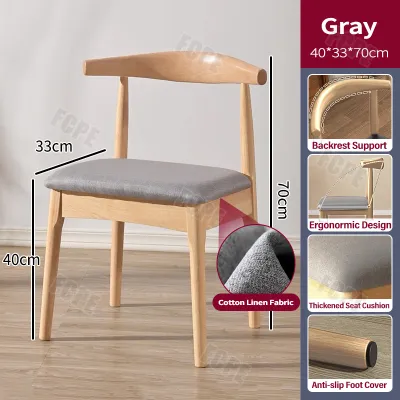
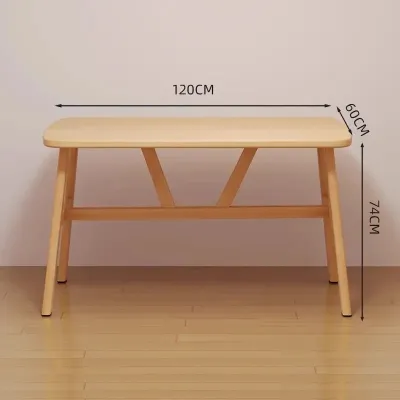
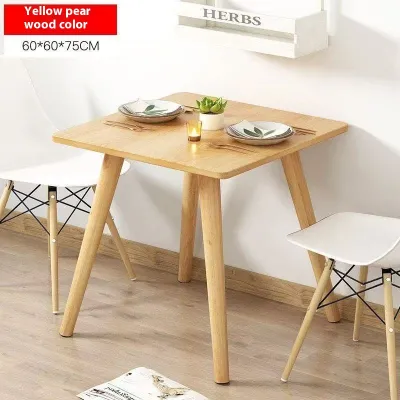
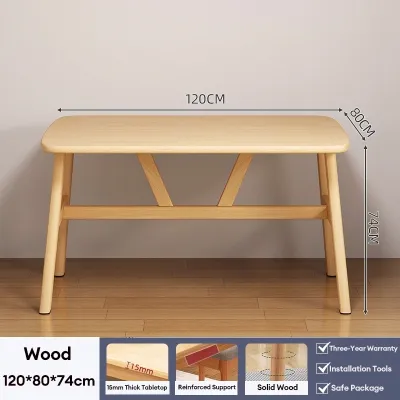
Prices are valid at publication and may change. Please refer to the product page for the latest price.
Before finalizing your choice, you must verify that your home’s delivery pathways can handle the table’s dimensions. A large fixed table or a heavy extendable model with integrated leaf storage can be incredibly difficult to maneuver through tight condo corridors, narrow stairwells, or standard passenger elevators.
Space and Layout: Measuring Your Dining Area
When planning your dining room layout, the physical footprint of the table is only the starting point. A fixed dining table for four occupies a permanent, predictable amount of floor space, which makes planning the surrounding furniture and decor relatively straightforward. You can place area rugs, pendant lighting, and sideboards with the confidence that the spatial dynamics of the room will never change.
An extendable table introduces a dual-state spatial puzzle that requires measuring your room under two entirely different scenarios. You must first evaluate the table in its collapsed state, which will be its configuration for daily family meals. Next, you must project how the room will function when the table is fully expanded to its six- or eight-seater capacity. If the expanded table blocks the main pathway to the kitchen or crowds the living area, the temporary convenience of extra seating may create a highly frustrating bottleneck in your home.
To maintain comfortable traffic flow and prevent a cramped dining experience, you should apply standard clearance guidelines to both configurations. Ideally, you need a minimum of 90 centimeters of clear space between the edge of the table and the nearest wall or piece of furniture. This clearance allows diners to pull their chairs out and sit down comfortably without hitting obstacles. If a major walkway runs behind the dining area, increase this clearance to 120 centimeters so family members can walk past seated guests without forcing them to tuck in their chairs.
For an extendable table, you must run these clearance calculations twice. While you might tolerate a tighter 70-centimeter clearance during occasional hosting events, a permanently blocked pathway will quickly become a daily nuisance. If your dining area cannot accommodate the necessary clearance when the table is fully extended, a fixed four-person table supplemented by a separate, temporary folding table in another room may be a more practical solution.
Another critical design factor is the visual weight of the furniture, which directly impacts how spacious your dining room feels. Fixed tables often feature minimalist designs, slender legs, and thin tabletops because they do not need to conceal heavy extension hardware. This airy aesthetic is highly beneficial in smaller homes as it allows light to pass through, creating the illusion of a larger room.
Extendable tables, on the other hand, tend to have a much heavier visual presence. To support the sliding mechanisms and store internal extension leaves, these tables often require thicker aprons, wider legs, or substantial central pedestal bases. In a compact dining nook, a bulky extendable table can easily overwhelm the space visually, even when it is collapsed to its four-seater size.
Budget and Long-Term Value
From a financial perspective, the price difference between a fixed and an extendable dining table is primarily driven by engineering complexity and material volume. A fixed table is a straightforward structural piece consisting of a top, a supporting frame, and legs. Because it lacks moving parts, manufacturers can focus their production costs on material quality and surface finishes, allowing you to find highly durable fixed tables within moderate budget bands.

Extendable tables command a price premium because they are precision-engineered machines. The cost of manufacturing high-quality aluminum sliding tracks, steel hinges, alignment pins, and locking latches must be factored into the retail price. Additionally, the extra tabletop panels—known as leaves—require precise matching of wood grain or color, which increases material waste and labor costs during production.
When evaluating these options, it is helpful to perform a cost-per-use calculation based on your actual lifestyle. If you choose a fixed table but frequently host larger groups, you may eventually need to purchase secondary folding tables, extra folding chairs, or even rent furniture for special occasions. These secondary purchases can quickly close the price gap between a fixed table and a high-quality extendable model.
However, if you only host large gatherings once or twice a year—such as during major holidays—paying a steep premium for an extendable mechanism may not be a wise allocation of your budget. In this scenario, the extra cost of the mechanism is essentially wasted for 360 days of the year. You would get better long-term value by investing that money into a premium, highly durable fixed table that elevates your daily dining experience.
If you decide that an extendable table is the right choice for your home, prioritize your budget allocation toward the mechanical components rather than purely aesthetic upgrades. A table made of ultra-premium wood with a cheap, sticky extension track will quickly become a source of frustration and may fail prematurely. Look for models that feature smooth-gliding, heavy-duty metal tracks and robust locking systems, even if it means opting for a more modest wood veneer or engineered wood top.
Durability, Materials, and Mechanism Maintenance
The structural longevity of any dining table depends heavily on how its joints and materials handle daily physical stress. A fixed dining table benefits from rigid, permanent joinery. Because there are no moving parts to loosen or misalign over time, a well-constructed fixed table can easily last for decades with minimal structural degradation. The absence of seams also means there are no weak points where downward pressure can cause the tabletop to sag.
Extendable tables face unique structural challenges due to their moving parts. Over years of sliding open and shutting closed, the tracks and hinges can experience wear and tear, leading to slight misalignments. If the table is frequently moved or dragged across the floor, the internal hardware can loosen, causing the table to wobble or the extension seams to gap unevenly.
Material behavior is a particularly critical consideration in the tropical climate of the Philippines, where indoor humidity levels fluctuate dramatically between the wet monsoon season and the dry summer months. Natural solid wood is highly hygroscopic, meaning it absorbs and releases moisture from the air, causing it to expand and contract. In a fixed table, this natural movement is accommodated by flexible tabletop fasteners that allow the wood to breathe without splitting.
In an extendable table, however, even minor wood expansion can cause serious functional issues. If the solid wood leaves swell during the humid rainy season, they may no longer fit together tightly, or the alignment pins may fail to slide into their corresponding holes. Conversely, during dry periods, the wood may shrink, leaving noticeable gaps at the seams. For this reason, many high-quality extendable tables utilize high-density engineered wood finished with premium wood veneers, as engineered wood is far more dimensionally stable under fluctuating humidity.
To ensure your extendable table remains functional for years, you must commit to a regular maintenance routine:
- Keep tracks clean: Vacuum the sliding tracks and gear mechanisms regularly to remove food crumbs, dust, and pet hair, which can jam the glides and scratch the metal.
- Check alignment: Periodically inspect the alignment pins and latches underneath the table, tightening any loose screws with a screwdriver to prevent structural play.
- Lubricate carefully: If the mechanism begins to stick, consult the manufacturer's care instructions before applying any lubricant; some tracks require specific dry-silicone sprays, while others should never be lubricated.
- Store leaves flat: If your table uses removable leaves that do not store inside the table frame, always store them completely flat in a dry, climate-controlled closet; storing them upright against a wall can cause them to warp over time, making them impossible to install later.
Everyday Usability and Hosting Flexibility
Beyond space and budget, your daily physical interaction with the table will determine how satisfied you are with your purchase. One of the most noticeable differences in daily use is the presence of seams on the tabletop. A fixed table provides a perfectly smooth, uninterrupted surface that is easy to wipe down and clean. There are no crevices where spilled liquids, crumbs, or dust can accumulate.
An extendable table inevitably features one or more seams where the leaves meet the main tabletop. These seams can become magnets for food particles, requiring meticulous cleaning with a fine brush or toothpick. Furthermore, if the table leaves do not align perfectly, you may experience a slight lip at the seam, which can cause glasses to wobble or make it uncomfortable to write or work on the table surface.
The design of the table base also plays a massive role in seating comfort and legroom. Fixed tables can utilize simple, elegant four-leg designs positioned at the outermost corners of the frame, maximizing the clear space underneath for chairs and legs. This setup ensures that all four daily users have completely unobstructed legroom.
Extendable tables must balance structural support with seating flexibility, which often results in complex base designs. Some models feature central pedestal bases, which are excellent for maximizing legroom because they eliminate corner legs that might get in the way of extra chairs. However, these pedestals must be exceptionally heavy to prevent the table from tipping when fully extended. Other extendable models feature legs that slide outward with the frame, which keeps the legs at the corners but can make the physical transition process heavier and more awkward.
The physical effort required to transition an extendable table is a practical detail that is easy to overlook in the showroom. Some high-end models feature butterfly mechanisms that allow a single person to open the table and unfold the stored leaf in seconds with minimal effort. Cheaper models often require two people to pull the table ends apart, followed by the manual retrieval and insertion of heavy, separate leaves from a storage closet. If the transition process is too physically demanding, you may find yourself leaving the table in one state permanently, defeating the purpose of buying an extendable model.
Finally, consider the conversational dynamics of your meals. A compact, fixed four-seater table fosters an intimate dining experience where everyone is close enough to share dishes and converse easily without raising their voices. When you stretch an extendable table to accommodate six or eight people, the physical distance between diners increases, changing the room’s energy. Serving food also becomes more complex, often requiring multiple serving platters spaced along the table rather than a single central layout.
Pre-Purchase Checklist: Finalizing Your Decision
Before you swipe your card or place an online order, take the time to run through this practical pre-purchase checklist to ensure your chosen dining table fits your home perfectly.
Verify Delivery and Access Routes
- Measure the height and width of your front door, any narrow hallways, tight stairwell turns, and the interior dimensions of your building's elevator.
- If you are purchasing a fixed table, ensure the diagonal measurement of the table is smaller than your lowest ceiling height along the delivery path.
- For extendable tables, verify if the piece ships fully assembled or flat-packed, as flat-packed furniture is significantly easier to transport through tight spaces.
Test the Mechanism and Stability
- If you are shopping in a physical showroom, operate the extension mechanism yourself multiple times to check if the slides move smoothly without grinding or sticking.
- Observe whether the tabletop remains perfectly level and stable when fully extended, and lean lightly on the extended ends to check for flex or sagging.
- If you are purchasing online, carefully read customer reviews focusing on the mechanism's durability, and verify the retailer's return policy and warranty coverage specifically regarding mechanical parts.
Conduct a Realistic Lifestyle Audit
- Be completely honest about your actual hosting habits rather than planning for an aspirational lifestyle.
- If your actual routine consists of quiet family dinners with occasional guests once or twice a year, a high-quality fixed four-seater table is almost always the more practical, durable, and budget-friendly choice.
- Choose the table that serves your daily life beautifully, not the one designed for rare exceptions.

Community discussion
Share your experience or ask a question. Comments are reviewed before publication.