
Selecting the right mattress in the Philippines requires a careful understanding of how environmental factors interact with bedding materials. The combination of high ambient temperatures, persistent relative humidity, and seasonal monsoon moisture spikes creates a challenging environment for sleep products. Without adequate ventilation, a mattress can trap body heat, absorb airborne moisture, and become a breeding ground for mold, dust mites, and structural degradation. To achieve restful sleep and protect your investment, you must evaluate how different mattress core materials manage heat transfer and moisture dissipation.
When comparing foam, latex, and spring mattresses, material names alone do not guarantee comfort or longevity. A mattress that performs exceptionally well in a dry, temperature-controlled climate may soften prematurely or run uncomfortably hot in a naturally ventilated tropical bedroom. The key to making an informed decision lies in examining the internal physical structure of each material, verifying density ratings, and checking the breathability of the outer cover. By focusing on these observable specifications, you can select a mattress that maintains its supportive properties and hygienic integrity through years of tropical weather.
Foam Mattresses: Heat Retention and Density Checks
Standard polyurethane foam and memory foam are highly popular due to their pressure-relieving properties and affordability, but they present distinct challenges in tropical climates. Traditional memory foam features a closed-cell structure, meaning the microscopic bubbles within the material are sealed off from one another. This design restricts air movement, causing the foam to absorb and retain body heat throughout the night. In high-humidity conditions, this heat retention is often amplified, as the moisture in the air limits the body’s natural evaporative cooling process, leaving sleepers feeling hot and damp.
Products mentioned in this guide
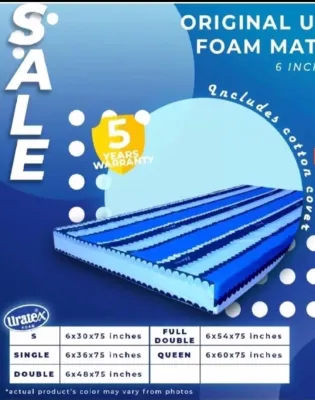
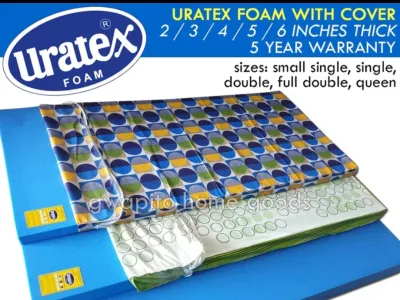
![ORIGINAL URATEX FOAM Mattress 6InchesX75 ALL SIZES ( 6x30x75 / 6x36x75 / 6x48x75 /6x54x75 / 6x60x75 / 6x72x75 - ALL COLOURS) [ S size / Single size / Double size / Full Double size / Queen size / King size ] BED FOAM - URATEX SALE - URATEX BED ON SALE](https://img.lazcdn.com/g/p/2ae24e7eb27b96e53d1967b759fc92e5.png_400x400q80.png_.webp)
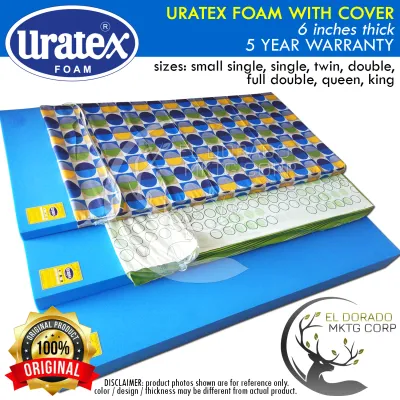
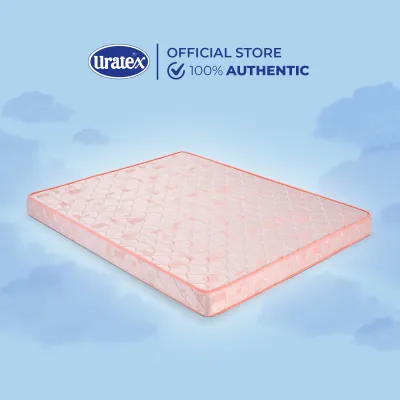

Prices are valid at publication and may change. Please refer to the product page for the latest price.
For many Filipino households, a 6-inch foam queen mattress, such as those produced by Uratex, serves as a practical and accessible sleeping solution. A 6-inch profile balances essential spinal support with a lightweight design that is easy to flip, rotate, and clean. However, a thinner foam mattress has less physical volume to dissipate heat compared to thicker multi-layered models. Under heavy loads, a lower-density 6-inch foam can compress fully, trapping heat closer to the solid wooden or metal bed base below. To mitigate this, look for high-density foam options, which resist deep compression and maintain structural integrity longer under humid conditions.
When shopping for a foam mattress, it is essential to look beyond basic marketing terms and inspect the product specifications for cooling features. Check the product labels for open-cell polyurethane foam, which features interconnected air pathways that allow heat to escape more freely. Some modern foam models incorporate cooling gel infusions or physical ventilation channels cut directly into the foam core. While these surface treatments and gel particles help lower initial contact temperatures, keep in mind that their cooling efficacy can gradually decline over years of use. Therefore, prioritizing a high-density, open-cell base structure remains the most reliable strategy for long-term heat management.
Latex Mattresses: Breathability and Material Verification
Natural latex is highly regarded for tropical sleeping conditions due to its inherent physical structure and thermal properties. During the manufacturing process, latex is poured into molds containing metal pins, which conduct heat to cure the material. This process leaves behind thousands of tiny, vertical pinholes throughout the finished mattress core. This open, perforated structure acts as a natural ventilation system, allowing air to circulate freely with every movement of the sleeper and facilitating the rapid evaporation of body sweat and ambient moisture.

To ensure you are purchasing a high-quality product, you must verify the composition of the latex, as market options range from 100% natural latex to synthetic and blended varieties. Natural latex, harvested from rubber tree sap, is highly resilient, naturally resistant to mold and dust mites, and exceptionally breathable, though it carries a higher price tag. Synthetic latex, made from petroleum-based polymers, is more uniform and less expensive but tends to retain more heat and has a shorter lifespan in humid conditions. You can verify natural latex by checking for reputable international certifications on the product label, such as the Global Organic Latex Standard (GOLS) or OEKO-TEX, and by noting the weight, as natural latex is significantly heavier than synthetic alternatives.
Even the most breathable natural latex core can be rendered hot and uncomfortable if it is wrapped in the wrong outer cover. A dense, synthetic polyester encasement acts as a barrier, trapping heat and moisture at the surface and preventing the pinhole ventilation system from functioning. When evaluating a latex mattress, inspect the cover material and prioritize natural, moisture-wicking fibers such as organic cotton, bamboo-derived rayon, or Tencel. A removable, washable cover is also highly advantageous in the Philippines, allowing you to regularly clean the surface and prevent the buildup of sweat residue and humidity-induced allergens.
Spring Mattresses: Airflow and Humidity Protection
Spring mattresses offer a distinct advantage in hot climates due to the vast amount of open space within their core structures. Unlike solid foam or latex blocks, a spring system is composed primarily of air, allowing for unrestricted ventilation. As you move during sleep, the bellows-like action of the coils actively pushes warm air out of the mattress and draws cooler air in from the sides. This continuous passive airflow makes spring mattresses an excellent option for bedrooms that rely on natural ventilation or ceiling fans rather than continuous air conditioning.
When choosing a spring mattress, you will generally encounter pocketed coil systems and continuous coil systems. Pocketed coils are individually wrapped in fabric sleeves, allowing them to compress independently to contour to your body and minimize motion transfer. Continuous coil systems consist of interconnected wire grids that provide a highly buoyant, traditional feel. While continuous coils offer slightly more open space for horizontal airflow, modern pocketed coils still provide excellent ventilation. However, because pocketed coils are encased in fabric, it is crucial to verify that the pocket material is a breathable, non-woven fabric rather than a dense synthetic sheet that could restrict air movement.
Persistent tropical humidity introduces the risk of metal oxidation, which can lead to squeaking, structural weakening, and premature coil failure. To protect against rust, inspect the mattress specifications to confirm that the steel coils have been treated with a rust-resistant coating or are made from tempered steel. Additionally, pay close attention to the comfort layers positioned above the spring core. A mattress with a thick pillow top or Euro top made of low-density, non-ventilated memory foam can trap heat right against your body, completely neutralizing the cooling benefits of the open spring system below. Opt for comfort layers made of breathable fiber fills, open-cell foam, or natural latex.
Material Comparison and Decision Framework
To help you evaluate these materials side by side, the following matrix compares their performance across key criteria relevant to the Philippine climate. Relative cost is represented on a scale from ₱ (most budget-friendly) to ₱₱₱₱ (premium investment).
| Mattress Material | Airflow & Cooling | Moisture Resistance | Structural Durability | Relative Cost |
|---|---|---|---|---|
| Standard Polyurethane Foam | Low to Moderate | Moderate (prone to softening) | Moderate | ₱ to ₱₱ |
| Memory Foam | Low (traps heat) | Moderate | Moderate to High | ₱₱ to ₱₱₱ |
| Natural Latex | High (pinhole structure) | High (mold resistant) | Very High | ₱₱₱ to ₱₱₱₱ |
| Pocketed Spring | Very High | High (requires coated coils) | High | ₱₱ to ₱₱₱ |
To determine which mattress type best suits your household, apply this conditional decision framework based on your specific sleeping environment and budget:
- Choose Foam if you are working with a limited budget, prefer a lightweight mattress that is easy to flip and clean, and sleep in a room that is consistently air-conditioned to keep the material cool.
- Choose Latex if you want a highly durable, natural material that actively resists mold and dust mites, provides excellent passive cooling, and you are willing to make a larger upfront financial investment.
- Choose Spring if you sleep hot, rely primarily on natural ventilation or electric fans, prefer a responsive and bouncy feel, and want maximum airflow through the core of your bed.
- Verify first if you are buying a hybrid model; ensure the comfort layers on top of the springs or foam base are made of breathable, open-cell materials rather than dense, heat-trapping synthetics.
Ultimately, your bedroom’s ventilation plays a decisive role. If your bedroom is naturally ventilated and subject to daily humidity, a spring or natural latex mattress will provide the necessary airflow to keep you dry. If you run an air conditioner throughout the night, a high-density foam mattress becomes a highly viable and comfortable option, as the ambient air temperature will keep the foam cool and supportive.
Space, Sizing, and Setup Verification
Before finalizing your purchase, you must verify that the physical dimensions of the mattress are compatible with your bedroom layout and home access routes. In the Philippines, a standard queen-size mattress typically measures 60 inches wide by 75 inches long (approximately 152 cm by 190 cm). Measure your bedroom floor space carefully, ensuring you maintain at least 24 to 30 inches of walking clearance around the three open sides of the bed. This clearance is essential not only for comfortable movement but also for allowing adequate air circulation around the mattress perimeter, which helps prevent moisture buildup in the corners of the room.
Physical delivery and installation constraints must also be checked, particularly for rigid or exceptionally heavy mattress types. Pocketed spring mattresses cannot be bent, folded, or compressed once unpacked without causing permanent damage to the steel coils and border wires. Natural latex mattresses, while highly flexible, are incredibly dense and heavy, often requiring two or three people to carry safely. Measure the width and height of your doorways, stairwells, low ceilings, and condominium elevators to guarantee the delivery team can maneuver the mattress into your bedroom without damaging the product or your walls.
Finally, confirm that your bed frame provides the correct structural support for your chosen mattress material. Heavy latex and pocketed spring mattresses require a sturdy, rigid foundation to prevent sagging and preserve their shape. If you use a slatted bed frame, ensure the slats are made of strong, moisture-resistant wood or metal and are spaced no more than 2.75 inches apart. Wide gaps between slats can cause foam and latex to bulge downward, leading to uneven support and accelerated wear. A slatted base is highly recommended over a solid platform in humid climates, as the open spaces between the slats allow air to circulate beneath the mattress, preventing moisture from pooling at the base.
Frequently Asked Questions (FAQ)
How can I reduce heat buildup on a foam mattress?
To minimize heat retention on a foam mattress, start by using bed sheets made from highly breathable, natural fibers such as bamboo, Tencel, or high-quality cotton, which allow air to pass through and help wick away sweat. Avoid synthetic polyester sheets, which trap heat at the surface. Elevating your mattress on a slatted bed frame rather than a solid platform or the floor creates a pathway for air to circulate underneath the bed, helping to cool the foam core. Additionally, using a breathable, non-waterproof mattress protector or one specifically designed with open-weave fabric can prevent heat from reflecting back toward your body.
Does a thicker mattress always mean better durability in humid climates?
No, mattress thickness is not a direct indicator of durability, especially in humid environments. A thick mattress constructed with multiple layers of low-density foam can soften, sag, and trap moisture much faster than a thinner, high-density mattress. In tropical climates, high humidity can accelerate the breakdown of low-grade polyurethane foams through a process called hydrolysis. When selecting a mattress, prioritize the density and quality of the internal materials—such as high-density foam cores, tempered steel coils, or natural latex—rather than the overall height of the bed. Ensure that thicker profiles include dedicated ventilation channels to prevent moisture from becoming trapped in the deep center layers.

Community discussion
Share your experience or ask a question. Comments are reviewed before publication.