
Finding a foldable dining table that comfortably accommodates 6 to 10 people in the Philippines requires balancing space-saving flexibility with robust structural stability. For large Filipino families who love hosting Sunday lunches and holiday gatherings but have limited everyday space, a high-capacity expandable table is an ideal solution. To choose the best option for your home, you must carefully evaluate the folding mechanism, verify the expanded footprint against your dining area, and inspect the structural joints and base stability before making a purchase.
By understanding the engineering behind these tables and planning your space carefully, you can find a model that transitions seamlessly from a compact daily setup to a grand banquet table. This guide outlines the critical factors to consider so your investment remains safe, functional, and comfortable for every guest.
Core Challenges of Seating 6-10 People on Foldable Tables
Designing a table that expands to seat up to ten people introduces significant engineering hurdles. The primary challenge is the inherent conflict between maximizing seating capacity and minimizing the folded footprint. A table that extends to accommodate a large group requires a massive surface area, which must fold down into a compact form that does not overwhelm your daily living space or block natural light in smaller dining areas.
Products mentioned in this guide
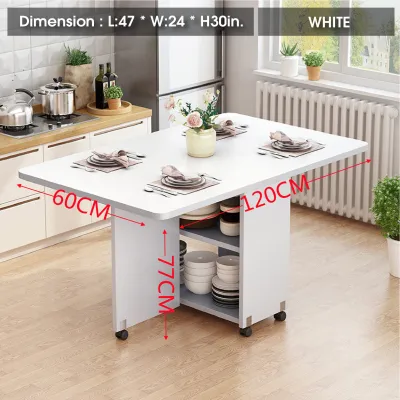
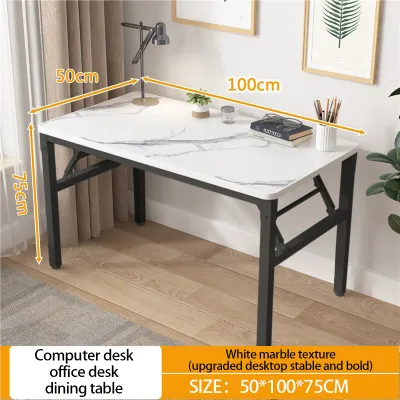
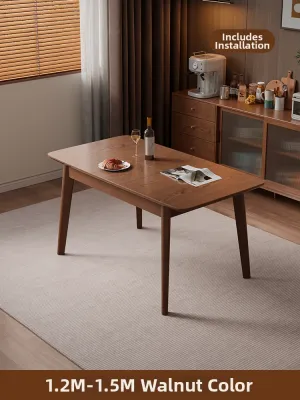
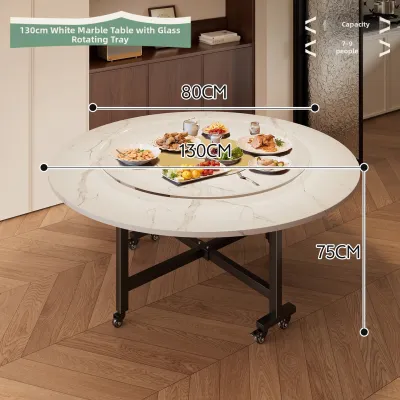
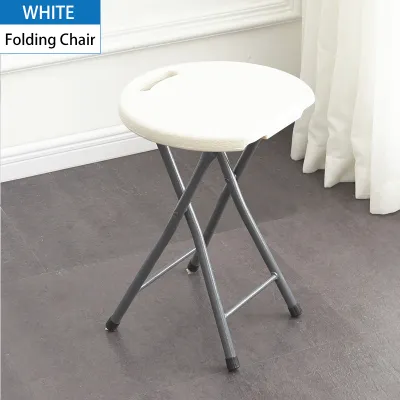
Prices are valid at publication and may change. Please refer to the product page for the latest price.
Weight distribution becomes a critical safety concern when a table is fully extended. Large family meals in the Philippines often feature heavy serving platters, large rice cookers, and multiple dishes placed in the center or along the outer edges. If the table relies on extended leaves without adequate support underneath, placing heavy items near the perimeter can cause the table to tip, sag, or put immense stress on the hinges.
Legroom constraints are another common issue with high-capacity foldable tables. When a table is designed to fold, the legs, support bars, and hinges must fold inward or store beneath the tabletop. These structural elements often end up blocking the space where your guests need to put their legs, making sitting at the table uncomfortable, especially for those seated near the joints or support legs.
Evaluating Folding Mechanisms for Large Gatherings
Different expansion and folding designs perform uniquely when scaled up to accommodate 10 seats. Understanding how these mechanisms operate will help you choose the right style for your home.

Drop-Leaf and Gateleg Designs
Drop-leaf and gateleg tables feature hinged panels that hang down when not in use. To expand the table, you lift the leaves and swing out supporting legs—the “gatelegs”—to hold them up. While highly space-efficient, you must assess the hinge strength and expect some loss of legroom where the swinging legs rest. These tables are excellent for quick transitions but require sturdy hardware to prevent the leaves from drooping over time.
Extendable Console Tables
Extendable console tables start as slim console tables placed against a wall and pull out using telescopic metal rails to accommodate multiple insert leaves. They can expand dramatically to seat up to ten people. When evaluating these, inspect the telescopic rail system for smooth operation and check the stability of the center span, which often requires an extra drop-down support leg to prevent sagging under heavy loads.
Butterfly Leaf and Self-Storing Mechanisms
Butterfly leaf designs store the extra table leaves inside a hidden compartment under the main tabletop. When you pull the table ends apart, the leaf flips open like butterfly wings to fill the gap. This mechanism is highly convenient because you do not have to store the leaves separately, but you must check the mechanical stress on the central pivot and ensure the tracks are kept clean and free of debris.
Wall-Mounted Options
Wall-mounted drop-leaf tables are popular for saving floor space in tight apartments. However, they have strict structural limits. They are generally unsuitable for seating 6 to 10 people because the weight of a large table and multiple heavy dishes puts immense stress on the wall anchors, requiring heavy professional reinforcement that is rarely practical or safe for large gatherings.
Space Planning and Clearance Requirements
Before purchasing a large foldable table, you must measure your dining area to ensure the table fits both when folded and fully expanded. Proper space planning prevents your dining room from feeling cramped and ensures a comfortable experience for your guests.
First, calculate the fully expanded footprint plus the necessary pull-out space for 6 to 10 chairs. As a general rule, allow at least 90 centimeters of clearance between the edge of the table and the wall or adjacent furniture. This space is necessary for guests to pull out their chairs and sit down comfortably without feeling trapped.
Ensure there is adequate walkway clearance behind seated guests for safe movement during family gatherings. During lively family events, people will constantly need to get up to visit the kitchen or restroom. Maintaining a clear path behind the chairs ensures that movement does not feel hazardous, especially when carrying hot dishes or serving drinks.
Verify door, hallway, and stairway dimensions to ensure the folded or partially assembled table can actually be delivered into your dining room. Many homeowners forget to measure the path leading to the dining room. You must verify the width and height of your doorways, narrow hallways, and condominium service elevators or stairways to ensure the delivery team can safely bring the table inside.
Finally, plan the storage footprint for removable leaves when the table is in its compact state. If you choose an extendable table with separate insert leaves, remember that these leaves must be stored somewhere when the table is folded. Plan where you will keep these large panels—such as in a closet, under a bed, or behind a sofa—so they do not clutter your living space.
Material, Base, and Stability Checks
To ensure your table will not wobble or collapse under heavy use, you must inspect the materials, base design, and hardware quality before checking out.
- Base Weight and Spread: A wide, heavy base or a dual-pedestal design is critical for long, extended tables. If the base is too narrow or lightweight, the table will wobble whenever someone cuts food or leans on the edge. Look for designs where the legs spread close to the outer corners when fully extended.
- Leg Bracing and Apron Construction: The apron is the wooden or metal frame supporting the tabletop. Inspect the table for sturdy leg bracing and a deep apron, which prevent the center of the table from sagging under the weight of heavy serving bowls over time.
- Surface Material Care: Do not assume that a material name alone guarantees durability against tropical humidity or hot dishes. Check the manufacturer's care labels for specific heat and moisture resistance ratings. In humid environments, look for finishes that seal the wood or laminate to prevent warping and bubbling.
- Joint and Hinge Inspection: When viewing a table in a showroom or checking specifications online, pay close attention to the hardware. Look for heavy-duty metal hinges, secure locking pins that hold the leaves in place, and smooth-gliding tracks that do not stick or grind when pulled.
Building Your Shortlist: What to Verify Before Checkout
Before finalizing your purchase on an online marketplace or at a local showroom, use this checklist to verify the product’s suitability for your home.
First, cross-reference the exact expanded dimensions listed by the manufacturer against your room measurements. Never rely on visual estimates from online photos. Use a tape measure to map out the exact expanded dimensions on your dining room floor using masking tape to visualize the actual space the table will occupy.
Second, check the stated weight capacity and verify if it applies to the extended leaves or just the main body. Some manufacturers list a high weight capacity that only applies to the center of the table. Verify whether the extended leaves can support a reasonable load, as guests often lean heavily on the ends of the table during long conversations.
Third, review the return policies from retailers, specifically looking for restocking fees or return shipping costs for oversized furniture. Shipping a large, heavy table back to an online marketplace or local retailer can be incredibly expensive. Read the fine print on return policies to understand who covers the return shipping costs if the table does not fit or arrives damaged.
Finally, confirm the assembly requirements, including whether professional installation is needed for complex mechanical tracks. Some expandable tables arrive flat-packed with highly complex gear systems and telescopic rails. Confirm if the retailer offers professional assembly services, or if you will need to hire a local carpenter to ensure the mechanism is aligned correctly.
Whether you are spending ₱10,000 or ₱50,000, verifying these details beforehand will ensure your new foldable dining table provides a safe, stable, and welcoming space for your family gatherings for years to come.
Frequently Asked Questions (FAQ)
Can a wall-mounted foldable table safely seat 10 people?
Standard wall-mounted drop-leaf tables are designed for small spaces and typically seat only two to four people. They lack the heavy-duty support brackets and structural integrity required to span the length needed for ten diners. Attempting to seat a large group at a wall-mounted table risks pulling the anchors out of the wall, potentially causing severe damage or injury. If you absolutely require a wall-mounted solution for ten people, you must consult a structural engineer or a qualified carpenter to design a custom, heavily reinforced system anchored directly into concrete walls or structural studs.
How do I protect the floor when moving a heavy expandable table?
Always check the manufacturer’s care instructions before moving or reconfiguring your table. To prevent scratches on tile, laminate, or hardwood floors, apply heavy-duty felt pads or specialized rubber furniture glides to the bottom of the table legs. Ensure these glides are rated for the total weight of the table. When extending or folding the table, always lift the frame slightly with the help of another person rather than dragging it across the floor, which can damage both the floor and the table joints.

Community discussion
Share your experience or ask a question. Comments are reviewed before publication.