
Finding a table foldable for dining that comfortably accommodates 6 to 10 people requires balancing daily space constraints with the demands of large family gatherings. In many Philippine households, where dining areas often serve multiple purposes and homes range from compact condominiums to open-plan suburban houses, a versatile table is essential. The ideal solution must transition smoothly from a compact footprint for daily family meals to an expanded surface that can handle festive spreads without crowding.
To make the right choice, you must look beyond simple seating capacity claims. A table advertised for ten people might only fit that number if you use narrow, armless chairs and sacrifice legroom. Selecting the right option involves evaluating the extension mechanism, assessing structural stability under heavy loads, and planning your room layout to ensure guests can move freely.
Core Selection Criteria for Large Expandable Tables
When shopping for a table foldable for dining, the first step is to look past the manufacturer’s maximum capacity rating and analyze the actual surface dimensions. A standard guideline for comfortable dining is to allow at least 60 to 70 centimeters of width per person. For a gathering of six people, you need a minimum table length of 150 to 180 centimeters, while a group of ten requires at least 240 to 300 centimeters of usable edge space.
Products mentioned in this guide
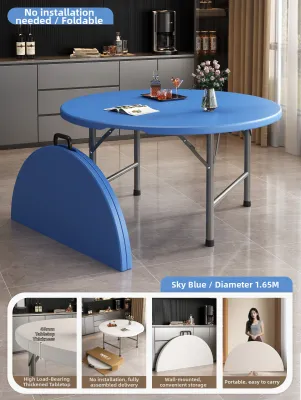
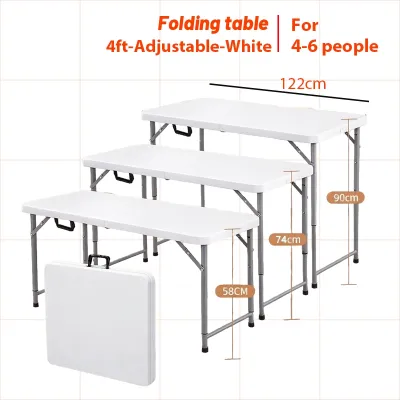
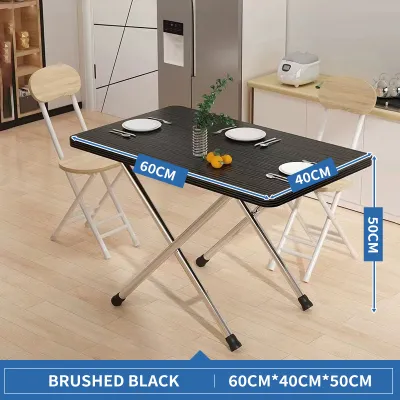
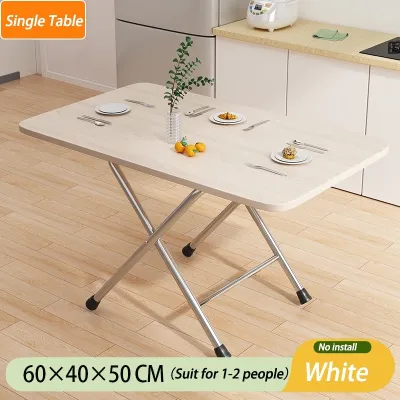
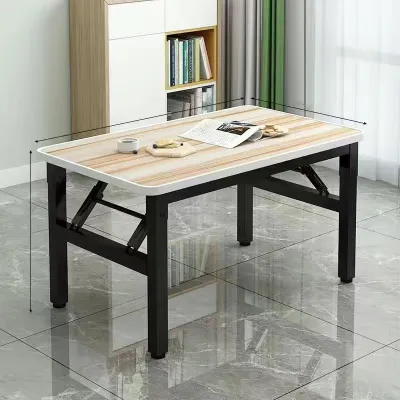
Prices are valid at publication and may change. Please refer to the product page for the latest price.
Legroom is another critical factor that is often overlooked in product descriptions. Some expandable tables utilize thick trestle bases or central support columns that can block the knees of guests sitting near the center. When a table is fully extended, the placement of the legs determines where chairs can actually slide in. If the table legs remain at the outer corners during expansion, you gain maximum clearance; if they stay fixed in the center, guests may have to straddle the table legs.
The choice of extension mechanism directly impacts how easily you can transition the table and how long the furniture will last. Common designs include drop-leaf panels, butterfly leaves, and sliding track systems. Drop-leaf tables feature hinged sides that hang down when not in use, making them highly compact but sometimes limiting legroom when closed. Butterfly leaves store inside the table frame and fold out like wings when the main top is pulled apart, offering a seamless look but requiring precise alignment of the internal gears.
Sliding track systems allow you to pull the table ends apart and insert separate leaf panels, which must be stored elsewhere in your home. While these separate leaves often provide the most stable and flat dining surface for up to ten people, you must have dedicated closet or under-bed space to store the extra panels when they are not in use.
Finally, you must weigh the relationship between table weight, portability, and stability. A lightweight table made of thin hollow-core boards or aluminum frames is easy to move around the room, but it may wobble or sag when fully extended and loaded with heavy serving dishes. Conversely, a solid wood or heavy steel-framed table offers excellent stability but can be incredibly difficult to shift without assistance, which is an important consideration if you plan to reposition the table frequently.
Matching Table Shapes and Extension Mechanisms to Your Space
The shape of your expandable dining table plays a major role in how well it fits your room layout and how comfortably your guests can interact. Rectangular tables are the most traditional choice for large groups because they align perfectly with long walls and open-plan dining zones. A rectangular table foldable for dining maximizes surface area for serving platters, making it highly practical for large family feasts, though the sharp corners can restrict movement in tight walkways.

Oval expandable tables offer a softer aesthetic and can make a room feel more spacious because they lack hard corners. This rounded design allows you to squeeze in an extra chair or two during large gatherings, as guests are not restricted by rigid corner angles. However, oval tables often require specialized extension leaves that must match the curved profile perfectly, which can sometimes make the mechanism more complex to operate.
Round expandable tables are excellent for fostering conversation because everyone faces each other directly. A round table that starts at a modest diameter for four people can often expand into an oval shape to seat eight or ten guests by adding central leaves. The main limitation of round-to-oval designs is that they require a significant amount of clearance in all directions when fully opened, which can overwhelm narrow dining rooms.
How the table folds or extends also dictates where your guests can sit comfortably. In drop-leaf configurations, the support brackets underneath must be checked to ensure they do not interfere with the knees of those sitting at the ends. For tables with center-opening butterfly leaves, the seam where the two halves meet must align perfectly to prevent plates and glasses from tilting.
When fully opened, some mechanisms can suffer from weight distribution issues. If a table relies on long cantilevered ends without extra support legs, placing heavy ceramic serving bowls near the outer edges can cause the table to tip or bow. Always check if the manufacturer specifies the use of auxiliary support legs for the maximum extension setting, as these are crucial for maintaining a level surface during busy family meals.
Evaluating Structural Stability and Material Durability
A large dining table must be structurally sound to handle the weight of multiple dishes, glassware, and the occasional leaning elbow. When evaluating a table foldable for dining, pay close attention to the base support and leg design. Look for models that feature robust cross-bracing or heavy-duty metal slide tracks underneath the tabletop, as these components distribute weight evenly across the entire frame.
Inspect the quality of the joints, hinges, and locking mechanisms. High-quality expandable tables use metal-on-metal connections, such as steel hinges and brass alignment pins, rather than plastic parts or simple wood screws driven directly into particleboard. If you are inspecting a table in person, gently shake it while it is fully extended to check for lateral wobble; any significant swaying indicates that the joints may loosen further over time.
Material durability is particularly important in the humid, tropical climate of the Philippines. High humidity levels can cause untreated solid wood to warp or swell, which can jam sliding tracks and prevent extension leaves from fitting together smoothly. If you prefer solid wood, look for seasoned timber with a moisture-resistant polyurethane or lacquer finish that seals the wood against environmental changes.
Engineered wood options, such as medium-density fiberboard (MDF) or particleboard with a laminate veneer, are common and budget-friendly, but their durability depends heavily on the quality of the edge banding. If moisture from spilled drinks or humid air penetrates the edges, the underlying board can swell and crumble. Check that all edges are completely sealed with thick, heat-resistant PVC or ABS banding.
For families with young children, scratch resistance and ease of cleaning are paramount. High-pressure laminate (HPL) surfaces and tempered glass tops offer excellent resistance to scratches, heat, and stains, making them highly practical for daily use. Regardless of the material, always verify the manufacturer’s recommended weight limits and care instructions to ensure the table can safely support your dining needs without sagging.
Space Planning and Pre-Purchase Measurement Checklist
Before purchasing a large expandable table, you must measure your dining area carefully to ensure the furniture fits comfortably in both its collapsed and fully extended states. Start by measuring the length and width of your dining room, then map out the footprint of the table when it is closed for daily use and when it is opened to its maximum length.
To ensure guests can sit down and get up comfortably, you need to calculate the clearance around the table. A standard rule of thumb is to maintain at least 90 centimeters of open space between the edge of the table and the nearest wall, cabinet, or doorway. This clearance allows enough room for chairs to be pulled out fully and for someone to walk behind a seated guest without squeezing.
Do not forget to measure the access path to your dining room. Large expandable tables often arrive in heavy, bulky boxes that must fit through your front door, hallway corners, stairwells, or condominium elevators. Check the packaged dimensions provided by the seller and compare them against the narrowest points of your entry route to avoid delivery day complications.
The condition of your dining room floor can also affect the stability of a foldable table. Uneven floor tiles or thick area rugs can cause a long, extended table to wobble or sit at an angle. To counter this, look for tables equipped with adjustable leveling feet or glides underneath the legs, which allow you to fine-tune the height of each corner individually to ensure a perfectly stable dining surface.
Frequently Asked Questions (FAQ)
How much clearance is needed around a fully extended dining table?
For comfortable dining, you should aim for a minimum of 90 centimeters of clearance between the edges of the fully extended table and any surrounding walls or furniture. This distance provides enough space for guests to pull out their chairs and sit down without hitting the wall. If you want to allow enough room for people to walk behind seated guests during the meal, increase this clearance to 110 to 120 centimeters.
Are drop-leaf tables stable enough for heavy family meals?
Drop-leaf tables can be highly stable, provided they use robust support mechanisms. Look for designs that feature sturdy wooden gatelegs or heavy-duty steel slide-out brackets to support the hinged leaves. Avoid models that rely on thin, friction-based wooden slides or plastic supports, as these can wear down quickly and cause the extended leaves to sag under the weight of heavy serving dishes.

Community discussion
Share your experience or ask a question. Comments are reviewed before publication.