
Choosing between a foldable and a fixed wall-mounted table for your work-from-home (WFH) setup comes down to a trade-off between spatial flexibility and structural rigidity. If you work in a tight studio condominium or a shared bedroom where every square inch of floor space must be reclaimed after office hours, a foldable wall-mounted table offers the ultimate space-saving solution. Conversely, if your daily tasks require multiple monitors, heavy typing, or a permanent desktop organizer, a fixed wall-mounted table provides the unyielding stability and larger surface area necessary for a dedicated, distraction-free workspace.
In the Philippines, where urban living spaces in Metro Manila and other major cities are increasingly compact, maximizing vertical space is a practical necessity. Both table types eliminate the bulky legs of traditional desks, making the room feel larger and easier to clean. However, selecting the wrong style can lead to frustrating wobbles during intense typing sessions or a cluttered room that never truly feels like a home once the laptop is closed. Understanding how these two designs handle weight, space, and daily wear is the first step toward building an ergonomic and productive home office.
Core Differences in Space and Stability
The most obvious distinction between these two designs is how they interact with your room’s physical footprint. A foldable wall-mounted table is engineered to disappear when not in use. By utilizing a hinge mechanism and collapsible brackets, the tabletop drops down or folds up flat against the wall, reducing its projection into the room to just a few centimeters. This physical transformation is highly beneficial in multi-purpose rooms, allowing a bedroom or dining area to instantly shed its corporate identity at the end of the workday.
Products mentioned in this guide
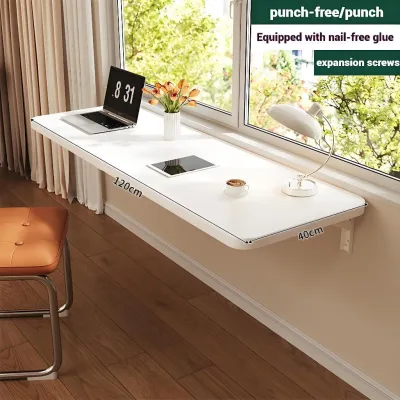
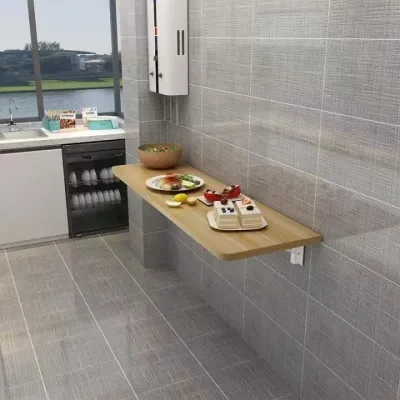
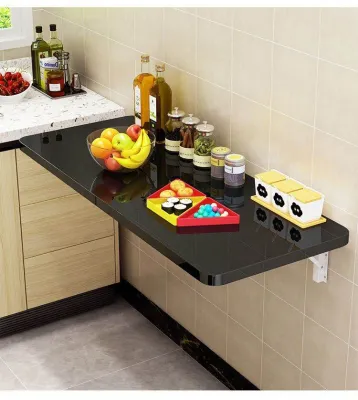
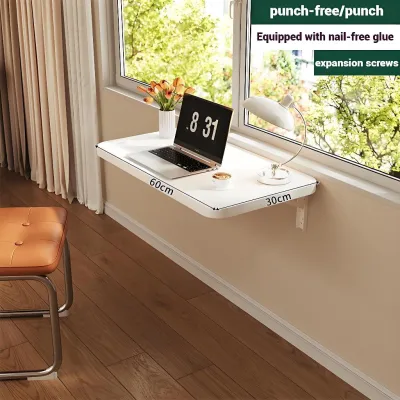
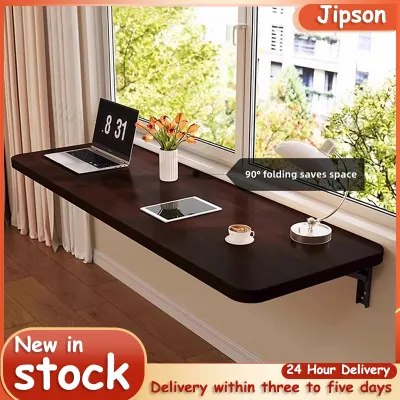

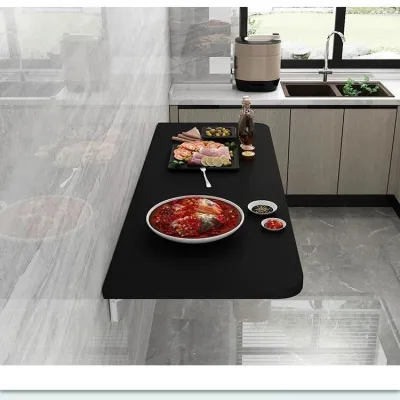
Prices are valid at publication and may change. Please refer to the product page for the latest price.
A fixed wall-mounted table, on the other hand, maintains a permanent physical and visual presence. While it does not reclaim floor space, it compensates by offering a completely solid, uninterrupted surface. Because there are no moving parts, hinges, or latching mechanisms, a fixed table is inherently more rigid. It does not suffer from the minor joint play or microscopic shifting that can occur over time with foldable models, providing a rock-solid foundation that feels identical to a traditional heavy desk.
This structural difference directly impacts the maximum surface area each table type can safely support. Foldable tables are generally limited in depth and width because a larger surface exerts greater leverage on the wall brackets and hinges when extended. Most foldable designs feature a shallow depth to keep the center of gravity close to the wall. Fixed tables are not bound by these mechanical limitations; they can accommodate much deeper and wider wooden tops, allowing you to spread out documents, reference books, and large desk pads without compromising safety.
Furthermore, the materials used in these tables must withstand local environmental factors. In tropical climates with high humidity, the moving joints, pins, and spring-loaded latches of foldable tables require regular inspection to ensure they do not rust, bind, or loosen. Fixed tables, which rely on simple, heavy-duty steel or iron brackets, have fewer failure points and are generally easier to maintain over years of continuous exposure to humid air.
Evaluating Your Daily WFH Usage Patterns
Your choice of table must align with the specific tools you use to perform your job. If your WFH setup consists solely of a lightweight laptop, a mouse, and a notebook, a foldable table is more than adequate. However, if your workflow relies on a heavy setup—such as dual monitors, a desktop tower, external hard drives, and a mechanical keyboard—the weight capacity of a foldable table can quickly become a limiting factor. You must carefully check the manufacturer’s specified weight limits, keeping in mind that these limits often assume a perfectly distributed load rather than heavy items concentrated at the outer edge.

Work duration and ergonomics also play a critical role in this decision. For full-time, eight-hour workdays, a fixed wall-mounted table is generally superior because it allows you to set up a permanent ergonomic environment. You can position your monitors at the exact eye level using clamp-on mount arms, route your cables permanently, and position your keyboard at the optimal height without worrying about dismantling the setup every evening. The absolute stability of a fixed surface also prevents monitor shake, which is a common cause of eye strain and distraction during long typing sessions.
For part-time remote workers, freelancers, or students who only need a desk for a few hours a day, the convenience of a foldable table often outweighs the need for heavy-duty stability. It serves as a temporary workstation that can be deployed in minutes and tucked away when it is time to relax. This clear boundary between work and leisure is vital for mental well-being, especially when your office is located in your bedroom or living room.
If your workspace must serve multiple household members, consider how easily the table adapts. A fixed table is always ready for use, making it a convenient spot for quick tasks, writing down notes, or holding household items when you are not working. A foldable table, while highly flexible, requires a conscious effort to clear, fold, and unfold. If you find yourself leaving a foldable table permanently extended because clearing it is too tedious, you lose its primary space-saving benefit while still dealing with the structural limitations of a folding mechanism.
Installation and Wall Requirements
Before purchasing any wall-mounted furniture, you must evaluate the structural integrity of the wall where you plan to mount it. In the Philippines, residential walls are commonly constructed from solid concrete, hollow concrete blocks (CHB) with plaster, or lightweight drywall over metal studs. Mounting a table to solid concrete or masonry provides the strongest possible hold, allowing both fixed and foldable tables to reach their maximum rated weight capacities. This installation requires a hammer drill, masonry bits, and heavy-duty concrete expansion bolts or wall plugs.
Drywall installations are significantly more challenging and require strict adherence to safety protocols. You must never mount a wall table directly into hollow drywall using simple plastic anchors, as the downward leverage exerted by typing or leaning on the table will easily tear the anchors out of the gypsum board. Instead, the mounting brackets must be screwed directly into the wooden or metal wall studs behind the drywall. This limits your placement options, as the table’s bracket spacing must align perfectly with the distance between your wall studs.
Clearance and movement are equally critical spatial considerations. For a foldable table, you must measure not only the static footprint of the open desk but also its swing radius. Ensure that the table can fold down or up without striking nearby furniture, light switches, electrical outlets, or door frames. There must also be sufficient clearance for your office chair to slide underneath comfortably when the table is open, and enough room for you to stand and operate the folding mechanism safely.
Finally, consider the long-term impact on the wall surface. The constant upward and downward motion of a foldable table can cause the brackets to rub against the paint or plaster, potentially leaving scuffs or hairline cracks over time if the installation is not perfectly level. A fixed table, once securely bolted in place, remains completely static, minimizing wear on the wall surface but leaving permanent holes that will need to be patched and painted if you ever decide to relocate the desk.
Decision Framework: Which Wall-Mounted Table Fits You?
To make the right choice for your home office, evaluate your space, equipment, and living situation against these clear criteria.
Choose a foldable wall-mounted table if:
- Your workspace is located in a high-traffic, multi-use room like a narrow hallway, a small bedroom, or a dining area where floor space is at a premium.
- Your daily work equipment is minimal, consisting of a single laptop, a tablet, or lightweight writing materials.
- You highly value the psychological boundary of folding your desk away at the end of the day to signal that work is officially over.
- You are comfortable clearing your desk surface completely before folding it flat against the wall.
Choose a fixed wall-mounted table if:
- You have a dedicated corner or alcove that can be permanently designated as your home office.
- Your setup includes heavy or sensitive equipment, such as multiple monitors, clamp-on monitor arms, a desktop computer, or heavy reference books.
- You require absolute stability with zero wobble or bounce during intense typing, drawing, or writing sessions.
- You prefer a permanent cable management system and want to keep your desk accessories, keyboard, and mouse in place at all times.
Verify first if:
- You are renting your home. Many rental agreements in the Philippines strictly prohibit drilling large holes into concrete or drywall. Always consult your landlord or property management office before purchasing a wall-mounted table, as failing to do so could result in a deduction from your security deposit.
- You are unsure of your wall's internal structure. If you cannot identify whether your wall is solid concrete, hollow block, or drywall, or if you do not own a stud finder and a hammer drill, it is highly recommended to hire a professional carpenter or handyman to handle the installation, which typically costs around ₱500 to ₱1,500 depending on your location. A poorly mounted table poses a serious safety hazard to your expensive work equipment and anyone sitting nearby.
Frequently Asked Questions (FAQ)
Can I install a wall-mounted table on drywall?
Yes, you can install a wall-mounted table on drywall, but you must never rely on standard drywall anchors alone. The downward force and leverage of a desk require you to anchor the mounting brackets directly into the wooden or metal wall studs hidden behind the drywall sheet. Use a stud finder to locate these structural supports and secure the brackets using heavy-duty wood screws or specialized toggle bolts designed for metal studs. Always check the product manual for specific drywall installation instructions and strictly observe the reduced weight limits that often apply to drywall installations compared to solid concrete.
How do I manage cables on a foldable wall desk?
Managing cables on a foldable wall desk requires a flexible solution that accommodates the table’s movement without pinching, pulling, or damaging your wires. Start by checking the product specifications to see if the table includes built-in cable routing slots or a small gap near the wall hinge. To keep your cords organized, use flexible neoprene cable sleeves or spiral wraps that allow the bundle to bend naturally as the table folds. Secure the cables to the underside of the tabletop and along the wall using adhesive cable clips, leaving enough slack near the hinge so the wires do not stretch or tear when the desk is collapsed.

Community discussion
Share your experience or ask a question. Comments are reviewed before publication.