
Choosing the right compact study table for a small bedroom or condo unit depends on your primary spatial constraint—whether you have unused floor space, an empty wall, or an awkward corner. Foldable tables work well for multi-purpose rooms where the desk must disappear after work; wall-mounted desks preserve floor area but require sturdy vertical support; and corner or L-shaped tables turn dead space into a continuous work surface. Selecting the right configuration requires balancing your daily workflow with precise measurements of your room’s clearance zones and structural limits.
Assessing Your Space and Workflow Needs
Before looking at specific furniture designs, evaluate your room’s physical layout. Look at your available floor area versus your empty wall space to determine if a freestanding desk is practical or if you need to utilize vertical space. In many high-rise condo units, floor area is at a premium, making wall-mounted options highly attractive if you have solid concrete partitions.
Next, assess how often and how long you will use the desk. A daily, eight-hour remote work setup requires a highly stable surface and proper ergonomic support. If you only need a surface for occasional study sessions, paying bills, or casual browsing, a temporary, tuck-away table is a practical choice that keeps the room flexible.
Products mentioned in this guide
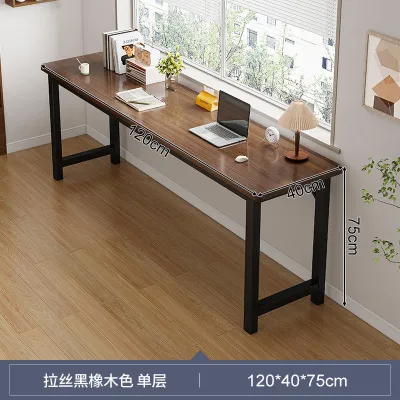
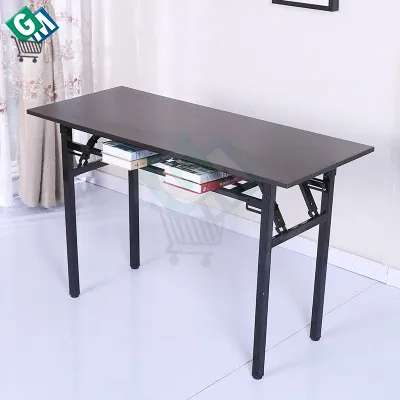
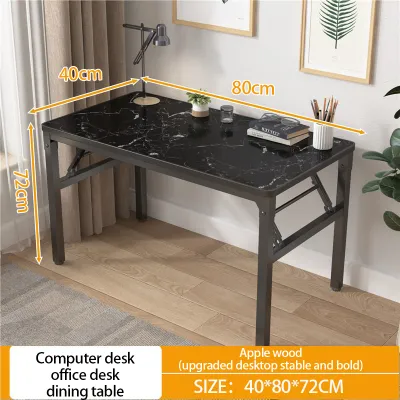
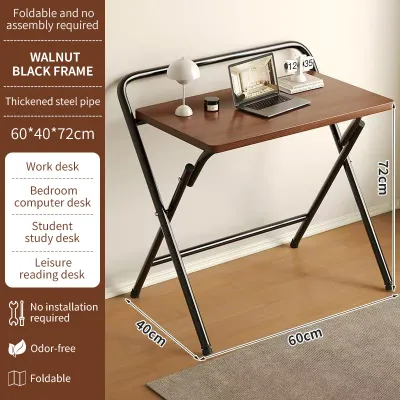
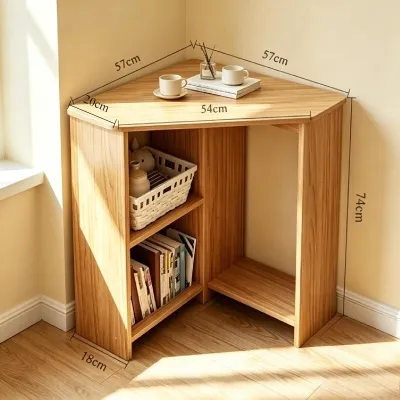
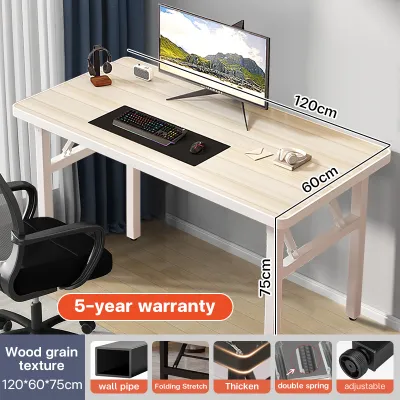
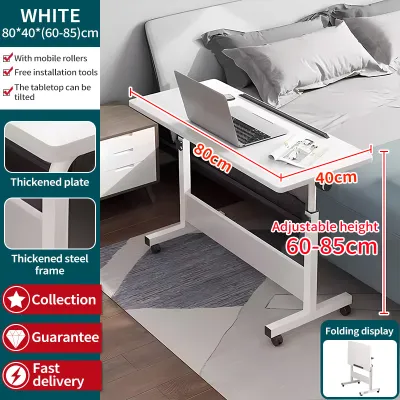
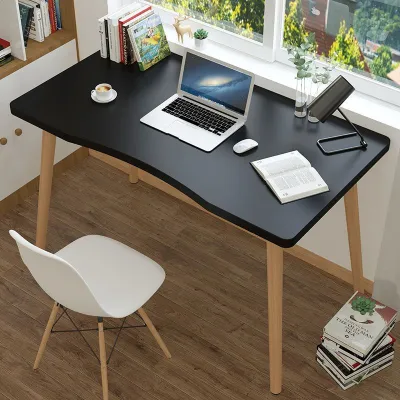
Prices are valid at publication and may change. Please refer to the product page for the latest price.
Your equipment requirements also dictate the desk size. A single lightweight laptop requires very little depth and minimal weight capacity. If you use multiple monitors, external keyboards, heavy textbooks, or printers, you will need a deeper surface and a much sturdier frame to prevent bowing or instability.
Finally, consider the visual impact of the desk on your living space. In a studio apartment where your bed is close to your workspace, being able to fold the desk away or hide the clutter helps maintain a relaxing environment. If you prefer a permanent setup, look for designs that blend naturally with your existing decor.
Comparing Compact Desk Configurations
To find the right fit, compare how foldable, wall-mounted, and corner configurations handle space constraints. Each design addresses a different layout challenge, from temporary setups to permanent corner installations.

Foldable Study Tables
Foldable study tables are highly versatile options for multi-purpose rooms. When your study or work session ends, you can collapse the frame and slide the table under a bed, behind a wardrobe, or inside a closet, completely reclaiming your living space.
When shopping, inspect the hinge mechanisms, locking brackets, and frame joints. Look for robust manual locking pins or tension bars that prevent the table from accidentally collapsing during use. Check the quality of the joints to ensure they do not wobble under normal typing pressure.
Always verify the manufacturer’s stated weight capacity limits before purchasing. Ensure you have both the clear floor area required to set up the table comfortably and a dedicated, dry storage spot where the folded unit won’t block daily foot traffic.
Wall-Mounted Study Tables
Wall-mounted study tables are highly suited for tight pathways and narrow bedrooms because they completely eliminate desk legs, leaving the floor underneath entirely clear. This open space makes the room feel larger and allows for easy cleaning.
Because these desks rely entirely on vertical support, you must verify your wall structure before installation. Solid concrete or brick walls offer excellent support, whereas hollow drywall partitions require careful anchoring to internal studs or specialized heavy-duty toggle bolts.
Keep in mind that wall-mounted desks are permanent fixtures with fixed heights. They offer minimal flexibility for room rearrangements and typically lack built-in under-desk drawer storage, meaning you must find alternative ways to store your office supplies.
Corner and L-Shaped Study Tables
Corner and L-shaped study tables are designed to maximize awkward, underutilized areas of a room. By fitting snugly into a 90-degree corner, these desks provide a surprisingly generous amount of desktop surface area without protruding into the center of the room.
This configuration is practical if you use multiple monitors or need separate zones for writing and computer work. The deep corner pocket naturally accommodates larger screens at a comfortable viewing distance, keeping your eyes at a healthy distance from the display.
Before choosing this style, measure the exact corner angles and wall lengths on both sides. Ensure the desk’s outer edges do not block nearby doorways, wardrobe doors, or walkways, as corner units have a larger overall footprint and are difficult to relocate once assembled.
Key Measurements and Clearance Checks
Before ordering any compact study table, measure your building’s entry points. Ensure the packaged or pre-assembled desk can fit through condo main lobbies, elevator doors, narrow stairwells, and your apartment’s front door without scraping the walls.
Calculate the space behind the desk to ensure comfortable movement. A seated user typically needs at least 60 to 75 centimeters of clear space behind the table to pull out an office chair, sit down, and stand up comfortably without hitting a wall or another piece of furniture.
Verify the desk height against your seating. Standard desk heights range around 70 to 76 centimeters. If you are installing a fixed wall-mounted unit, sit in your preferred office chair and measure your elbow height to determine the most comfortable mounting position before drilling.
Map out the swing radius of all nearby doors, windows, and cabinet doors. A desk placed too close to a closet can block access to your clothes, while a window that swings inward might collide with a monitor or desk lamp, causing damage.
Common Space-Matching Mistakes to Avoid
One common mistake is ignoring the location of electrical outlets. Placing your desk far from a wall outlet leads to messy extension cords running across the floor, creating tripping hazards and unsightly visual clutter in a small room.
Do not overload your desk beyond its structural limits. Overestimating the weight capacity of wall brackets or folding hinges can lead to structural failure, potentially damaging your expensive electronics and tearing up your wall plaster.
Many buyers forget to account for baseboards or skirting boards along the floor. These trim pieces can prevent freestanding or corner desks from sitting completely flush against the wall, leaving an annoying gap where pens and papers can fall.
Choosing a desk that is too shallow is a frequent error in small spaces. If a desk is less than 45 centimeters deep, your monitor will sit too close to your eyes, causing eye strain and leaving almost no room for a keyboard and mouse.
Frequently Asked Questions (FAQ)
Can I install a wall-mounted desk on a hollow drywall partition?
Yes, but you must take specific safety precautions. Standard drywall cannot support the weight of a desk and a user leaning on it without proper reinforcement. You must locate the wooden or metal wall studs behind the drywall using a stud finder and anchor the mounting brackets directly into them. If studs are not positioned where you want the desk, you must use heavy-duty toggle bolts or hollow-wall anchors rated for the desk’s maximum weight capacity, or consult a professional installer to avoid structural damage.
How do I manage cables on a foldable or wall-mounted desk?
Managing cables on desks with moving parts requires flexibility. Use adhesive cable clips and hook-and-loop wraps to secure wires along the underside of the desk surface or down the legs. For wall-mounted units, a flexible cable sleeve or a lightweight under-desk wire tray can keep cords bundled neatly. Always leave enough slack in the cables so that when you fold, unfold, or adjust the desk, the wires do not pull tight, strain the device ports, or unplug from the wall.

Community discussion
Share your experience or ask a question. Comments are reviewed before publication.