
When selecting a folding dining table to accommodate a large family of 6 to 10 people, the primary focus must be on three critical factors: a minimum extended length of 240 centimeters (approximately 94 inches), a robust locking mechanism to prevent structural sagging, and a moisture-resistant tabletop finish that withstands daily spills and high tropical humidity. The ideal mechanism—whether a space-saving gateleg, a highly adjustable console-to-dining system, or a seamless butterfly leaf—depends on how often you host large gatherings versus your daily floor area limits. Because material names such as “solid hardwood” or “engineered MDF” do not automatically guarantee long-term durability, buyers should always verify the specific protective coatings, joint constructions, and manufacturer care instructions before purchasing.
Sizing and Expansion: Accommodating 6 to 10 Diners
Calculating the Right Dimensions
To seat up to 10 people comfortably without overcrowding, you must calculate the physical space required for each individual diner. The standard industry guideline allocates approximately 60 centimeters (24 inches) of width per person. This spacing provides sufficient elbow room for eating without bumping into adjacent guests. For a family of 10, this translates to a minimum of 240 centimeters (94 inches) of total linear seating edge if you plan to seat four people along each long side and one person at each end. If your family prefers to seat all ten diners along the sides of the table (five on each side), the table length must extend to at least 300 centimeters (118 inches).
Table width is equally critical, especially for family-style dining where large platters, rice cookers, and serving bowls are placed in the center of the table. A table width of less than 90 centimeters (35 inches) leaves very little room for shared dishes once individual place settings are laid out. For comfortable family-style meals, look for a table width between 95 and 105 centimeters (37 to 41 inches).
Products mentioned in this guide
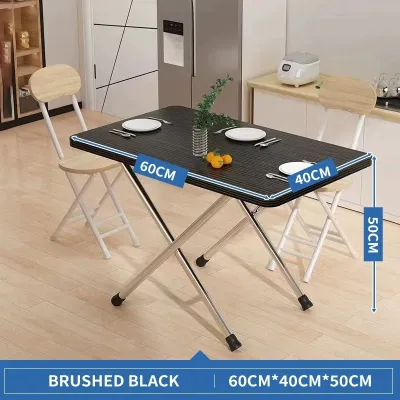
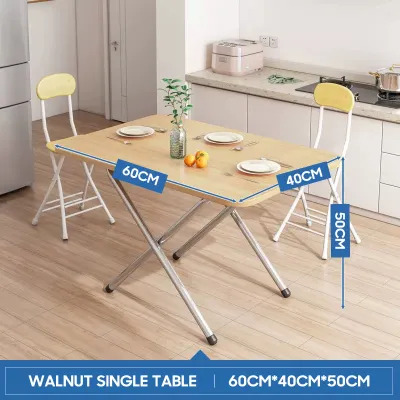
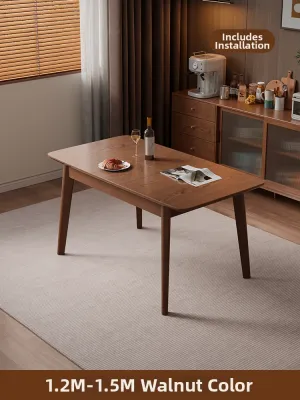
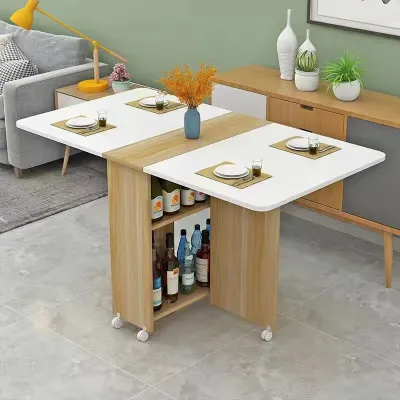
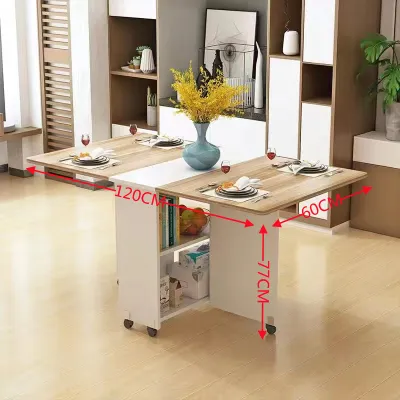
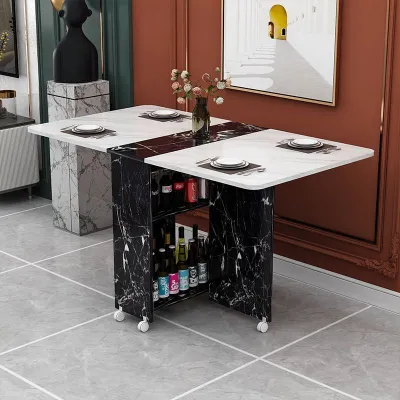
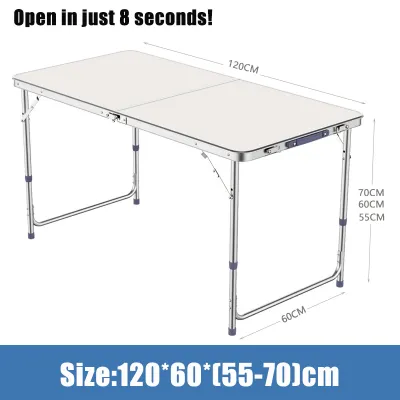
Prices are valid at publication and may change. Please refer to the product page for the latest price.
Additionally, always cross-reference the manufacturer’s stated seating capacity with the actual dimensions of your dining chairs. Standard dining chairs typically range from 45 to 55 centimeters in width, but bulky armchairs or wide upholstered seats require significantly more space. If your chairs are wider than average, you will need to select a table with a longer extended length to accommodate the same number of diners.
Folding vs. Extendable Mechanisms
Choosing between folding and extendable mechanisms requires balancing daily convenience with structural practicality. Drop-leaf mechanisms feature hinged side panels that fold downward when not in use. While highly convenient for quick adjustments, drop-leaf tables often have fixed legs that do not move outward with the leaves. This design can create awkward seating arrangements, as the supporting legs or gatelegs may directly block the legroom of guests seated at the corners or ends of the fully extended table.
Track-based extendable tables operate by splitting the tabletop down the middle and pulling the two halves apart along metal or wooden slides, allowing you to insert one or more extension leaves. This mechanism keeps the primary supporting legs at the outer corners of the table, maximizing legroom for everyone seated. However, manual wooden slide systems can be prone to sticking or binding in humid environments due to the natural expansion of the wood.
When evaluating any expansion mechanism, test the ease of operation. High-quality tables often feature steel ball-bearing glide systems that allow a single person to smoothly extend the table from one end. Manual systems with lower-grade hardware typically require two people to pull from opposite sides to avoid binding or damaging the tracks.
Stability and Safety for Heavy Family Use
Base and Leg Configurations
As a dining table extends to accommodate 8 or 10 people, its center of gravity shifts significantly. Traditional four-leg configurations provide excellent stability because the support points remain at the outermost corners of the structure. However, if the legs are fixed and do not slide outward with the extension, the long overhanging ends of the table can become prone to tipping if a guest leans heavily on the edge.

Pedestal and trestle bases offer superior legroom because they eliminate corner legs, allowing chairs to be tucked in tightly. However, a single central pedestal base can become unstable when extended beyond 180 centimeters unless it is engineered with a wide, heavy base plate or auxiliary drop-down support legs. Trestle bases provide better weight distribution along the length of the table, but you must check that the trestle bar does not interfere with the feet of your diners.
Do not assume that a heavy tabletop automatically guarantees a stable table. A heavy top paired with a narrow or lightweight base actually increases the risk of tipping. The true indicator of wobble resistance is the base-to-top ratio and the quality of the joint construction. Look for wide-set legs and reinforced corner brackets that prevent lateral movement when the table is fully extended.
Weight Capacity and Wobble Prevention
Large family gatherings often involve placing heavy items on the table, such as hot soup pots, heavy ceramic serving platters, and small kitchen appliances. Before purchasing, locate the manufacturer’s explicit weight capacity specifications for both the folded and fully extended states. A high-quality folding table should support at least 75 to 100 kilograms of evenly distributed weight when fully extended.
To prevent the extended sections from shifting, sagging, or collapsing under load, verify the presence of heavy-duty locking mechanisms. Look for metal toggle latches, tension hooks, or alignment pins located on the underside of the tabletop. These locks pull the seams tightly together, securing the extension leaves to the main frame and preventing accidental separation during use.
Inspect the alignment of the tabletop seams when the table is fully extended. The surface must form a perfectly flat plane. Any height variance between the main tabletop and the extension leaves creates a lip hazard that can cause glasses to tip over and spill. Furthermore, uneven seams easily trap food crumbs and moisture, which can lead to hygiene issues and damage the core material over time.
Materials and Hardware: Withstanding Daily Family Use
Tabletop Durability and Maintenance
In a busy household, the dining table surface must withstand constant wear, hot dishes, and frequent cleaning. While terms like “solid wood” suggest durability, wood is a porous material that can warp, crack, or stain if not properly sealed. In humid climates, solid wood tables require high-quality polyurethane or lacquer finishes to block moisture absorption. Always check the manufacturer’s care label to understand the required maintenance, as some natural wood finishes require regular oiling or waxing to prevent drying and cracking.
For low-maintenance durability, engineered wood (such as high-density fiberboard or marine plywood) finished with high-pressure laminate (HPL) is a highly practical choice. HPL surfaces are highly resistant to scratches, moisture, and mild heat. However, you must inspect the quality of the edge banding; if the edges are poorly sealed, moisture from spills or humid air can seep into the inner core, causing the engineered wood to swell and delaminate.
Sintered stone and ceramic tabletops offer exceptional scratch and heat resistance, allowing you to place hot serving dishes directly on the surface without trivets. However, these materials add substantial weight to the table, which puts extra stress on the folding or sliding hardware. If you select a stone or ceramic top, ensure the supporting frame and expansion tracks are constructed from heavy-duty steel to handle the load.
Hardware and Joint Quality
The mechanical hardware is the most common failure point in folding and extendable tables. Inspect the hinges, tracks, and slides closely. High-quality hardware is constructed from thick-gauge steel, brass, or anodized aluminum. Avoid tables that utilize thin, stamped metal alloys, as these can easily bend or warp under the weight of the extension leaves, causing the table to sag or jam.
For drop-leaf tables, look for soft-close hinges or spring-loaded dampening systems. These safety features prevent heavy wooden leaves from dropping suddenly if the support bracket is accidentally released, reducing the risk of finger pinch injuries and structural damage. Additionally, check that the hardware is easily accessible from the underside of the table. Because frequent folding and unfolding naturally loosens screws over time, you will need to periodically tighten the bolts to maintain structural integrity.
Recommended Folding Table Styles for Large Households
Drop-Leaf and Gateleg Tables
- Best For: Multi-purpose rooms or open-concept living spaces where the dining area doubles as a walkway or play area, requiring the table to shrink to a narrow console footprint daily.
- Pros: This style offers excellent space efficiency. When fully folded, some gateleg tables shrink to a width of just 30 to 40 centimeters, allowing them to be pushed against a wall to serve as a sideboard or entryway console.
- Limitations for 10 People: To accommodate 10 diners, a gateleg table must have exceptionally long leaves. When opened, these long leaves require multiple diagonal supporting gatelegs. These legs can severely obstruct legroom, forcing guests seated along the sides to awkwardly straddle the wooden support frames.
Extendable Console-to-Dining Tables
- Best For: Homes or apartments that host massive family gatherings or holiday dinners but require only a small, unobtrusive table for daily use.
- Pros: These tables offer an unmatched expansion ratio, utilizing a telescoping aluminum track system that can expand from a compact 40-centimeter console to a full-length dining table exceeding 250 centimeters. They typically include three to five separate leaves, allowing you to customize the length for 6, 8, or 10 people.
- Limitations for 10 People: You must have a dedicated closet or storage area to keep the extra extension leaves when they are not in use. Additionally, when fully extended to seat 10 people, the long central telescoping track can flex slightly under heavy loads unless it is supported by an adjustable, heavy-duty central support leg.
Butterfly Leaf and Self-Storing Tables
- Best For: Families who frequently transition between seating 6 and 10 diners and want a quick, seamless setup without the hassle of storing loose leaves.
- Pros: The extension leaf is integrated directly into the table's internal frame. It folds in half and rotates smoothly to store beneath the main tabletop when closed. This design eliminates the risk of dropping or scratching loose leaves during storage.
- Limitations for 10 People: The maximum extension length of a butterfly leaf table is physically limited by the width of the table itself, as the folded leaf must fit entirely within the internal frame. Consequently, a table that starts as a standard 6-seater can typically only expand to seat 8 comfortably, unless the base table size is already quite large.
Pre-Purchase Space Planning and Measurement Checklist
To ensure your chosen folding dining table fits and functions perfectly in your home, use the following pre-purchase checklist:
- Delivery and Assembly Path: Measure the width and height of all doorways, narrow corridors, stairwells, and elevator doors in your building. Large extendable tables often arrive in long, heavy boxes. Ensure the delivery team can safely navigate these packages into your dining room without damaging walls or the furniture itself.
- Clearance Calculation: Measure the physical dimensions of your dining room. Subtract at least 90 centimeters (36 inches) from all sides of the fully extended table. This clearance is the absolute minimum required for diners to pull out their chairs and sit down. For a comfortable walkway behind seated guests, aim for 120 centimeters (48 inches) of clearance.
- Flooring Compatibility: Dragging and extending a heavy table can easily scratch flooring. Check the bottom of the table legs before assembly. Hardwood floors require thick felt pads, while ceramic tiles or polished concrete benefit from durable polymer glides. Ensure these protective pads are securely attached to prevent direct wood-to-floor or metal-to-floor contact.
- In-Store Testing: If purchasing from a physical showroom, perform a hands-on test of the expansion mechanism. Extend and fold the table yourself to assess the physical force required. Check for any binding, catching, or squeaking in the tracks, and gently shake the table at its maximum extension to verify its stability.
Frequently Asked Questions (FAQ)
How much clearance is needed around a fully extended dining table?
You should maintain a minimum clearance of 90 centimeters (36 inches) between the edge of the fully extended table and the nearest wall or piece of furniture. This distance allows diners to pull out chairs and sit down comfortably. For busy households where people need to walk behind seated guests during meals, a clearance of 120 centimeters (48 inches) is highly recommended.
Can a folding table support heavy appliances or buffet dishes?
Yes, provided the weight is distributed correctly. The extended leaves and hinges of a folding table are the weakest structural points. Always place heavy items, such as large rice cookers, heavy ceramic serving bowls, or hot buffet trays, directly over the main base or central support legs rather than on the outer edges of the extended leaves. Always check the manufacturer’s specified weight limits.
Are extendable tables less durable than fixed dining tables?
Extendable tables are not inherently less durable, but they do feature moving parts that require proper care. A well-constructed extendable table built with high-quality metal tracks and robust locking hardware can last just as long as a fixed table. To maximize longevity, avoid forcing the mechanism if it binds, and periodically check and tighten the underside screws and bolts.

Community discussion
Share your experience or ask a question. Comments are reviewed before publication.