
Quick Answer: Which Drawer System Fits Your Needs?
Choosing the right drawer for clothes is a fundamental step in designing an organized, functional bedroom. The decision between a freestanding chest of drawers and a built-in wardrobe drawer system hinges on a balance of spatial limitations, financial investment, and your long-term living plans. If you prioritize immediate utility, flexibility, and a lower upfront cost, freestanding furniture is often the most practical choice. Conversely, if you want to maximize every square inch of your room with a seamless, custom aesthetic and have the budget for permanent installations, built-in drawers offer unmatched space efficiency.
To make the right choice, you must evaluate three key pillars: your bedroom’s physical layout, your budget, and your housing plans. For renters or those who enjoy rearranging their living spaces, freestanding units provide the freedom to adapt. For homeowners looking to optimize awkward architectural features and invest in their property’s long-term value, built-in systems represent a durable, tailored solution.
Evaluating Your Bedroom Layout and Space Constraints
When planning your bedroom layout, the physical footprint of your furniture dictates how comfortably you can move within the space. A common mistake is focusing solely on the width and height of a drawer for clothes, ignoring the dynamic space required when the furniture is in use. You must analyze both static floor footprint and vertical volume to determine which system fits your lifestyle.
Products mentioned in this guide
![LIVING [BIG SIZE] 3 Drawers Chest Storage Bedroom Furniture/Clothes Drawer/Drawer Chest](https://img.lazcdn.com/g/p/290586d7179bfe02627918fc679617b4.jpg_400x400q80.jpg_.webp)
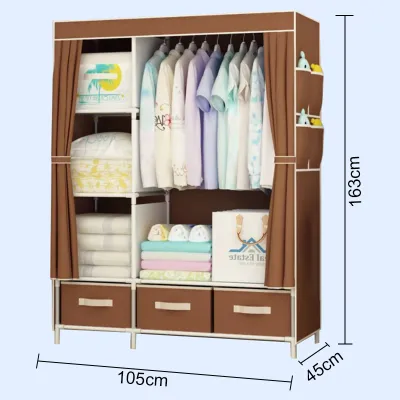
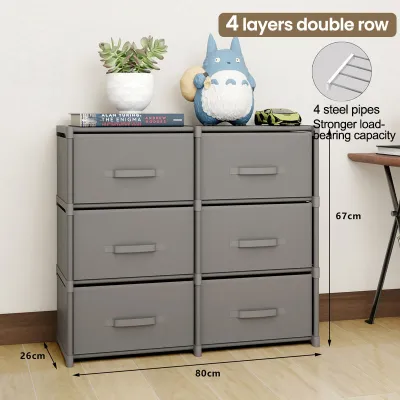
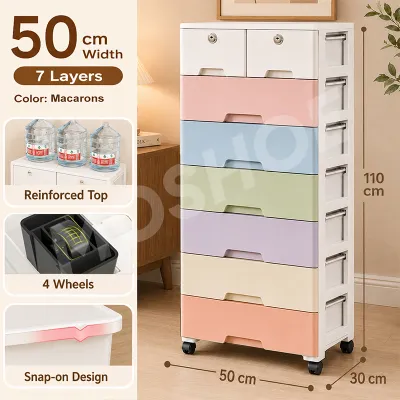
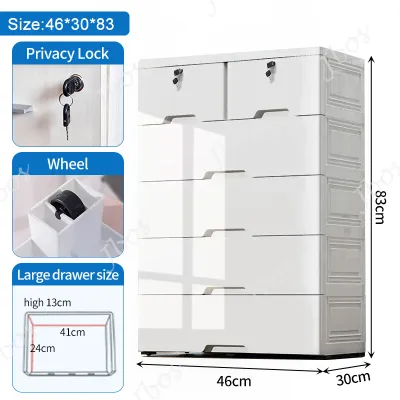
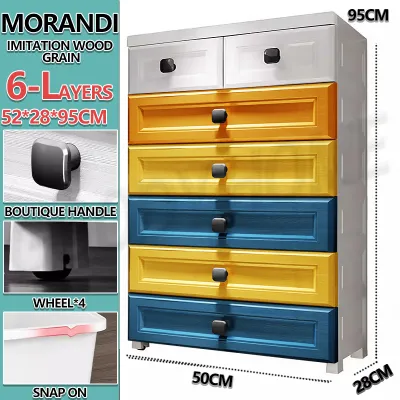
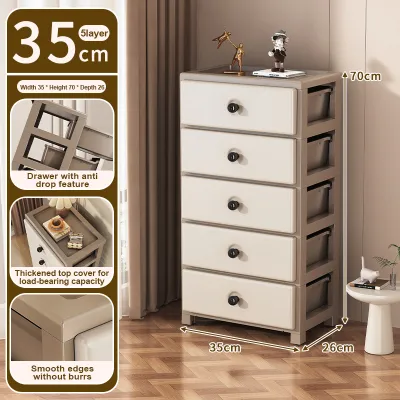
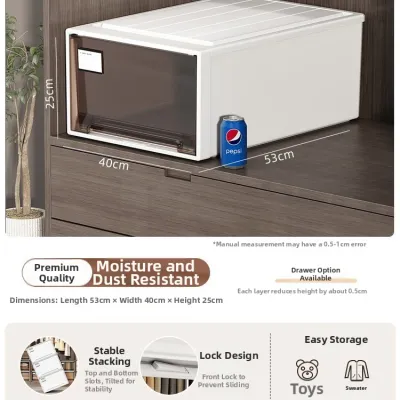
Prices are valid at publication and may change. Please refer to the product page for the latest price.

Freestanding drawers require careful floor-space planning. Beyond the physical dimensions of the cabinet itself, you must calculate the clearance required to fully extend the drawers. A standard drawer requires its full depth plus at least 50 to 60 centimeters of standing room for you to access your clothes comfortably. Additionally, you must ensure that open drawers do not collide with adjacent door swings, bed frames, or nightstands. For those living in urban condominiums or multi-story homes in the Philippines, delivery logistics present another critical constraint. Before purchasing a large, fully assembled freestanding chest, you must measure the clearance of entryways, narrow stairwells, tight corridors, and elevator cabins to prevent delivery day disasters.
Built-in drawer systems, by contrast, excel at utilizing vertical space and adapting to irregular architectural features. Many bedrooms feature structural columns, recessed alcoves, or sloped ceilings that leave awkward, unusable gaps when paired with rectangular freestanding furniture. Built-in systems can be custom-tailored to fit flush against these anomalies, transforming dead space into highly functional storage. By extending the cabinetry all the way to the ceiling, built-ins maximize vertical storage without consuming additional floor area, making them highly efficient for compact bedrooms.
Before making any decisions, compile a precise spatial checklist. Measure the total wall length, floor-to-ceiling height, and the distance from the wall to the edge of your bed or other furniture. Note the location of electrical outlets, light switches, baseboards, and window frames to ensure your chosen drawer system does not block essential room features.
Comparing Storage Capacity and Organization
The way you store, organize, and access your daily wardrobe depends heavily on the internal configuration of your drawer system. Standard freestanding chests of drawers typically offer pre-determined, uniform drawer depths and widths. While these standardized configurations are highly effective for storing folded items like t-shirts, jeans, and knitwear, they offer limited flexibility. The total storage capacity is strictly bound by the unit’s external frame, meaning you cannot easily adjust the layout if your wardrobe needs change over time.
Built-in drawer systems offer a high degree of customization that caters specifically to your inventory of clothes and accessories. Because these systems are built to order or assembled from highly modular components, you can specify varying drawer depths within a single unit. For instance, you can design shallow, velvet-lined drawers for jewelry, watches, and sunglasses at chest height, medium-depth drawers for daily garments, and deep, heavy-duty drawers at the base for bulky bedding or winter wear. This tailored approach ensures that no vertical space is wasted inside the cabinet.
Regardless of which system you select, the longevity and usability of your drawers depend on the quality of their hardware. When browsing retail options or reviewing a contractor’s quotation, pay close attention to the drawer glide mechanisms. Standard undermount or side-mounted roller slides are common in budget freestanding furniture, but they often prevent the drawer from pulling out completely, leaving the back of the drawer difficult to reach. Look for full-extension, ball-bearing runners that allow the entire drawer box to slide clear of the frame, giving you complete visibility and access to your clothes.
Furthermore, verify the load capacity of the drawer runners. While manufacturers do not always publish uniform weight limits, high-quality drawer systems generally specify their maximum load capacities on product specification sheets. Ensure the hardware is rated to handle the weight of your specific clothing items without sagging or binding. Finally, consider dust-proofing features. Built-in systems that seal tightly against the outer frame or include soft-close dampening mechanisms help minimize the gap between the drawer front and the carcass, reducing the accumulation of dust on your clean clothes.
Budget, Installation, and Long-Term Value
Financial planning for bedroom storage involves weighing immediate, upfront costs against long-term property value and potential future modifications. Freestanding drawers represent a highly predictable, budget-friendly investment. Because these units are mass-produced, they benefit from economies of scale, allowing you to find functional options across a wide range of price bands. Furthermore, freestanding furniture incurs virtually zero installation costs; you simply pay for delivery and, in some cases, basic home assembly. Once placed in your room, the unit is immediately ready for use, making it an efficient option for those on a tight budget or schedule.
Built-in drawer systems require a significantly larger upfront financial commitment. Whether you choose a custom carpentry route or a high-end modular system, you are paying not just for materials, but also for professional design, precise site measurements, and skilled labor. The installation process itself can be disruptive, requiring several days of on-site construction, fitting, sanding, and painting or laminating. This process generates noise, dust, and paint fumes, which may require you to temporarily seal off the room or adjust your daily routine.
Despite the higher initial cost, built-in storage often yields superior long-term value for homeowners. Because custom built-ins are designed to integrate seamlessly with the room’s architecture, they are viewed as permanent fixtures that enhance the overall appeal and marketability of a property. If you plan to sell your home in the future, high-quality built-in closets and drawers can positively influence a buyer’s perception of the home’s storage capacity. Freestanding units, on the other hand, are classified as movable personal property; they depreciate over time and must be packed up and transported when you move, offering no added value to the real estate itself.
You must also consider the hidden costs associated with future modifications. If your storage needs change or you decide to repurpose the bedroom, a freestanding chest of drawers can be easily moved to another room, sold on online marketplaces, or donated with minimal effort. Modifying or removing a built-in system, however, is a complex and costly undertaking. Dismantling built-in cabinetry often damages the underlying drywall, flooring, and paint, requiring professional repair, plastering, and repainting to restore the room to its original state. When obtaining quotes for built-ins, request a detailed breakdown of costs, including material specifications (such as moisture-resistant boards), hardware brands, delivery, installation labor, and any necessary structural adjustments to your walls or baseboards.
Aesthetics, Flexibility, and Moving Plans
The visual impact of your storage system plays a major role in shaping the atmosphere of your bedroom. Freestanding chests of drawers act as distinct design statements. Because they are available in a vast array of architectural styles—ranging from mid-century modern wood finishes to sleek, minimalist metal designs—they can serve as a focal point that anchors your bedroom’s decor. This independence allows you to mix and match different furniture pieces over time, evolving your style without undergoing a full room renovation.
For renters or individuals who relocate frequently due to career or lifestyle changes, the mobility of freestanding furniture is indispensable. Being able to pack your drawer for clothes into a moving truck ensures that your investment travels with you from one home to the next. In contrast, installing built-in drawers in a rented property is rarely feasible. Most tenancy agreements strictly prohibit permanent structural alterations, such as drilling extensive support rails into walls or removing existing baseboards.
Built-in systems excel at creating a clean, streamlined aesthetic that minimizes visual clutter. By fitting flush against the walls and matching the room’s paint or trim colors, built-ins draw the eye upward and make small bedrooms feel larger and more cohesive. The absence of gaps between the furniture and the walls also means there are no hard-to-reach crevices where dust, cobwebs, or pests can accumulate.
If you love the integrated look of built-in cabinetry but are constrained by a rental budget or landlord rules, you can employ clever styling techniques to make freestanding drawers appear built-in. Consider placing a freestanding chest of drawers inside an existing closet alcove, ensuring the dimensions match tightly. You can paint the unit the exact color of your bedroom walls, making it visually recede into the background. Adding removable, color-matched trim or molding around the base of the unit can also create the illusion of a custom, floor-to-ceiling installation while remaining entirely reversible when it is time to move.
Final Decision Framework: Which Should You Choose?
To finalize your decision, systematically evaluate your current living arrangements, budget constraints, and aesthetic preferences against the distinct characteristics of each system. This structured framework will help guide your path forward.
Choose Freestanding if:
- You rent your home: You need mobile furniture that can easily transition to a new property without violating lease agreements or requiring wall repairs.
- You have a limited immediate budget: You want to avoid the high cost of custom design, professional carpentry, and installation labor.
- You enjoy design flexibility: You like to periodically rearrange your bedroom layout or swap out furniture styles to refresh your space.
- You want to avoid construction disruption: You prefer a plug-and-play solution that does not involve dust, noise, or paint fumes in your living space.
Choose Built-in if:
- You own your home: You want to make a long-term investment that maximizes your property's storage capacity and overall market value.
- Your bedroom has irregular dimensions: You need to convert awkward alcoves, sloped ceilings, or areas around structural pillars into functional storage.
- You prioritize a minimalist aesthetic: You want a clean, flush design that hides clutter and integrates seamlessly with your room's architecture.
- You require specialized organization: You need custom drawer depths, specialized accessory inserts, or floor-to-ceiling storage configurations.
Verify first if:
- Your walls can support the installation: If you lean toward built-ins, consult a contractor to check if your bedroom walls are load-bearing or if they require reinforcement to support heavy cabinetry.
- Your clothing inventory is stable: Ensure your storage needs will not dramatically change in the near future, as built-in systems are difficult and expensive to alter once installed.
- You have landlord permission: If renting, ensure any minor modifications or anchoring required for safety are fully permitted under your lease.
Your immediate next step should be to conduct a thorough inventory of your clothing. Count your folded items, hanging garments, and accessories to determine the exact volume of drawer space you require. Once you have these requirements and your precise room measurements in hand, you can confidently browse retail showrooms for freestanding options or contact a reputable contractor for a custom built-in quotation.
Frequently Asked Questions (FAQ)
Can I add built-in drawers to an existing freestanding wardrobe?
Retrofitting built-in drawers into an existing freestanding wardrobe is possible, but it requires careful structural evaluation. Standard standalone wardrobes are designed to support specific weight distributions, and adding the weight of heavy wooden drawer boxes and dynamic loads when pulled out can compromise the unit’s stability. Before proceeding, check the wardrobe manufacturer’s guidelines to see if they offer compatible modular drawer inserts. If no official accessories exist, consult a professional carpenter to assess whether the wardrobe’s side panels and base are thick and stable enough to support drawer runners without warping, splitting, or causing the wardrobe to tip forward.
Which drawer system is better for humid climates?
In tropical, high-humidity environments like the Philippines, both freestanding and built-in systems can face moisture challenges if not properly specified. Rather than choosing one system over the other, focus on material selection, finishing, and air circulation. For either option, verify that the materials used are moisture-resistant engineered boards (such as marine-grade plywood or high-density fiberboard with proper edge banding) to prevent swelling and warping. Ensure the design leaves a small ventilation gap behind the unit to prevent stagnant air and mold growth. Regardless of the system you select, always check the manufacturer’s care instructions, keep drawers slightly ajar during highly humid periods, and place moisture-absorbing sachets inside to protect your clothes.

Community discussion
Share your experience or ask a question. Comments are reviewed before publication.