
Finding the right multi-functional coffee or side table from a brand like LINSY for a compact home in the Philippines requires balancing versatility with physical footprint. In tight living rooms, studio apartments, or condominiums, furniture must perform double duty—serving as a dining surface, a work-from-home desk, or a hidden storage unit. To select the ideal LINSY table, you must evaluate how its specific space-saving mechanisms, storage configurations, and material finishes align with your daily habits and the unique environmental conditions of your home. By focusing on verifiable specifications, precise spatial measurements, and robust build quality, you can secure a piece of furniture that enhances your living space without causing physical or visual clutter.
Key Features to Look for in Small-Space Tables
When space is at a premium, every piece of furniture must justify the floor area it occupies. Multi-functional tables achieve this by integrating hidden features that maximize utility while keeping the surrounding area organized. The first design element to consider is the storage configuration. Hidden compartments, such as those found beneath lift-top mechanisms or inside hollow drum-style side tables, are highly effective at concealing daily clutter like remote controls, chargers, and reading materials. This concealment is crucial for maintaining a tidy aesthetic in small rooms, where visible clutter can quickly make the space feel cramped. Conversely, open shelving or lower tiers provide easy access to frequently used items but require disciplined organization to prevent them from becoming visual eyesores.
Space-saving mechanisms are another critical feature to evaluate when browsing LINSY designs. Nesting side tables offer exceptional flexibility; they can be stacked neatly together when you need to clear floor space for activities, yoga, or cleaning, and then separated and spread across the room when hosting guests. Lift-top coffee tables feature top surfaces that raise upward and forward, bringing the tabletop closer to you. This mechanism transforms a standard coffee table into an ergonomic desk or dining surface, eliminating the need for a separate bulky dining table or dedicated home office desk. Foldable extensions or drop-leaf designs also provide temporary surface area that can be tucked away when no longer in use, ensuring your living room remains adaptable to different times of the day.
Products mentioned in this guide

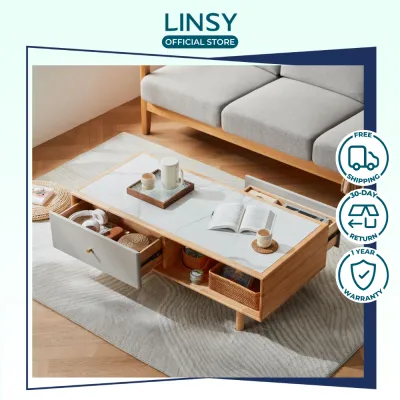
Prices are valid at publication and may change. Please refer to the product page for the latest price.
Visual lightness is an often-overlooked factor that dramatically influences how spacious a room feels. A solid, block-like table that sits flat on the floor blocks light and creates a heavy visual anchor, making a small room feel even smaller. To combat this, look for tables with slender, raised legs that elevate the main body of the table off the ground. This design allows light to pass underneath, creating an open, airy feel. Additionally, materials that incorporate transparency, such as tempered glass tops or light-colored wood laminates, help reduce the visual weight of the furniture. Choosing a table with a slim profile and clean lines ensures that even if the table has a generous surface area, it will not visually dominate the room.
Measuring Your Space and Table Dimensions
Before committing to any furniture purchase, taking precise measurements of your living area is non-negotiable. Start by calculating the available floor space where the table will sit. It is vital to compare this area against the product’s footprint in all of its configurations. For instance, a lift-top coffee table requires additional clearance not just for its closed state, but also for when the top is fully extended upward and outward. If the extended top encroaches too closely on your sofa or television console, it will restrict your movement and make the room feel incredibly tight. Always check the manufacturer’s detailed dimension diagrams to understand the maximum height, width, and depth of the table when it is fully opened.

Ergonomics play a significant role in how comfortable and functional your table will be in daily use. For a standard coffee table, the height of the tabletop should ideally align within one to two inches of your sofa’s seat cushion height. This alignment ensures that reaching for a drink, book, or remote control is natural and does not require awkward bending. For side tables, the surface should sit level with or slightly below the armrest of the adjacent seating. If you plan to use a lift-top table for working or dining, verify the extended height to ensure it allows you to sit comfortably on your sofa with your legs underneath the raised top, maintaining a healthy posture.
Clearance for walking paths is essential to maintain a smooth flow of traffic through your living room. As a general rule, you should maintain a clearance of at least 30 to 45 centimeters between the edge of the coffee table and the front of your sofa. This distance provides enough legroom to sit comfortably while still allowing you to walk past without bumping your shins. Furthermore, ensure there is at least 60 centimeters of space between the table and other major furniture pieces, such as a TV console or armchair. Finally, do not forget to measure the delivery route. Verify that the packaged box can easily pass through your building’s elevators, narrow stairwells, corridors, and main doorway entryways to avoid delivery-day headaches.
Evaluating Material Specifications and Build Quality
The tropical climate of the Philippines introduces specific challenges for furniture preservation, particularly high humidity and ambient heat. When evaluating LINSY tables, it is crucial to look past generic material names and scrutinize the specific surface treatments and finishes detailed in the product specifications. Look for tables featuring moisture-resistant laminates, sealed engineered wood, or melamine coatings. These protective layers help prevent the underlying wood fibers from absorbing moisture from the air, which can lead to swelling, warping, or peeling over time. If the table features metal components, ensure they are treated with rust-resistant powder coatings to withstand humid conditions.
Structural integrity is paramount for multi-functional tables that feature moving parts. Lift-top hinges, drawer runners, and nesting joints are subjected to repetitive physical stress during daily operation. Examine the product specifications for details on the hardware used, prioritizing heavy-duty hydraulic lifters or spring-assisted steel mechanisms over basic manual hinges. These advanced mechanisms provide smoother, more controlled movement and reduce the risk of sudden slamming. Additionally, pay close attention to the manufacturer’s stated weight capacity limits. A high-quality table will specify different weight limits for the tabletop when closed versus when it is fully extended, helping you avoid overloading the mechanism and compromising its structural stability.
Understanding and following the manufacturer’s care instructions is the best way to ensure the longevity of your multi-functional table. Moving parts and specialized finishes require gentle maintenance to prevent premature wear. Avoid using harsh chemical cleaners, abrasive scrubbing pads, or excessive water, which can strip away protective coatings or seep into joints and cause damage. Instead, use a soft, slightly damp microfiber cloth for daily dusting and wipe up spills immediately to prevent water rings. For tables with mechanical hinges, keeping the moving parts free of dust and debris will prevent grinding and ensure the lifting action remains smooth and quiet for years to come.
Pre-Purchase Checklist for Online and In-Store Buying
To ensure a seamless purchasing experience, it is highly recommended to follow a systematic checklist before finalizing your order. First, cross-reference the product dimensions, material specifications, and functional features across multiple platforms. Check the official LINSY brand store as well as authorized e-commerce platforms to ensure the information is consistent. Online product photos can sometimes use lighting or staging angles that distort the actual scale of the furniture, so relying strictly on the written specification sheet is the safest way to verify that the table will fit your space perfectly.
Next, clarify the assembly requirements of the table. Multi-functional furniture, especially pieces with complex lifting gears, nesting frames, or integrated storage drawers, often arrives flat-packed and requires careful assembly. Review the product description to see if the necessary assembly tools, such as hex keys or specialized screws, are included in the package. If you are not confident in your DIY skills or lack the time, check if the seller offers professional installation services for an additional fee. Correct assembly is critical; poorly aligned hinges or loose screws can cause the moving parts to wear out prematurely or operate unevenly.
Finally, carefully review the financial and logistical details of your purchase. Calculate the total cost, including the delivery fees which are typically priced in ₱ and vary based on your location and the weight of the package. Because multi-functional tables can be heavy due to their internal mechanisms, shipping costs can add up. Additionally, read the seller’s return policy and warranty coverage thoroughly. Ensure that the warranty explicitly covers mechanical components like hinges and runners, and understand the process for reporting any transit damage or missing parts immediately upon delivery so you can secure prompt after-sales support.
Frequently Asked Questions (FAQ)
How do I maintain the moving parts of a lift-top coffee table?
Maintaining the moving parts of a lift-top coffee table involves regular inspection and gentle care. Periodically check all visible screws, brackets, and hinges to ensure they remain tight, as repetitive lifting and lowering can cause hardware to loosen over time. Avoid overloading the table surface, especially when it is in the raised position, to prevent bending or straining the lifting arms. To keep the mechanism operating smoothly, wipe away any accumulated dust or debris from the hinges using a dry cloth, and always consult the manufacturer’s user manual before applying any lubricants or cleaning agents to the mechanical parts.
Are nesting side tables stable enough for daily use?
Yes, nesting side tables are highly stable for daily use, provided you evaluate their design and load limits beforehand. When choosing a set, inspect the base design to ensure it offers balanced weight distribution, with sturdy metal or solid wood frames that resist tipping. Many high-quality nesting tables feature anti-slip pads or adjustable feet on the bottom of the legs, which protect your flooring and allow you to level the tables on slightly uneven surfaces. Always verify the manufacturer’s stated load capacity for each individual tier, and place heavier items on the lower, larger table to maintain optimal stability.

Community discussion
Share your experience or ask a question. Comments are reviewed before publication.