
Setting up a highly productive and organized home office requires a careful balance of storage efficiency and visual appeal. When designing your workspace, selecting the right floating shelves bracket with wood is a critical decision that balances structural safety with visual style. There is no single bracket style that works best for every room; instead, the ideal choice depends heavily on your aesthetic preferences, wall construction, and what you intend to store.
Hidden brackets are the premier choice for achieving a clean, minimalist aesthetic where the wood appears to float seamlessly against the wall. This style keeps the focus entirely on the natural grain of your timber and the items you display. Conversely, visible brackets—such as L-brackets, heavy-duty metal gussets, or decorative wooden corbels—are superior when you need to support heavier loads, use thinner wood profiles, or want to complement industrial, rustic, or traditional design themes. The final choice depends on your specific wall material, the thickness of your chosen wood, and the weight distribution of your home office equipment.
Hidden vs. Visible Brackets: Core Differences Explained
To make an informed decision for your home office, it is essential to understand how these two bracket categories differ in their construction and physical interaction with wooden shelves. Hidden brackets, often referred to as blind or concealed shelf supports, consist of a metal backplate with solid steel rods or pins protruding horizontally. This backplate is mounted directly to the wall, and the wooden shelf is prepared with matching holes drilled deep into its rear edge. The shelf then slides over the rods, completely enclosing the hardware so that no metal is visible once the installation is complete.
Products mentioned in this guide
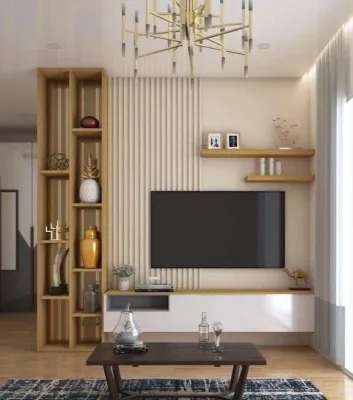
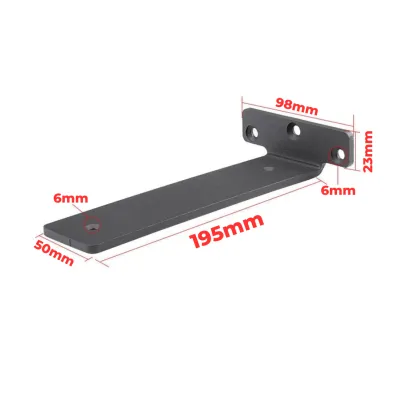
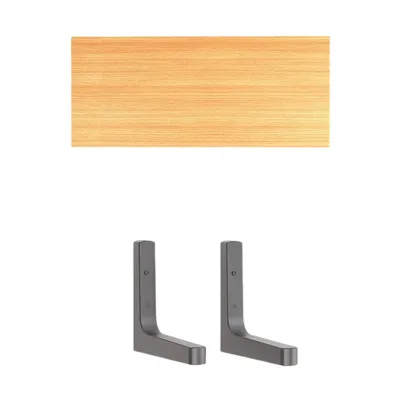
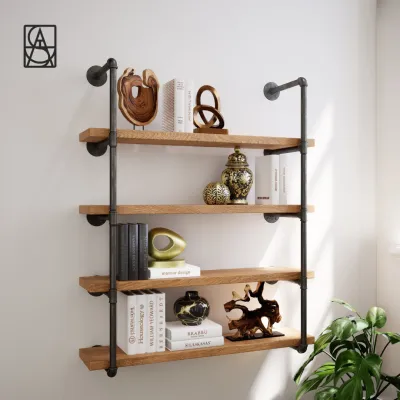
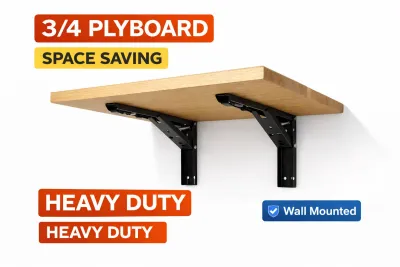
Prices are valid at publication and may change. Please refer to the product page for the latest price.
Visible brackets, on the other hand, are external structural supports that remain fully exposed after installation. These brackets are typically shaped like an “L” or a triangle, with one arm secured to the wall and the other supporting the underside or sides of the wooden shelf. They can be made from various materials, including powder-coated steel, wrought iron, brass, or even carved wood. Because they are mounted externally, they do not require any internal modifications to the shelf itself, making them highly versatile for various wood thicknesses.
The physical mechanism of weight transfer differs significantly between the two systems. A hidden bracket relies on the shear strength of the internal steel rods and the bending resistance of the metal plate secured to the wall. Because the support is entirely internal, the leverage exerted by the shelf’s weight is concentrated on a small area within the wood and the wall anchors. Visible brackets support the shelf from underneath, distributing the downward force over a larger vertical area on the wall. This structural configuration reduces the rotational force (torque) exerted on the wall anchors, allowing the system to handle significantly more weight without sagging.
Selecting the Right Floating Shelves Bracket with Wood: Aesthetic and Structural Comparisons
Choosing between hidden and visible brackets requires balancing structural physics, visual design, and your DIY woodworking capabilities. Each system offers distinct advantages and trade-offs that will directly impact the functionality and style of your home office storage.

Load Capacity and Structural Support
In a home office, shelves must often support substantial weight, including heavy textbooks, reference manuals, printers, and decorative items. Visible brackets generally offer a much higher and more predictable load capacity. Because the bracket supports the wood from underneath, it acts as a cantilever support that transfers weight directly down the wall. This configuration allows you to distribute heavy items across the shelf with minimal risk of the hardware bending or pulling away from the wall, provided the brackets are anchored securely into studs or solid concrete.
Hidden brackets rely heavily on the thickness of the steel rods and the depth to which they penetrate the wood. Because there is no support underneath, hidden brackets are highly susceptible to leverage. If you place a heavy item near the front edge of a deep shelf supported by hidden brackets, the rotational force can cause the shelf to sag forward or even pull the anchors out of the wall. When using hidden brackets, you must subtract the weight of the wooden shelf itself from the manufacturer’s specified load limits to determine the actual usable capacity. For example, a heavy hardwood slab like Acacia or Mahogany will consume a significant portion of the bracket’s weight rating before you even place a single book on it.
Aesthetic Impact in a Home Office
Hidden brackets create a true “floating” illusion that is highly sought after in modern, minimalist, or Scandinavian-inspired home offices. By eliminating visible hardware, these brackets keep the visual focus on the natural beauty of the wood grain and the items displayed on the shelf. This clean look helps reduce visual clutter, which can create a calmer, more focused working environment. It is particularly effective in smaller study spaces where bulky hardware might make the room feel cramped.
Visible brackets serve as active design elements that add visual weight, texture, and character to your office. For instance, matte black industrial L-brackets pair beautifully with reclaimed wood to create a rustic or industrial loft aesthetic. Alternatively, polished brass, chrome, or ornate cast-iron brackets can complement a traditional, vintage, or classic study design. The key is ensuring that the style and finish of the visible hardware complement your office desk, light fixtures, and overall decor rather than clashing with them.
Installation Complexity and Wood Preparation
The installation process for hidden brackets is highly precise and demands advanced woodworking skills or specialized tools. To prepare the wood, you must drill deep, perfectly straight holes into the back edge of the shelf. If the drill bit wanders even slightly off-angle, the shelf will not slide onto the rods, or it will sit crookedly on the wall. Additionally, you may need to rout a shallow recess in the back of the shelf so the bracket’s mounting plate sits flush with the wood, preventing a gap between the shelf and the wall. The wall mounting must also be perfectly level, as there is very little room for adjustment once the holes are drilled into the wood.
Visible brackets offer a much more forgiving and straightforward installation process. You do not need to drill deep internal holes or rout recesses into your wooden shelves. Instead, you simply mount the brackets to the wall, level them, place the pre-cut wood shelf on top, and secure it from underneath with short wood screws. This simplicity makes visible brackets highly accessible for DIY beginners. Furthermore, visible brackets allow for easier adjustments if your wall studs are slightly misaligned or if you are dealing with uneven masonry walls, as you can position the brackets precisely where support is available.
Decision Framework: Choose Hidden or Visible?
To help you finalize your selection, consider this structured framework based on your specific office requirements, budget, and structural constraints.
Choose Hidden Brackets if:
- You want a minimalist design: Your primary goal is a clean, seamless look with zero visible hardware.
- Your wood is sufficiently thick: Your wooden shelves are at least 40 mm (1.5 inches) thick, allowing you to drill deep internal holes without risking splitting the wood.
- Your walls are perfectly flat: You are mounting to a straight wall where a flush fit is easily achievable.
- Your load requirements are light to moderate: You plan to display lighter items, such as small indoor plants, framed photos, or a small collection of books.
- You have the right tools: You have access to a drill press, a self-centering doweling jig, or a router to ensure precise wood preparation.
Choose Visible Brackets if:
- You need high load capacity: You plan to store heavy office equipment, large stacks of reference books, or file organizers.
- Your wood is relatively thin: Your shelves are under 30 mm thick, making internal drilling unsafe or impossible.
- You prefer a specific design theme: You want to highlight industrial, rustic, or traditional design elements using textured metal hardware.
- You want an easy DIY project: You prefer a fast, forgiving installation process using standard hand tools.
- Your budget is limited: Quality visible brackets are generally more affordable and widely available on online marketplaces than high-precision hidden bracket systems, which often range from ₱500 to over ₱2,000 for heavy-duty options.
Verify First if:
- Your wall material is non-standard: Always check whether you are mounting into drywall, solid concrete, or hollow concrete blocks before purchasing hardware.
- You are using reclaimed wood: Inspect the wood for pre-existing cracks or soft spots that could compromise structural integrity under load.
Crucial Safety and Wall Compatibility Checks
Before purchasing your brackets and wood, you must perform several essential safety verifications to ensure your shelving system remains stable and secure over time.
Identify your wall type. In many tropical climates, including residential homes in the Philippines, interior walls are frequently constructed from solid concrete or concrete hollow blocks (CHB) rather than drywall over timber studs. This distinction is critical because mounting hardware behaves differently in each material. Drywall requires heavy-duty toggle bolts or threaded anchors, whereas concrete and hollow blocks require masonry wall plugs (often referred to locally as “tox” anchors) or expansion sleeve bolts to grip the masonry securely.
Match your fasteners to the wall material. Never rely on standard plastic wall plugs for heavy loads on drywall or hollow blocks. For concrete hollow blocks, ensure your anchors expand within the solid portions of the block or use specialized hollow-wall anchors. If you are mounting to drywall, always attempt to secure at least one side of each bracket directly into a wooden wall stud for maximum stability.
Inspect the wood quality. Before drilling or mounting, thoroughly check your wooden shelves for structural defects. Look for large loose knots, deep cracks, or signs of dry rot, especially if you are using reclaimed timber. High humidity can cause unsealed wood to warp or degrade, which can put uneven stress on hidden brackets and lead to failure. Ensure your wood is properly sealed with a polyurethane or varnish finish to protect it from moisture-induced warping.
Prevent shelf sagging through smart loading. To minimize leverage and prevent your shelves from sagging or pulling away from the wall, always place your heaviest office items—such as heavy books or printers—closest to the wall. Avoid overloading the front edge of the shelf. Additionally, limit the depth of your shelves; for hidden brackets, a shelf depth of 15 cm to 20 cm is generally recommended to keep the center of gravity close to the wall support.
Frequently Asked Questions (FAQ)
This section provides quick answers to common installation and material questions regarding wood floating shelves.
Can I use hidden brackets on any type of solid wood?
While solid wood is generally strong enough for shelving, very brittle woods or pieces with large internal knots can split when deep holes are drilled into their rear edges. Hardwoods like Acacia, Mahogany, or Tanguile are excellent candidates for hidden brackets due to their density and strength, provided they are dry and properly cured. You should avoid using hidden brackets on engineered woods like MDF, particleboard, or low-grade plywood unless the hardware manufacturer explicitly rates them for such materials, as these engineered products lack the grain structure required to hold internal rods securely under load.
How do I prevent my wood shelves from sagging over time?
To prevent long-term sagging, ensure your bracket spacing complies with the manufacturer’s guidelines, typically spacing supports no more than 60 cm to 80 cm apart. Keep heavy items positioned toward the back of the shelf to reduce rotational leverage. If you are using long spans of wood, choosing thicker slabs (at least 40 mm) will naturally resist bending. For ultimate sag prevention under heavy loads, visible brackets featuring a front lip or a diagonal support strut offer superior physical reinforcement compared to hidden rod systems.

Community discussion
Share your experience or ask a question. Comments are reviewed before publication.