
To safely display a book collection on wall-mounted shelves, you must determine the total weight of your books and match it to a shelf system where every component—the board, the brackets, and the wall anchors—can support that load. A typical collection of books can weigh anywhere from 15 to over 40 kilograms per linear meter. To prevent bowing, sagging, or catastrophic wall damage, your installation must be designed around the weakest link in your mounting setup, taking into account your specific wall type and shelf material.
Understanding How Shelf Weight Limits Actually Work
When planning to install wall-mounted shelves for a book collection, it is easy to look only at the weight capacity of the shelf board. However, a shelf’s true weight capacity is determined by the entire system working together: the board, the brackets, the wall anchors, and the wall structure itself.
The maximum safe capacity of your shelving is always determined by the weakest component in this chain. If you mount a solid hardwood shelf board rated for 50 kilograms using lightweight decorative brackets rated for only 15 kilograms, your safe limit is strictly 15 kilograms. If you mount those brackets into weak drywall using low-grade plastic plugs, your actual safe capacity drops even further. Always check manufacturer labels and product specifications for verified maximum load ratings of every individual part.
Products mentioned in this guide
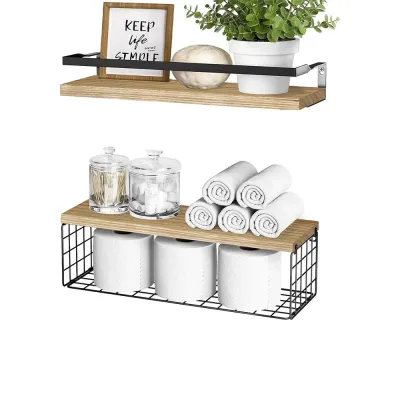
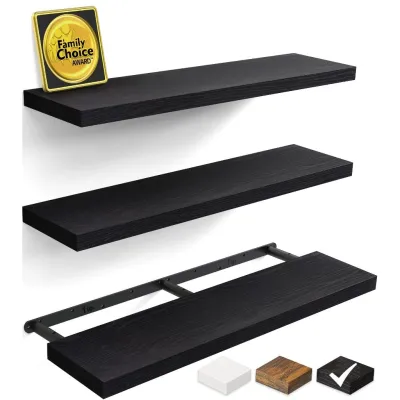
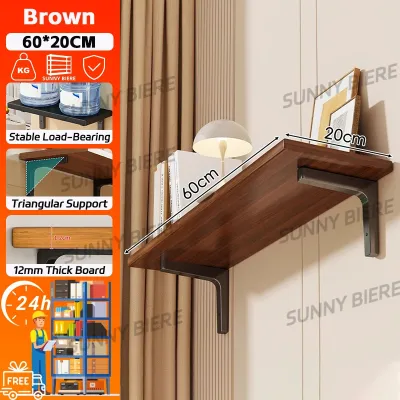
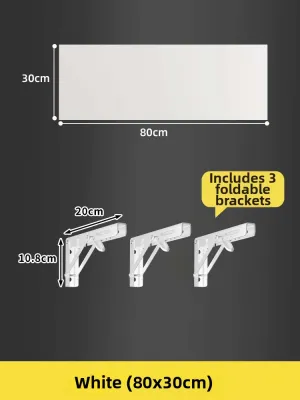
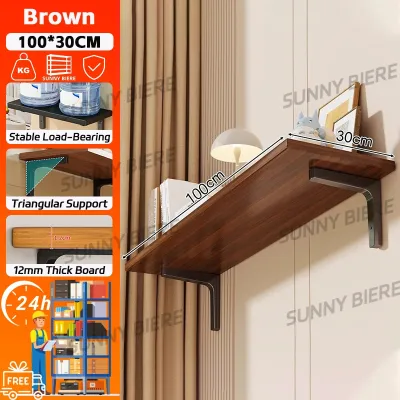
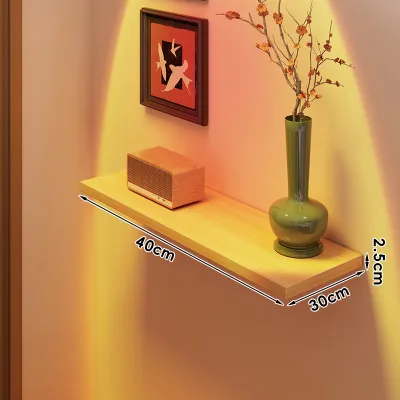
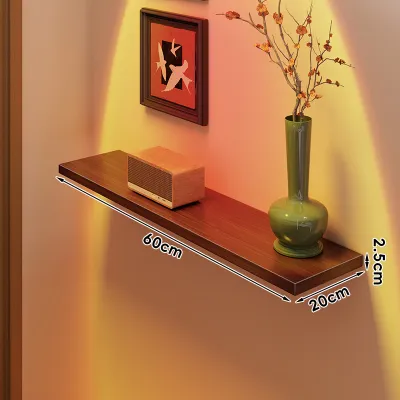
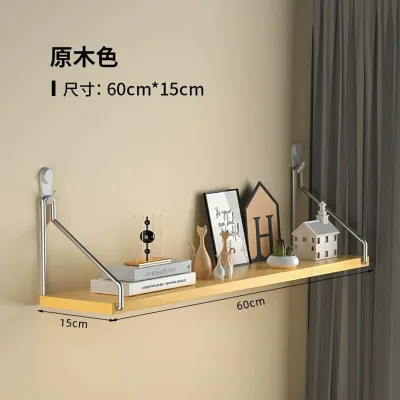
Prices are valid at publication and may change. Please refer to the product page for the latest price.
Storing dense items like books requires a significant safety margin because they exert a continuous, static load. In tropical climates with high humidity, such as in the Philippines, wood and engineered wood boards can absorb airborne moisture over time, which can slightly reduce their structural stiffness. To account for this environmental factor and the constant weight of your books, design your system with a safety margin of at least 20% to 30% beyond your calculated book weight.
How to Estimate the Total Weight of Your Books
Before purchasing any wall-mounted shelves or mounting hardware, you need a realistic estimate of how much your book collection actually weighs. Books are surprisingly heavy, and underestimating their collective weight is the primary cause of sagging shelves and pulled anchors.

Standard paperbacks are the lightest category, averaging about 15 to 20 kilograms per linear meter of shelf space. Hardcover novels, textbooks, and reference manuals are much denser, often weighing between 30 to 40 kilograms per linear meter. Large, oversized coffee table books or heavy encyclopedias can easily exceed 45 kilograms per linear meter.
To calculate your total expected load, measure the length of the shelf space you plan to fill and multiply it by the estimated weight of your book type. For instance, if you have three separate shelves, each measuring 80 centimeters in length, you have a total of 2.4 linear meters of shelving. If you plan to fill these shelves entirely with standard hardcover novels, your calculation would be 2.4 meters multiplied by an average of 35 kilograms, resulting in a total book weight of approximately 84 kilograms.
If you want to be precise, weigh a small stack of your books on a home scale, measure the width of that stack, and use that ratio to calculate the weight of the entire collection. Do not forget to adjust your weight estimates if you plan to add heavy decorative items, metal bookends, or storage boxes to the same shelves.
Choosing Shelf Materials and Spans to Prevent Sagging
The material you choose for your shelf boards, along with the distance between your support brackets, directly dictates whether your shelves will remain straight or bow under the weight of your books over time. Different materials have varying levels of natural stiffness and resistance to bending.
Solid hardwoods, such as mahogany or acacia, offer excellent natural stiffness. However, even solid wood must be checked for proper sealing and moisture-resistant finishes to prevent warping in humid environments. High-density engineered wood, such as furniture-grade plywood or high-density fiberboard (HDF), provides reliable structural stability and is less prone to warping than solid wood. In contrast, standard low-density particleboard or medium-density fiberboard (MDF) is highly susceptible to sagging under heavy, continuous loads and should generally be avoided for heavy book collections unless the boards are exceptionally thick and heavily supported.
The relationship between shelf thickness, depth, and the maximum unsupported span between brackets is a critical engineering factor. As a general rule, the thinner the shelf board, the closer your brackets must be to prevent sagging. For a standard 19mm-thick wood or plywood shelf holding a dense collection of books, the unsupported span between brackets should not exceed 60 to 80 centimeters. If you are using a thinner board or a weaker material like MDF, you must reduce this span to 45 to 50 centimeters, or increase the thickness of the board to 25mm or more.
When selecting materials, always review the manufacturer guidelines for identifying long-term sagging risks based on your intended load. If a shelf board begins to show even a slight visual bow immediately after loading, it is a clear sign that the span is too wide or the material is too weak for the weight of your books.
Matching Brackets and Wall Anchors to Your Wall Type
Once you have calculated the weight of your books and selected your shelf boards, you must choose brackets and wall anchors that can safely transfer that load into your wall structure. The correct hardware depends entirely on whether you are mounting onto solid masonry or hollow drywall.
In many homes, walls are constructed from solid concrete, brick, or hollow concrete blocks. For these solid wall types, you must use heavy-duty masonry screws or expanding steel sleeve anchors, often referred to locally as tox plugs or concrete anchors. These fasteners grip the solid masonry tightly and can support substantial weight. For hollow drywall partitions, standard plastic plug anchors are completely inadequate for holding books and will quickly pull out of the wall. Instead, you must use heavy-duty toggle bolts or metal hollow-wall anchors that expand behind the drywall sheet to distribute the weight.
Whenever you are mounting shelves on drywall, it is absolutely necessary to secure your brackets directly into the vertical wooden or metal wall studs behind the plaster. Screwing directly into studs provides the highest possible weight capacity and prevents the drywall from tearing under the heavy leverage of the shelf.
The design and size of your brackets must also match your shelf depth. The horizontal arm of the bracket should extend at least two-thirds of the depth of the shelf board. If the bracket is too short, the shelf board will be unstable and will exert excessive outward leverage on the top wall anchor, increasing the risk of the anchor pulling out of the wall. If you are unsure of your wall’s internal structure, or if you encounter crumbling plaster or weak concrete while drilling, stop the installation immediately and consult a qualified professional to avoid structural damage.
Critical Installation Mistakes That Cause Shelf Failure
Even with the best materials, poor installation practices can lead to catastrophic shelf failure, resulting in damaged walls, ruined books, or personal injury. Understanding these common mistakes will help you ensure a secure and lasting installation.
The most frequent mistake is overloading the shelving system beyond the rating of its weakest component. Homeowners often buy strong, solid wood boards but mount them with cheap, light-duty brackets or inadequate wall anchors, assuming the wood’s strength will compensate. Always design your system around the lowest rated component in your hardware setup.
Another critical error is using standard, lightweight plastic wall plugs in hollow drywall. These plugs are designed for light picture frames, not the heavy, continuous load of a book collection. Over time, the constant downward pull of the books will cause these plugs to slip, damaging the drywall and causing the shelf to collapse.
Ignoring the proper spacing between brackets is another common failure point. Spacing brackets too far apart forces the shelf board to bear too much weight across an unsupported span, which drastically increases the risk of the board bowing, cracking, or snapping.
Finally, failing to use a spirit level during installation is a subtle but dangerous mistake. If a shelf is not perfectly level, the weight of the books will shift unevenly, concentrating the load onto specific brackets and anchors. This uneven stress can cause individual fasteners to fail progressively, eventually bringing down the entire shelving system.
Frequently Asked Questions (FAQ)
Can I use floating shelves for heavy books?
Floating shelves can be used for books, but they have strict structural limitations. Because they lack visible diagonal brackets, they rely entirely on internal steel rods anchored deep into the wall. For a heavy book collection, you must use heavy-duty floating shelf systems with thick, concealed steel bracket rods and strict adherence to the manufacturer’s weight limits. Furthermore, floating shelves carrying heavy books must be anchored directly into solid masonry or wooden wall studs; mounting them solely into drywall with standard anchors is highly likely to result in wall damage and shelf collapse.
How do I know if my wall can support the shelves?
Before drilling, you must assess your wall’s material and structural integrity. For drywall, use a reliable stud finder to locate the solid vertical framing members behind the plaster. For concrete or brick walls, you can tap the surface; a solid, dull thud indicates solid masonry, while a hollow sound suggests plasterboard or an internal cavity. You can also drill a small, inconspicuous test hole to examine the dust: white gypsum dust indicates drywall, while grey or red masonry dust confirms concrete or brick. If you notice deep cracks, moisture damage, or crumbling plaster, the wall may be structurally compromised and unable to bear a heavy load without professional reinforcement.

Community discussion
Share your experience or ask a question. Comments are reviewed before publication.