
Finding a secure, discreet way to store personal items, documents, or valuables right next to your bed requires a careful balance of design and functionality. In the Philippines, where bedroom spaces can range from compact high-rise condominiums in metropolitan areas to spacious suburban homes, selecting a bedside table with a secret compartment involves more than just picking an attractive piece of furniture. You must evaluate how the hidden compartment operates, how the local tropical climate might affect its materials, and how the unit fits into your daily routine.
Because inventory and specific product availability on local e-commerce platforms and physical showrooms fluctuate constantly, the most reliable approach is to use a structured evaluation framework. Instead of searching for a single model that may be out of stock, you can assess any candidate table based on its mechanical design, physical dimensions, material durability, and locking reliability. This guide provides the practical steps needed to identify high-quality options and build a dependable shortlist for your home.
Understanding Hidden Storage Mechanisms
The effectiveness of a secret compartment depends heavily on its opening mechanism. Different designs offer varying levels of concealment, ease of access, and storage volume. Understanding these mechanisms allows you to match the furniture to your specific security needs and the types of items you plan to store.
Products mentioned in this guide
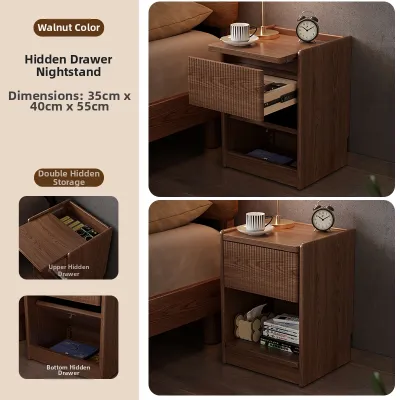

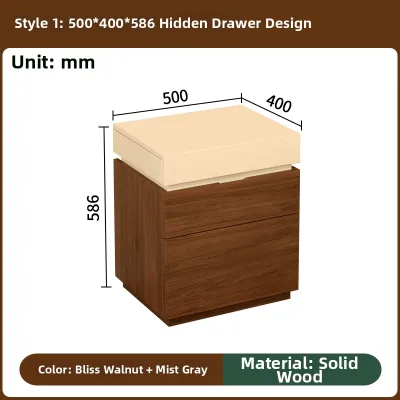
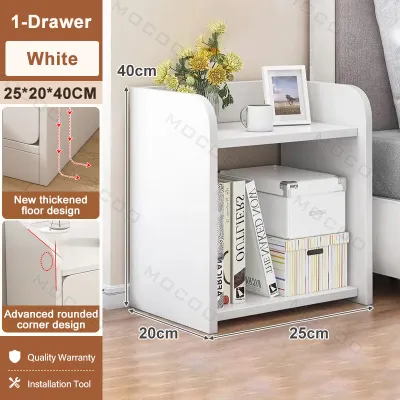
Prices are valid at publication and may change. Please refer to the product page for the latest price.
One common design is the false drawer bottom. This mechanism utilizes a shallow, hidden tray situated beneath a standard, fully functional drawer. To the casual observer, the drawer appears to be a normal storage space, while the secret compartment remains completely invisible underneath. This setup is excellent for flat items like documents, passports, or emergency cash, but it offers limited vertical clearance.
Another popular option is the lift-top surface. With this design, the entire top panel of the bedside table hinges upward or slides forward to reveal a deep storage well. Lift-tops provide generous storage volume, making them suitable for larger items. However, they require you to clear the tabletop of lamps, phones, or books before you can access the compartment, which can be inconvenient for items you need to reach quickly.
Side-swing panels and drop-down shelves offer alternative access points. Side-swing panels use concealed hinges on the side of the table cabinet, opening like a small door to reveal a narrow vertical compartment. Drop-down shelves are often built into the lower apron or base of the table, lowering down under the unit. These designs are highly discreet because they utilize spaces that are typically solid wood or empty air, but they may require specific clearance on the sides or bottom of the table to operate.
Beyond the physical opening method, you must consider the locking system. Mechanical key locks are highly reliable and do not require power, but keeping track of a physical key can compromise the secret if someone finds it. Digital keypads or biometric fingerprint scanners offer rapid access and high security, but they rely on batteries that must be monitored and replaced. Hidden magnetic releases use a separate magnetic key or card that you swipe over a specific, unmarked spot on the exterior to release an internal latch. This completely eliminates visible keyholes or keypads, preserving the stealth of the table, though it requires you to keep the magnetic key in a secure, memorable location.
When choosing a mechanism, evaluate how quickly you need to access your items. If you are storing emergency items, a rapid-access magnetic or biometric lock is preferable. For long-term storage of items you rarely need, a more complex mechanical release or a false bottom that requires removing the main drawer is highly effective and less likely to be discovered.
Key Dimensions and Space Planning
Before purchasing any bedside table, you must carefully plan your bedroom layout to ensure the furniture fits physically and functions without obstruction. A secret compartment is useless if you cannot open it fully due to space constraints, or if its operation is blocked by your bed frame.

Start by measuring your bed mattress height. Ideally, the top surface of your bedside table should align closely with the top of your mattress, or sit within five to ten centimeters of it. This alignment ensures a comfortable reach from a lying position and maintains visual proportion in the room. If the table is too high or too low, it not only looks awkward but can also make accessing a hidden compartment difficult or conspicuous.
Next, calculate the clearance space required for the hidden features to operate. If you choose a lift-top model, ensure there is enough vertical clearance above the table, keeping in mind wall-mounted reading lights, artwork, or low-hanging curtains. For pull-out hidden drawers or side-swing panels, measure the distance between the bedside table and the bed frame, as well as adjacent walls or wardrobes. The compartment must be able to open fully without colliding with other furniture or blocking pathways.
You must also verify the internal usable volume of the secret compartment against the exact dimensions of the items you intend to store. Do not rely solely on the external dimensions of the bedside table. Hidden compartments often have much smaller interior dimensions due to the double-wall construction and locking hardware. Measure your valuables—such as tablets, document folders, or lockboxes—and compare them to the manufacturer’s specified internal compartment dimensions.
Finally, consider the overall stability and finished dimensions of the unit for delivery and installation. Ensure the table has a wide, stable base, especially if it features a heavy lift-top mechanism that shifts the center of gravity when opened. Check your doorway, hallway, and elevator clearances to guarantee the fully assembled table can be delivered to your bedroom without damage.
Material, Build Quality, and Concealment Checks
The true value of a hidden-storage bedside table lies in its ability to remain completely inconspicuous. Poor build quality can easily betray a secret compartment through misaligned seams, unusual gaps, or rattling parts. When evaluating options, a thorough inspection of materials and construction is essential.
Begin by inspecting the exterior seams and joints. High-quality concealment furniture features tight, uniform seams that match the natural design lines of the piece. If one side panel has a slightly wider gap than the others, or if a decorative molding strip looks uneven, it may indicate a hidden door or panel. Look for hardware placement; visible screws, hinges, or magnetic catches on the exterior are immediate giveaways. The best designs hide all functional hardware deep within the interior structure.
In the tropical climate of the Philippines, high humidity levels can cause solid wood to expand and contract. This natural movement can lead to warped panels, sticking drawer tracks, or widening seams that expose hidden compartments. When choosing materials, check if the wood has been properly treated, sealed, or veneered to resist moisture. Engineered woods like high-density fiberboard (HDF) with moisture-resistant coatings can sometimes offer greater dimensional stability in humid environments than untreated solid wood, though high-quality, kiln-dried solid hardwoods remain excellent if properly finished.
Check the manufacturer’s specifications for weight capacity. This is particularly critical for lift-top mechanisms and suspended false bottoms. A weak mechanism may sag over time under the weight of items placed on top, creating a visible gap or making the compartment difficult to open. Ensure the internal support brackets and hinges are made of heavy-duty steel rather than thin metal or plastic.
Verify the smoothness of the sliding tracks and the reliability of the locking components. Drawer slides should operate quietly and smoothly without catching or squeaking, which could draw unwanted attention. If you are inspecting a physical floor model, test the mechanism multiple times to ensure it locks securely and releases cleanly without requiring excessive force. For online purchases, carefully read product descriptions to confirm the type of drawer runners and locking hardware used.
Building Your Shortlist: Pre-Purchase Verification
When you are ready to build your shortlist from online marketplaces or local furniture retailers, you need an actionable verification process. Because you cannot always test the furniture in person before it arrives, relying on structured checks will help you avoid low-quality products.
First, cross-reference the listed external dimensions with the internal compartment specifications. Some retailers advertise large external dimensions but fail to mention that the secret compartment is extremely small due to thick structural walls or bulky locking mechanisms. If the internal dimensions are not listed, contact the seller directly to ask for exact measurements of the hidden space before making a purchase.
Second, review the retailer’s return policy and warranty coverage. Because bedside tables with secret compartments rely on moving parts and locking systems, they are more prone to mechanical issues than standard furniture. Look for warranties that specifically cover the locking hardware, electronic components, and drawer tracks. Understand the return process: if the table arrives with warped panels or a misaligned lock, you need to know if the seller covers return shipping or offers a replacement.
Third, analyze customer reviews with a critical eye. Look past general ratings and search specifically for keywords like “lock,” “track,” “alignment,” “assembly,” or “humidity.” Pay close attention to reviews mentioning that the digital lock failed after a few weeks, that the wood warped in humid weather, or that the hidden drawer sticks. If multiple buyers report that the hidden drawer sticks or that the seams are highly visible, remove that model from your shortlist.
Additionally, verify the assembly requirements. Some bedside tables arrive fully assembled, which ensures the factory-aligned seams and locks function perfectly. Others require complete home assembly. If you must assemble the unit yourself, ensure you have the necessary tools and patience, as even a minor misalignment during assembly can cause the secret compartment to stick or become visible.
Frequently Asked Questions (FAQ)
What should I do if the digital lock on a bedside table fails?
If the electronic or digital lock on your bedside table fails to open, the first step is to check the external power status. Many digital locks feature external battery contacts or a micro-USB port at the bottom of the keypad, allowing you to connect a temporary power source (like a power bank or a fresh battery) to power the lock and enter your code. If your model came with a physical manual override key, locate it from its secure storage spot outside the bedside table to unlock the compartment manually. Always consult the manufacturer’s instruction manual for specific troubleshooting steps before attempting to force the compartment open. Avoid using physical force, screwdrivers, or drills, as this can permanently damage the locking mechanism, warp the wood, and ruin the concealment features of your furniture.
How can I prevent hidden drawer tracks from sticking over time?
To keep hidden drawer tracks and sliding mechanisms operating smoothly, perform regular visual inspections and clean any accumulated dust, lint, or debris from the runners. In the Philippines, the combination of dust and high humidity can create a sticky residue on metal tracks, leading to friction and noise. Use a dry microfiber cloth or a soft brush to clean the tracks. Check your product manual for approved lubricants; some manufacturers recommend a light application of dry silicone spray or paraffin wax on the tracks. Avoid using heavy household oils, cooking oils, or WD-40 unless explicitly approved, as these can attract more dust, degrade plastic components, and seep into the wood, potentially damaging the finish and causing the wood to swell.

Community discussion
Share your experience or ask a question. Comments are reviewed before publication.