
Finding a comfortable office chair under ₱5,000 in the Philippines requires a strategic approach that separates marketing hype from functional design. In a tropical climate where high humidity can make long working hours uncomfortable, selecting the right materials and mechanical features is crucial for daily comfort. By focusing on essential physical support, verifying component certifications, and measuring your workspace, you can secure a reliable chair that protects your posture without exceeding your budget. This guide outlines how to navigate the entry-level market, prioritize the most impactful features, and make an informed decision that fits both your body and your wallet.
Setting Realistic Expectations for a ₱5,000 Budget
When shopping for an office chair within a ₱5,000 budget, managing expectations is the first step toward a successful purchase. At this price point, manufacturers must make clear trade-offs in materials and engineering. You will not find premium features like polished aluminum bases, high-end elastomeric mesh, or complex synchronous tilt mechanisms. Instead, the market consists primarily of chairs constructed with reinforced nylon frames, standard polyester mesh backrests, and seat cushions made of polyurethane or recycled foam.
It is also important to understand what “ergonomic” means in this budget tier. On online marketplaces, the term is frequently used as a generic marketing buzzword. In this price range, an ergonomic chair typically offers basic postural support—such as a fixed lumbar curve and standard height adjustment—rather than a highly customizable, multi-dimensional fit. A budget ergonomic chair is designed to keep you in a reasonably upright, supported position, but it will not offer the micro-adjustments needed to accommodate highly specific physical needs.
Products mentioned in this guide
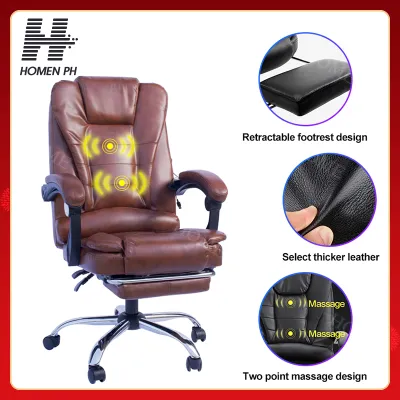
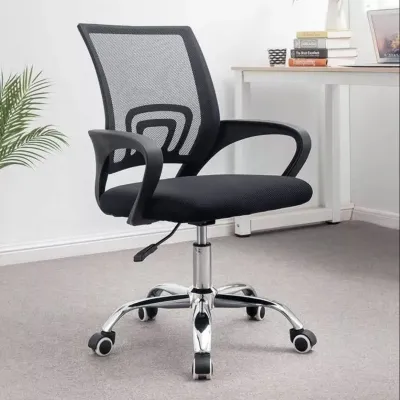
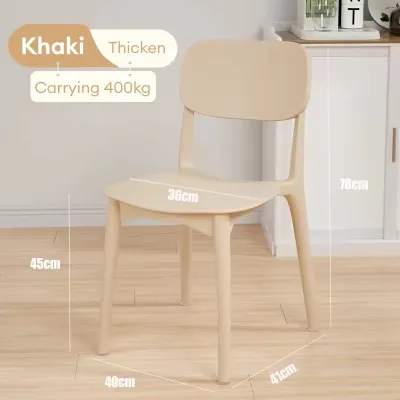
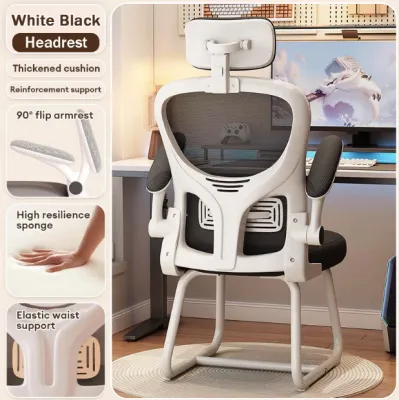
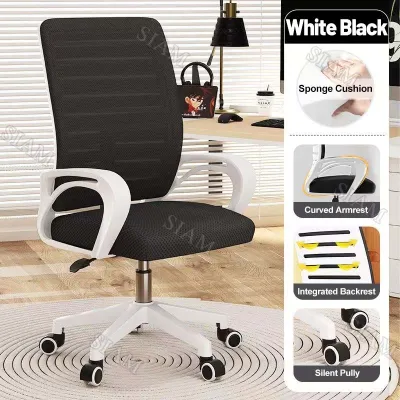
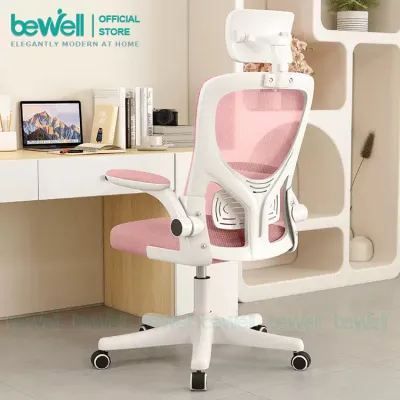
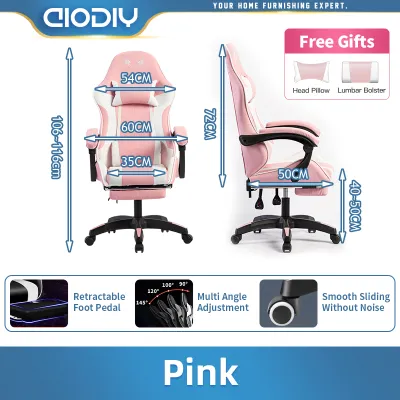
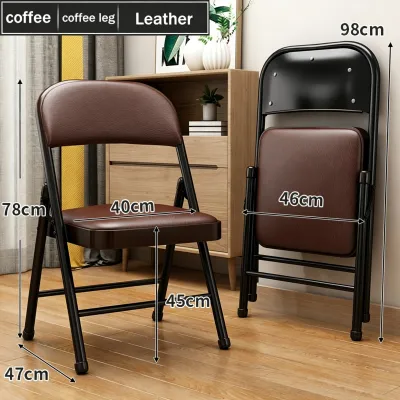
Prices are valid at publication and may change. Please refer to the product page for the latest price.
To avoid disappointment, read product specifications with a critical eye. Do not rely solely on promotional images that show sleek, futuristic designs. Instead, look for concrete details about the materials used, the adjustability of the armrests, and the density of the seat foam. Understanding these limitations beforehand prevents buyer’s remorse and helps you focus on finding a sturdy, reliable workhorse.
Prioritizing Must-Have Features Over Premium Add-Ons
To stay under the ₱5,000 threshold, you must distinguish between non-negotiable features that directly impact your physical comfort and premium add-ons that can be sacrificed. The absolute most critical feature is a reliable pneumatic seat height adjustment. This mechanism allows you to align the chair with your desk height so that your feet rest flat on the floor, which is essential for reducing pressure on your lower back and thighs.

Another non-negotiable feature is a contoured backrest with dedicated lumbar support. Even if the lumbar support is fixed and cannot be adjusted up or down, the backrest must have a distinct curve that mirrors the natural S-shape of your spine. Without this curve, a chair is simply a flat stool with a back, which inevitably leads to slouching and muscle fatigue over long working sessions.
Conversely, there are several premium features you should willingly compromise on to keep costs down. For example, multi-directional armrests (often marketed as 3D or 4D armrests) are unnecessary luxury items at this price point. Fixed armrests or simple height-adjustable armrests are perfectly adequate for basic support. Similarly, advanced synchro-tilt mechanisms are rarely found in durable budget chairs. A simple tilt-lock or a tension-adjustable rocking mechanism is a practical compromise that keeps the chair’s construction simple and less prone to mechanical failure.
You should also pay close attention to the base and casters, as these components bear your entire weight. Look for a heavy-duty nylon base or a basic chrome-plated steel base. Nylon bases are highly resilient, lightweight, and do not rust, making them excellent for humid environments. Ensure the casters are designed for your specific flooring. Standard hard nylon casters are suitable for low-pile carpets or protective office mats, but if you have delicate hardwood or vinyl tile floors, you may want to verify if the casters are made of softer polyurethane to prevent scratching.
Evaluating Comfort, Fit, and Space Requirements
A chair can have excellent specifications on paper, but if it does not physically fit your body or your workspace, it will not be comfortable. Before making a purchase, cross-reference the chair’s physical dimensions with your own measurements. Check the product specification sheet for the seat width, seat depth, and backrest height. If you are taller than average, a shallow seat depth can leave your thighs unsupported, while a backrest that is too short might place the lumbar curve in the wrong position, causing discomfort rather than relief.
Weight capacity is another critical metric to evaluate. While many budget chairs claim a maximum weight capacity of 120 kg or more, it is wise to treat these ratings conservatively. For long-term durability and stability, aim for a chair where your weight sits well below the maximum limit. A chair operating near its weight limit will experience faster wear on the gas lift cylinder and the seat foam, leading to premature failure.
Workspace integration is equally important. Measure the height of your desk and compare it to the height of the chair’s armrests at their highest and lowest settings. If the armrests are fixed and sit higher than your desk surface, you will not be able to slide the chair under the desk when you are finished working. This not only wastes valuable space in smaller rooms or condominium units but also forces you to sit too far from your keyboard, straining your neck and shoulders. Additionally, consider the physical path the package will take during delivery. Ensure the box dimensions can easily clear your doorways, narrow hallways, stairwells, or condominium lifts to avoid delivery day headaches.
Finally, leverage the power of user reviews on online marketplaces, but do so selectively. Ignore the initial five-star reviews that only praise the fast shipping. Instead, search for reviews that mention long-term use, specifically looking for feedback on whether the seat foam sags after a few weeks, if the mesh loses its tension, or if the frame begins to squeak loudly under normal movement.
Verifying Safety, Warranty, and Total Checkout Costs
When buying a budget office chair, safety should never be compromised. The pneumatic cylinder, or gas lift, is the most critical mechanical component of the chair. Low-quality, uncertified gas lifts can leak, lose pressure, or fail catastrophically. To ensure your safety, look for product descriptions that explicitly state the gas lift has been certified by recognized testing bodies, such as SGS or BIFMA, or is rated as a Class 3 or Class 4 cylinder. These classifications indicate that the cylinder has thicker steel walls and more robust seals, providing peace of mind during daily use.
Warranty coverage is another area where budget chairs vary significantly. Many low-cost sellers offer no warranty at all, or limit it to a few days after delivery. Look for sellers who offer at least a six-month to one-year warranty on major structural components, such as the gas lift, base, and tilt mechanism. Furthermore, read the seller’s return policy carefully. Most online merchants will only accept returns for clear manufacturing defects or shipping damage. They will rarely accept a return simply because you find the chair uncomfortable or the seat cushion too firm.
Lastly, keep a close eye on the total checkout cost to ensure you stay strictly under your ₱5,000 budget. Bulky furniture items like office chairs can incur substantial shipping fees, especially if you live outside Metro Manila or in remote provincial areas. A chair priced at ₱4,200 can easily exceed ₱5,000 once shipping charges and remote area surcharges are added at checkout. Additionally, check if the chair requires self-assembly. While most budget chairs are shipped flat-packed to save on shipping costs, they usually include the necessary tools and basic instructions. If you are not comfortable with DIY assembly, you may need to factor in the cost of hiring local help or look for a seller that offers pre-assembled delivery options within your area.
Frequently Asked Questions (FAQ)
Is a mesh back better than foam for a budget office chair?
Mesh backrests offer superior breathability, making them highly suitable for the warm and humid climate of the Philippines, especially if you work in a room without continuous air conditioning. The open weave allows air to circulate, keeping your back cool and dry. However, budget-grade mesh can stretch and sag over time, losing its supportive qualities. Foam seats, on the other hand, provide more immediate cushioning and a solid feel, but cheap, low-density foam can flatten permanently within a few months of daily use. For the best balance of comfort and durability under ₱5,000, look for a hybrid design that features a breathable mesh backrest for ventilation paired with a high-density molded foam seat cushion that retains its shape over time.
How can I test if a budget chair is truly ergonomic?
Once you have assembled your chair, you can perform a few simple physical checks to evaluate its ergonomic fit. Sit fully back in the chair so your spine is supported by the backrest. Your feet should rest flat on the floor, and your knees should be bent at approximately a 90-degree angle, with your hips slightly higher than or level with your knees. There should be a small gap, about the width of two or three fingers, between the back of your knees and the front edge of the seat cushion to ensure proper blood circulation. Finally, the lumbar curve of the backrest should align naturally with the small of your lower back without forcing you to slouch or arch your spine uncomfortably.
What should I do if the chair's gas lift starts sinking?
A sinking chair is a clear sign that the internal seals of the gas lift cylinder have failed, allowing the pressurized gas to escape. This is a common issue with budget chairs over time and represents both a functional failure and a potential safety hazard. You should never attempt unsafe DIY fixes, such as wrapping duct tape around the cylinder, using metal hose clamps, or inserting PVC pipes to lock the chair in place, as these temporary workarounds do not restore proper mechanical function and can damage the chair further. If the chair is still within its warranty period, contact the seller immediately to request a replacement cylinder. If the warranty has expired, you can easily purchase a standard, certified replacement gas lift cylinder online and install it yourself using basic tools, or consult a local furniture repair professional to handle the replacement safely.

Community discussion
Share your experience or ask a question. Comments are reviewed before publication.