
Finding a cozy sofa bed that fits the Japandi aesthetic in the Philippines requires balancing minimalist design with tropical-friendly materials. The Japandi style—a harmonious fusion of Japanese simplicity and Scandinavian warmth—emphasizes clean lines, natural textures, and a clutter-free environment. In Philippine homes, where living spaces often serve multiple purposes and face high humidity, selecting the right convertible sofa means looking beyond basic functionality. You must evaluate how the piece supports daily lounging, accommodates overnight guests, and maintains an airy, peaceful atmosphere. By focusing on low-profile silhouettes, breathable fabrics, and robust mechanical frames, you can find a versatile piece that elevates your living room without overwhelming its footprint.
Recognizing Japandi Design Elements in Sofa Beds
To successfully integrate a sofa bed into a Japandi-style living room, you must first understand the visual and material markers of this design philosophy. Japandi relies heavily on natural materials that bring a sense of the outdoors inside. When browsing options, look for visible wooden elements, such as exposed solid wood bases, tapered oak or rubberwood legs, and armrests with clean, rounded edges. These wooden accents should feature light to medium finishes—such as natural oak, ash, or soft walnut—rather than dark, heavy varnishes that can disrupt the light, airy feel of the room.
Upholstery choice is equally critical for achieving the desired texture and warmth. True Japandi design favors tactile, matte fabrics over shiny or highly synthetic materials. Look for linen blends, cotton canvas, or textured bouclé in neutral tones. In the tropical climate of the Philippines, these breathable weaves are not just aesthetic choices; they prevent the sticky, uncomfortable feeling often associated with faux leather or dense polyester microfibers during warm afternoons.
Products mentioned in this guide
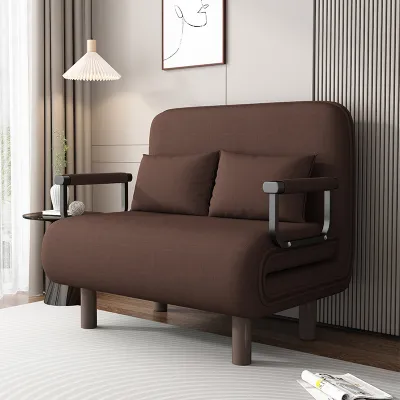
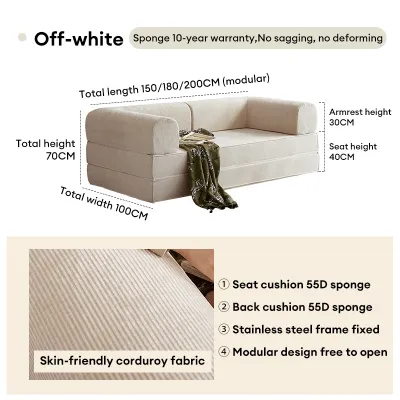
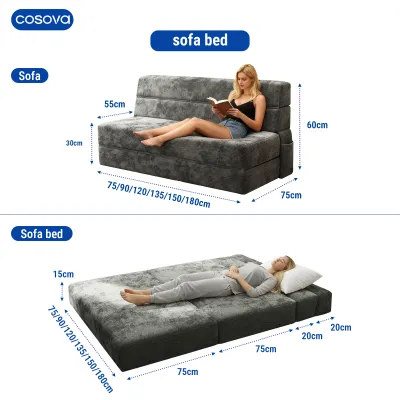

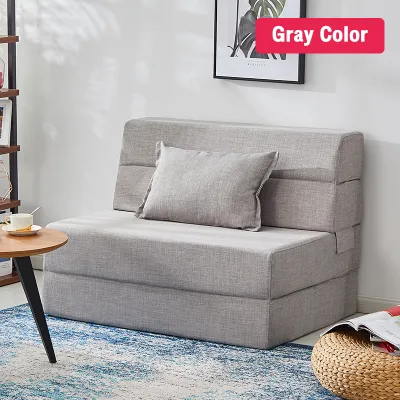

Prices are valid at publication and may change. Please refer to the product page for the latest price.
Color palettes in a Japandi space are deeply rooted in nature. Your sofa bed should serve as a calm, grounding anchor for the room rather than a loud focal point. Focus on warm neutrals such as oatmeal, sand, soft beige, muted stone gray, and warm cream. If you want to introduce color, stick to earthy, desaturated tones like olive green, terracotta, or dusty slate blue. These shades harmonize beautifully with indoor plants and natural light, creating a serene environment.
Finally, pay close attention to the silhouette of the sofa bed. Traditional sleeper sofas can look bulky and heavy, which contradicts the minimalist ethos. Seek out low-profile designs with clean, straight lines and minimal ornamentation. Avoid tufting with deep buttons, overly ornate piping, or thick, rolled arms. Instead, opt for sleek track arms, cushion-back designs, and elevated bases that allow light to pass underneath, making your living room feel more spacious and uncluttered.
Evaluating Comfort and Sleep Quality
A sofa bed must perform exceptionally well in both of its primary roles: as a comfortable daytime seat and a supportive nighttime bed. Achieving this balance requires a close inspection of the internal cushioning and mattress construction. Many standard sofa beds compromise on one aspect, resulting in either a stiff seat or a sagging bed. To avoid this, look for high-density foam cores wrapped in soft fiber fill, which provides a supportive sit while maintaining its shape over time.

For the sleeping surface, evaluate the mechanism and mattress type carefully. If the sofa bed will be used frequently for guests, a pocket spring or hybrid mattress is generally preferable to thin, low-density foam. Pocket springs contour to the body and minimize motion transfer, which is essential if two people are sharing the bed. If you choose a foam mattress, ensure it has a thickness of at least ten centimeters to prevent sleepers from feeling the underlying metal or wooden support bars.
The structural integrity of the frame determines both safety and longevity. A squeaky, unstable frame will quickly ruin the peaceful ambiance of a Japandi home. Verify that the inner frame is constructed from kiln-dried hardwood or reinforced metal. Kiln-drying removes moisture from the wood, preventing it from warping or cracking in the humid Philippine climate. Inspect the joints and folding mechanisms; smooth, fluid transitions when converting the sofa to a bed indicate high-quality engineering and reduce wear on the moving parts.
Upholstery breathability directly impacts sleep quality, especially during warm, humid nights. Synthetic fabrics like standard polyester can trap body heat, leading to an uncomfortable, sweaty sleep experience. Choosing a cotton-linen blend or a highly breathable woven fabric allows air to circulate freely. Additionally, check if the mattress cover is removable and washable, as this makes it much easier to maintain a fresh, hygienic sleeping environment over years of use.
Planning Space and Layout for Your Living Room
Integrating a multi-functional piece of furniture like a sofa bed requires precise spatial planning to maintain the open, uncluttered feel central to Japandi design. Before making a purchase, you must measure your living room with extreme care. Do not rely solely on how the sofa looks in a spacious showroom or on a website. Use painter’s tape to outline the exact footprint of the sofa on your living room floor, both in its closed sofa state and its fully extended bed state.
Clearance is the most critical spatial factor. A pull-out sofa bed requires significant forward clearance to extend fully. Ensure there is at least sixty centimeters of walking space around the extended bed so guests can move comfortably without bumping into walls or other furniture. If your living room is compact, consider how you will move secondary furniture, such as coffee tables or side chairs, when converting the sofa. Lightweight, modular, or easily movable accent pieces are ideal companions for a flexible layout.
Visual weight is another design consideration. A large, blocky sofa bed that sits directly on the floor can make a small room feel cramped and heavy. To preserve a minimalist, airy aesthetic, choose a sofa bed with raised legs. Elevating the frame even fifteen centimeters off the ground allows the eye to see more floor space, creating the illusion of a larger, more open room. This gap also facilitates better airflow and makes daily cleaning much easier.
Finally, do not overlook the logistics of delivery and assembly. Many apartment buildings and condominiums in urban areas of the Philippines have tight corridors, sharp stairwell turns, and small elevator cabins. Check the packaged dimensions of the sofa bed against your building’s entryways. If access is restricted, look for flat-packed options or modular designs that can be assembled directly inside your living room, ensuring a smooth delivery process without unexpected structural obstacles.
Pre-Purchase Verification Checklist
Before finalizing your decision, running through a practical verification checklist will help protect your investment and ensure the sofa bed meets your daily needs. First, review the manufacturer’s detailed specifications for weight capacity. A reliable sofa bed should clearly state its maximum load limit for both seating and sleeping configurations. Ensure these limits accommodate your household and potential guests safely.
Next, scrutinize the fabric care guidelines. Natural fiber blends look beautiful but can be susceptible to staining if untreated. If you have pets or young children, check if the fabric has been treated with a non-toxic stain-resistant finish, or if the sofa features fully removable, dry-cleanable covers. Removable covers are highly practical, allowing you to wash away dust and spills easily, which is particularly useful in dusty urban environments.
Finally, verify the warranty terms provided by the manufacturer or retailer. A high-quality sofa bed represents a significant financial commitment, so you want assurance that the structural frame and the mechanical folding parts are covered. Look for warranties that separate the frame construction from the fabric and mechanism, as the moving metal parts often experience the most wear and tear over time. Understanding these terms beforehand prevents future frustration and ensures long-term satisfaction.
Frequently Asked Questions (FAQ)
How do I clean and maintain natural fabric upholstery?
To keep natural fabrics like linen and cotton blends looking pristine, establish a regular cleaning routine. Vacuum the upholstery weekly using a soft brush attachment to remove dust, pet dander, and loose dirt before they settle deep into the fibers. If a spill occurs, blot it immediately with a clean, dry white cloth; never rub, as this can push the liquid deeper and damage the fabric weave. For spot cleaning, use a mild, pH-balanced fabric cleaner recommended by the manufacturer, and always test it on an inconspicuous area first. In humid climates, ensure the fabric dries completely to prevent mold or mildew growth, utilizing a fan or dehumidifier if necessary.
What if my living room has limited clearance for a pull-out bed?
If your living room cannot accommodate the forward extension of a traditional pull-out sleeper, several space-saving mechanisms still align beautifully with the Japandi aesthetic. A click-clack mechanism allows the backrest to fold flat, utilizing the existing depth of the sofa rather than extending forward into the room. Alternatively, a futon-style frame with a high-quality, minimalist mattress offers a low-profile look that folds down easily. You can also explore modular daybeds or chaise lounges that serve as comfortable single sleeping surfaces without requiring any mechanical transformation, preserving both floor space and visual simplicity.

Community discussion
Share your experience or ask a question. Comments are reviewed before publication.