
Selecting a double deck heavy duty metal bed for a small bedroom in the Philippines requires balancing space efficiency with structural safety. In dense urban areas where condominium units and studio apartments often feature compact footprints, maximizing vertical space is a practical necessity. However, not all metal frames are built to handle the daily stress of multiple sleepers. A truly heavy-duty double deck bed must offer exceptional stability, robust joint connections, and a resilient finish that can withstand the country’s high relative humidity. By focusing on precise spatial measurements, structural specifications, and proper installation, you can secure a safe and durable sleeping solution that optimizes your limited floor area.
Measuring Your Small Space for a Double Deck Bed
Standard residential ceilings in Philippine condominiums often range from 2.4 to 2.7 meters. To ensure the safety and comfort of the top-bunk sleeper, you must calculate the vertical clearance. Measure from the floor to the ceiling, then subtract the total height of the bunk bed frame. From this remaining space, subtract the thickness of the top mattress. The sleeper on the top deck should have at least 75 to 90 centimeters of headroom to sit up comfortably without risking head contact with the ceiling, concrete beams, or light fixtures like ceiling fans and pendant lights.
A standard single-over-single or double-over-double metal frame occupies a specific footprint that must be mapped onto your floor plan. Use painter’s tape to outline the bed’s dimensions on the floor. Ensure this footprint does not obstruct the swing path of bedroom doors, wardrobe doors, or cabinet drawers. Additionally, verify that the bed does not block access to windows, which are crucial for natural ventilation, or interfere with the airflow and maintenance access of wall-mounted split-type air conditioning units.
Products mentioned in this guide
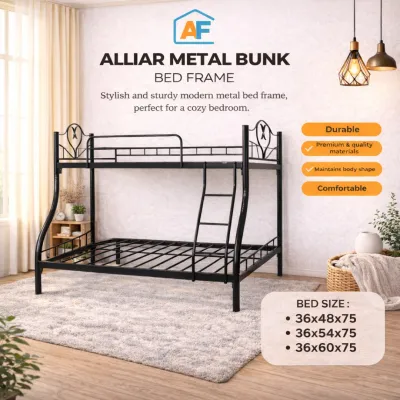
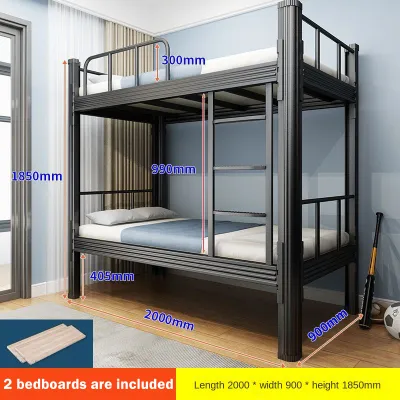
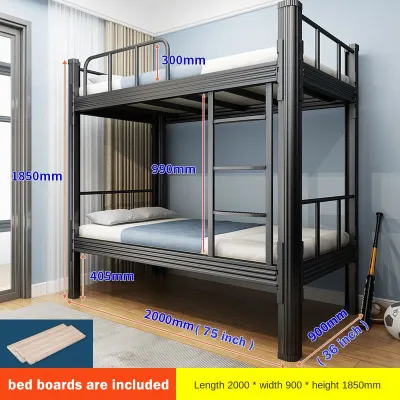
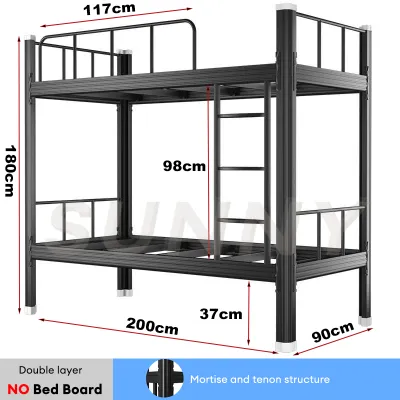
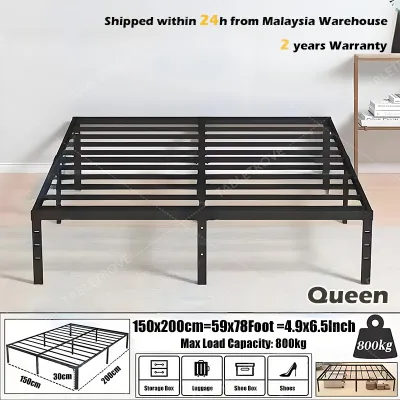
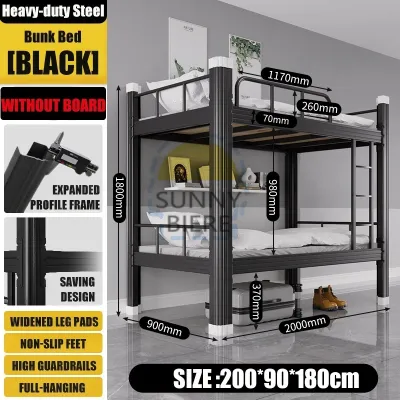
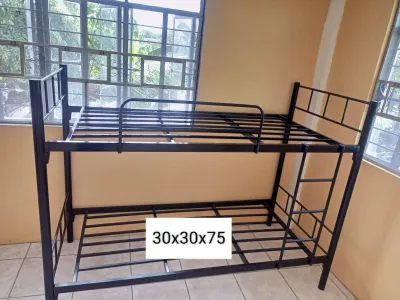
![[Shipping from Manila] Double layer iron bed Double layer iron bed Workers dormitory Double layer iron bed Workers apartment Shelf height Iron bed 180 * 200 * 90/120/150CM Upper and lower beds Double iron frame bed](https://img.lazcdn.com/g/p/9608d9b76c99de587228518b77cc34af.jpg_400x400q80.jpg_.webp)
Prices are valid at publication and may change. Please refer to the product page for the latest price.
Beyond the final placement, consider how the individual metal components will reach the bedroom. Measure the width and height of all doorways, narrow hallways, stairwells, and especially the building’s service or passenger elevator. Heavy-duty metal bunk beds often feature large, pre-welded headboards and footboards that cannot be disassembled into smaller pieces. Verifying these clearance paths beforehand prevents the frustration of receiving a delivery that cannot physically fit through your condominium’s corridors or entryways.
The method of accessing the top bunk significantly impacts both safety and floor space. Integrated vertical ladders, which are built directly into the end panels of the frame, are the most space-saving option because they do not extend beyond the bed’s rectangular footprint. Angled ladders offer a more comfortable climbing angle but require additional floor space at the side or foot of the bed. For very tight rooms, an integrated vertical ladder is highly recommended, provided the users are physically comfortable climbing vertically.
Identifying True Heavy-Duty Metal Construction
The term “heavy-duty” is frequently used as a marketing label rather than a technical specification. To identify a genuinely robust frame, look for the steel gauge or the wall thickness of the metal tubing. High-quality heavy-duty frames typically utilize steel with a wall thickness of 1.2 millimeters to 1.5 millimeters or thicker. Thinner metal tubes, often found in budget-friendly, lightweight frames, are prone to bending under concentrated weight and will cause the entire structure to sway or wobble when a sleeper moves.

Inspect the connection points where the horizontal rails meet the vertical posts. A high-quality metal bed features full-perimeter welds that are smooth, continuous, and free of air pockets or cracks. Avoid frames that rely solely on thin spot welds, as these can fail under repeated stress. Furthermore, the assembly joints should use heavy-duty steel bolts that pass completely through the tubing, secured with locking nuts or washers, rather than simple slip-fit brackets or light screws that loosen over time.
The foundation supporting the mattress is critical for both safety and comfort. Heavy-duty metal bunk beds should feature a dense network of welded metal slats rather than a few sparse bars. Check the spacing between the slats; they should be positioned no more than 7 to 10 centimeters apart to provide uniform support. For wider configurations, such as double-over-double setups, verify if the frame includes a longitudinal center support rail equipped with adjustable support legs that contact the floor to distribute weight evenly.
The Philippines’ tropical climate, characterized by high humidity and saline air in coastal regions, poses a constant threat of corrosion to metal furniture. Raw steel will rust rapidly if exposed to moisture. Therefore, prioritize frames finished with an electrostatic powder coating rather than standard liquid spray paint. Powder coating involves baking a dry polymer powder onto the metal at high temperatures, creating a thick, durable, and scratch-resistant barrier that prevents moisture from reaching the steel underneath.
Verifying Weight Limits and Mattress Compatibility
Always review the manufacturer’s official weight capacity ratings rather than assuming a universal limit. These ratings are typically divided into static weight, which is the weight the bed can hold when completely still, and dynamic weight, which is the force applied when a person moves, sits down, or climbs. Note that the top bunk almost always has a lower weight limit than the bottom bunk to maintain a low center of gravity and prevent tip-over hazards. Ensure the combined weight of the sleeper and the mattress does not exceed these specified limits.
Safety regulations dictate that the top guardrails must extend at least 12.7 centimeters above the top surface of the mattress to prevent accidental falls during sleep. When choosing a mattress for the top bunk, you must select a low-profile model, typically between 10 to 15 centimeters thick. Using a thick, plush mattress on the top deck reduces the effective height of the guardrail, rendering it unsafe. Save the thicker, heavier mattresses for the bottom bunk where guardrail height is not a constraint.
Different mattress materials require different types of support. Traditional spring mattresses and high-density polyurethane foam mattresses, which are highly popular in local households, can sag or deform if placed directly on widely spaced metal slats. To protect your mattress investment and ensure proper spinal alignment, check if the metal slats provide a flat, continuous surface. If the gaps are wide, you should place a bunkie board—a thin, fabric-wrapped wooden support—or a custom-cut sheet of plywood over the metal slats before laying down the mattress.
Sourcing and Inspecting Furniture in the Philippines
When shopping for a heavy-duty metal bed, visiting a physical furniture showroom allows you to personally test the bed’s stability. You can physically shake the display model to check for sway, inspect the weld quality up close, and verify the thickness of the metal. If purchasing from an online marketplace or a local e-commerce platform, carefully read customer reviews, look for real-life photos uploaded by buyers, and request detailed technical specifications from the seller regarding steel thickness and weight capacities before placing an order.
Upon delivery, do not sign the receiving documents until you have thoroughly inspected the components. Check that all hardware, including bolts, washers, and assembly tools, is present and matches the instruction manual. Inspect the metal tubes for any dents, warping, or deep scratches incurred during transit. Examine the welded joints to ensure there are no sharp metal burrs or exposed, unpainted steel that could lead to premature rusting in the humid climate.
A reliable manufacturer or retailer should offer a clear warranty covering structural defects, such as broken welds or frame failure, rather than just cosmetic damage. Additionally, consider utilizing the retailer’s professional assembly services if available. Professional installers have the correct tools and experience to ensure that all bolts are tensioned correctly and that the frame is perfectly square, which is essential for minimizing squeaks and ensuring long-term structural integrity.
Frequently Asked Questions (FAQ)
Do metal bunk beds squeak more than wooden ones?
Metal bunk beds can develop squeaks due to metal-on-metal friction at the joint connections when the frame sways or when sleepers move. This issue is highly preventable during assembly. Applying a thin layer of silicone lubricant or placing nylon washers between the metal joints before tightening the bolts can eliminate friction. Ensuring that all bolts are tightened securely and checking them periodically will keep the frame quiet and stable.
Can I separate a heavy-duty metal bunk bed into two single beds later?
Whether a double deck bed can be separated depends entirely on its structural design. Some heavy-duty models are engineered as convertible units, featuring detachable connection pins that allow the top deck to be lifted off and set up as a standalone single bed. Other models feature fully welded, single-piece vertical end frames that cannot be disassembled. If you anticipate needing separate beds in the future, verify that the model is explicitly advertised as convertible or detachable before purchasing.
How often should I tighten the bolts on a metal bunk bed?
For a newly assembled metal bunk bed, it is normal for the joints to settle slightly after initial use. You should perform the first bolt-tightening check approximately two to four weeks after assembly. After this initial adjustment, establish a routine maintenance schedule to inspect and tighten all connection bolts every six months. Regular tightening prevents the joints from loosening, which reduces structural wear, eliminates squeaks, and maintains the overall stability of the bed.

Community discussion
Share your experience or ask a question. Comments are reviewed before publication.