
Selecting the right table for laptop use in a compact bedroom or condominium unit requires balancing immediate workspace needs with the physical limits of your floor plan. To make the right choice, you must weigh the temporary, stowaway convenience of a foldable desk against the permanent, corner-utilizing surface area of an L-shaped model. The ideal decision depends on your daily work habits, room layout, and whether you need an always-on workstation or a flexible setup that disappears when the workday ends.
Assessing Your Room Layout and Movement Paths
Before browsing online marketplaces or visiting furniture showrooms, you need to map out the exact zone where your desk will sit. Grab a tape measure and mark the physical footprint on your floor, paying close attention to how the surrounding space functions throughout the day. A desk that fits perfectly on paper can easily block a wardrobe door, prevent your bedroom door from opening fully, or obstruct the narrow pathway between your bed and the wall.
In tight condominium layouts, every centimeter of clearance matters for daily comfort. You must account for the swing radius of doors, drawers, and even your office chair when it is pushed back. If your room serves multiple purposes, such as a combined bedroom and living area, map out the traffic flow to ensure you do not have to squeeze past your workspace to reach other areas of your home.
Products mentioned in this guide
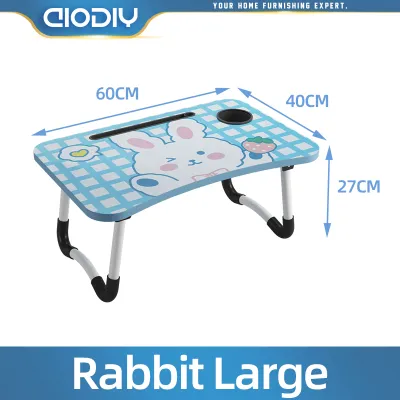
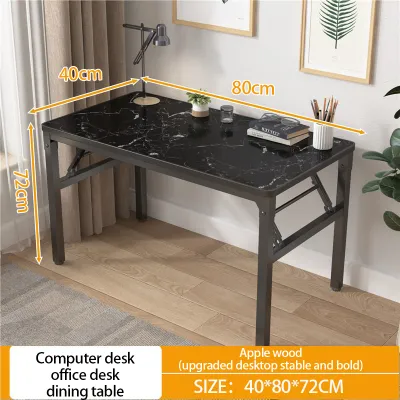
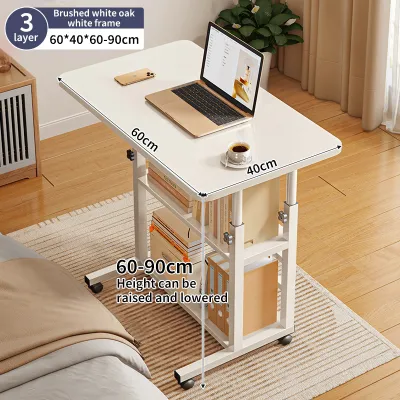
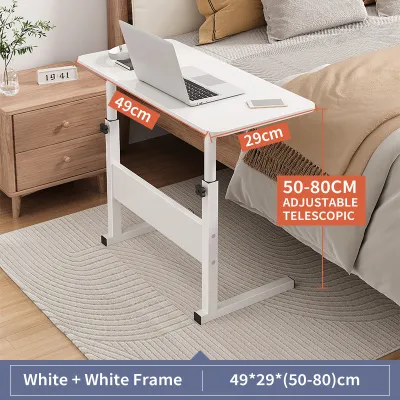
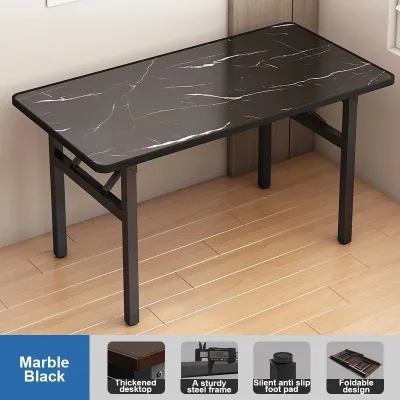
Prices are valid at publication and may change. Please refer to the product page for the latest price.
Whether you are planning a budget-friendly setup of a few thousand ₱ or investing in a premium wooden desk, your housing status also dictates your furniture options. If you rent your condo, drilling into concrete walls to mount a floating desk might violate your lease agreement or risk your security deposit. Freestanding options are generally safer for renters, while property owners have more freedom to consider permanent wall-mounted installations that save valuable floor space.
Finally, evaluate how often you actually work from home. If you only use your laptop for an hour or two in the evening, a permanent desk might be an unnecessary waste of space. However, if you work full-time remote shifts, a dedicated, stable setup is essential to prevent physical fatigue and maintain a healthy boundary between work and rest.
Choosing Between Foldable and L-Shaped Designs
Foldable tables and L-shaped desks solve space constraints in fundamentally different ways, making it crucial to match their strengths to your specific work style. Foldable tables are the ultimate space-savers for multi-purpose rooms or highly restricted floor plans. These desks can be set up in minutes and tucked away behind a door, under a bed, or inside a closet when your workday is complete.

When shopping for a foldable table for laptop use, pay close attention to the hinge mechanisms and locking systems. Look for models with robust manual locks or bracing bars that prevent the legs from buckling under pressure. Because these tables are designed to move, any play in the joints can lead to an annoying wobble while typing, which quickly becomes frustrating during long working hours.
L-shaped tables, on the other hand, are designed to maximize corner spaces that might otherwise go unused. They provide a generous amount of surface area, making them ideal if you use a dual-monitor setup, keep physical notebooks open, or need space for a printer. By tucking into a corner, an L-shaped desk keeps your workspace organized and out of the main traffic lanes of your room.
Before choosing an L-shaped desk, verify the return depth and corner clearance. Some models feature a reversible return, allowing you to assemble the longer side on either the left or right to match your room’s layout. Keep in mind that L-shaped desks are heavy, permanent fixtures that are difficult to rearrange once assembled, so you must be certain of your room layout before purchasing.
The trade-offs between these two designs come down to portability, storage, and structural rigidity. Foldable tables offer unmatched portability and storage convenience but sacrifice surface area and overall stability. L-shaped desks provide superior structural rigidity and ample workspace but require a permanent commitment of floor space and are much harder to move during relocation.
Verifying Critical Dimensions and Clearances
To ensure your new table for laptop use is comfortable and functional, you must verify several critical dimensions before making a purchase. Start with the desk height, which typically ranges between 70 and 76 centimeters. Compare this with your office chair’s seat height to ensure you have at least 25 to 30 centimeters of clearance for your thighs, allowing you to sit comfortably without your knees hitting the underside of the desk.
Next, evaluate the surface depth of the tabletop. A depth of at least 50 to 60 centimeters is generally recommended for laptop use. This depth provides enough space to position your laptop at a comfortable viewing distance, place an external keyboard and mouse, and leave room for cable routing behind the device. Shallower desks may force your hands into an awkward typing position or place the screen too close to your eyes.
Do not overlook the weight capacity limits of the desk, especially for foldable models. Check the manufacturer’s specifications to ensure the table can safely support your laptop, external monitors, desk lamps, and any personal items. Keep in mind that leaning on the front edge of a lightweight or foldable desk can cause it to tip or sag, so look for reinforced frames and stable leg designs.
In humid tropical environments, material selection plays a significant role in long-term stability. While engineered wood like MDF or particleboard is common and budget-friendly, check that all edges are fully sealed with PVC edge banding to prevent moisture from entering and causing the wood to swell. For metal frames, look for powder-coated finishes that resist rust and corrosion caused by high humidity.
Avoiding Common Space-Matching Mistakes
One of the most common mistakes when buying furniture for small spaces is only measuring the desk when it is closed or empty. For foldable tables, you must consider the “open” footprint, which includes the spread of the legs and the space required for your chair. A table that folds down to a slim 10 centimeters against the wall still needs a clear path of over a meter when fully extended and occupied.
Another frequent oversight is ignoring delivery and assembly access. Condo living often involves navigating narrow hallways, tight stairwells, and small passenger elevators. Before ordering a large L-shaped desk, check the packaged dimensions to ensure the box can actually fit through your doorway and around tight corners. If the desk requires home assembly, make sure you have enough open floor space in your room to lay out the parts and work comfortably with tools.
Finally, avoid assuming that a material name automatically guarantees durability. A desk labeled as “solid wood” or “heavy-duty steel” can still wobble or sag if the joint construction is poor. Instead of relying on material buzzwords, inspect the actual connection points, bracket designs, and assembly hardware. Look for desks that use metal-to-metal bolt connections rather than simple wood screws, as these provide much better long-term stability and allow you to disassemble and reassemble the desk without stripping the holes.
Frequently Asked Questions (FAQ)
Installing Wall-Mounted Foldable Tables in Rented Condos
Before installing a wall-mounted foldable table in a rented condo, always review your lease agreement regarding drilling and wall modifications. Most wall-mounted desks require heavy-duty anchors secured directly into concrete walls or wooden studs to safely support the weight of the desk and your laptop. If your landlord prohibits drilling, or if your walls are made of lightweight gypsum board without proper reinforcement, it is best to avoid wall-mounted options entirely. Instead, opt for a freestanding foldable table that provides the same space-saving benefits without damaging the property or risking your security deposit.
Managing Cables on L-Shaped Tables in Tight Spaces
Managing cables on an L-shaped desk in a small room is essential to prevent visual clutter and safety hazards. Start by mounting an under-desk cable tray or wire basket to keep power strips and bulky adapters off the floor. Use adhesive cable clips along the back edges of the desk legs to route cords neatly down to the outlet, ensuring they do not get pinched or pulled when you move your chair. If your desk sits in a corner, leave a small gap of about one to two centimeters between the desk and the wall to allow cables to pass through freely without being crushed.

Community discussion
Share your experience or ask a question. Comments are reviewed before publication.