
Finding a dining table that accommodates a large family while saving space requires balancing structural strength with flexible design. When shopping for a heavy-duty stainless steel foldable table for 6 to 10 people, marketing terms like “heavy-duty” can be vague. This guide provides a practical framework to help you verify material quality, assess folding mechanisms for stability, and ensure the table fits your dining area, allowing you to make a confident purchase from online stores or local furniture showrooms.
In many households, the dining table serves as the ultimate multi-functional hub. It is where families gather for daily meals, children complete their schoolwork, and extended relatives congregate for weekend feasts and celebrations. Because stainless steel is highly resistant to heat, moisture, and heavy impact, it has transitioned from commercial kitchens into residential spaces. However, selecting a foldable model that can safely support the weight of large meals without wobbling requires a close look at structural specifications and spatial dimensions.
Sizing and Space Planning for 6 to 10 Diners
To comfortably seat a large family, you must first determine the physical footprint required by both the diners and the table itself. For a group of 6 to 10 adults, table length is the most critical dimension. A table accommodating 6 people generally requires a minimum length of 150 to 180 centimeters. To seat 8 people comfortably, look for a length of 200 to 220 centimeters, while a gathering of 10 people will require a table spanning 240 centimeters or more.
Products mentioned in this guide
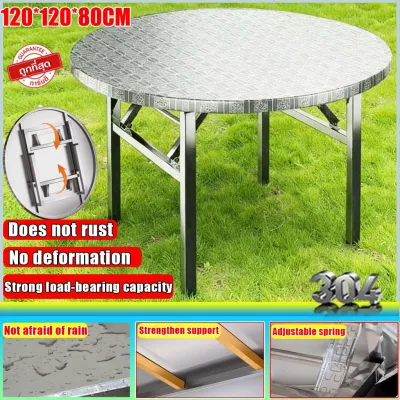
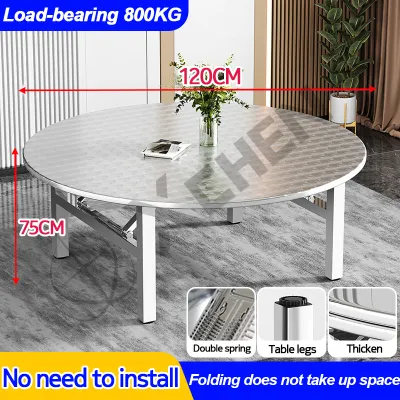
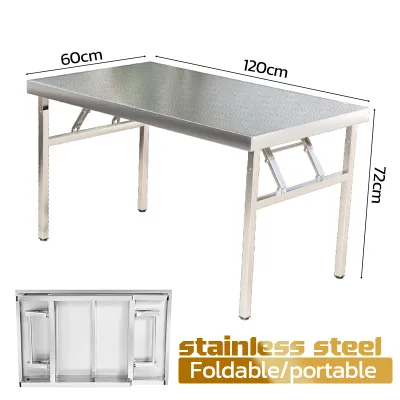
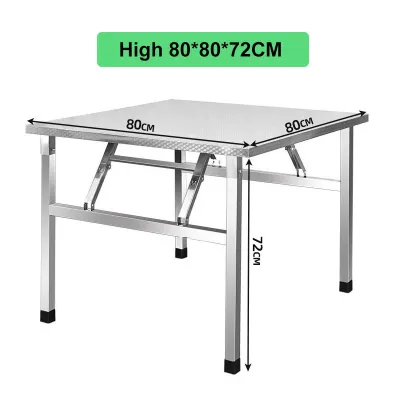
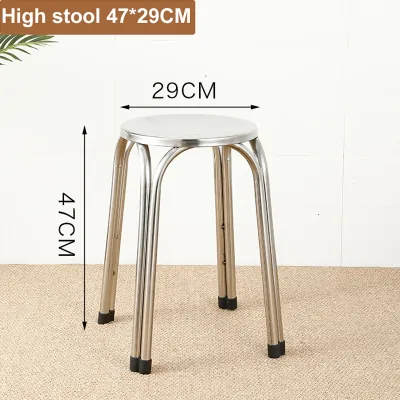
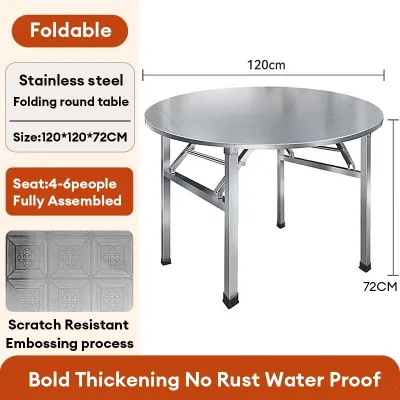
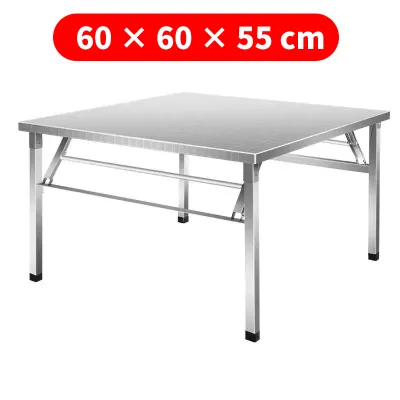
Prices are valid at publication and may change. Please refer to the product page for the latest price.
Width is equally important, especially for family-style dining where multiple large serving platters, rice cookers, and beverage pitchers sit in the center of the table. A width of 80 to 100 centimeters provides sufficient space for individual place settings while leaving a central zone for shared dishes. If the table is too narrow, diners will feel cramped, and there will be little room for serving ware.
Beyond the table’s physical dimensions, you must calculate the clearance required around it. To allow family members to pull out chairs and sit down comfortably, maintain a minimum clearance of 90 centimeters between the edge of the table and the nearest wall or piece of furniture. If the area behind the chairs serves as a primary walkway, increase this clearance to 120 centimeters to prevent traffic bottlenecks during busy meal times.
Finally, consider the logistics of getting the table into your home. Even though a foldable table is designed to save space, its packaged or folded dimensions can still be substantial. Measure your front door, hallway widths, stairwell clearances, and elevator dimensions before making a purchase. A table that cannot clear a tight corner in a condominium hallway or a low ceiling in a stairwell will present immediate delivery challenges, regardless of how well it fits inside your actual dining room.
Verifying "Heavy-Duty" Stainless Steel Construction
Not all stainless steel tables are built to the same standards, and relying solely on product titles can lead to disappointment. To verify actual durability, start by identifying the steel grade used in construction. Grade 304 (often labeled as SUS304) is the gold standard for residential and commercial use due to its high chromium and nickel content, which provides exceptional resistance to rust and corrosion. This is particularly important in tropical climates with high humidity, where lower-grade steels can deteriorate quickly. Grade 201 is a more budget-friendly alternative that offers decent strength but is more susceptible to corrosion over time if exposed to moisture or salty coastal air.

Next, examine the thickness of the steel, often referred to as the gauge. In sheet metal, a lower gauge number indicates thicker, stronger steel. For a heavy-duty tabletop, look for a thickness of 16-gauge or 18-gauge. Anything thinner, such as 20-gauge or 22-gauge, is more prone to denting and flexing under heavy loads. For the supporting frame and legs, check the product specifications for the tube wall thickness; a thickness of 1.0 millimeter to 1.2 millimeters generally indicates a robust frame capable of supporting substantial weight.
Inspect the structural reinforcement underneath the tabletop. A quality heavy-duty table does not rely on a single sheet of metal; it features cross-bracing, support channels, or a reinforced underlayment (such as a high-density board sealed beneath the steel) to distribute weight evenly and prevent the surface from bowing. Look closely at the joints and welds in product photos or showroom models. Continuous, clean welds at the connection points of the frame are far stronger than simple spot welds, which can crack under repeated stress.
Lastly, locate the manufacturer’s rated weight capacity. A table designed for 6 to 10 people should have a static weight capacity of at least 100 to 150 kilograms. This ensures the table can safely support heavy cast-iron cookware, large serving bowls, and the natural tendency of diners to lean their forearms on the table surface during long conversations.
Choosing a Stable Folding Mechanism
The folding mechanism is the most vulnerable part of any space-saving table. A weak hinge or a poorly designed lock can cause the table to wobble, sag, or, in the worst-case scenario, collapse. When evaluating large tables, you will generally encounter three primary folding designs: drop-leaf, center-fold, and folding-leg systems.
Drop-leaf tables feature hinged side panels that hang down when not in use. This design is highly convenient for daily use, as you can keep the center section open for smaller family meals and raise the leaves only when hosting larger groups. Center-fold tables fold completely in half like a suitcase, making them highly portable and easy to store in a closet or utility room. However, they require a highly secure center locking bar to ensure the middle seam remains perfectly flat and rigid when unfolded. Folding-leg tables have a solid, one-piece tabletop with legs that fold flat against the underside, offering maximum surface rigidity at the expense of a larger storage footprint.
Regardless of the design, pay close attention to the locking hardware. Look for positive locking pins, gravity locks, or spring-loaded latches that automatically engage when the table is fully opened. These safety features prevent the legs from folding inward if the table is accidentally bumped or pushed. Heavy-duty steel hinges with thick bolts are essential; thin, stamped-metal hinges will quickly bend or wear out under the weight of a large table.
Consider the physical effort required to operate the folding mechanism. Large stainless steel tables are inherently heavy, and folding them should not be a hazardous chore. Check if the mechanism allows for smooth, controlled movement. Avoid designs with exposed pinch points where fingers can easily get caught during setup or teardown. If the table is exceptionally heavy, look for models that feature locking caster wheels on the legs, which allow you to roll the folded table into storage without lifting it.
Evaluating Tabletop Finishes and Daily Maintenance
Stainless steel surfaces come in various finishes, each offering different aesthetic and practical benefits. A polished or mirrored finish has a bright, reflective look, but it is highly susceptible to showing fingerprints, water spots, and fine scratches. For a busy family dining table, a brushed or matte finish is highly recommended. The fine texture of a brushed finish excels at hiding minor surface abrasions and daily wear, keeping the table looking clean and presentable with minimal effort.
Safety is another critical factor when evaluating the tabletop design. Because stainless steel tables are fabricated from sheet metal, the edges must be carefully finished to prevent injury. Look for tables with rolled edges, bullnose profiles, or rounded corners. Sharp, square metal corners pose a significant safety hazard, particularly in active households with young children or elderly family members.
Maintaining a stainless steel dining table is straightforward, but using the wrong cleaning methods can permanently damage the surface. For daily cleanup, use a soft microfiber cloth dampened with warm water and a mild dish soap. Always wipe in the direction of the metal’s brushed grain to avoid creating cross-grain scratches. Avoid using abrasive scrubbing pads, steel wool, or harsh chemical cleaners containing chlorine, bleach, or ammonia, as these substances can break down the protective chromium oxide layer of the steel, leading to unsightly discoloration and rust.
To reduce the metallic noise associated with stainless steel, check if the table features sound-dampening technology. Many high-quality tables have a wooden or composite backing bonded to the underside of the steel top, which absorbs vibration and prevents the loud clattering of plates, glasses, and cutlery during meals.
Pre-Purchase Checklist for Online and In-Store Shopping
Before finalizing your purchase on an e-commerce platform or at a local furniture retailer, use this step-by-step checklist to ensure the table meets your household’s needs:
- Verify Dimensions: Double-check the fully unfolded length, width, and height against your dining room floor plan. Then, verify the folded dimensions against your designated storage area to ensure it fits comfortably when not in use.
- Assess Assembly Requirements: Determine if the table arrives fully assembled or if it requires manual setup. If assembly is required, check if all necessary tools, bolts, and instructions are included, or if you will need to prepare your own tools.
- Inspect Floor Protectors: Ensure the table legs are equipped with non-marring rubber feet, plastic glides, or adjustable leveling feet to protect your flooring from scratches and accommodate uneven surfaces.
- Review Return and Warranty Policies: Read the seller's return policy carefully, paying close attention to how they handle items that arrive damaged or defective. Look for a warranty that covers structural defects in the frame and folding mechanism for at least one year.
- Calculate Total Costs: When shopping online, the listed price may not include delivery. Because heavy-duty metal tables are heavy and bulky, shipping fees can be substantial. Always calculate the total cost, including shipping fees in ₱, to ensure the purchase fits your budget.
Frequently Asked Questions (FAQ)
Does stainless steel require special cleaners to prevent water spots?
Specialized stainless steel cleaners are not required for daily maintenance. A simple solution of warm water and mild dish soap is highly effective for removing grease and food residue. To prevent water spots and streaks, always dry the surface immediately after cleaning with a clean, dry microfiber cloth. If hard water spots or dullness develop over time, you can restore the shine by wiping the surface with a diluted mixture of white vinegar and water, rinsing it thoroughly with clean water, and drying it completely. Always wipe in the direction of the brushed metal grain.
How can I protect the floor from heavy metal legs when moving the table?
Heavy metal legs can easily scratch, dent, or scuff tile, hardwood, and laminate flooring. To protect your floors, check if the table comes equipped with factory-installed rubber caps or plastic glides. If the table lacks these protectors, or if they wear out over time, you can purchase aftermarket heavy-duty rubber caps or slip-on silicone leg protectors. When moving or folding the table, always lift it with the assistance of another person rather than dragging it across the floor, which puts unnecessary stress on both your flooring and the table’s leg joints.

Community discussion
Share your experience or ask a question. Comments are reviewed before publication.