
Finding the right seating solution for a compact home office or study nook in the Philippines requires balancing physical dimensions with ergonomic support. When working with a budget of ₱3,000 to ₱15,000, you do not have to compromise on comfort, but you must be highly strategic about which features to prioritize. A smaller footprint should never mean sacrificing the alignment of your spine or the stability of your seat. By understanding your spatial limits and identifying key mechanical features, you can secure a chair that fits both your room and your body.
Selecting a compact chair involves analyzing how a smaller frame interacts with your daily work habits. In tight living spaces like studio condominiums, every centimeter of floor space is valuable. A massive executive chair will quickly overwhelm a small room, making movement difficult. Conversely, a well-chosen mini office chair provides the necessary physical support while maintaining an open, functional layout in your home.
Defining Your Space and Ergonomic Needs
Before browsing online listings or visiting local showrooms, you must establish the physical boundaries of your workspace. Start by measuring the exact floor area where the chair will be positioned. You need to account not just for the chair’s static footprint, but also for the space required to roll backward when standing up or tucking the chair away. A standard compact chair base typically measures between 55 to 65 centimeters in diameter, so ensure your designated area can accommodate this rotational clearance without hitting walls or other furniture.
Products mentioned in this guide
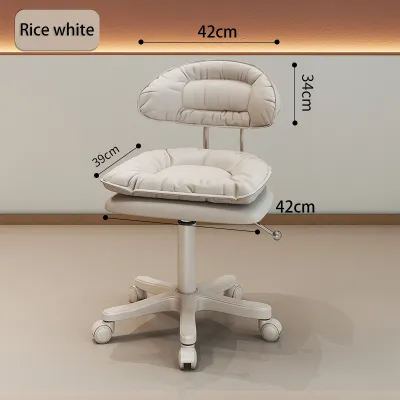
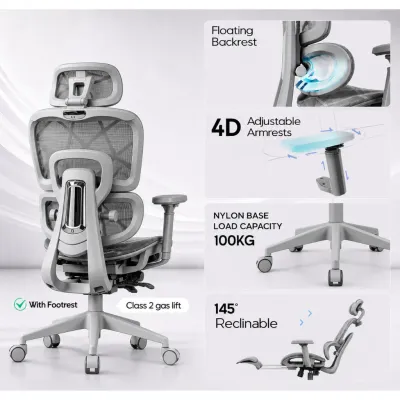
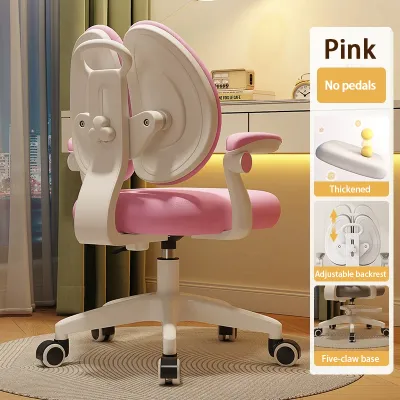
Prices are valid at publication and may change. Please refer to the product page for the latest price.
Next, measure your desk clearance. Pay close attention to the distance from the floor to the underside of your desk surface, taking into account any low-hanging drawers, keyboard trays, or structural crossbeams. If you choose a chair with fixed armrests, these armrests must be low enough to slide completely under the desk when the chair is not in use. If the armrests collide with the desk edge, the chair will stick out into your room, defeating the purpose of a space-saving design.
Ergonomic needs should be tailored to your specific body proportions rather than a generic standard. For a mini chair, the seat depth is particularly critical; if the seat is too deep, the front edge will press against the back of your knees, cutting off circulation and forcing you to slouch forward. Look for essential adjustments like pneumatic seat height control and a reliable lumbar support mechanism that aligns with the natural curve of your lower back. Advanced features like seat slide adjustments or deep recline tensions are secondary to a solid, upright foundation that keeps your feet flat on the floor.
Finally, do not overlook delivery logistics. Measure the width of your doorways, narrow hallways, and elevator doors to ensure that either the shipping box or the fully assembled chair can pass through safely. Many compact chairs are delivered flat-packed, which makes transport easier, but you should still verify that you have a clear, flat area in your home to assemble the components.
Budget Priorities: What to Expect from ₱3,000 to ₱15,000
Navigating the price spectrum from ₱3,000 to ₱15,000 requires a clear understanding of what your money actually buys. As you move up this price scale, the improvements are generally found in the durability of materials, the sophistication of adjustment mechanisms, and the overall structural integrity of the frame.

Entry-Level Tier (Around ₱3,000 to ₱6,000)
In the entry-level price bracket, your primary focus should be on simplicity, stability, and basic material quality. At this level, chairs typically feature fixed or minimally adjustable frames made of molded nylon or lightweight plastics. The adjustment mechanisms are usually limited to basic pneumatic seat height lifting and a simple tilt-lock function that allows you to lock the backrest in a single upright position.
Upholstery in this tier is almost exclusively standard polyester mesh or basic fabric over foam. Given the warm and humid tropical climate of the Philippines, prioritizing a breathable mesh backrest is highly recommended to prevent heat and moisture buildup during long working sessions. However, you should inspect the mesh quality closely; look for tightly woven, resilient fibers that resist sagging over time.
To maintain a low price point, manufacturers of entry-level chairs often compromise on advanced adjustments. You will likely find fixed plastic armrests and basic, non-adjustable lumbar pads. When shopping in this range, it is vital to check the manufacturer’s official weight capacity label, which typically ranges from 80 to 100 kilograms. Ensure the warranty terms cover at least the gas lift and base for one year, as these components are most prone to early wear.
Mid-Range Tier (Around ₱7,000 to ₱15,000)
Stepping into the mid-range tier opens up access to significantly better ergonomics, superior materials, and enhanced durability. In this bracket, chairs often incorporate multi-functional tilt mechanisms that allow you to tilt and lock the backrest at multiple angles, or even sync-tilt, where the seat and backrest move together at an ergonomic ratio. This dynamic movement is crucial for reducing spinal pressure throughout the day.
The materials used in mid-range compact chairs are noticeably more robust. You can expect high-density molded foam cushions that retain their shape and supportive properties for years, rather than cheap cut foam that flattens within a few months. The mesh backrests are often made of specialized elastomeric materials that provide zoned tension, offering firmer support at the lower back and softer flexibility near the shoulders.
Adjustability becomes much more precise in this tier. Look for chairs featuring dedicated, height-adjustable lumbar support and multi-directional armrests (often referred to as 2D or 3D armrests) that can be adjusted for height, angle, and depth. These features allow you to customize the chair to your exact physical dimensions. Additionally, mid-range chairs usually feature reinforced nylon or heavy-duty steel bases, higher-class gas lifts, and smoother, floor-friendly casters, backed by more comprehensive multi-year warranties.
Key Specifications to Verify Before Checkout
To ensure your chosen mini office chair is a perfect fit, you must carefully analyze the manufacturer’s specification sheet before making a purchase. Do not rely solely on product photos, which can be visually deceptive regarding scale. Begin by comparing the chair’s total outer width—measured from the outermost edges of the armrests—with the clear width between your desk legs. You must also compare the seat width and seat depth with your own body measurements; a seat that is too narrow will restrict your movement, while a seat that is too deep will prevent your back from contacting the lumbar support.
Next, verify the safety and load-bearing specifications of the chair’s core components. The gas lift cylinder is the most critical safety component of any office chair. Look for specifications that explicitly state the gas lift class, with Class 3 or Class 4 cylinders being the industry standard for durability and safety. These classes are designed to handle higher weight capacities and frequent height adjustments without losing pressure or sinking over time.
The base material and construction directly impact the chair’s overall stability and lifespan. While reinforced nylon bases are lightweight and highly resistant to impact, heavy-duty metal bases (such as chrome-plated steel or aluminum) offer superior rigidity and a higher weight threshold. Inspect the joints where the caster wheels insert into the base; these areas should be reinforced with thick plastic or metal sleeves to prevent cracking under lateral stress.
Caster selection is another critical detail that depends entirely on your home’s flooring. Standard hard nylon casters are suitable for carpets, but they can easily scratch hard flooring surfaces like ceramic tiles, polished concrete, or vinyl planks, which are common in Philippine households. If you have hard floors, look for chairs equipped with soft polyurethane (PU) or rubber-coated casters, which provide quiet movement and protect your flooring from wear.
Hidden Costs and Quality Traps to Avoid
When purchasing a budget-friendly compact chair, the initial price tag is not always the final cost of ownership. Shipping fees for bulky furniture items can be surprisingly high, especially if you reside outside major metropolitan areas. Before finalizing your order on local ecommerce platforms, check the shipping calculations and look for promotional vouchers or store pickup options to minimize these delivery expenses.
Another potential hidden cost is professional assembly. While many mini chairs are designed for self-assembly and include basic tools, some users may find the process challenging or physically demanding. If you prefer not to assemble the chair yourself, check if the seller offers an optional assembly service for a flat fee, or prepare to have a set of basic household tools on hand to ensure all bolts are tightened securely to prevent squeaking and wobbling.
In the tropical climate of the Philippines, high humidity levels present a unique challenge for furniture materials. A common quality trap in budget chairs is the use of low-grade synthetic polyurethane (PU) leather. In humid environments, cheap PU leather is highly susceptible to hydrolysis, a chemical breakdown that causes the material to crack, peel, and flake off within a year of use. To avoid this messy and unsightly deterioration, opt for breathable mesh or high-quality woven fabric upholstery, which handles humidity much better and is easier to clean.
Finally, always scrutinize the seller’s return policy and warranty terms before checking out. Because ergonomic comfort is highly subjective, a chair that looks perfect on paper may feel uncomfortable once you sit in it. Ensure the seller has a clear return or exchange policy for online purchases, and verify exactly what parts are covered under the warranty. A reliable manufacturer should offer clear channels for sourcing replacement parts, such as extra casters or replacement gas lifts.
Frequently Asked Questions (FAQ)
Can a mini office chair support long hours of work?
Yes, a compact office chair can comfortably support long hours of work, provided its dimensions are properly matched to your body proportions. The smaller footprint of a mini chair does not inherently reduce its ergonomic value; rather, it eliminates excess bulk that is unnecessary for smaller or medium-sized frames. To ensure long-term comfort, prioritize a chair with a high-density molded foam seat cushion that distributes your weight evenly. Additionally, regardless of how supportive your chair is, you should practice active sitting by taking short standing or stretching breaks every hour to maintain healthy blood circulation.
How do I know if a compact chair will fit under my desk?
To guarantee a perfect fit, you must measure the vertical clearance of your desk and compare it with the chair’s height specifications. Use a tape measure to find the distance from your floor to the lowest point beneath your desk surface, such as the bottom edge of a drawer or keyboard tray. Next, check the chair’s specification sheet for both the minimum seat height and the maximum armrest height. For the chair to slide completely under the desk when not in use, the armrest height at its lowest setting must be at least two to three centimeters lower than your desk’s clearance measurement.

Community discussion
Share your experience or ask a question. Comments are reviewed before publication.