
Finding the right shoe rack to sit beneath hanging clothes and alongside bulky storage bags requires balancing vertical clearance with floor accessibility. The most effective solution is a low-profile, adjustable, or sliding shoe rack that adapts to the changing heights of your garments while leaving a clear path for your storage bags. By selecting a modular or low-clearance design, you can maximize the often-wasted bottom half of your closet without crushing delicate fabrics or blocking access to seasonal items stored in bags.
Assessing Your Closet Space and Clearance
Before purchasing any storage organizer, you must conduct a thorough physical assessment of your closet interior. Start by clearing the floor space and hanging garments to expose the true dimensions of the area. Use a metal measuring tape to record the width from side wall to side wall, and the depth from the back wall to the front door frame or sliding track.
Next, measure the vertical clearance. This is the distance from the closet floor to the hem of your lowest-hanging garments, such as long dresses, trousers, or coats. If you have hanging storage bags or vacuum-sealed organizers suspended from the rod, measure from the floor to the bottom edge of these bags. This measurement defines the maximum height your new shoe rack can reach before it begins to crowd, wrinkle, or damage your hanging items.
Products mentioned in this guide
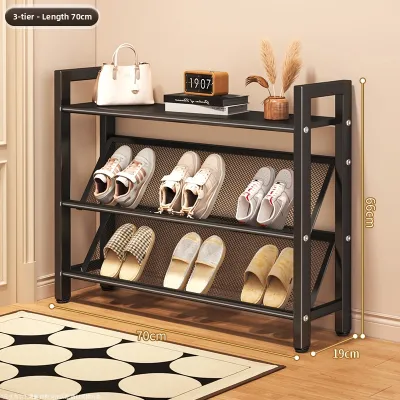
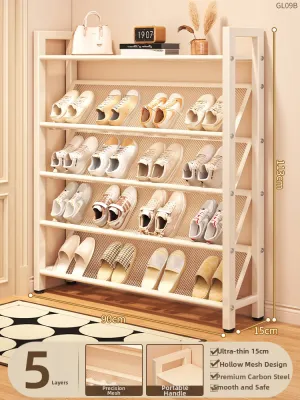
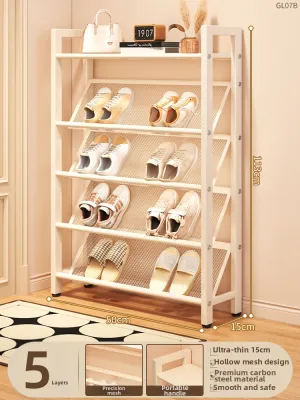
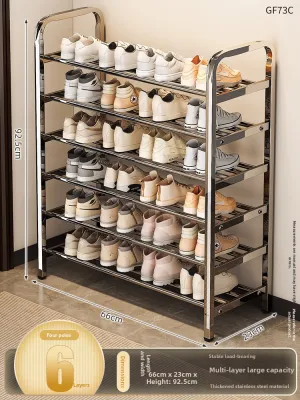
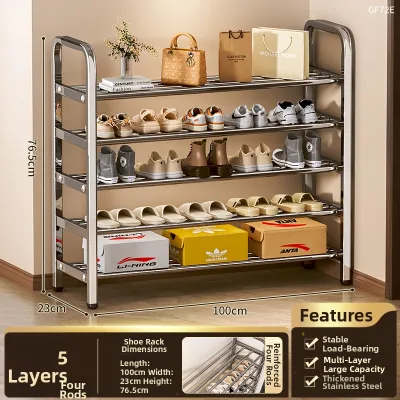
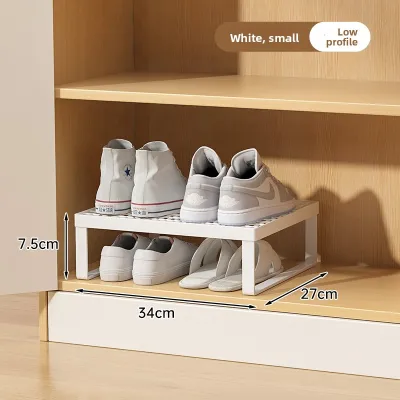
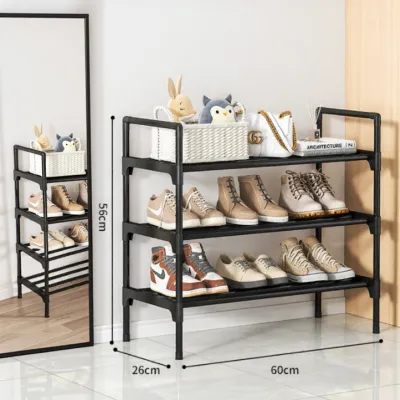
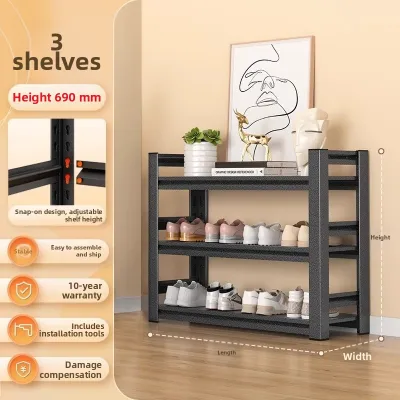
Prices are valid at publication and may change. Please refer to the product page for the latest price.
Do not forget to account for the door mechanics. Sliding closet doors often overlap, meaning one side of the closet floor is always partially obstructed when opening the other. Hinged doors require a clear swing radius, and any shoe rack placed near the front must not block the door from closing completely. If you use floor-level storage bags, map out their footprint to ensure the shoe rack does not pinch or puncture the bag material.
Finally, inspect the closet floor for hidden obstructions. Baseboards, floor molding, sliding door tracks, and vertical partition supports can reduce the usable floor width by several centimeters. If your closet has an integrated light fixture, outlet, or floor-mounted safe, ensure the rack placement does not block access to these features.
Shoe Rack Styles That Integrate Best Under Hanging Clothes
To make the most of the space beneath your hanging garments, you need a shoe rack that prioritizes horizontal expansion over vertical height. The goal is to utilize the “dead zone” on the closet floor while keeping your shoes organized and accessible. Several structural designs excel at this task, each offering unique advantages depending on your closet’s depth and the types of shoes you own.

Adjustable and Stackable Tiered Racks
Adjustable and stackable tiered racks offer excellent flexibility for dynamic closet spaces. These modular systems allow you to add or remove horizontal shelves based on your current footwear collection and the available vertical clearance. If you have tall boots or high heels, you can adjust the spacing between the tiers to accommodate them on the top level, while keeping flat shoes, sandals, or slippers on the lower levels.
When positioning a stackable rack, always check the base footprint to ensure it does not crowd adjacent storage bags. The legs of the rack should sit firmly on the closet floor without pressing against plastic or fabric storage containers, which can cause wear over time.
Stability is a critical factor for stackable designs. Before fully loading the rack, verify the locking mechanisms between the tiers. A wobbly rack can easily tip over under the weight of heavy shoes, potentially damaging your hanging clothes or tearing nearby storage bags. Look for models with secure interlocking joints or wall-anchoring brackets if you plan to stack them more than two tiers high.
Pull-Out or Sliding Shoe Shelves
For deep closets where reaching the back row of shoes is difficult, pull-out or sliding shoe shelves are a highly practical choice. These systems utilize the full depth of your closet floor, allowing you to slide the entire shelf outward to access shoes stored in the rear. This eliminates the need to push aside hanging clothes or crawl into the closet to find a specific pair.
Before choosing a sliding system, evaluate the installation requirements. Many pull-out shelves require mounting directly to the closet floor or to the side panels using tracks and screws. Ensure your closet material is sturdy enough to support these tracks, and check that the screws will not pierce through thin partition walls.
You must also ensure the extended shelf does not collide with other closet elements. Measure the full extension length of the sliding mechanism to confirm it will not hit open closet doors, door frames, or bulky storage bags resting on the floor. A collision can damage the sliding tracks or scuff your footwear.
Low-Profile Freestanding and Offset Racks
When vertical clearance is extremely limited—such as under long coats or maxi dresses—low-profile freestanding or offset racks are highly suitable. These designs typically feature only one or two tiers, keeping the overall height to a minimum while still doubling your floor storage capacity.
Offset or staggered shelves are particularly clever because they angle the shoes slightly downward or upward. This angling reduces the vertical height required for each shoe, allowing you to store heels and sneakers in a much tighter vertical space than a flat shelf would allow.
These narrow, low-profile racks can easily slide into the small gaps next to bulky floor-level storage bags. When placing them, evaluate the material finish of the rack. Smooth, rounded edges, powder-coated metals, or sealed plastics are ideal, as they prevent the rack from scuffing your closet walls or snagging the fabric of adjacent storage bags.
Shoe Rack Styles to Avoid or Use With Caution
While many shoe organizers are excellent for open entryways, certain designs are poorly suited for the tight confines of a closet with hanging clothes and storage bags. Avoiding these styles will save you from wasted space and daily frustration.
Tall, fixed-tier shoe towers should generally be avoided. These structures are designed to maximize vertical space in open areas, but inside a closet, they will inevitably collide with your hanging garments. Using a tall tower forces you to hang your clothes elsewhere or crowd them onto one side of the rod, defeating the purpose of an integrated closet system.
Bulky bench-style shoe racks are another poor choice for closet interiors. While they are convenient in a hallway for sitting down to put on shoes, their heavy frames and wide footprints consume valuable floor space that is better utilized for storage bags or low-profile racks. The seating surface of the bench becomes dead space inside a dark closet.
Be cautious with over-the-door hanging shoe organizers. While they seem like a space-saving miracle, they add significant bulk to the back of the closet door. This added depth can prevent the door from closing fully or cause the organizer to rub against your hanging clothes and storage bags every time the door is opened or closed. Over time, this friction can scuff shoes, wrinkle garments, and wear down the door hinges.
Key Specifications to Verify Before Purchasing
Before finalizing your purchase on any online marketplace or at a local furniture store, compile a checklist of physical specifications to verify. This step ensures the rack will integrate seamlessly into your closet without requiring frustrating modifications.
First, compare the rack’s exact assembled dimensions against your measured closet clearances. Pay close attention to the design of the legs; some racks feature outward-splaying feet for stability, which can add several centimeters to the overall width at the base. Ensure this extra width still fits within your closet’s clear floor space.
Second, evaluate the material durability and moisture resistance of the rack. In the humid tropical climate of the Philippines, enclosed closets are prone to trapping moisture, which can lead to mold growth on untreated wood or rust on low-grade metal. Look for shoe racks made from rust-resistant powder-coated steel, heavy-duty molded plastics, or treated bamboo. Ensure the shelves have a slatted or mesh design to promote airflow around your shoes, which helps prevent dampness and odor buildup.
Third, set a realistic budget in Philippine Pesos (₱) based on the quality and mechanism you need. Simple plastic stackable shelves are highly affordable, while heavy-duty sliding metal shelves require a larger investment. Always review the seller’s return policy before purchasing, especially when buying from online marketplaces, to ensure you can easily exchange the rack if the physical fit does not match your closet’s unique layout.
Frequently Asked Questions (FAQ)
Can I use a tension rod shoe rack inside a closet with hanging clothes?
Tension rod shoe racks can work as a temporary, light-duty solution, but they carry specific risks in a closet setup. These racks rely on constant outward pressure against opposing walls to stay in place. If your closet walls are made of thin plywood panels or hollow drywall, the pressure required to hold the rods secure can cause the walls to bow or crack over time. Additionally, heavy shoes can cause the rods to slip, potentially knocking over adjacent storage bags or tangling with hanging clothes. If you choose this option, ensure your walls are solid wood or concrete, and avoid overloading the rods.
How do I prevent shoe odors from transferring to hanging clothes in the same closet?
To protect your hanging garments from footwear odors, prioritize proper ventilation and moisture control. Never place damp or dirty shoes directly onto the rack; allow them to air out completely in a well-ventilated area before storing them in the closet. You can place activated charcoal deodorizer bags or silica gel packets directly on the shoe rack shelves to absorb excess moisture and neutralize odors, which is especially helpful during the humid rainy season in the Philippines. Additionally, maintain a small gap between the top of your shoe rack and the bottom of your hanging clothes to ensure air can circulate freely.

Community discussion
Share your experience or ask a question. Comments are reviewed before publication.