
Finding the perfect side table for the bed involves more than just matching your bedroom decor. When you integrate technology and storage into this essential piece of furniture, you turn a simple surface into a highly functional hub for your daily devices, nighttime reading, and personal items. A well-designed bedside table keeps your smartphone, tablet, and smartwatch fully powered while concealing unsightly cords and keeping your nighttime essentials within arm’s reach.
To make a smart purchase, you must evaluate several critical factors, from the physical dimensions and electrical safety of the charging components to the storage layout and material durability. This is especially true in tropical climates like the Philippines, where high humidity and temperature fluctuations can impact both wood furniture and integrated electronics. Taking the time to assess these features ensures you select a table that is safe, durable, and highly practical for your daily routine.
Assess Your Space and Bed Height for a Side Table for the Bed
Before browsing online marketplaces or visiting local showrooms, you must determine the exact physical dimensions your bedroom can accommodate. Start by measuring the available floor space next to your bed using a standard tape measure. Note both the width and depth of the area, making sure to leave at least 50 to 60 centimeters of walking clearance around the table so you do not bump your shins in the dark. You must also account for the swing of nearby wardrobe doors, bedroom entryways, or the pull-out distance of under-bed storage drawers.
Products mentioned in this guide
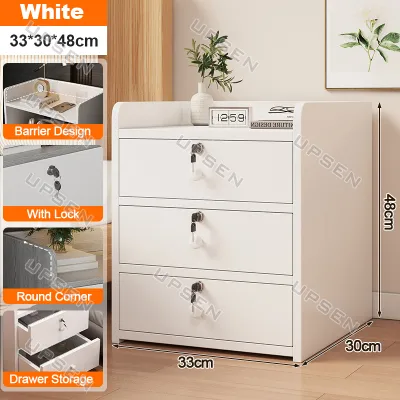
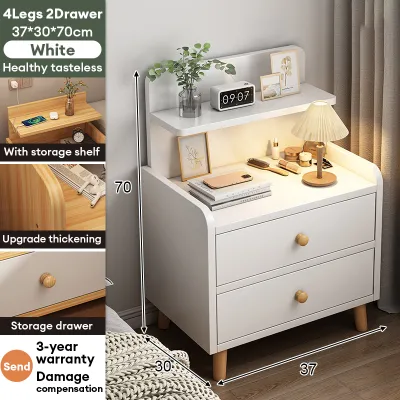
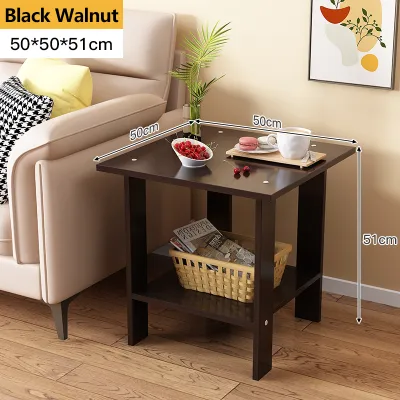
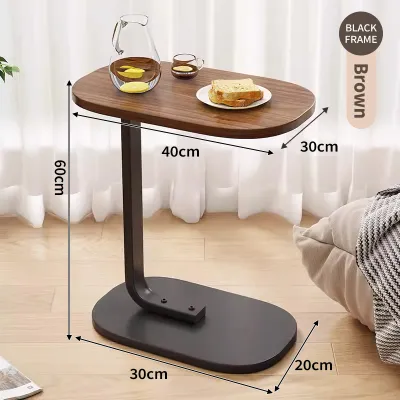
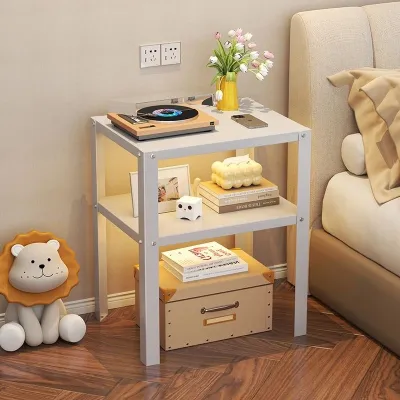
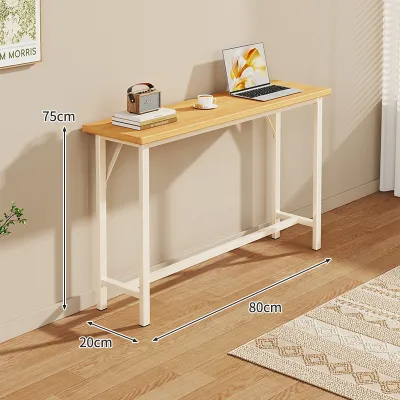
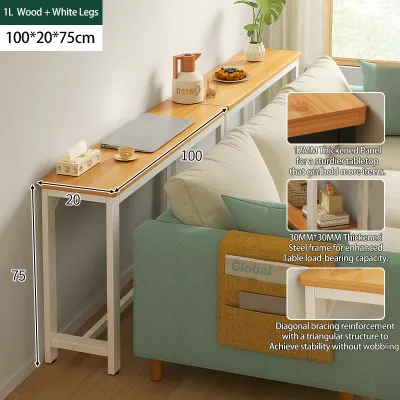
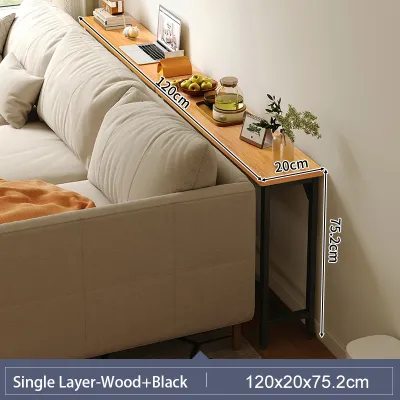
Prices are valid at publication and may change. Please refer to the product page for the latest price.
Next, measure the height of your bed from the floor to the very top of your mattress. Ideally, your side table for the bed should stand level with or up to 5 to 10 centimeters lower than the sleeping surface. A table that is too high makes it awkward to reach for a glass of water or turn off an alarm, while a table that is too low increases the risk of knocking items off the surface when you reach down. A level surface allows for a natural, comfortable arm movement from a lying position.
Finally, do not forget to locate your nearest wall outlet and measure the distance to where the table will stand. Built-in charging modules rely on an external power cord that must plug into a wall socket. Ensure the table’s power cord is long enough to reach the outlet comfortably without being stretched tight or draped across high-traffic walkways where it could pose a severe tripping hazard. If the cord is too short, you may need to reposition your bed or consult an electrician, as relying on daisy-chained extension cords behind wooden furniture is a fire hazard.
Evaluate the Built-in Charging Features
The convenience of a tech-enabled nightstand relies entirely on its power capabilities and user safety. Not all charging modules are created equal, and choosing the wrong configuration can lead to slow charging speeds or cluttered wiring.

Port Types and Power Capabilities
Modern bedrooms house a variety of electronic devices, each requiring different connection types and power levels. When evaluating a table’s charging panel, look for a balanced mix of ports to accommodate both current and future devices:
- USB-C Ports: This is the modern standard for fast-charging smartphones, tablets, and newer wearable devices. Look for ports that support higher power delivery if you plan to charge larger devices.
- USB-A Ports: Still highly useful for charging older accessories, e-readers, wireless headphones, or smartwatches that utilize legacy cables.
- Standard AC Outlets: Essential for plugging in bedside lamps, humidifiers, air purifiers, or laptop chargers that require a standard wall plug.
- Wireless Charging Pads: Many premium tables feature a wireless charging zone integrated directly into the top surface. This allows you to charge compatible smartphones simply by laying them down, eliminating cables entirely, though you must verify if your phone case is thin enough to allow power transfer.
Always check the manufacturer’s product label or specifications sheet to verify the power output of the USB ports. Basic ports often provide only 5 watts of power, which results in very slow charging times. If you want to charge modern smartphones or tablets efficiently, look for modules that support fast-charging standards.
Electrical Safety and Cable Management
Because you are combining electrical currents with wooden or fabric furniture right next to your sleeping area, safety must be your top priority.
- Safety Certifications: Look for recognized electrical safety certification marks on the built-in power components. In the Philippines, look for products that carry the Philippine Standard (PS) quality mark or the Import Commodity Clearance (ICC) sticker. For imported furniture, look for trusted international certifications such as UL, CE, or FCC, which indicate the electrical components have undergone rigorous testing for safety and fire prevention.
- Heat Dissipation: Charging devices generate heat, and a poorly ventilated charging module can become a fire hazard. Inspect the design of the table to ensure there is adequate ventilation around the power strip. Avoid tables where the power module is tightly enclosed in a small, unventilated wooden compartment without any air vents.
- Cable Management: A great side table for the bed should keep cords organized and hidden. Look for features like built-in cord channels, rubber grommets, or recessed back panels. These designs allow you to route cables cleanly from the internal ports to your devices on top of the table, preventing a tangled mess of wires that can easily get snagged, damaged, or chewed by household pets.
Analyze Storage Configurations and Capacity
Bedside storage is highly personal; some people only need a spot for a phone and a glass of water, while others require space for books, medications, skincare products, and personal journals.
Drawers vs. Open Shelving
Choosing between enclosed drawers and open shelves depends on what you plan to store and how neat you want your bedroom to look:
- Enclosed Drawers: Excellent for hiding daily clutter, keeping personal items private, and protecting sensitive electronics from dust. In the humid tropical climate of the Philippines, enclosed drawers can also protect items from ambient moisture, provided you place a small silica gel packet inside to absorb trapped dampness.
- Open Shelving: Ideal for quick, easy access to items you grab frequently throughout the night, such as a box of tissues, reading glasses, or a book. However, open shelves require regular dusting and can quickly look cluttered if not organized carefully.
For the best of both worlds, many homeowners choose a hybrid design featuring a single top drawer for private items and an open lower shelf for books or decorative baskets.
Specialized and Hidden Compartments
To maximize the utility of a compact footprint, look for tables that offer clever, specialized storage solutions:
- Felt-Lined Trays: Perfect for protecting delicate jewelry, watches, or eyeglasses from scratches when you take them off before sleep.
- Dedicated Tablet Slots: Some modern tables include vertical slots inside drawers or on the side of the cabinet specifically designed to hold tablets or e-readers upright while they charge.
- Pull-Out Trays: A secondary sliding shelf that extends from just below the tabletop. This is incredibly useful for temporarily expanding your surface area to hold a cup of tea or a laptop, then sliding back out of sight when not in use.
- Lockable Compartments: If you share your home or have curious children, a drawer with a physical key lock or an electronic biometric lock provides peace of mind for storing sensitive medications, passports, or personal journals.
Check Material Durability and Build Quality
A bedside table is a long-term investment, and its materials must withstand daily use as well as local environmental conditions.
- Solid Wood: Beautiful, sturdy, and highly durable, but solid wood is sensitive to extreme humidity changes. In tropical regions, ensure the wood is treated with a high-quality, moisture-resistant sealant to prevent warping, cracking, or splitting over time.
- Engineered Wood (MDF or Particleboard): A highly common and budget-friendly option. However, cheap engineered wood is highly susceptible to moisture damage. You must carefully inspect the edge banding—the thin plastic or veneer strip covering the raw edges of the board. If the edge banding is peeling or poorly applied, humid air or an accidental spill from a bedside water glass can seep into the core, causing the wood to swell, bubble, and crumble.
- Metal and Glass: Industrial-style tables often use powder-coated steel frames paired with tempered glass shelves. These materials are incredibly durable, easy to clean, and completely unaffected by humidity, making them excellent choices for tropical climates, though glass surfaces require frequent wiping to remove fingerprints.
To verify the build quality before buying, test the moving parts if you are shopping in a physical store. Pull the drawers out fully to check if they glide smoothly on steel ball-bearing slides rather than sticking on cheap plastic tracks. Shake the table gently from side to side to ensure the legs are securely attached and the base does not wobble. If you are buying flat-pack furniture online, read customer reviews specifically looking for comments on assembly difficulty, joint alignment, and overall structural stability.
Consider Style, Extras, and Final Verification
Once you have confirmed the dimensions, charging capabilities, and storage layout, you can focus on the aesthetic details, price points, and final checks.
- Design and Finish: Choose a style that complements your existing bed frame and bedroom decor. A warm wooden finish works beautifully in traditional or rustic spaces, while a sleek white or black laminate with clean lines fits a minimalist or modern aesthetic. Industrial designs often combine dark metal frames with distressed wood textures.
- Optional Extras: Some high-tech side tables come with integrated LED ambient lighting. These often feature touch-sensitive controls on the tabletop, allowing you to turn on a soft under-cabinet nightlight without fumbling for a switch in the pitch black. Other models might include built-in Bluetooth speakers or digital clocks.
- Budget and Value: Quality options in the market typically range from budget-friendly engineered wood models around ₱2,000 to premium solid-wood or highly integrated smart designs exceeding ₱8,000. Set a budget that matches your material preference and the complexity of the integrated electronics.
- Pre-Purchase Checklist: Before finalizing your order, run through a quick mental checklist. Double-check your measurements one last time to ensure the table fits comfortably through your bedroom doorway and stairwells. Review the retailer's return and warranty policies, particularly regarding the electronic charging module. Finally, confirm the assembly requirements; some tables arrive fully assembled, while others require basic tools and a couple of hours of self-assembly.
Frequently Asked Questions (FAQ)
Can I replace the built-in charging module if it stops working?
Whether you can replace the charging module depends entirely on the table’s design. Some manufacturers use standard, modular power strips that are simply screwed into a recessed slot and can be easily unplugged and replaced if they fail. Other tables use hardwired, proprietary electronic components integrated directly into the wooden frame. Attempting to replace or repair these hardwired modules yourself can be difficult, may void your furniture warranty, and should only be handled by a qualified professional or according to the manufacturer’s official instructions.
Is it safe to leave devices charging on the bedside table overnight?
Yes, it is generally safe to charge modern electronics overnight, as most smartphones and tablets are equipped with internal chips that automatically stop drawing power once the battery is full. However, you must ensure the charging environment is safe. Never cover your charging devices with pillows, blankets, or heavy books, as this traps heat and can lead to overheating. Always ensure the side table’s charging area is well-ventilated, and verify that the built-in power strip carries official safety certifications to prevent electrical shorts or fire hazards.

Community discussion
Share your experience or ask a question. Comments are reviewed before publication.