
Finding the right work-from-home (WFH) setup in compact Philippine living spaces requires balancing limited floor area with daily productivity needs. A small foldable table offers an excellent solution, allowing you to establish a dedicated workspace during office hours and reclaim your living area once the laptop closes. To find the ideal option, you must look beyond simple aesthetics and focus on structural stability, compact storage dimensions, and materials that can withstand local environmental conditions.
When space is at a premium, a “small” footprint typically means a table width of 60 to 80 centimeters. This size easily accommodates a standard laptop, a mouse, and a notebook without overtaking a room. The ideal foldable desk must balance lightweight portability with a robust leg structure that prevents distracting wobbles during intense typing sessions. Before making a purchase, always verify three critical specifications: the manufacturer-stated weight capacity, the folded storage thickness, and the moisture resistance of the tabletop surface.
Key Dimensions and Stability Checks for Compact Spaces
Selecting the right dimensions for your foldable table depends heavily on your daily work tools. If your WFH setup consists solely of a mid-sized laptop and a smartphone, a compact surface measuring 60 centimeters in width and 40 centimeters in depth is generally sufficient. However, if you use an external keyboard, a mouse, and a secondary tablet, you will require a width of at least 80 centimeters and a depth of 50 to 60 centimeters to avoid wrist strain and clutter.
Products mentioned in this guide
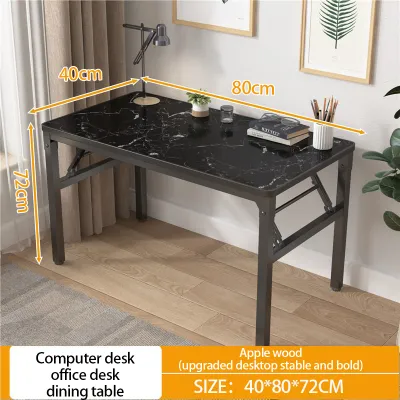
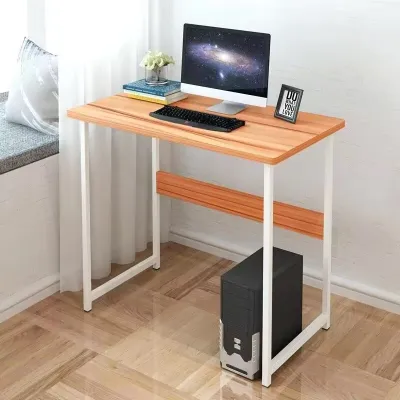
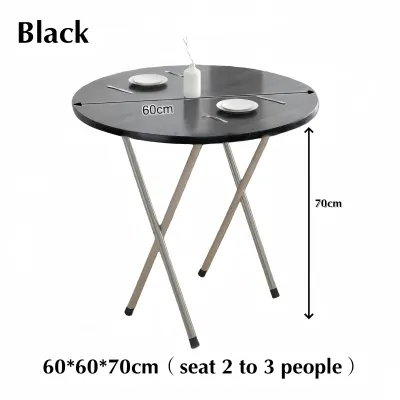
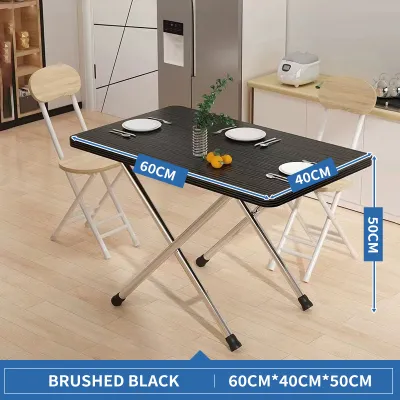
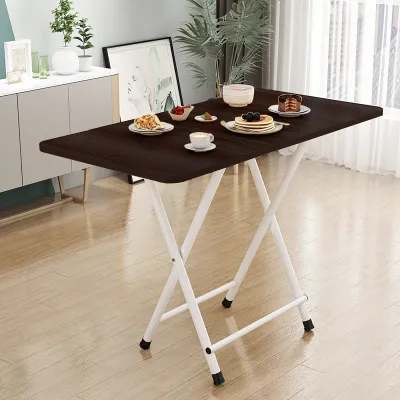
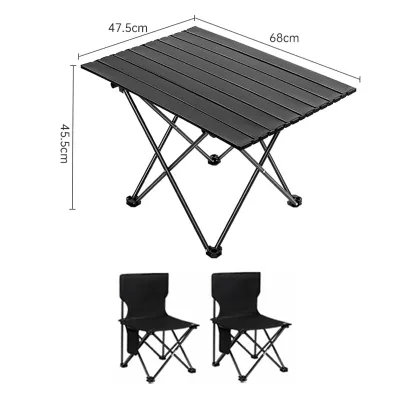
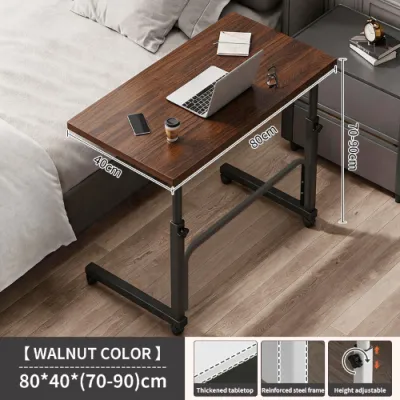
Prices are valid at publication and may change. Please refer to the product page for the latest price.
For those attempting to use a dual-monitor setup, a foldable table is rarely the ideal choice due to weight and balance constraints. If you must use an external monitor alongside your laptop, look for a heavy-duty folding desk with a minimum width of 100 centimeters and a depth of 60 centimeters. Ensure the table frame is rated to support the concentrated weight of a monitor stand or clamp-on monitor arm without bowing.
Storage convenience is another critical factor in a small home. Before buying, check the folded thickness of the table. A truly space-saving design should fold down to a thickness of 10 centimeters or less. This slim profile allows you to slide the table easily under a bed frame, behind a bedroom door, or inside a narrow wardrobe gap when your workday is complete.
Leg design directly dictates how much your screen will shake while you type. Cross-braced legs (often called X-frames) offer excellent lateral stability and are highly portable, but they significantly restrict your knee clearance and legroom. Conversely, straight-leg designs with locking hinges provide maximum legroom but are more prone to side-to-side wobbling. Look for straight-leg tables that feature diagonal tension bars or locking braces that secure the legs firmly to the underside of the tabletop.
Never assume a table is strong simply because the listing mentions “steel legs” or “solid wood.” Instead, look for explicit manufacturer-stated weight limits. A reliable small foldable table should support a static load of at least 15 to 20 kilograms. Checking for structural certification labels or detailed load-capacity specifications in the product manual is the safest way to ensure your expensive work equipment remains secure.
Matching Foldable Designs to Your Daily WFH Routine
Different folding mechanisms suit different lifestyles and home layouts. Wall-mounted drop-leaf tables are an exceptional choice for studio apartments where floor space is virtually non-existent. These tables mount permanently to a wall and fold flat downward when not in use, requiring zero floor space when closed. They provide a highly stable, consistent work nook but lack portability, meaning you cannot move your workspace to another room if household noise levels change.

Freestanding fold-in-half or fold-down desks offer the ultimate flexibility for dynamic households. These tables can be set up in the living room, moved to the bedroom for a quiet video call, or even taken out to a shaded balcony on a pleasant afternoon. The entire structure folds flat in seconds, making them ideal for professionals who share their living space with family members or roommates and need to clear their work gear away completely every evening.
For highly casual or secondary work zones, lap desks and adjustable bed trays provide a comfortable alternative. These are perfect for answering quick emails from the sofa or working from bed during recovery days. However, they lack the surface area for a full mouse-and-keyboard setup and offer very little ergonomic support, making them unsuitable as a primary workspace for full-eight-hour shifts.
When choosing between these designs, consider the trade-off between setup speed and ergonomic comfort. Wall-mounted and freestanding desks allow you to pair your workspace with a proper, supportive office chair, protecting your posture over long hours. Lap desks and ultra-lightweight tray tables are incredibly fast to deploy but force your neck and spine into awkward angles, which can lead to chronic discomfort if used continuously.
Navigating Online Marketplaces: Filters and Review Red Flags
Finding a reliable foldable table on local e-commerce platforms requires a strategic approach to filtering and product research. Start by using highly specific search terms rather than broad categories. Searching for “small table foldable” or “folding desk 80cm” will yield much more relevant results than simply searching for “office desk.” Use the platform’s dimension filters to narrow down the width and depth to match your pre-measured space.
Customer reviews can be incredibly helpful, but you must learn to filter out unhelpful or misleading feedback. Many five-star reviews on online marketplaces focus entirely on fast shipping speeds or polite courier interactions, offering zero insight into the actual quality of the furniture. Look specifically for reviews that mention “stability,” “wobble,” “hinges,” or “assembly.” Pay close attention to one-star and two-star reviews to see if multiple buyers report the same structural failures or broken locking mechanisms.
Always scroll down to the user-uploaded photos and videos in the review section. Sellers frequently use heavily photoshopped stock images that manipulate the scale of the table, making a tiny 50-centimeter tray look like a spacious executive desk. By examining real photos taken in buyers’ homes, you can gauge the table’s true size relative to standard household items like wall outlets, plastic chairs, or standard 14-inch laptops.
Finally, carefully review the seller’s return policy and shipping fees before checking out. Foldable tables are relatively heavy and bulky, meaning shipping costs can escalate quickly, especially for deliveries outside major metropolitan areas. Ensure the seller has a clear policy for replacing items damaged during transit, as thin metal legs and composite tabletops are highly susceptible to corner dents and bent hinges if not packaged securely.
Pre-Purchase Measurements and Safety Verifications
Before finalizing your purchase, take precise physical measurements of your home to ensure a seamless fit. Use a tape measure to map out the exact floor area where the table will stand during your work hours. Remember to account for chair clearance; you will need at least 70 to 80 centimeters of open space behind the table to pull your chair out and sit down comfortably without hitting walls or other furniture.
Next, measure your designated storage area. If you plan to slide the folded table under your bed, measure the vertical clearance between the floor and the bottom of the bed frame. If you plan to store it behind a door, ensure the gap is wide enough so the door can still open fully without crushing the table’s hinges or scratching your wall paint.
Consider your home’s flooring material when evaluating a table’s feet. Many homes in the Philippines feature smooth ceramic tiles, polished concrete, or laminate flooring, which can allow lightweight tables to slide easily during typing. Look for tables that include rubberized or silicone non-slip leg caps. If the table you want features bare metal or hard plastic feet, plan to purchase separate silicone floor protectors or a small, low-pile rug to place underneath the setup to prevent sliding and floor scratches.
If you decide on a wall-mounted drop-leaf table, verifying your wall structure is an absolute safety requirement. Most local homes utilize concrete hollow blocks (CHB) or solid concrete walls, which require a hammer drill, masonry drill bits, and heavy-duty plastic or metal wall plugs (tox) to secure the mounting brackets. If you are mounting the table to a drywall partition, you must locate the internal wooden or metal studs using a stud finder; never mount a load-bearing desk directly into hollow drywall, as it will eventually tear free under the weight of your arms and laptop.
If you do not own the necessary tools, or if you feel unsure about drilling into concrete or locating wall studs, do not attempt the installation yourself. Stop the process and consult a qualified local carpenter or handyman to ensure the table is anchored safely, preventing potential damage to your walls and expensive work equipment.
Frequently Asked Questions (FAQ)
How do I prevent a foldable table from wobbling on uneven floors?
To stabilize a freestanding foldable desk on uneven tile or concrete floors, first check if the table legs feature built-in adjustable leveling feet. These are small, screw-in plastic or rubber glides on the bottom of each leg that can be rotated to extend or shorten the leg length individually. If your table lacks this feature, place a non-slip, compressible silicone furniture pad or a small, dense rug under the legs to absorb minor floor imperfections. Avoid using makeshift shims like folded cardboard or paper, as these compress quickly under weight and can slip out unexpectedly, causing your desk to tilt.
Can I use a small foldable table as a permanent full-time desk?
While a small foldable table is highly convenient, using one as a permanent, full-time desk for eight-hour workdays carries ergonomic and structural risks. Most foldable tables have a fixed height that cannot be adjusted, which can lead to neck, shoulder, and wrist strain if it does not align perfectly with your chair height. Additionally, the hinges, joints, and locking mechanisms are subject to continuous wear and tear under daily use, which can cause the table to become increasingly wobbly over time. If you must use a foldable table permanently, ensure you pair it with a highly adjustable ergonomic chair, use a separate laptop stand to keep your screen at eye level, and regularly inspect and tighten the table’s structural screws.

Community discussion
Share your experience or ask a question. Comments are reviewed before publication.