
Choosing a smart coffee table with a built-in fridge for a small living room requires balancing physical dimensions, cooling efficiency, and electrical safety. In a compact home, every square meter counts, making multi-functional furniture highly appealing. However, because these tables house active refrigeration systems, you must look beyond aesthetics to evaluate ventilation needs, noise levels, and power requirements. By focusing on how the unit fits your layout and matches your daily habits, you can enjoy chilled beverages at arm’s reach without overcrowding your living space.
Integrating an appliance into your primary relaxation area changes how you interact with your furniture. Unlike a traditional wooden table, a refrigerated model is an active electronic device that requires a dedicated power source and regular upkeep. Understanding the technical specifications and installation limits beforehand ensures that your investment remains safe, functional, and quiet for years to come.
What to Expect from a Smart Coffee Table with Fridge
A smart coffee table with a fridge is a hybrid piece of furniture designed to consolidate multiple living room accessories into a single footprint. Typically, these units combine a sleek tabletop surface with one or more refrigerated drawers, built-in power outlets, and wireless charging capabilities. Some premium models also feature integrated Bluetooth speakers, ambient LED lighting, and touch-control glass tops. By merging these functions, you can eliminate the need for separate side tables, charging stations, bulky speakers, and frequent trips to the kitchen.
Products mentioned in this guide
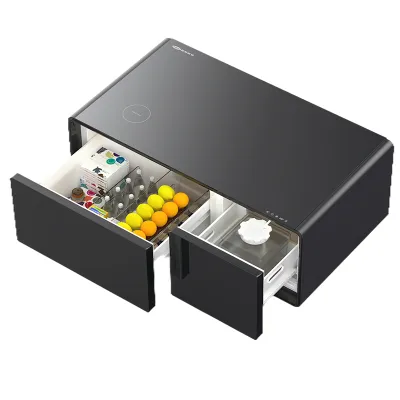
Prices are valid at publication and may change. Please refer to the product page for the latest price.
When evaluating these tables, the most critical technical distinction lies in the cooling mechanism. True compressor-based refrigeration systems operate exactly like a standard kitchen refrigerator, using a compressor and refrigerant cycle to actively lower temperatures. These systems can easily reach and maintain low temperatures between 3°C and 8°C, even in warm tropical climates. In contrast, thermoelectric cooling systems rely on the Peltier effect to transfer heat. Thermoelectric units are quieter and lighter, but they can only cool contents relative to the ambient room temperature, usually lowering it by about 10°C to 15°C. In a warm room without continuous air conditioning, a thermoelectric cooler may fail to keep drinks sufficiently cold.
Smart features also vary widely between basic and premium models. Standard configurations usually include a couple of USB-A or USB-C charging ports and a digital thermostat control on the tabletop. Advanced models introduce dual wireless charging pads built directly into the glass surface, allowing you to charge compatible smartphones simply by laying them down. Bluetooth audio systems with built-in speakers are another common upgrade, turning your table into a central sound system. Before purchasing, identify which of these features are essential for your lifestyle, as unnecessary add-ons can significantly increase the price and power consumption.
It is vital to set realistic expectations regarding storage capacity. While these tables are incredibly convenient for hosting guests or keeping daily refreshments close by, they are not designed to replace a full-sized kitchen refrigerator. The internal drawers are optimized for beverage cans, water bottles, fruit, and small snacks. They lack the deep vertical clearance needed for large pitchers, and they do not have dedicated freezer compartments for long-term food preservation. Viewing the table as a supplementary convenience cooler rather than a primary appliance will help you plan your storage space effectively.
Measuring Your Space and Managing the Weight
Fitting a heavy, active appliance into a small living room requires precise physical planning. Start by measuring your available floor space, keeping in mind that a coffee table needs comfortable clearance on all sides. Standard living room layouts require at least 30 to 45 centimeters of space between the edge of the sofa and the table to allow for comfortable legroom. For a refrigerated table, you must also calculate the drawer extension depth. If the cooling drawers slide outward by 40 centimeters, you will need to add that distance to your clearance calculations to ensure you can open the drawers fully without hitting your shins or blocking the walkway.

Because these tables house compressors, glass tops, and metal framing, they are exceptionally heavy even when empty. A typical smart coffee table can weigh anywhere from 30 to 60 kilograms before you add a single beverage. This weight increases significantly once the drawers are fully stocked with cans and bottles. If you live in a high-rise condominium or a multi-story townhouse, verify your building’s delivery access rules. Measure the interior dimensions of your building’s elevator, the width of your front door, and any tight turns in your stairwells to ensure the delivery team can safely transport the unit to your living room.
Ventilation is another critical factor that is often overlooked in small spaces. Refrigerators work by extracting heat from the interior drawers and expelling it into the surrounding room. To prevent the compressor from overheating, the table must have adequate clearance around its ventilation grilles, which are typically located at the back or bottom of the unit. Pushing the table flush against a sofa, wall, or heavy drapes will trap hot air, forcing the cooling system to run continuously. This constant operation increases energy consumption and shortens the lifespan of the appliance. Always check the manufacturer’s manual for the recommended ventilation clearance, which is usually at least 5 to 10 centimeters of unobstructed space around the vents.
Matching Cooling Capacity to Your Daily Needs
Evaluating the internal capacity of a smart coffee table requires looking closely at the volume, which is measured in liters. Small-space models typically offer a total capacity of 60 to 130 liters, which is often divided into two separate drawers. Many models feature dual-zone cooling, allowing you to set different temperatures for each drawer. For example, you can set one drawer to a chilly 3°C for soft drinks and beers, while keeping the other drawer at a mild 10°C for delicate snacks, chocolates, or skincare products. Look for models with adjustable or removable dividers so you can customize the interior layout to fit your preferred beverage sizes.
Understanding the operational limits of the cooling technology will prevent disappointment. If you plan to store perishable food items like dairy, fresh meat, or leftovers, you must choose a compressor-based model that can consistently maintain temperatures below 4°C. Thermoelectric models are better suited for simply chilling canned drinks or storing items that do not require strict temperature control. Additionally, keep in mind that these units are not freezers; attempting to store ice cream or frozen treats in a standard smart coffee table drawer will result in a melted mess, as the temperature ranges rarely drop below freezing.
Noise level is a major consideration for a piece of furniture that sits directly in front of your television or reading chair. Compressor-based tables will inevitably produce a low hum when the cooling cycle kicks in. To ensure the noise does not disrupt your quiet evenings, check the manufacturer’s decibel (dB) rating. A rating of 35 to 40 dB is comparable to a quiet library or a modern household refrigerator and is generally easy to ignore. Anything above 45 dB may become noticeable during quiet movie scenes or conversations, making it less suitable for multi-use living rooms.
Electrical Safety and Routine Maintenance
Because a smart coffee table is an active electrical appliance, safe power integration is paramount. The table must be plugged directly into a grounded wall outlet that can handle the power draw of a compressor. Avoid using extension cords, multi-plug adapters, or cheap power strips, as the high startup current of a refrigerator compressor can overload these temporary connections, posing a serious fire hazard. If your living room layout does not have an outlet near the sofa, consider hiring a professional electrician to install a floor outlet or run a safely covered, heavy-duty extension line along the baseboards to prevent tripping hazards.
Managing the physical weight of the table is also essential for protecting your flooring. The concentrated weight of a fully loaded table can leave permanent indentations or scratches on delicate surfaces like vinyl planks, laminate, or engineered wood. To prevent this damage, place heavy-duty felt pads or rubber caster cups under the table’s legs. If your table features wheels for easy movement, ensure they can be locked securely in place to prevent the unit from rolling unexpectedly when you open the drawers or lean on the tabletop.
Routine maintenance is necessary to keep the cooling system running efficiently, especially in humid tropical environments. High humidity can cause condensation to build up inside the drawers or around the magnetic door seals. Wipe down the interior surfaces with a soft, dry cloth once a week to prevent moisture accumulation and mold growth. Additionally, dust and pet hair can quickly clog the condenser coils and ventilation grilles underneath the table. Use a vacuum cleaner with a brush attachment to clean these vents every three to six months, ensuring unrestricted airflow and optimal cooling performance.
Building Your Comparison Shortlist
When comparing different smart coffee table models, pay close attention to the durability and heat resistance of the surface materials. The tabletop will serve as your primary coffee table, meaning it will host hot mugs, heavy books, and occasional spills. Tempered glass is a highly popular choice because it is scratch-resistant, easy to wipe clean, and handles both hot and cold items without cracking. If you prefer a wood or laminate finish, verify that the surface has been treated with a moisture-resistant coating to prevent warping, bubbling, or staining from sweating beverage glasses.
Warranty coverage is another crucial factor to investigate before making a purchase. Because these tables are hybrid products, they combine furniture components with complex electronic and mechanical systems. A reputable manufacturer should offer a clear warranty that covers different parts of the table. It is common to see a one-year warranty on the overall furniture frame and smart electronics, paired with a longer three- to five-year warranty specifically for the refrigeration compressor. Be sure to read the fine print to understand how repairs are handled, especially regarding whether you must transport the heavy table to a service center yourself.
To help you organize your options, use the blank comparison matrix below to log the specifications of the models you find on online marketplaces or at local appliance retailers. This structured approach will make it easier to identify which table offers the best balance of size, cooling power, and smart features for your specific budget.
| Model Name | Dimensions (W x D x H cm) | Cooling Type (Compressor/Thermoelectric) | Smart Features (Bluetooth/Wireless Charging/USB) | Price Range (₱) |
|---|
Frequently Asked Questions (FAQ)
Do smart coffee tables with fridges consume a lot of electricity?
The electricity consumption of a smart coffee table depends primarily on its cooling technology and how often the drawers are opened. Compressor-based models are highly efficient, often consuming a similar amount of power to a small minibar or bedside refrigerator. Thermoelectric models run continuously to maintain their cool temperatures, which can result in higher relative energy use in warm rooms. To minimize electricity consumption, keep the table out of direct sunlight, ensure the ventilation grilles are clean, and avoid leaving the cooling drawers open for extended periods.
Can I place a smart coffee table with a fridge on a rug or carpet?
Placing a smart coffee table with a fridge directly on a thick rug or carpet is generally not recommended if the unit vents heat from the bottom. Thick fibers can block the airflow underneath the table, trapping heat and causing the compressor to work harder or overheat. If you want to place the table on a rug, ensure the model has high, solid legs that elevate the ventilation grilles well above the carpet pile. Alternatively, you can place a solid wooden or acrylic board under the table’s legs to create a stable, flat surface that preserves the necessary ventilation clearance.

Community discussion
Share your experience or ask a question. Comments are reviewed before publication.