
Gathering a large family for daily meals, Sunday lunches, and festive celebrations is a cornerstone of daily life in the Philippines. In many households, the dining table serves as more than just a place to eat; it is a homework station, a remote workspace, and the primary hub for family discussions. However, finding a wooden dining table that comfortably accommodates six to ten people without overstretching your household budget requires a strategic approach. The challenge lies in balancing physical space constraints, material durability, and structural stability rather than relying solely on low price tags or unverified marketing claims.
To make a smart investment, you must look beyond surface aesthetics and evaluate how a table is built, how it fits your room, and how it will withstand daily wear. This guide provides a practical framework to help you calculate your spatial needs, assess wood materials, inspect structural joints, and navigate local purchasing channels. By focusing on these essential factors, you can identify a high-value, budget-friendly wooden dining table that serves your family safely and reliably for years to come.
Sizing Your Dining Space for 6 to 10 People
Before browsing designs, you must determine the exact table dimensions your dining room can accommodate. To ensure everyone can eat comfortably without bumping elbows, each seated person requires a minimum of 60 centimeters of lateral table width and 35 centimeters of depth. For a six-seater table, this translates to a minimum length of 150 to 180 centimeters. An eight-seater table typically requires a length of 180 to 210 centimeters, while a ten-seater table demands a length of 240 to 300 centimeters to prevent cramped seating.
Products mentioned in this guide
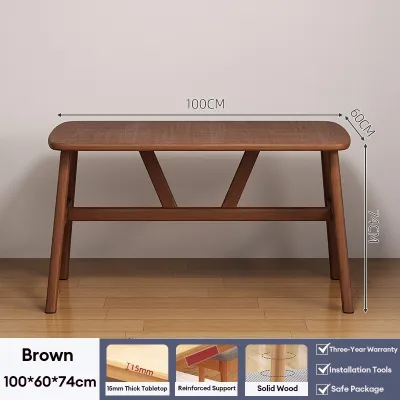
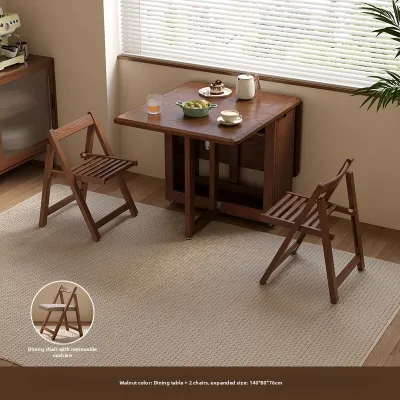
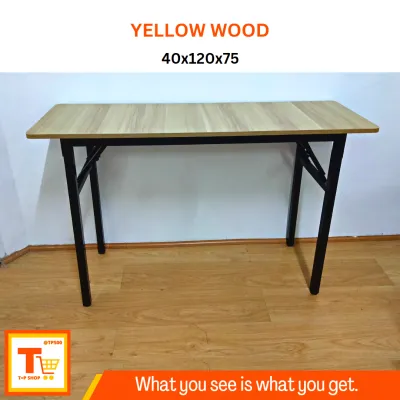
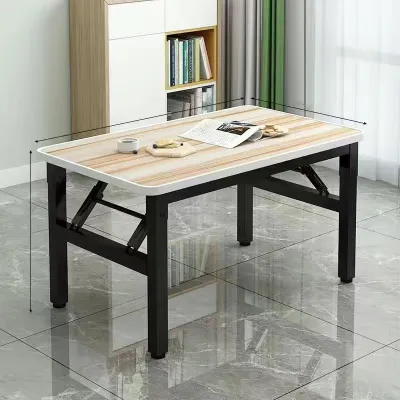
Prices are valid at publication and may change. Please refer to the product page for the latest price.
The shape of the table also dictates how efficiently it utilizes your available floor space. Rectangular tables are highly efficient for long, narrow dining rooms because they align with the natural shape of most rooms and can be pushed against a wall when not fully occupied. Round tables foster excellent conversation and eliminate sharp corners, which is highly beneficial in busy households. However, a round table large enough to seat ten people requires a massive room and makes reaching shared serving dishes in the center highly impractical. Extendable tables offer an excellent middle ground for budget-conscious homes, allowing you to maintain a compact footprint for daily family meals and expand the surface only when hosting larger gatherings.
In addition to the table’s physical dimensions, you must account for the clearance space required for movement. Ensure there is at least 90 centimeters of open space between the edge of the table and the nearest wall, cabinet, or doorway. This clearance allows family members to pull out their chairs, sit down comfortably, and walk behind seated guests without causing traffic jams or safety hazards. If your dining area is adjacent to a high-traffic hallway or kitchen entrance, increasing this clearance to 120 centimeters will ensure smoother foot traffic during busy meal prep times.
Finally, consider how the table’s leg design impacts seating capacity and legroom. Tables with traditional four-corner legs offer excellent stability but can restrict where chairs can be placed, often blocking the corners and reducing the usable seating area. Pedestal or trestle bases, on the other hand, clear up legroom and allow you to squeeze in extra chairs or benches along the sides when hosting larger groups. However, you must verify that a pedestal base is heavy and wide enough to prevent the table from tipping when weight is applied to the outer edges.
Evaluating Wood Options and Build Quality on a Budget
When shopping on a budget, navigating material options is crucial for finding a table that lasts. Solid local hardwoods, such as mahogany or acacia, offer excellent weight capacity and can be sanded down and refinished if damaged, though they generally carry a higher initial cost. Rubberwood, which is a medium-density hardwood often used in imported furniture, provides a highly cost-effective solid wood alternative that balances durability with affordability.

Engineered woods, such as medium-density fiberboard (MDF) or high-quality plywood topped with a natural wood veneer, offer a highly affordable alternative with a uniform, modern appearance. These materials are less prone to warping from temperature changes than solid wood, making them a practical choice for many homes. However, engineered wood is highly sensitive to moisture and cannot be easily repaired if the protective outer layer is compromised. If water penetrates the veneer, the underlying fibers can swell and bubble, making these tables best suited for dry, well-ventilated dining areas.
Regardless of the material, a table’s longevity depends heavily on its structural joints and leg attachments. Avoid tables that rely solely on simple wood screws or staples to hold the legs to the tabletop, as these will inevitably loosen and strip the wood under the weight of heavy daily use. Instead, look for tables featuring corner blocks, heavy-duty hanger bolts, or traditional mortise-and-tenon joinery. A well-constructed budget table should feel rigid and show no signs of swaying when you apply downward and lateral pressure to the corners.
Surface finishes play an equally vital role in protecting your investment from daily wear. In tropical climates, spills, condensation from cold drinks, and hot serving dishes can quickly ruin unprotected wood. Inspect the table surface to confirm it has been treated with a protective sealant, such as a polyurethane, lacquer, or specialized oil topcoat. These finishes create a moisture-resistant barrier that prevents liquids from penetrating the wood fibers, helping to ward off unsightly water rings, deep stains, and wood rot during family meals.
Where to Find Budget-Friendly Wooden Tables in the Philippines
Finding an affordable wooden table involves comparing different sourcing channels, each with its own set of trade-offs. Commissioning a local carpenter or visiting roadside woodshops in provinces known for woodworking can yield highly durable, solid wood tables at competitive prices. This approach allows you to customize the dimensions to your exact space and support local artisans, though you must personally inspect the wood to ensure it has been properly seasoned and dried to prevent warping in the local humidity.
Large furniture showrooms and retail chains offer convenience, clear return policies, and predictable designs, but their prices often include significant retail markups. Alternatively, online marketplaces and ecommerce platforms provide a vast selection of budget-friendly options delivered directly to your door. When purchasing online, always factor in the cost of shipping a heavy, bulky item, and carefully read the seller’s assembly services and return policies, as returning a defective ten-seater table can be logistically challenging and expensive.
If you want to maximize your budget, consider looking for second-hand tables, surplus furniture shops, or showroom floor models. These options often allow you to purchase high-quality solid wood pieces at a fraction of their original retail price. When inspecting a pre-owned table, check carefully for structural issues such as deep cracks along the grain, loose joints that cannot be tightened, or signs of wood-boring insect activity, which could compromise the safety of your home.
Inspection Checklist Before Buying or Assembling
Before finalizing your purchase or starting the assembly process, a thorough inspection can prevent costly mistakes. Begin by measuring the physical dimensions of the delivered boxes or the assembled table against your home’s entryways. Ensure the table components can safely pass through your front door, narrow hallways, or stairwells, especially if you live in a multi-story home or a condominium unit with elevator restrictions.
Once the table is unboxed, conduct a physical quality check of all surfaces and edges. Run your hand along the tabletop and edges to verify that the wood is flat, free of splinters, and smoothly sanded. Perform a quick stability test by placing both hands on the center of the table and rocking it gently from side to side; any noticeable swaying or creaking indicates weak support structures or loose hardware that must be addressed before use.
Finally, inventory all hardware components, including bolts, washers, and dowels, against the parts list in the assembly manual. Ensure you have the correct tools on hand and that the step-by-step instructions are clear and easy to follow. Taking the time to verify these details beforehand ensures a smooth, safe assembly process and prevents structural failures down the road.
Daily Care and Maintenance for Family Use
Maintaining an affordable wooden dining table requires consistent, gentle care to preserve its finish and structural integrity. For daily cleaning, avoid harsh chemical cleaners, bleach, or abrasive scrubbing pads, which can strip away the protective sealant and expose the raw wood underneath. Instead, wipe the surface with a soft, slightly damp microfiber cloth and a mild dish soap solution, immediately following up with a dry cloth to remove any residual moisture.
Protecting the wood from thermal and physical damage is essential for extending its lifespan. Always use heat-resistant pads, trivets, or placemats under hot serving dishes, pots, and warm plates to prevent the heat from clouding or melting the finish. Additionally, using a tablecloth or protective table runner during busy family meals can shield the surface from accidental scratches caused by keys, toys, or heavy serving utensils.
Keep an eye out for early signs of wear, such as localized cloudiness, fine cracks in the lacquer, or water rings that do not fade. Addressing these minor finish degradations early—either by applying a fresh coat of furniture wax or spot-treating the affected area—can prevent moisture from penetrating deeper into the wood. Taking these proactive steps ensures your dining table remains a safe, beautiful, and functional centerpiece for your family for years to come.
Frequently Asked Questions (FAQ)
Can a budget wooden table support heavy holiday meals?
Yes, a budget-friendly table can easily support heavy meals, provided its weight capacity is supported by a robust underframe rather than just a thick tabletop. Look for tables that feature a central support beam or a sturdy apron—the wooden frame directly beneath the tabletop—which distributes weight evenly to the legs and prevents the center of the table from sagging under heavy serving platters.
Is it better to buy a fixed 10-seater or an extendable table?
An extendable table is generally better for homes where space is limited, as it keeps your dining area open for daily activities and only expands when needed. However, if you have a dedicated, spacious dining room and host large groups almost daily, a fixed-size table is often more durable over the long term because it lacks moving mechanical parts that can wear out or require regular maintenance.
How do I protect an affordable wood table from high humidity?
To protect your table in a tropical climate, maintain consistent indoor ventilation and avoid placing the table in direct sunlight or directly beneath an air conditioning vent, as rapid temperature and humidity shifts can cause wood to warp or crack. Regularly checking that the table’s bottom and legs are sealed, and using a dehumidifier in damp rooms, will also help minimize moisture absorption.

Community discussion
Share your experience or ask a question. Comments are reviewed before publication.