
Finding the right expandable dining table for a Filipino household of 6 to 10 people requires balancing daily space efficiency with the demands of large family gatherings. In the Philippines, the dining room serves as the ultimate social hub, hosting everything from casual weekday dinners to grand Sunday lunches, birthday fiestas, and holiday feasts. An expandable table offers the ideal solution, staying compact for day-to-day living and extending easily when relatives and friends visit. To make a lasting investment, you must prioritize precise space planning, robust extension mechanisms, and materials capable of withstanding tropical humidity and heavy daily use.
Sizing and Space Planning for 6 to 10 Seats
To choose a table that accommodates both intimate family dinners and large gatherings, you must first understand the physical space requirements of your diners. Each person requires a minimum of 60 centimeters of table width and 40 centimeters of depth to eat comfortably without bumping elbows. For a standard 6-seat configuration, a rectangular table should measure at least 150 to 180 centimeters in length. When extending the table to seat 10 people, the length must expand to at least 240 to 300 centimeters. Additionally, because Filipino dining often features family-style serving with large platters of rice, soup, and main dishes placed in the center, look for a table width of 90 to 100 centimeters to ensure there is ample room for both individual place settings and shared serving bowls.
Measuring your dining room clearance is just as critical as measuring the table itself. A fully extended table must leave at least 90 centimeters of open space between the table edge and the nearest wall, buffet cabinet, or doorway. This clearance allows family members to pull out their chairs and sit down comfortably. If you want a clear walkway behind seated guests so people can move around the room during a busy meal, increase this clearance to 120 centimeters. Before purchasing, use painter’s tape or newspaper on your dining room floor to map out both the collapsed and fully extended footprints of the table to visualize how it affects traffic flow.
Products mentioned in this guide
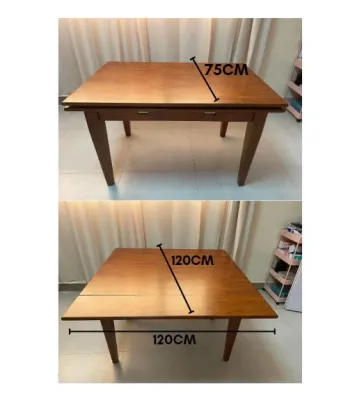
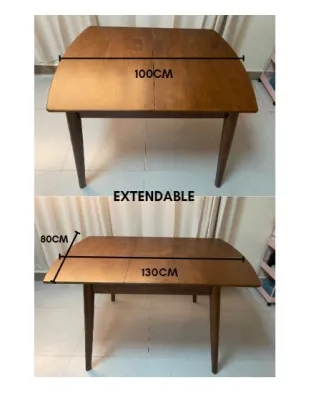
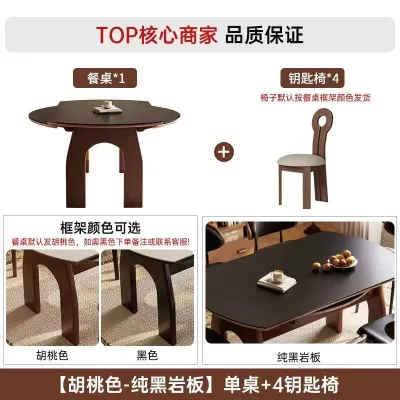
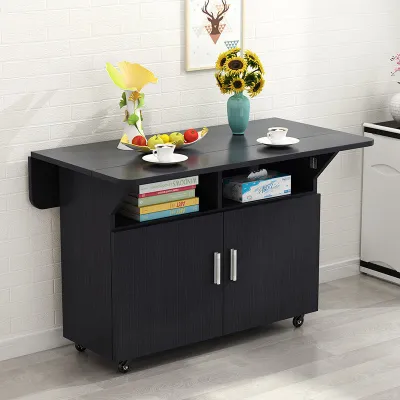
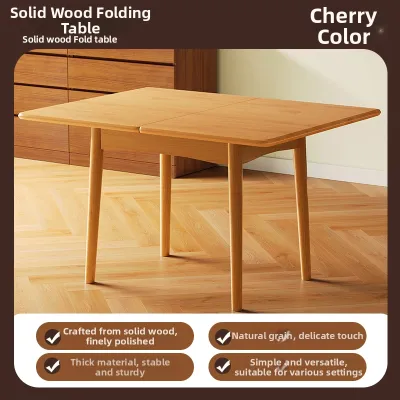
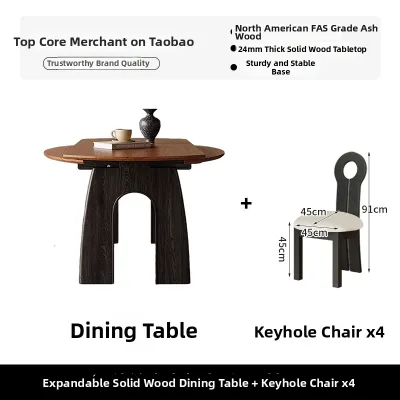
Prices are valid at publication and may change. Please refer to the product page for the latest price.
Finally, consider the logistics of getting the table into your home. Measure the height and width of your front door, narrow hallways, stairwells, and condominium service elevators. Many expandable tables are delivered flat-packed, but the main tabletop frame can still be exceptionally long and heavy. Ensuring that the delivery team can safely navigate these entry points without damaging your walls or the furniture is a vital step in the planning process.
Evaluating Extension Mechanisms and Stability
Comparing common expansion mechanisms helps you find a balance between daily convenience and long-term structural integrity. The three most common designs are butterfly leaves, drop-leaves, and removable inserts. A butterfly leaf mechanism features a hinged panel stored in a dedicated compartment beneath the tabletop. When you pull the table ends apart, the leaf flips open smoothly. This self-storing design is highly convenient for space-constrained homes because you do not need to find extra storage space for the leaves. Drop-leaf tables have hinged sections at the ends that hang down when not in use; while simple to operate, the dropped leaves can sometimes restrict legroom for those sitting at the ends when the table is collapsed. Removable inserts require you to physically insert separate panels into the center or ends of the table, which means you must have a dedicated, dry closet to store the extra panels when they are not in use.

Leg placement and base design directly impact both seating capacity and guest comfort. Standard four-legged tables provide excellent stability, but the corner legs can restrict where you place chairs, often forcing guests at the corners to straddle a table leg. Pedestal or trestle bases are highly practical for expandable tables because they eliminate corner legs entirely, allowing you to squeeze in extra chairs or stools during large gatherings without guests bumping their knees. However, because an extended table spans a significant distance, ensure the design includes center support legs. A span of 240 centimeters or more can sag over time under the weight of heavy serving dishes if it lacks a central support post.
To ensure the table remains stable during lively family meals, verify the manufacturer’s weight limits and joint reinforcement specifications. Look for tables constructed with reinforced corner blocks, heavy-duty metal-on-metal connection hardware, and sturdy wooden or steel glides. Avoid mechanisms that rely heavily on plastic components, as these can wear out, crack, or warp under frequent use and the weight of heavy ceramic serving platters.
Materials and Finishes for High-Traffic Family Use
The tropical climate of the Philippines, characterized by high relative humidity and warm temperatures, can cause wood to expand and contract. This environmental stress can lead to warping or cause extension glides to jam if the materials are not properly treated. When evaluating solid wood tables, check the manufacturer’s care instructions to ensure the timber has been properly kiln-dried and sealed with a high-quality, moisture-resistant finish such as polyurethane or lacquer. Solid wood offers unmatched durability and repairability, as scratches, dents, and stains can be sanded down and refinished over the years.
Engineered wood, such as high-density fiberboard (HDF) or medium-density fiberboard (MDF) topped with a natural wood veneer, is a popular and cost-effective alternative. It is highly stable and less prone to warping in humid conditions than solid wood. However, its durability depends heavily on the quality of the veneer and the edge banding. If moisture from condensation or spills penetrates the seams of the veneer, the underlying engineered wood can swell and ruin the table surface. Inspect the edges closely to ensure the banding is seamless and tight.
Glass-top tables offer a sleek, modern aesthetic and are incredibly easy to wipe clean after messy meals. However, they show fingerprints, smudges, and dust easily, requiring frequent maintenance. If you prefer a glass top, verify that it is made of tempered safety glass and check the stability of the supporting frame, as glass is exceptionally heavy and places continuous stress on the table joints. Regardless of the material you choose, pay close attention to the edge profiles. Rounded edge designs, such as bullnose or chamfered edges, are highly recommended for active households to minimize the risk of painful bumps and injuries for young children and elderly family members.
Building Your Shortlist: Pre-Purchase Verification
Before making your final decision, compile a shortlist of potential models and perform a thorough pre-purchase verification. Confirm the exact assembled dimensions of the table in both its collapsed and fully extended states directly with the retailer or manufacturer. Do not rely solely on online photos, which can sometimes distort proportions. Ask the seller to clarify the leaf storage method; if the table requires separate insert leaves, ensure you have a safe, dry closet or under-bed storage space where they can lie flat.
Review the retailer’s delivery and assembly policies carefully. Because expandable tables are heavy and feature complex moving parts, professional assembly is highly recommended to ensure the glides, alignment pins, and locking hardware are calibrated correctly. Check if the delivery team handles on-site assembly and verify any associated service fees in ₱. Additionally, review the return policy and warranty terms, paying close attention to what is covered regarding structural defects or malfunctioning extension mechanisms.
If you are shopping in a physical showroom, test the extension mechanism yourself. It should glide smoothly without sticking, squeaking, or requiring excessive physical effort. If you are purchasing online, download and read the user manual beforehand to understand the assembly steps, maintenance requirements, and troubleshooting guidelines for the specific mechanism used.
Frequently Asked Questions (FAQ)
Can an expandable table support heavy appliances or large buffet dishes?
Yes, but you must verify the manufacturer’s maximum static and dynamic weight limits for both the collapsed and extended states. While the main frame of the table is designed to be highly stable, the weight capacity often decreases when the table is fully extended. Avoid placing heavy appliances, such as electric hot pots, samgyupsal grills, or heavy ceramic serving platters, directly over the extension seams or drop-leaf hinges. Distribute the weight of your dishes evenly across the solid sections of the tabletop to prevent unnecessary strain on the joints and glides.
How do I store the extension leaves when not in use?
If your table does not feature a self-storing butterfly mechanism, you must store the separate insert leaves flat rather than leaning them vertically against a wall. Vertical storage can cause the wood to warp over time, especially in the humid Philippine climate, which will prevent the leaves from aligning correctly when you next extend the table. Keep the leaves in a temperature-controlled room away from direct sunlight, moisture, and air conditioning vents. Use a padded protective cover or a soft blanket to prevent scratches to the finish, ensuring the leaves match the main tabletop perfectly for years to come.

Community discussion
Share your experience or ask a question. Comments are reviewed before publication.