
Finding an extendable Nordic dining table that comfortably transitions from a six-seat daily family setup to a ten-seat gathering requires careful planning. In Philippine households, where dining rooms often serve as multi-functional spaces for family meals, remote work, and festive celebrations, the right table must balance minimalist aesthetics with structural resilience. Achieving this balance involves analyzing your room’s physical limits, understanding how different extension mechanisms behave under load, and selecting materials that can withstand tropical humidity.
Sizing Your Space and Table for 6 to 10 People
To select a table that accommodates both daily family life and larger gatherings, start by calculating the physical footprint of the furniture in both its collapsed and fully extended states. For daily use by six people, a standard table length of approximately 150 to 180 centimeters is typically sufficient, allowing three seats on each long side or two on the sides and one at each end. When extending the table to seat ten people, the length must expand significantly, often reaching 220 to 240 centimeters, to prevent guests from feeling cramped. Check the manufacturer’s specifications for the exact extended length and compare this against your room’s dimensions before making a purchase.
Beyond the table itself, you must account for the clearance required for chairs and walkways. A practical rule of thumb is to maintain a minimum clearance of 90 centimeters between the edge of the table and the nearest wall or piece of furniture. This distance allows diners to pull their chairs out and stand up comfortably. If the dining area serves as a primary pathway to the kitchen or living room, increase this clearance to 120 centimeters to ensure that family members can walk behind seated guests without causing disruption.
Products mentioned in this guide
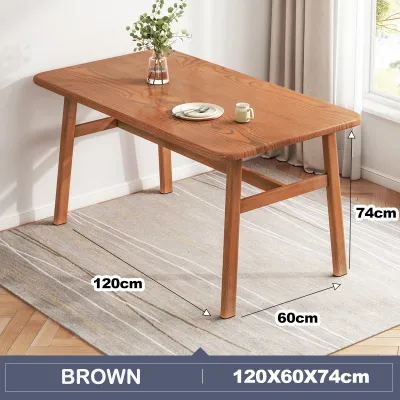
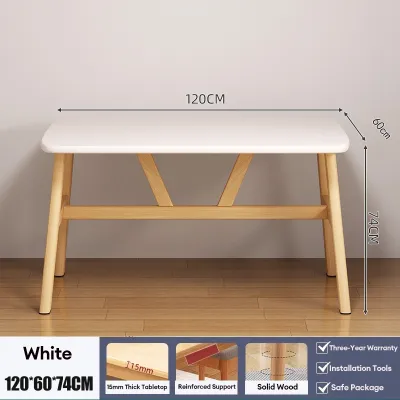
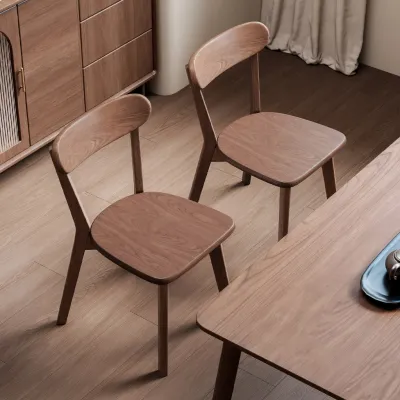
Prices are valid at publication and may change. Please refer to the product page for the latest price.
Failing to account for these clearances is a common sizing error that can make a dining room feel congested. In open-plan Philippine homes, an overextended table can easily block access to nearby storage cabinets, pantry doors, or the main hallway. Before finalizing your choice, use painter’s tape on the floor to outline both the daily and fully extended dimensions of the table. This visual aid helps you verify that high-traffic pathways remain clear and that nearby doors can swing open fully without obstruction.
Evaluating Extension Mechanisms and Stability
The mechanism that allows your Nordic dining table to expand plays a critical role in its daily usability and long-term durability. Butterfly-leaf mechanisms feature a hinged panel stored directly inside a compartment beneath the tabletop. When the table is pulled apart, the leaf flips open like butterfly wings to fill the gap. This design is highly convenient because it eliminates the need for separate storage, though the internal gears and hinges require regular inspection to ensure they remain clean and free of debris.

Drop-leaf tables offer a different approach, utilizing hinged panels at the ends of the table that hang down when not in use. While drop-leaf tables are exceptionally easy for a single person to operate, they can sometimes limit legroom for guests seated at the ends of the table due to the hanging panels and support brackets. Alternatively, separate insert leaves must be added manually to the center of the table. While these often provide a very flat and seamless dining surface, you must have a dedicated, dry storage space to keep the extra leaves safe from warping when they are not in use.
Stability is a paramount concern when a table is extended to its maximum length of ten seats. Examine the leg placement and base design of the table; models where the legs slide outward to the corners during extension generally offer greater stability and maximize legroom. If the legs remain fixed in the center while the tabletop expands outward, the overhanging ends may be prone to tipping or wobbling when heavy serving dishes are placed on them. Always verify the manufacturer’s rated weight capacity for the extended sections to ensure the table can safely support heavy platters and daily use.
Navigating Delivery and Assembly Constraints
Bringing a large, extendable dining table into your home requires careful logistical planning, especially in urban Philippine residential settings. Many condominium buildings in Metro Manila have strict elevator weight and size limits, while multi-story townhouses often feature narrow, winding stairwells. Measure the height, width, and depth of all doorways, hallways, stairwells, and elevator cabins along the delivery path, and compare these measurements against the packaged dimensions provided by the retailer.
Once the table is inside the room, the floor surface itself can affect its stability and operation. Uneven floor tiles, warped wood planks, or slightly sloped surfaces can cause the extension mechanisms to misalign or make the table wobble when fully extended. Look for tables equipped with adjustable leveling feet, which allow you to compensate for minor floor imperfections. Ensuring a perfectly level surface prevents unnecessary strain on the table’s joints and sliding hardware.
Assembly conditions vary widely depending on the complexity of the extension mechanism. While some basic tables require only attaching the legs, advanced butterfly-leaf or synchronized gear systems may arrive partially assembled with complex instructions. Review the required tools and assembly steps beforehand; if the process involves heavy lifting or precise alignment of metal tracks, consider hiring professional assembly services to avoid damaging the hardware or compromising the structural integrity of the table.
Matching Nordic Aesthetics with Daily Durability
The classic Nordic aesthetic is defined by clean lines, tapered legs, minimalist profiles, and light wood tones such as oak, ash, or beech. This design philosophy creates a bright, airy feel that can make a dining room appear more spacious. However, maintaining this minimalist look in a busy household requires selecting materials and finishes that can withstand the daily wear and tear of a large family.
In the Philippines, the tropical climate presents unique challenges for wooden furniture. High relative humidity can cause solid wood to expand, while dry air from air conditioning can cause it to contract, potentially leading to warping or joint separation over time. When shopping, check product specifications for engineered wood cores with high-quality wood veneers, which are often more stable under fluctuating humidity levels than solid wood. Additionally, verify that the manufacturer has applied a protective polyurethane or lacquer topcoat to seal the wood against moisture.
Daily maintenance is essential to preserve the beauty of your Nordic dining table. Because Filipino dining often features hot, moisture-rich dishes, always check the manufacturer’s care instructions regarding heat and liquid resistance. Use trivets, placemats, and coasters to protect the surface from hot serving bowls and condensation rings. Promptly wipe up spills with a soft, damp cloth, and avoid using harsh chemical cleaners that can strip away the protective finish and expose the wood to environmental damage.
Frequently Asked Questions (FAQ)
How much clearance is needed around a fully extended dining table?
To ensure comfortable movement, maintain at least 90 centimeters of clearance between the edge of the fully extended table and the nearest wall or obstacle. This provides enough space for guests to push their chairs back and stand up without difficulty. If the area behind the chairs serves as a primary walkway for serving food or moving between rooms, increase this clearance to 120 centimeters to prevent congestion.
Are drop-leaf or butterfly-leaf extensions better for large families?
For large families who frequently transition between different seating capacities, butterfly-leaf extensions are generally more practical because the leaves store directly inside the table, eliminating the risk of damage or warping during storage. Drop-leaf tables are highly convenient for quick adjustments but may offer less legroom at the ends. If you choose separate insert leaves, ensure you have a climate-controlled storage space to protect them from the high humidity levels common in the Philippines.

Community discussion
Share your experience or ask a question. Comments are reviewed before publication.