
Hosting large gatherings for family and friends is a cherished tradition, but finding a dining setup that accommodates everyone without dominating your daily living space can be a challenge. A high-quality wooden table and chairs set offers the perfect balance of warmth, durability, and timeless style. However, scaling a dining area from a cozy six-seater for daily meals to a spacious ten-seater for special occasions requires careful planning. Choosing the wrong size, mechanism, or layout can quickly lead to a cramped room where guests struggle to move and hosting becomes stressful.
To avoid an overcrowded dining room, you must evaluate the relationship between your room’s physical boundaries and the fully extended footprint of the table. This involves calculating precise clearance zones, understanding how different extension mechanisms respond to local environmental factors, and selecting a base design that maximizes legroom. By focusing on these core structural and spatial dimensions, you can invest in a versatile dining set that serves your household efficiently every single day while effortlessly expanding for larger celebrations.
Quick Sizing Guide for a 10-Seater Wooden Table and Chairs Set
When planning for a dining set that transitions from six to ten guests, spatial efficiency is determined by a simple formula: the maximum extended length of the table plus the clearance required for seating and traffic. For a ten-seater configuration, a rectangular or oval table typically needs to measure between 240 and 300 centimeters in length, with a width of at least 90 to 100 centimeters. To accommodate this footprint comfortably, your dining room should ideally have minimum dimensions of 4.8 meters in length and 3.4 meters in width. This ensures that even when the table is fully extended, guests have enough room to sit without their chairs pressing against walls or adjacent furniture.
Products mentioned in this guide
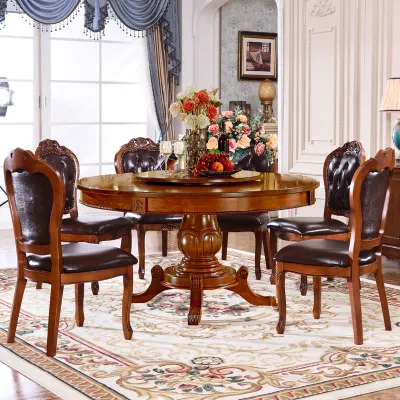
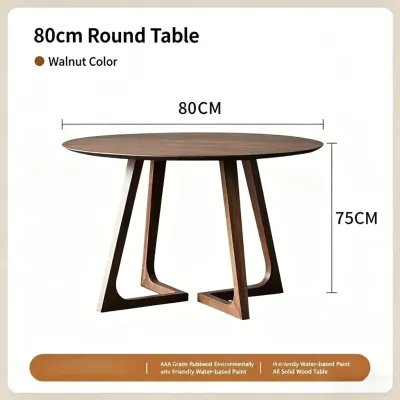
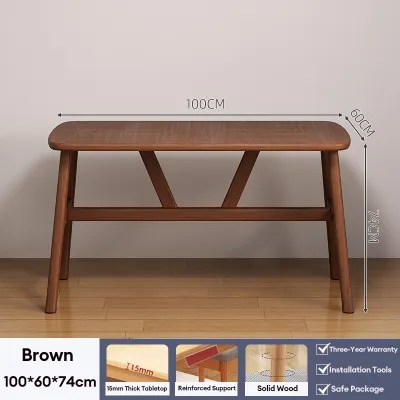
Prices are valid at publication and may change. Please refer to the product page for the latest price.
Equally important is how the table functions when collapsed to its six-person state, which is usually around 150 to 180 centimeters in length. A table that is too large when closed will overwhelm the room during daily use, while one that is too small might look disproportionate once surrounded by large dining chairs. You must also account for the visual weight of the wooden set; dark, heavy timbers can make a tight room feel smaller, whereas lighter finishes or tapered legs help maintain an open, airy atmosphere. Balancing these daily and hosting configurations is the first step toward a successful purchase.
How to Measure Your Dining Room for a 10-Person Footprint
Accurately measuring your dining room is the most critical step to prevent a crowded, uncomfortable dining experience. To calculate the exact floor space required for a ten-person setup, start by measuring the length and width of your dining room using a standard tape measure. Once you have the room’s total dimensions, subtract the depth of any buffet tables, sideboards, or console tables along the walls, as these permanent fixtures directly reduce your usable floor area.

Next, apply standard interior design clearances to ensure comfortable ergonomics. A seated guest requires a minimum of 60 to 75 centimeters of table width to dine comfortably without bumping elbows. Behind the table, you must allow at least 90 centimeters of clearance from the table edge to the nearest wall or obstacle; this provides enough space for a guest to push their chair back and stand up easily. If the area behind the chairs serves as a primary walkway through the home, increase this clearance to 110 or 120 centimeters so family members can walk past without forcing seated guests to tuck themselves in.
To physically visualize this layout before buying, map out the outlines of both the six-seater and ten-seater table dimensions on your floor using painter’s tape or newspapers. Leave the tape in place for a few days to test how easily you can navigate the room during your normal routine. This hands-on test will quickly reveal if the fully extended table will block pathways, cover floor vents, or interfere with nearby doors.
Finally, do not forget to measure the delivery path. Wooden dining tables, especially solid wood models designed to seat ten people, are exceptionally heavy and bulky. Measure the width and height of all doorways, hallways, stairwells, and elevator doors from your home’s entrance to the dining room. Verify these dimensions against the manufacturer’s shipping box dimensions to guarantee the set can actually be delivered and assembled in your home without requiring costly modifications or returns.
Comparing Extension Mechanisms for Large Wooden Tables
The mechanism that allows your table to expand determines not only how easy it is to transition between sizes but also the long-term durability of the furniture.
Butterfly Leaf / Self-Storing A butterfly leaf design features hinged panels stored in a hidden compartment directly beneath the tabletop. To extend the table, you slide the two halves of the tabletop apart, lift the folded leaf out of the center, and unfold it like butterfly wings. The primary benefit of this system is convenience; you never have to worry about finding storage space for extra wooden panels, and the leaves are protected from scratches and dust. However, the internal mechanical tracks and hinges are complex. Over time, these moving parts can wear down or collect dust, and if the table’s center support is not heavily reinforced, a very long span can begin to sag under heavy loads.
Removable Center Leaves Traditional extendable tables utilize separate, loose leaves that are inserted into the center after pulling the table ends apart. This classic design is incredibly sturdy because it relies on simple, robust wooden or metal slides with fewer moving parts to fail. Because the leaves are completely removed when the table is collapsed, the table remains lightweight and easy to move daily. The main drawback is storage; you must have a dedicated closet, under-bed space, or pantry where you can safely store these heavy, bulky wooden panels. They must also be stored flat and wrapped in protective blankets to prevent warping, scratching, or denting.
Drop-Leaf Drop-leaf tables feature hinged sections on the outer ends that hang vertically when not in use and lift up to be supported by pull-out brackets or wooden gates. While highly practical for small spaces, drop-leaf designs are generally unsuitable for a large jump from six to ten seats. The hinged ends lack the heavy-duty structural support of center-insert leaves, creating a tipping hazard if guests lean heavily on the outer edges. For a stable ten-person setup, a center-expanding mechanism is far superior.
Note on Wood Movement and Humidity In tropical climates like the Philippines, high humidity levels can significantly affect solid wood furniture. Wood naturally absorbs and releases moisture, causing it to expand and contract throughout the year. This natural movement can cause tight-fitting wooden slides to stick, swell, or warp, making the extension mechanism difficult to operate. When selecting a wooden table and chairs set, look for high-quality metal glides or well-engineered wooden tracks with built-in tolerances for humidity. Always check your specific furniture manufacturer’s care instructions before applying lubricants or cleaning products to the expansion tracks, and consider using air conditioning or dehumidifiers to maintain a stable indoor environment.
Selecting the Best Table Shape and Base for Maximum Legroom
The shape of your table and the design of its base play a massive role in how many people you can seat comfortably and how much legroom they will enjoy.
Rectangular vs. Oval Rectangular tables are the most popular choice for large dining spaces because their straight edges maximize surface area and align perfectly with standard rectangular dining rooms. They also make it easy to place chairs side-by-side without overlapping legs. Oval tables, on the other hand, offer rounded corners that soften the visual weight of a large piece of furniture and improve traffic flow in tighter spaces. However, the curved ends of an oval table offer less usable surface area, which can make seating guests at the very ends feel cramped and restricted.
Pedestal vs. Four Legs For an extendable table that reaches up to ten seats, the base configuration is a critical decision. Traditional tables with four corner legs can severely limit your seating flexibility. When you extend the table and add extra chairs, guests seated near the corners are often forced to straddle a table leg, which is highly uncomfortable for long meals.
A pedestal or trestle base is highly recommended for large extendable sets. Because the support structure is concentrated in the center of the table, there are no corner legs to interfere with chair placement. This allows you to slide chairs in flexibly along the entire perimeter, making it much easier to squeeze in an extra guest when needed.
Structural Stability A fully extended wooden table carrying heavy serving dishes, glassware, and decor requires exceptional structural integrity. Look for bases made from solid hardwoods with robust joinery, such as mortise-and-tenon joints or heavy-duty steel reinforcement brackets. Avoid tables that wobble or sag at the center when fully extended, as this indicates poor engineering and poses a safety risk.
Planning Chair Storage and Daily Space Management
One of the most overlooked challenges of owning a ten-seater extendable dining set is managing the extra chairs when the table is collapsed for daily six-person use. Having ten chairs permanently crowded around a six-person table ruins the room’s visual balance and makes daily seating feel cramped.
To manage this, calculate how many chairs can comfortably tuck completely under the table when it is in its collapsed state. For most standard six-seater tables, only four to six side chairs can slide fully under the frame. The remaining four chairs must be stored elsewhere.
Consider purchasing armless side chairs for the majority of the set, as they have a narrower profile and can be tucked closer together. For the extra four seats, you can choose matching wooden folding chairs or stackable designs that can be stored in a utility closet or guest room until needed. Alternatively, you can distribute the extra four chairs throughout your home as functional accent pieces—placing two in the living room, one in the study, and one in a bedroom—bringing them back to the dining room only when hosting.
When arranging your dining room daily, keep the table centered in its designated zone. This ensures that when you do extend it, the table remains balanced within the room and maintains equal clearance on all sides, saving you from having to lift and reposition a heavy wooden frame every time you host.
Frequently Asked Questions (FAQ)
What is the best wood type for an extendable dining table in a humid climate?
For humid tropical climates, dimensional stability is the key factor. Hardwoods like seasoned teak, mahogany, or acacia are highly regarded for their natural resistance to moisture and warping. However, the specific wood species is less important than how the wood was prepared and finished. Always check that the manufacturer uses kiln-dried timber, which reduces internal moisture content before assembly. Additionally, ensure the table has a high-quality, protective factory finish—such as a polyurethane or marine-grade lacquer—that seals the wood and prevents rapid moisture absorption. Follow the manufacturer’s care instructions, which may include keeping the table away from direct sunlight and maintaining stable indoor humidity levels.
Can I use a dining bench instead of chairs to seat more people on an extendable table?
Yes, a dining bench is an excellent, space-saving alternative for one or both sides of an extendable table. During daily six-person use, a bench can slide completely under the table and out of sight, opening up valuable floor space and reducing visual clutter. Benches are also highly flexible, allowing you to easily squeeze in three or four children where only two standard chairs would fit. The trade-off is comfort; benches lack back support, making them less comfortable for long, formal dinner parties. For the best of both worlds, use comfortable upholstered chairs at the ends and one side of the table, and use a matching wooden bench on the side facing the wall or pathway.

Community discussion
Share your experience or ask a question. Comments are reviewed before publication.