
Choosing the right sliding cabinet organizer for your buffet or display cabinet in the Philippines depends on matching your cabinet’s internal dimensions, door clearance, and the weight of your dinnerware with the correct track system and material. Buffet cabinets and display credenzas in Filipino homes often house heavy ceramic plates, delicate glassware, serving platters, and cherished family heirlooms. Because these cabinets are typically deep, items stored at the back can easily become forgotten, inaccessible, or damaged during attempts to reach them. Installing a sliding organizer transforms these dark, deep spaces into highly accessible, smooth-gliding storage solutions that protect your valuable tableware from accidental chips and breakage.
To make an informed purchase, you must evaluate several factors including the layout of your cabinet, the local climate, and the structural integrity of your furniture. High tropical humidity can quickly degrade low-quality metals and hardware, while incorrect measurements can lead to organizers that obstruct your cabinet doors. By understanding the different types of sliding mechanisms, taking precise measurements, and selecting durable materials, you can upgrade your dining room storage to be both functional and long-lasting.
Types of Sliding Organizers for Buffet and Display Cabinets
Selecting the right sliding cabinet organizer begins with understanding the physical form factors and how they interact with your specific storage needs. Pull-out wire baskets are a popular choice because they offer excellent ventilation. In the humid tropical climate of the Philippines, airflow is essential to prevent musty odors and mold growth inside closed wooden cabinets. Wire baskets also allow you to see items from below, making them highly practical for upper shelves. However, small items, spice jars, or delicate stemware can easily tip over on wire grids. If you plan to store these items, look for wire baskets that come with flat acrylic liners, or opt for solid sliding trays.
Products mentioned in this guide
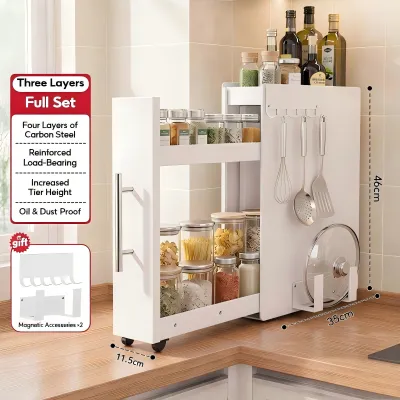
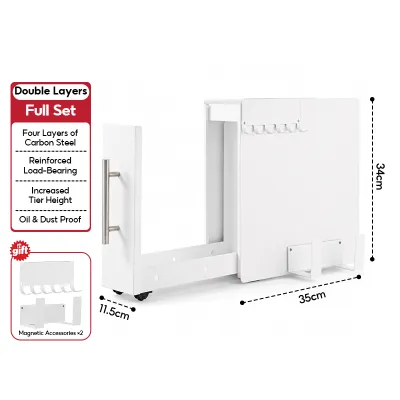
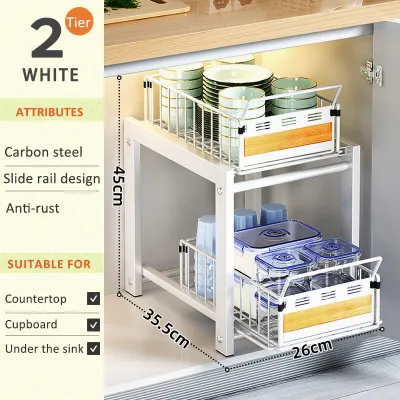
Prices are valid at publication and may change. Please refer to the product page for the latest price.
Solid sliding trays, constructed from finished wood, engineered wood, or thick acrylic, provide a perfectly flat, stable surface. These are ideal for organizing delicate tea sets, crystal glassware, and small decorative pieces that require absolute stability when the drawer is pulled open. While solid trays do not offer the same level of natural ventilation as wire baskets, they are much easier to wipe clean and prevent dust from falling onto the shelves below. They also provide a more premium, integrated look that complements high-end wooden buffet tables and display cabinets.
Tiered sliding shelves are designed to maximize vertical space in tall cabinet compartments. These systems feature a lower deep basket and an upper shallow tray that slide out independently or together on a stepped frame. This configuration is highly efficient for separating different types of tableware, such as placing heavy dinner plates in the bottom section and lighter saucers or cups on the top tier. For deep, single-level compartments, high-sided sliding drawers or deep baskets are preferred because they prevent tall stacks of plates or large serving bowls from shifting and sliding off the edges when the organizer is fully extended.
Mounting styles also dictate how the organizer fits and functions within your cabinet. Side-mounted track systems are attached directly to the inner side walls of the cabinet. They offer exceptional stability and are commonly used for heavy-duty drawers, but they require highly precise internal cabinet width measurements and sturdy side panels. Bottom-mounted track systems, on the other hand, screw directly into the existing cabinet shelf or base. This makes them incredibly versatile and much easier to install in older, custom-built, or retrofitted buffet tables where the side walls may not be perfectly square or strong enough to support side-mounted hardware.
Essential Measurements and Fit Checks
Before purchasing any sliding cabinet organizer, taking precise measurements of your cabinet’s interior is the most critical step. Do not rely on the external dimensions of your buffet table, as cabinet walls, back panels, and face frames can significantly reduce the actual usable space inside. Use a reliable metal measuring tape and measure the internal width, depth, and height of the cabinet compartment. Because custom-built wooden furniture in the Philippines can have slight structural variances, always measure the width and depth at three different points: the front, the middle, and the back. Use the smallest measurement of the three as your guide.

When measuring the internal width, pay close attention to the cabinet doors and hinges. Many buffet cabinets feature doors that do not open fully past a 90-degree angle, or they have bulky concealed hinges that protrude into the cabinet opening. If you do not account for these hinges, your sliding organizer will collide with them when pulled out. To avoid this, measure the “clear opening width,” which is the actual unobstructed horizontal space available when the doors are fully open. Subtract the thickness of any protruding hinges, door lips, or sliding door tracks from your total width measurement to find the maximum allowable width for your organizer.
Depth and height clearances require equal attention. Measure the internal depth from the back panel to the inside of the closed cabinet door. Ensure that the sliding organizer’s track length is at least two to three centimeters shorter than this depth to allow the cabinet doors to close completely without hitting the front of the tray. For height, measure the distance between the cabinet floor and the shelf above it, keeping in mind the height of the tallest items you plan to store on the sliding tray. Stacking plates or placing tall pitchers on a sliding shelf requires ample vertical clearance so they do not scrape against the upper cabinet frame when pulled forward.
Finally, verify the track width requirements and side clearance tolerances specified by the manufacturer. Some heavy-duty slide systems require an exact clearance of 12.7mm on each side to function smoothly, leaving very little room for error. If your cabinet walls are slightly uneven, you may need to install wooden spacer cleats behind the tracks to create a perfectly square and level mounting surface. A shelf that is not perfectly level can cause the sliding tray to roll open on its own or put uneven stress on the ball bearings, leading to premature wear of the hardware.
Evaluating Materials and Hardware Durability
Evaluating the materials and hardware of a sliding cabinet organizer is essential for ensuring long-term durability, especially under the environmental conditions of the Philippines. High relative humidity and salt air in coastal regions can quickly cause low-grade metals to rust and corrode. When choosing metal organizers, look for high-quality stainless steel (preferably grade 304) or carbon steel with a thick, durable powder-coated or polyethylene (PE) finish. Avoid cheap chrome-plated steel, as the plating can easily chip or scratch over time, exposing the underlying metal to moisture and leading to rapid rust formation.
If you prefer the warm look of wooden sliding trays to match a traditional hardwood buffet, ensure the wood is properly treated and sealed. Solid hardwoods like teak, mahogany, or acacia are naturally more resistant to moisture and warping than engineered woods like MDF or particle board. However, any wooden organizer used in a dining room or kitchen environment should have a clear, water-resistant polyurethane or lacquer finish. This protective coating prevents the wood from absorbing moisture from damp plates or humid air, which can cause the wood to swell, warp, or develop mold.
The slide rails are the mechanical heart of any sliding organizer, and their quality determines how smoothly the tray will operate under a heavy load. Avoid simple plastic roller tracks, which tend to sag, stick, and degrade quickly when carrying heavy ceramic or stoneware. Instead, look for full-extension ball-bearing slide rails made of galvanized or stainless steel. Ball-bearing slides provide a whisper-quiet, effortless glide and are designed to handle significantly higher weight capacities. If your budget allows, opt for soft-close ball-bearing slides, which gently pull the drawer closed during the last few centimeters of travel, preventing your delicate glassware and china from clashing together.
Before purchasing, inspect the physical build quality of the unit or examine high-resolution product images closely. Look for clean, robust welding points on wire baskets, ensuring there are no sharp metal burrs or rough edges that could scratch your hands or damage your linens. Check the thickness of the metal wire or solid panels; thin, flimsy wires will bend under the weight of a stack of heavy dinner plates. The frame and mounting brackets should feel rigid and solid, with no noticeable side-to-side play or wobbling when the sliding mechanism is fully extended.
Installation Methods and Weight Capacity Limits
When installing a sliding cabinet organizer, you must choose between temporary, non-invasive mounting methods and permanent, screw-mounted installations. Adhesive-mounted or tension-based sliding tracks are highly appealing because they require no drilling and are incredibly easy to set up. However, these temporary options are generally only suitable for lightweight items like plastic containers, napkins, or light pantry goods. The heavy weight of ceramic plates, glass platters, and iron cookware, combined with the softening effect of tropical heat on adhesives, makes adhesive mounts highly prone to failure over time, which can result in broken heirloom dishes.
For buffet and display cabinets holding valuable dinnerware, permanent screw-mounted installation is the only reliable method. Screwing the slide rails directly into the cabinet floor or side walls ensures that the organizer remains perfectly stable and secure, even when fully extended under a heavy load. When installing, always use the mounting screws provided by the manufacturer, or select screws that are appropriate for the material of your cabinet. For instance, particle board cabinets require specialized wide-thread cabinet screws to prevent the wood from stripping, while solid hardwood cabinets may require pre-drilling pilot holes to prevent the wood from splitting.
Understanding the difference between static and dynamic weight capacities is crucial for safe operation. The static weight capacity refers to how much weight the organizer can support when it is completely closed and resting inside the cabinet. The dynamic weight capacity is the maximum weight the slide rails can safely support while the drawer is being pulled out and is fully extended. Always adhere to the manufacturer’s specified dynamic weight limit, and avoid overloading the front of the tray. To maintain balance and prevent the cabinet from tipping forward, place your heaviest items, such as large stacks of dinner plates or heavy serving bowls, toward the back of the sliding tray.
There are situations where you should pause the installation and consult a qualified professional. If your buffet cabinet is an antique piece made of fragile, thin wood, or if it features glass shelves, standard screw-mounted organizers cannot be installed directly. A professional carpenter can help reinforce the cabinet structure by adding internal wooden support cleats, replacing glass shelves with sturdy plywood, or custom-fitting the tracks to preserve the integrity of the furniture. Never attempt to mount heavy sliding hardware onto sagging, water-damaged, or structurally compromised cabinet shelves.
Sourcing and Verifying Organizers in the Philippines
Sourcing sliding cabinet organizers in the Philippines requires a careful approach to ensure you receive a product that matches your expectations and measurements. When browsing local online marketplaces and e-commerce platforms, it is common to encounter listings with highly generic titles and confusing specifications. To avoid purchasing the wrong size, look past the main product title and scroll down to the detailed product description. Reliable sellers will provide a comprehensive sizing chart, including the exact external dimensions of the organizer, the minimum internal cabinet dimensions required, and the weight capacity of the tracks.
Customer reviews are an invaluable resource for verifying the actual quality and performance of a sliding organizer before you buy. Look for reviews from buyers in the Philippines, paying close attention to those who have uploaded photos or videos of their completed installations. These real-world images can give you a much better sense of the metal thickness, the finish quality, and how smoothly the tracks operate in a real home environment. Read the comments to see if other buyers experienced issues with missing hardware, bent wire frames during shipping, or inaccurate dimension listings.
When comparing prices in ₱, balance the cost against the materials used, the weight capacity, and the reputation of the seller. Extremely cheap sliding organizers often utilize thin, low-grade steel and basic plastic rollers that will rust quickly and struggle to support heavy dinnerware. Investing a bit more in a high-quality organizer made of stainless steel or heavy-duty powder-coated steel with ball-bearing slides is a much more cost-effective decision in the long run. A durable, smooth-gliding system not only lasts for years but also provides peace of mind by keeping your expensive glassware and family heirlooms safe from accidental falls and damage.
Frequently Asked Questions (FAQ)
Can I install a sliding organizer in a cabinet with a center stile?
A center stile is the vertical wooden post located in the middle of a double-door cabinet frame, which helps support the cabinet structure and provides a latch point for the doors. This post poses a structural limitation because it physically blocks a single, full-width sliding tray from pulling out of the cabinet. If your buffet cabinet has a center stile, you cannot install an organizer that spans the entire width of the cabinet.
To resolve this, you must measure the clear opening width on either side of the center stile individually, treating them as two separate cabinet compartments. Measure from the inner edge of the side wall to the outer edge of the center stile, subtracting any hinge clearances. The best solution is to install two narrow, independent sliding baskets side-by-side, allowing you to pull out one side at a time without interference from the central post.
How do I clean and maintain the sliding tracks?
Keeping your sliding tracks clean and well-maintained is essential for ensuring a smooth, quiet glide and extending the lifespan of the hardware. Over time, dust, pet hair, and small food crumbs can accumulate inside the slide rails, clogging the ball bearings and causing the tracks to stick or grind. Regularly vacuum the tracks using a narrow crevice tool, or use a stiff, dry brush to sweep out any debris from the sliding mechanism.
Before applying any lubricants to the tracks, always check the manufacturer’s care instructions, as some high-quality ball-bearing slides come pre-lubricated with specialized grease that should not be mixed with household oils. If lubrication is recommended, apply a small amount of dry silicone spray or light machine oil to the rails, then slide the tray back and forth several times to distribute it evenly. Avoid using harsh chemical cleaners, abrasive scrubbing pads, or water directly on the tracks, as these can strip away protective zinc coatings, degrade plastic rollers, and accelerate rust formation.

Community discussion
Share your experience or ask a question. Comments are reviewed before publication.