
Selecting the right 304 stainless steel kitchen storage cabinet or mobile cart in the Philippines requires looking past generic product descriptions to evaluate material thickness, structural reinforcement, and hardware quality. In a tropical climate characterized by high humidity and coastal salt air, choosing the correct grade of stainless steel is the difference between a lifetime investment and a rusted, structurally compromised unit within a few years. Because specific inventory and model numbers fluctuate rapidly across local online marketplaces and commercial kitchen suppliers, the most reliable path to a successful purchase is mastering the technical specifications that define high-quality stainless steel furniture. By focusing on verifiable fabrication standards, load-bearing designs, and precise spatial planning, you can secure a durable, hygienic, and highly functional storage solution tailored to your kitchen’s demands.
Why 304 Stainless Steel is the Standard for Kitchen Storage
Stainless steel is not a single material but a family of alloys with varying performance characteristics. Grade 304, also known as 18/8 stainless steel, contains approximately 18% chromium and 8% nickel, which creates a passive chromium oxide layer on the surface that self-heals when exposed to oxygen. This specific chemical composition provides exceptional resistance to organic acids, food acids, and the high-humidity environments common in the Philippines. Lower-grade alternatives like 201 or 430 stainless steel substitute manganese for nickel or lack nickel entirely, making them highly susceptible to pitting corrosion, tea staining, and structural rust when exposed to moisture, salt, or acidic food spills.
Beyond corrosion resistance, 304 stainless steel offers superior hygiene benefits due to its non-porous surface. Bacteria, mold, and food pathogens cannot penetrate the material, allowing for thorough sanitization with standard kitchen cleaners. This makes it the preferred choice for food preparation areas where cross-contamination must be strictly prevented. Additionally, the structural integrity of 304 steel ensures that it resists warping, denting, and bowing under heavy kitchen equipment, maintaining its flat surface and structural alignment over decades of daily use.
Products mentioned in this guide
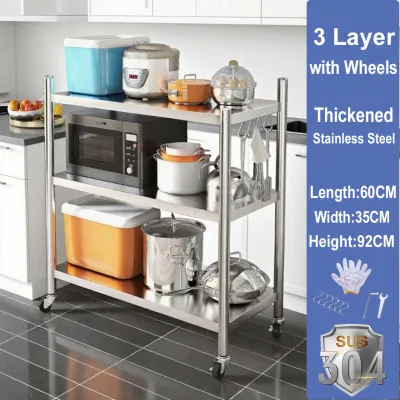
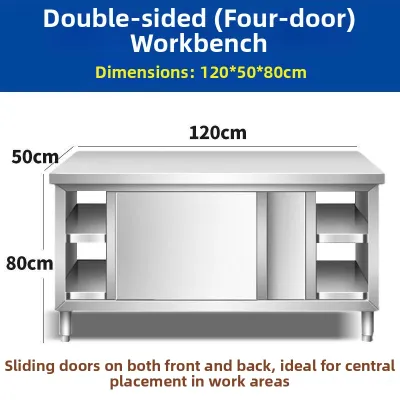
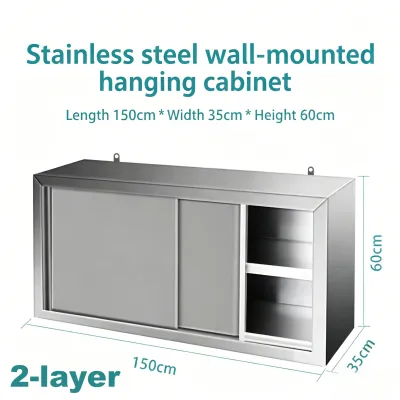
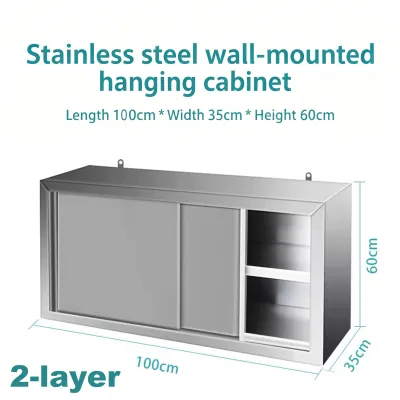
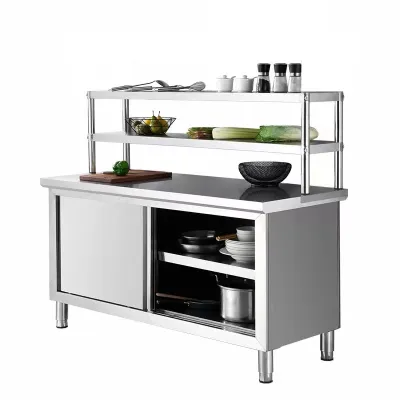
Prices are valid at publication and may change. Please refer to the product page for the latest price.
Evaluating Stationary Storage Cabinets
When assessing stationary 304 stainless kitchen storage cabinets, the thickness of the steel—measured in gauges—is the primary indicator of durability. High-quality residential and commercial cabinets typically utilize 16-gauge or 18-gauge steel for structural panels and shelves, where a lower gauge number indicates thicker, more rigid steel. Thinner 20-gauge or 22-gauge steel is prone to flexing and oil-canning (the popping sound made when pressure is applied to a flat metal sheet). To ensure the cabinet can support heavy appliances, pots, and pantry staples, look for shelves reinforced with welded hat channels or support ribs underneath. These structural channels distribute weight evenly and prevent the shelf from bowing over time.

The moving parts of a stationary cabinet are often the first components to fail, making hardware inspection critical. High-quality cabinets feature heavy-duty, stainless steel hinges—ideally hydraulic soft-close models—that resist sagging and rust. Door handles should be securely welded or through-bolted rather than glued, and sliding doors should operate on enclosed, dust-resistant ball-bearing tracks to prevent food debris from jamming the mechanism. Double-walled door construction, which sandwiches a reinforcing core between two sheets of stainless steel, adds significant rigidity, eliminates tinny vibrations, and ensures the doors close with a solid, premium feel.
Integration with your existing kitchen layout requires careful attention to the cabinet’s base design. Stationary cabinets should feature adjustable bullet feet made of stainless steel or heavy-duty composite materials, allowing you to level the unit on uneven kitchen tiles. A recessed toe-kick area at the base of the cabinet is highly recommended for ergonomic comfort, as it allows you to stand close to the counter without stubbing your toes. Furthermore, a sealed base or sufficient clearance for cleaning tools is essential in tropical climates to prevent pest harborage and simplify daily floor maintenance.
Selecting Mobile Prep Carts and Tables
Mobile prep carts and tables introduce dynamic forces that require a different set of design priorities than stationary cabinets. The foundation of any reliable mobile cart lies in its caster wheels. Look for heavy-duty casters with polyurethane or non-marking rubber wheels, which glide smoothly over tiled or concrete floors without scratching. The casters must feature dual-locking mechanisms that lock both the wheel rotation and the swivel direction simultaneously; single-locking casters that only stop the wheel from rolling can still allow the cart to swing and wobble during vigorous food preparation.
The tabletop of a mobile prep cart serves as an active work surface, demanding a robust construction that can withstand chopping, pounding, and heavy equipment. A 16-gauge 304 stainless steel top reinforced with a sound-dampening underlayment (such as water-resistant marine plywood or welded steel channels) prevents flexing and dampens noise. Edge profiles are equally important: hemmed edges eliminate sharp, hazardous undersides, while a raised marine edge or a rear backsplash prevents liquids, juices, and small ingredients from spilling over the sides onto your kitchen floor.
Stability and safety are paramount when moving a loaded cart through a busy kitchen. A high center of gravity increases the risk of tipping, especially when navigating floor transitions, door thresholds, or drainage slopes. To mitigate this risk, ensure the cart’s design places heavier storage options—such as heavy pots, pans, or bulk ingredients—on the lowest shelf or utility drawer. When evaluating a cart, check that the overall width-to-height ratio supports lateral stability, and always verify that the manufacturer’s load ratings are distributed evenly across all tiers rather than concentrated on a single shelf.
How to Verify Authentic 304 Stainless Steel
Because lower-grade stainless steel alloys look virtually identical to 304 grade to the untrained eye, verifying material authenticity is essential to protect your investment. The most reliable method is to request a Mill Test Report (MTR) or material certification from the manufacturer or supplier, which documents the exact chemical composition of the steel batch used in fabrication. Reputable commercial kitchen suppliers in the Philippines routinely provide these documents for quality assurance, whereas generic online listings often lack verifiable documentation.
A common misconception is that a simple magnet test can definitively identify 304 stainless steel. While it is true that raw, fully annealed 304 stainless steel is non-magnetic (austenitic), the physical process of cold-working—such as bending, stamping, or drawing the steel into cabinet corners, sinks, or structural channels—alters the crystalline structure and induces a weak magnetic response. Consequently, a magnet may lightly stick to the bent corners or welded seams of an authentic 304 cabinet. A strong, aggressive magnetic pull across flat, unworked panels, however, strongly indicates a lower-grade ferritic steel like 430, which lacks nickel and offers significantly less corrosion resistance.
For a definitive, non-destructive field test, chemical testing kits provide rapid and highly accurate results. These kits utilize a specialized acid solution containing molybdenum or other reactive agents. To perform the test, clean a small, inconspicuous area of the steel, apply a single drop of the testing liquid, and observe the color change over a specified timeframe (typically 30 to 60 seconds). Authentic 304 stainless steel, which contains high levels of nickel and chromium, will resist reaction or turn a specific color indicated by the kit’s reference chart, while lower-grade steels like 201 will rapidly turn a dark red or brown due to their high manganese content.
Space Planning and Delivery Considerations
Before finalizing your purchase of a large stationary cabinet or mobile cart, meticulous space planning is required to avoid costly delivery failures. Measure the entire delivery path, including entry doorways, narrow hallways, stairwell turns, and elevator cabin dimensions. Many modern condominium units and townhouses in the Philippines feature tight corners and low door frames that cannot accommodate fully assembled commercial-grade cabinets. If access is restricted, prioritize flat-packed units that can be assembled directly inside your kitchen, ensuring that the assembly hardware is also made of corrosion-resistant stainless steel.
Within the kitchen itself, account for the spatial clearance required for daily operation. Ensure there is sufficient clearance for cabinet doors and drawers to swing fully open without obstructing walkways or colliding with major appliances like refrigerators and ovens. Additionally, leave a small ventilation gap of at least 1 to 2 centimeters between stationary cabinets and concrete walls to prevent moisture buildup and condensation, which can lead to mold growth on adjacent wall surfaces in humid tropical environments.
Finally, evaluate the condition of your kitchen floor. Many local kitchens are designed with sloped floors leading to floor drains to facilitate easy washing. While this is excellent for drainage, it presents a challenge for both stationary cabinets and mobile carts. For stationary units, ensure the adjustable feet have enough thread length to compensate for the floor slope and keep the unit perfectly level. For mobile carts, always park the unit with the locking casters engaged, and test the cart’s stability on the sloped surface to ensure it does not drift or become top-heavy.
Maintenance and Long-Term Care
Preserving the pristine finish and corrosion resistance of 304 stainless steel requires a consistent, non-abrasive cleaning routine. For daily maintenance, wipe down the surfaces using a soft microfiber cloth dampened with warm water and a mild, pH-neutral dish soap. Always wipe in the direction of the steel’s brushed grain (the visible parallel lines on the metal surface) rather than in circular motions. Wiping against the grain can trap microscopic dirt particles and create fine scratches that dull the finish over time.
To address stubborn grease buildup, hard water spots, or minor surface discoloration common in areas with hard municipal water, use a specialized stainless steel cleaner or a mild solution of warm water and white vinegar. Apply the solution, let it sit for a few minutes to break down the mineral deposits, and then rinse the area thoroughly with clean water before drying it completely with a clean microfiber towel. Leaving acidic residues or standing water on the surface can eventually lead to localized staining and compromise the protective chromium oxide layer.
To prevent permanent damage to your cabinet or cart, strictly avoid harsh chemical agents and abrasive cleaning tools. Never use chlorine bleach, chloride-based sanitizers, or highly acidic tile cleaners near your stainless steel furniture, as chlorides rapidly break down the passive protective layer and cause severe pitting corrosion. Similarly, never use abrasive steel wool, wire brushes, or scouring pads, which scratch the surface and leave behind microscopic carbon steel particles that will quickly rust and stain the underlying stainless steel.
Frequently Asked Questions (FAQ)
Is 304 stainless steel completely rust-proof?
While 304 stainless steel is highly resistant to corrosion, it is not entirely rust-proof. Under extreme conditions—such as prolonged exposure to harsh chemicals like chlorine bleach, high-salinity coastal air without regular cleaning, or standing acidic food spills—the protective chromium oxide layer can break down. This leads to localized surface rust or pitting. Regular cleaning, rinsing, and keeping the surface dry are essential to maintaining its corrosion-resistant properties over the long term.
Can I use magnetic hooks on a 304 stainless steel cabinet?
Generally, magnetic hooks will not adhere well to the flat panels of a high-quality 304 stainless steel cabinet because of its austenitic crystalline structure, which is naturally non-magnetic. While you might feel a very weak magnetic pull on bent edges, corners, or welded seams due to structural changes from cold-working during fabrication, it is usually insufficient to hold the weight of magnetic hooks or organizers. For hanging kitchen utensils, it is best to use adhesive hooks or integrated hanging rails.

Community discussion
Share your experience or ask a question. Comments are reviewed before publication.