
Organizing a closet in the Philippines requires storage solutions that can withstand high tropical humidity while maximizing limited space. Finding the right shoe boxes involves balancing accessibility, structural stability, and protection against dust and moisture. By integrating a dedicated shoe box system into your closet, you can transform a cluttered wardrobe floor into a clean, organized display that preserves the lifespan of your footwear.
The ideal shoe box setup depends on your specific closet layout, the types of shoes you own, and how often you wear them. Standard built-in closets often suffer from deep, dark corners where shoes are easily forgotten or damaged by mold. Utilizing stackable, clear-front containers allows you to utilize vertical space efficiently, keeping every pair visible and within arm’s reach.
Before purchasing any storage containers, it is essential to evaluate your closet’s physical dimensions and environmental conditions. This guide outlines the key factors to consider, from measuring shelf capacity to selecting moisture-resistant materials, helping you build a practical and durable shoe organization system.
Products mentioned in this guide
Prices are valid at publication and may change. Please refer to the product page for the latest price.
Assessing Your Closet Space and Storage Needs
Before buying shoe boxes, measure your closet shelves’ depth, width, and vertical clearance to ensure a proper fit. Many built-in closets have a depth of 30 to 45 centimeters, which accommodates standard shoe boxes placed lengthwise. If shelves are shallower, you may need to store boxes sideways, reducing the number of pairs you can fit side-by-side.
Measure the total width of your shelves to calculate how many boxes can sit next to each other. Leave a small gap of about one to two centimeters between the boxes and the closet walls to allow for easy retrieval and air circulation. If you have sliding closet doors, ensure the boxes do not protrude past the shelf edge, as this will block the doors from closing.
Vertical clearance determines how high you can safely stack your boxes. Measure the distance between shelves and compare it to the height of the boxes you plan to buy. For example, a shelf gap of 50 centimeters can comfortably accommodate three stacked boxes that are 15 centimeters tall each, leaving a safe margin at the top. Avoid stacking boxes all the way to the ceiling without intermediate shelves, as tall stacks can become unstable.
Consider the weight capacity of your closet shelves, especially if they are made of particleboard or thin plywood. While a single plastic shoe box is lightweight, a stack of five boxes containing heavy leather boots or thick-soled sneakers can weigh several kilograms. Over time, this concentrated weight can cause shelves to sag. If your shelves show signs of bowing, reinforce them with extra brackets or limit your stacks to three boxes high.
Finally, count your shoe collection and compare it to your available closet footprint. If you have more shoes than physical space, you must prioritize which pairs belong in the closet. Keep your daily footwear and delicate formal shoes in the closet boxes, while storing off-season shoes, sports cleats, or outdoor slippers in alternative storage areas like under-bed organizers or entryway racks.
Key Features to Look for in Closet Shoe Boxes
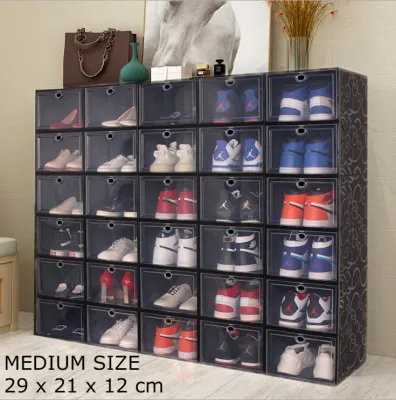
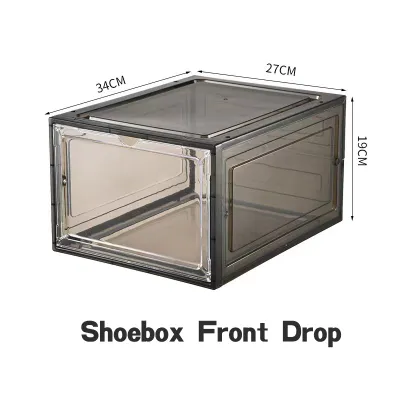
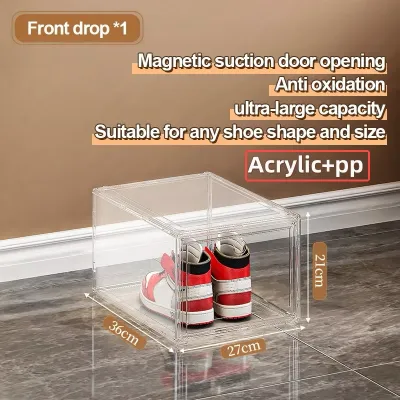
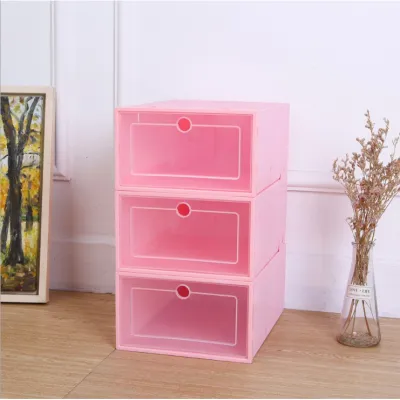
The design of a shoe box directly impacts how easily you can access your footwear on a daily basis. Traditional shoe boxes with top-opening lids are highly inconvenient when stacked, as you must remove all the upper boxes just to reach the pair at the bottom. For a functional closet system, look for drop-front shoe boxes that feature a hinged or magnetic front door. This design allows you to open the front panel and slide your shoes out without disturbing the rest of the stack.

Magnetic closures on drop-front doors offer superior durability and ease of use compared to plastic latches. Plastic tabs can wear down, crack, or become misaligned over time, making the doors difficult to close securely. Magnetic doors snap shut effortlessly, keeping dust out while maintaining a clean, uniform appearance across your entire storage wall.
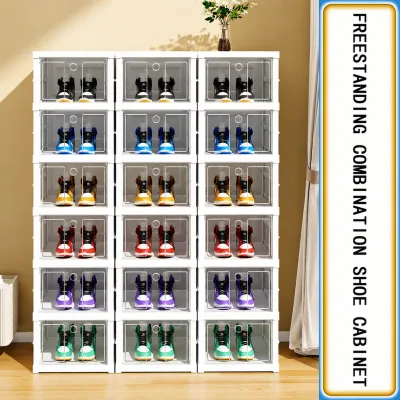
Stackability is another critical feature that prevents your shoe organization system from toppling over. High-quality closet shoe boxes feature interlocking designs, such as molded tabs on the top panel that fit into corresponding recesses on the bottom of the box above. These interlocking channels lock the boxes together, preventing them from sliding forward when you pull a shoe out.
Visibility is essential for saving time when getting ready. Fully transparent acrylic or clear polypropylene boxes allow you to see the exact color, style, and condition of your shoes instantly. If you prefer a more minimalist or less cluttered look, frosted or semi-transparent boxes offer a compromise, obscuring minor scuffs while still allowing you to identify the silhouette of the shoe inside.
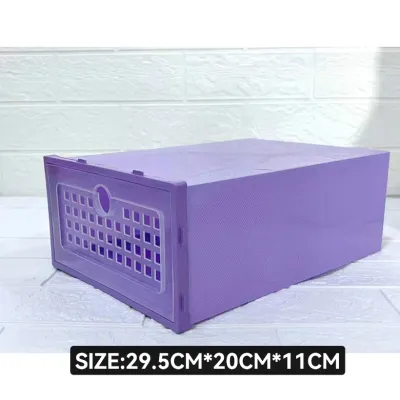
In the humid climate of the Philippines, proper ventilation is non-negotiable for preventing mold and mildew. Look for shoe boxes designed with ventilation holes, slotted rear panels, or breathable mesh sections. These openings allow air to circulate continuously through the box, preventing stagnant, humid air from trapping moisture inside the container and damaging your shoes.
Comparing Shoe Box Materials and Structures
Shoe boxes come in several materials, each offering distinct trade-offs regarding durability, weight, and moisture resistance. Clear acrylic and rigid polystyrene offer glass-like clarity and excellent structural rigidity, allowing high stacks without warping. However, rigid plastics can be brittle and may crack if dropped on hard tile floors, requiring careful handling.
Polypropylene is a more flexible and resilient plastic option. While it may not offer the absolute clarity of acrylic, it is highly impact-resistant, lightweight, and virtually shatterproof. Polypropylene boxes are often more affordable and come in collapsible designs that are easy to store when not in use. When choosing polypropylene, check the thickness of the plastic panels; thin, flimsy sheets can bow under the weight of heavy shoes, compromising the stability of your stack.
Opaque heavy-duty plastic boxes, made from high-density polyethylene, provide maximum structural strength and protection. Because they block out light completely, they protect sensitive shoe materials, such as white canvas or delicate leathers, from yellowing or fading due to UV exposure. These boxes are highly durable and easy to clean, making them ideal for long-term storage, though you will need to label them to know what is inside.
Cardboard shoe boxes are highly breathable and cost-effective, but they are poorly suited for humid closet environments. Cardboard naturally absorbs moisture from the air, which weakens its structural integrity over time. In the Philippines, a stacked column of cardboard boxes can easily soften, sag, and collapse, potentially crushing the shoes inside. Additionally, damp cardboard can attract pests like silverfish and cockroaches, making it a risky choice for long-term closet storage.
Fabric shoe boxes, typically constructed from non-woven polyester wrapped around cardboard or plastic frames, offer a soft, textured aesthetic that blends well with bedroom decor. They are lightweight and breathable, but they share the same structural limitations as cardboard if they rely on paperboard inserts. If you prefer the look of fabric, ensure the internal support panels are made of rigid plastic sheets rather than cardboard, and avoid stacking them more than two units high.
Building Your Custom Shoe Box Shortlist
To build an effective closet storage system, you should match the type of shoe box to the specific footwear you own. Everyday shoes, such as flat sandals, canvas sneakers, and casual slip-ons, require quick access and moderate protection. For these pairs, standard-sized polypropylene drop-front boxes are highly practical. They are durable enough to handle daily opening and closing, and their moderate size fits easily on lower, accessible closet shelves.
Sneaker collectors require specialized storage to protect and display their investment. Premium sneakers, especially high-tops or those with thick platform soles, often do not fit in standard shoe boxes. Look for extra-large sneaker cases with high-clarity acrylic panels and magnetic doors. These cases are designed to accommodate larger sizes and are tall enough to store high-top sneakers upright without bending the ankle collars.
Seasonal and formal footwear, such as leather dress shoes, patent leather heels, and embellished evening shoes, are worn infrequently and need maximum protection from dust and light. For these pairs, choose sturdy, opaque, or frosted plastic boxes with secure latching lids. Since you do not need quick access to these shoes, top-opening or fully sealed boxes are acceptable, as they provide a tighter seal against dust and insects during long periods of storage.
Tall boots and high heels present unique storage challenges due to their height and shape. Standard shoe boxes are usually around 15 centimeters tall, which will crush high heels or force you to fold boot shafts, causing permanent creases in the material. Look for extra-tall shoe box variants designed specifically for heels, or long, flat boot boxes that allow you to store boots flat. Some modular closet systems also offer boxes with adjustable internal dividers, allowing you to customize the height of each compartment.
Tips for Arranging and Maintaining Your Shoe Box System
Once you have selected your shoe boxes, organizing them strategically within your closet will improve daily efficiency. Arrange your boxes by frequency of use, placing your most-worn pairs at eye and waist level. This minimizes the need to bend down or reach high up during your morning routine. Keep rarely worn formal shoes on the highest shelves, and place heavy boots or sports shoes on the bottom shelves to maintain a stable center of gravity.
To maximize vertical space in closets with tall, fixed shelves, consider using freestanding shelf risers or tension rods. These accessories create intermediate platforms, allowing you to split a tall space into smaller sections. This prevents you from having to stack shoe boxes too high, which can make the stack unstable and difficult to manage when retrieving a box from the middle.
Managing humidity is the most critical aspect of maintaining a shoe box system in the Philippines. Excess moisture trapped inside plastic containers can quickly lead to mold growth, which ruins leather and fabric. Always place a silica gel packet or a small, renewable moisture absorber inside each shoe box. Additionally, never store shoes immediately after wearing them; let them air out in a well-ventilated room for at least 24 hours to ensure all sweat and environmental moisture have evaporated.
Regular maintenance will keep both your shoe boxes and your footwear in pristine condition. Every few months, take all the boxes out of your closet and wipe them down with a damp microfiber cloth and a mild, non-abrasive disinfectant. This removes accumulated dust and prevents any mold spores from settling on the plastic. While the boxes are empty, inspect your shoes for any signs of material degradation, such as peeling synthetic leather or separating soles, so you can address repairs early.
Frequently Asked Questions (FAQ)
Can I stack shoe boxes without them falling over?
Yes, you can stack shoe boxes safely if you choose containers designed specifically for stacking. Look for boxes with interlocking features, such as raised ridges on the lids that nest into corresponding grooves on the bottom of the box above. This physical connection prevents the boxes from sliding or shifting when you open the doors.
To ensure stability, always place the heaviest shoes, such as leather boots or thick-soled sneakers, at the bottom of the stack to create a low center of gravity. Avoid stacking lightweight or flexible plastic boxes more than four or five units high, as the weight can cause the lower boxes to bow and tilt. If you need to stack higher, ensure the column is supported by a closet wall or a dedicated shelving unit.
How do I prevent mold on shoes stored in plastic boxes?
Preventing mold in plastic shoe boxes requires controlling moisture and ensuring adequate airflow. Never place damp or sweaty shoes directly into a closed box; always let them air out completely in a well-ventilated room for a full day before storing them. Choose shoe boxes that feature built-in ventilation holes or slotted back panels to allow continuous air exchange.
Additionally, place a silica gel packet or a small moisture-absorbing sachet inside each box to capture any residual humidity. Periodically open your closet doors and the front panels of your shoe boxes to let fresh air circulate, especially during the rainy season when indoor humidity levels are exceptionally high.
Are fabric shoe boxes better than plastic for closet storage?
Fabric shoe boxes offer excellent breathability and a softer, more decorative look, but they are generally less practical than plastic boxes for most closet setups. Fabric containers typically rely on internal cardboard supports, which can absorb moisture from the air and sag over time in humid climates. They are also more difficult to clean if they get dusty or stained.
Plastic boxes, particularly those made of polypropylene or acrylic, provide superior structural rigidity, allowing you to stack them much higher without risk of collapsing. They are completely moisture-resistant, easy to wipe clean, and offer clear visibility so you can see your shoes instantly. For long-term durability and ease of maintenance in the Philippines, plastic is the recommended choice.

Community discussion
Share your experience or ask a question. Comments are reviewed before publication.