
Selecting the right bookshelf for a small home office is a balancing act between maximizing storage capacity and preserving valuable floor space. In compact environments, such as urban condominiums or spare bedrooms, an oversized or poorly positioned unit can quickly make the workspace feel cramped and hinder daily productivity. The key to finding the optimal fit lies in analyzing your room’s physical dimensions, understanding your specific storage needs, and choosing a configuration that complements the existing architectural layout.
By taking a systematic approach to measuring your space, evaluating vertical versus horizontal configurations, and verifying structural safety, you can create an organized, efficient, and visually balanced home office. This guide outlines the essential steps to select a bookshelf that optimizes your storage without overwhelming your limited workspace.
Measure Your Space and Clearance Requirements
Before browsing online marketplaces or visiting local furniture showrooms, you must establish the precise physical boundaries of your home office. Begin by measuring the available floor width and depth where you plan to place the bookshelf. Do not rely on general room dimensions; instead, measure the exact footprint, taking into account the thickness of baseboards, which can prevent a flat-backed unit from sitting flush against the wall. Additionally, measure the ceiling height from floor to ceiling to determine the maximum vertical limit for your furniture.
Products mentioned in this guide
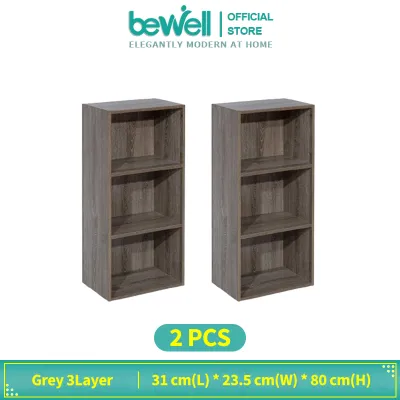
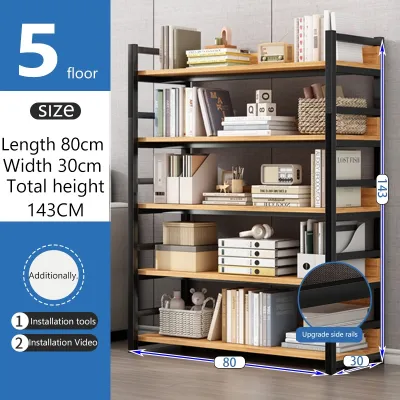
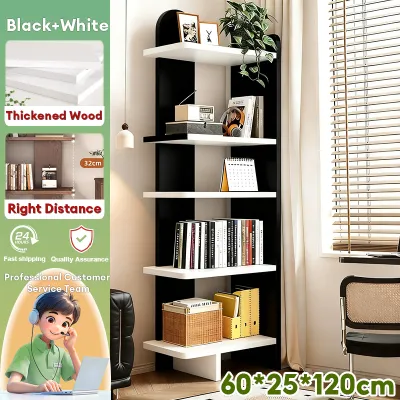
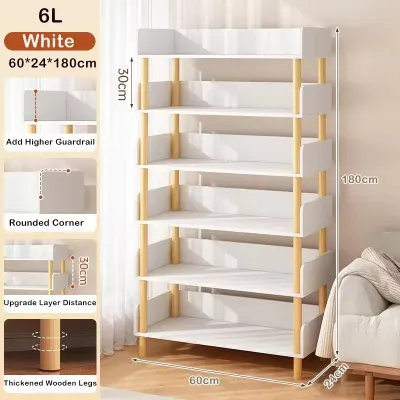
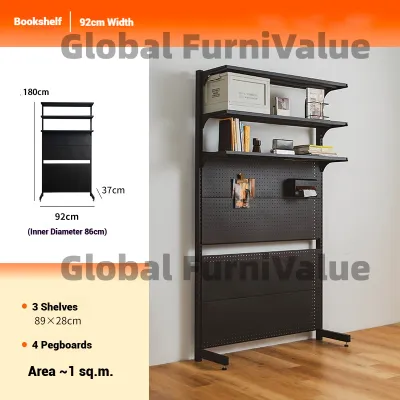
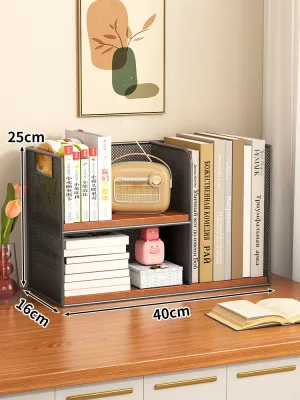
Prices are valid at publication and may change. Please refer to the product page for the latest price.
It is equally important to identify the locations of wall fixtures that could interfere with the bookshelf’s placement. Note the positions of electrical outlets, light switches, internet ports, and wall-mounted air conditioning units. Blocking these fixtures can restrict access to power sources or disrupt the airflow in your workspace. If your office features ventilation grilles, ensure the bookshelf does not obstruct them, as this can create safety hazards or reduce cooling efficiency.
Beyond the static footprint of the bookshelf, you must account for the dynamic clearance zones required for daily movement. Measure the swing path of nearby doors, wardrobe doors, and windows to ensure they can open fully without striking the furniture. Leave ample space behind your office chair to allow you to push back and stand up comfortably. Walkways should remain clear; a minimum clearance of 60 to 90 centimeters is generally recommended to maintain comfortable traffic flow through the room.
Finally, verify the delivery path from the building entrance to your home office. In high-rise condominiums or apartment complexes, this includes measuring the height and width of elevator doors, interior corridors, stairwells, and apartment entryways. A bookshelf that fits well in your office is of little use if it cannot physically clear the tight corners of your building’s stairwell or fit inside the elevator. If access is limited, consider flat-pack units that can be assembled directly inside the room.
Evaluate Bookshelf Configurations for Limited Layouts
When space is at a premium, the configuration of your bookshelf determines how effectively you utilize the room’s volume. You must decide whether to expand vertically or horizontally, balancing your storage requirements against the visual weight of the furniture. Matching the configuration to your room’s unique architectural features, such as windows, sloped ceilings, or existing desks, ensures a cohesive and functional layout.

Tall and Narrow Bookshelves
Tall and narrow bookshelves are highly effective for rooms with limited floor width but standard or high ceilings. By extending upward rather than outward, these units maximize storage capacity while occupying a minimal physical footprint on the floor. This configuration is particularly suitable for tight corners or narrow wall sections adjacent to your desk, allowing you to keep reference materials and office supplies within arm’s reach.
When selecting a tall unit, always check your ceiling height limits and ensure adequate clearance from overhead fixtures. Be mindful of ceiling fans, pendant lights, or split-type air conditioning units, as a tall bookshelf must not block air circulation or pose a physical obstruction to moving parts. Additionally, tall furniture can make a small room feel more enclosed; choosing a unit with an open-back design or a light finish can help mitigate this visual weight.
Safety is a critical consideration for any tall, narrow furniture piece. Because these units have a high center of gravity, they are inherently susceptible to tipping over, especially when loaded with heavy books or when placed on uneven flooring. It is essential to use anti-tip anchoring hardware to secure the bookshelf firmly to the wall. Always verify the manufacturer’s installation instructions and ensure you have the appropriate hardware for your specific wall type before setting up the unit.
Wide and Low Bookshelves
Wide and low bookshelves offer a horizontal alternative that keeps the upper half of your walls open, preserving a sense of spaciousness in a small office. This configuration is suitable for placement under windows, beneath low-hanging artwork, or along long, unbroken walls where a tall unit might feel visually overwhelming. By keeping storage at or below eye level, you maintain clear sightlines across the room, which helps make a compact space feel larger.
These low-profile units are highly versatile and can serve multiple functions in a home office. The top surface of a low bookshelf can double as an extended work area, providing a convenient spot for office equipment such as printers, scanners, or charging stations. Alternatively, it can hold decorative items, plants, or task lighting to enhance the ambiance of your workspace.
To maintain a cohesive visual flow, try to align the top surface height of a low bookshelf with other horizontal lines in the room, such as your desk surface or the window sill. This alignment creates a clean, continuous line that unifies the furniture and reduces visual clutter. When placing equipment on the top shelf, ensure the unit’s height allows for comfortable access and that power cords can reach nearby outlets safely.
Match Shelf Dimensions to Your Storage Needs
To choose a functional bookshelf, you must match its internal dimensions to the specific items you plan to store. Begin by taking inventory of your office materials. Standard novels and paperbacks require less depth, while large binders, reference manuals, professional journals, and storage boxes demand deeper shelves. If you plan to store electronics, such as a printer or a backup power supply, measure their depth and width carefully, adding a few centimeters of clearance for cables and ventilation.
Adjustable shelf heights are a highly desirable feature for small office bookshelves. Fixed shelves often result in wasted vertical space, leaving large gaps above smaller books while failing to accommodate taller items. Adjustable shelves allow you to customize the interior layout, maximizing storage efficiency by positioning shelves closely together for smaller items and creating larger openings only where necessary.
Before purchasing, review the manufacturer’s stated weight capacity per shelf to prevent sagging and structural failure. Heavy textbooks, legal binders, and office equipment can exert significant downward force. In humid environments, certain manufactured wood materials may be more susceptible to warping under heavy loads over time. Check the quality of the joints, the thickness of the shelves, and the manufacturer’s care instructions to ensure the unit can safely support your intended items without compromising its structural integrity.
Check Structural and Installation Safety Limits
Ensuring the structural stability of your bookshelf is vital for a safe working environment. The installation method and the type of anchors required depend heavily on the construction of your office walls. In many residential buildings and condominiums, walls may consist of solid concrete, hollow concrete blocks, or drywall over metal or wood studs. Each of these materials requires specific wall anchors and drill bits to achieve a secure hold.
For wall-mounted bookshelves or floating shelves, it is critical to secure the mounting brackets directly into structural studs whenever possible. If studs are unavailable, or if you are mounting onto drywall, you must use heavy-duty toggle bolts or expansion anchors rated for the total weight of the shelf and its contents. When anchoring to concrete or masonry walls, use appropriate masonry anchors and a hammer drill to ensure a deep, stable connection.
Never attempt to install a wall-mounted unit or an anti-tip kit if you are unsure of the wall’s composition or structural integrity. If the wall shows signs of moisture damage, cracking, or crumbling, or if you cannot locate the studs, stop the installation immediately. Consult a qualified professional installer or carpenter to assess the wall condition and perform the installation safely, preventing potential damage to your property or injury from a falling unit.
Frequently Asked Questions (FAQ)
Can I use a bookshelf as a room divider in a small home office?
Yes, a bookshelf can serve as an excellent room divider to zone a multi-functional space, such as a home office set up within a bedroom or living room. To maintain a sense of openness and allow natural light and airflow to pass through, choose an open-back or ladder-style bookshelf. However, because a room divider stands free of walls, stability is paramount. You must select a unit with a wide, stable base and secure it firmly to the floor or ceiling using specialized hardware to prevent any risk of tipping.
How deep should a bookshelf be for a small home office?
The ideal depth depends on what you intend to store, but for a small home office, a shelf depth of 25 to 30 centimeters is generally sufficient for standard books, binders, and small storage organizers. If you need to store larger items like printers, deep storage bins, or oversized portfolios, you may require a depth of 35 to 40 centimeters. Always check the manufacturer’s specified external and internal dimensions, and measure your largest items beforehand to ensure they will not overhang the shelves and block walkways.

Community discussion
Share your experience or ask a question. Comments are reviewed before publication.