
Selecting the ideal DuraBox cabinet drawer configuration for your wardrobe requires balancing your closet’s exact internal dimensions with your specific storage needs. In tropical climates like the Philippines, where high humidity can cause traditional wooden drawers to swell or harbor mold, modular storage solutions offer a highly practical alternative. However, a successful setup relies on precise spatial measurements, an understanding of how different drawer profiles accommodate various items, and strict adherence to installation clearances and weight guidelines.
Before purchasing any drawer units, you must evaluate what you intend to store and where the drawers will sit within your wardrobe frame. A mismatch in measurements can lead to drawers that stick, doors that fail to close, or wasted vertical space. By taking a systematic approach to measuring, categorizing, and planning, you can design an organized, smooth-operating wardrobe system that maximizes every square inch of your closet.
Measure Your Wardrobe's Internal Clearances
To establish the exact physical boundaries available for your drawer installation, you must begin with a comprehensive set of measurements. Use a reliable metal measuring tape rather than a flexible fabric one, as even a minor discrepancy can prevent your drawers from sliding smoothly. Start by measuring the internal width, depth, and height of the cabinet cavity. Be sure to measure at multiple points—top, middle, and bottom—since built-in wardrobes, especially those constructed against concrete walls, are rarely perfectly square.
Products mentioned in this guide
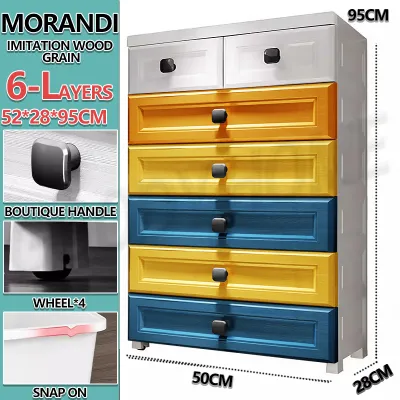
![[ON HAND] 5L AND 6L COLORED DRAWER RANDOM/ASSORTED COLOR/Wardrobe Clothes/DURABOX/LALAGYAN NG DAMIT/COLORED DRAWER/ORGANIZERS](https://img.lazcdn.com/g/p/70cce7f5735962108c23bd39eaab8607.png_400x400q80.png_.webp)
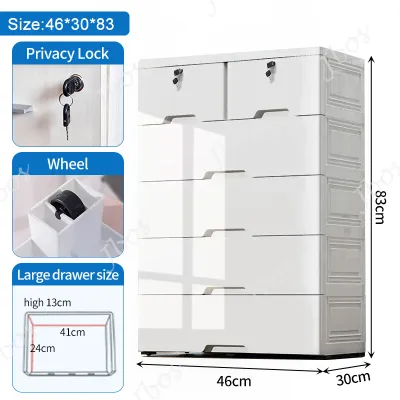

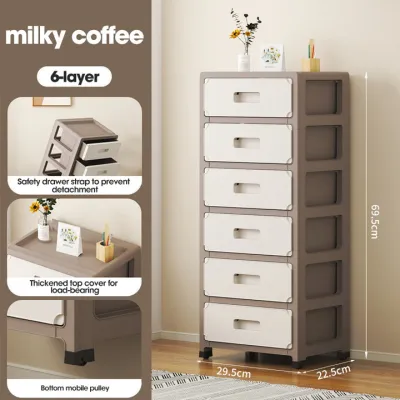

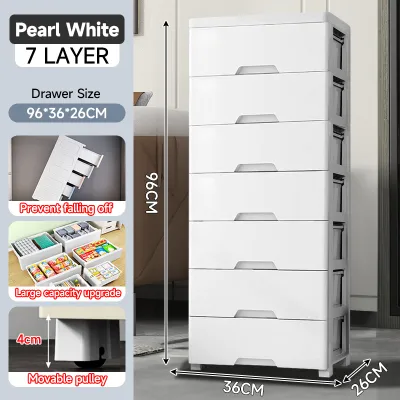
Prices are valid at publication and may change. Please refer to the product page for the latest price.
When calculating these dimensions, do not simply measure from wall to wall. You must account for the thickness of any back panels, existing shelving, or structural supports that project into the space. Furthermore, deduct the necessary spatial allowances for door hinge mechanisms, sliding door tracks, and side panel thickness. Hinges often protrude significantly into the cabinet opening, and sliding doors usually overlap, creating a dead zone where drawers cannot extend unless they are offset.
Finally, verify the squareness of your cabinet opening by performing a diagonal measurement check. Measure from the top-left corner to the bottom-right corner, and then from the top-right corner to the bottom-left corner. If these two diagonal measurements differ by more than a few millimeters, your wardrobe frame is out of square. This misalignment can cause drawer runners to bind or jam during operation, meaning you may need to install shims or adjust the mounting brackets to ensure the slides remain perfectly parallel.
Match Drawer Heights to Your Storage Categories
An efficient wardrobe layout relies on matching your drawer heights to the specific items you plan to store. Utilizing a single drawer size for everything often leads to wasted vertical space or overcrowded compartments. To prevent this, categorize your wardrobe contents and assign them to appropriate drawer profiles.

Allocate shallow drawer profiles for small, flat items that easily get lost in deeper spaces. This includes jewelry, ties, belts, watches, and folded undergarments. Keeping these items in shallow drawers allows you to see everything at a glance without digging through layers of fabric. In humid environments, keeping these smaller items organized and well-ventilated also helps prevent musty odors from settling into delicate fabrics.
Assign medium drawer profiles for standard folded clothing such as t-shirts, trousers, activewear, and lightweight knits. These drawers should be deep enough to hold items folded using vertical folding methods, which maximize space and keep clothes visible. Avoid stacking clothes too high in medium drawers, as the weight of the upper layers can crush the garments underneath and make it difficult to pull items from the bottom.
Reserve deep drawer profiles for bulky seasonal wear, thick blankets, bed linens, or large folded textiles. These larger compartments are ideal for items that you do not need to access daily but require secure, dust-free storage. When planning these deep spaces, always check the manufacturer’s specifications to distinguish between the external face dimensions of the drawer and the actual internal usable height. The internal storage depth is always slightly less than the front panel height, and failing to account for this can result in bulky items catching on the frame above when you close the drawer.
Evaluate Weight Limits and Slide Mechanisms
Ensuring structural safety and smooth operation over time requires a careful evaluation of weight limits and slide mechanisms. Every drawer system is engineered to support a specific maximum load, and exceeding this limit can damage the runners, warp the drawer base, or even cause the entire wardrobe unit to tip forward.
Always consult the product manual or the physical label on your DuraBox cabinet drawer to identify the maximum weight capacity per drawer before loading your belongings. When organizing your wardrobe, plan to place heavier items, such as denim, heavy jackets, or bed linens, in the lower drawers. This keeps the wardrobe’s center of gravity low, significantly reducing the risk of the cabinet tipping over when multiple drawers are extended simultaneously.
Next, identify the specific slide features of your chosen drawer configuration. Whether your system utilizes standard roller runners, full-extension ball-bearing slides, or soft-close mechanisms, each type has distinct depth and clearance requirements. Full-extension slides allow you to pull the drawer out completely to access the very back, but they require robust side-panel support. If your planned storage load approaches or exceeds the manufacturer’s stated structural limits, stop the installation immediately and consult a qualified carpenter or the manufacturer to discuss reinforcing your wardrobe frame.
Plan the Layout and Installation Clearances
A functional wardrobe layout requires careful planning of vertical spacing and operational clearances. When stacking multiple drawers within a single cabinet run, you must calculate the total stacked height of the units. This calculation must include the mandatory vertical gaps required between individual drawer fronts to prevent them from rubbing against one another during use.
Additionally, ensure that the bottom drawer is positioned high enough to clear the wardrobe’s baseboard, toe kick, or lower structural rails. If the bottom drawer is flush with the floor, it may scrape against your flooring or get blocked by thick rugs. Elevating the lowest drawer slightly also makes it much easier to access without bending down excessively.
You must also check for potential physical interference with other wardrobe components. Ensure that when a drawer is fully extended, it does not collide with internal lighting fixtures, hanging rods, or adjacent shelving units. For wardrobes with hinged doors, verify that the doors can open past a 90-degree angle; otherwise, the door panels themselves will block the path of the extending drawers. If you have sliding doors, ensure the drawer configuration is narrow enough to slide out within the open portion of the doorway without scraping the door frame.
Common Sizing and Layout Mistakes to Avoid
Many wardrobe organization projects encounter setbacks due to a few common planning errors. One of the most frequent mistakes is forgetting to subtract the combined thickness of the drawer slides from the internal cabinet width. Drawer runners require a specific amount of lateral clearance on both sides of the drawer box; assuming the drawer box can be the exact width of the cabinet opening will result in a system that cannot be installed.
Another common oversight is ignoring the swing arc of hinged doors or the overlapping panels of sliding doors. If your wardrobe doors do not open fully, or if the sliding panels do not retract completely out of the way, they will block the drawers from extending. Always measure the clearance with the doors in their fully open positions.
Finally, never assume that the external drawer dimensions listed on the packaging match the internal storage volume. The drawer sides, bottom panel, and slide mechanisms all consume physical space. Always verify the internal usable dimensions in the product specifications to ensure your storage containers, organizers, or bulky items will actually fit inside the drawer.
Frequently Asked Questions (FAQ)
Can I retrofit DuraBox drawers into an existing built-in wardrobe?
Yes, you can retrofit these drawers into an existing built-in wardrobe, provided you verify the internal clearances first. You must assess the structural integrity of your wardrobe’s side panels to ensure they can securely support the weight of the mounting slides and the loaded drawers. Additionally, check that your existing wardrobe doors—whether hinged or sliding—will not obstruct the new drawer fronts when they are pulled open.
How do I maintain the drawer slides for long-term smoothness?
To maintain your drawer slides for long-term smoothness, perform routine visual inspections to check for dust, lint, or debris that can accumulate in the tracks. Wipe the metal runners periodically with a clean, dry microfiber cloth to remove buildup. Always check the manufacturer’s care instructions before applying any lubricants, as some slide mechanisms are self-lubricating and applying grease or oil can attract more dust, leading to friction and clogging over time.

Community discussion
Share your experience or ask a question. Comments are reviewed before publication.