
Selecting the perfect wardrobe for a compact bedroom in the Philippines requires a thoughtful balance of physical dimensions, door functionality, and internal storage efficiency. In urban areas where condominium units and townhouses often feature limited square footage, finding a wardrobe that fits your space without overwhelming the room is a common challenge. Exinhome offers a variety of wardrobe configurations designed to maximize vertical space and streamline organization. To make the right choice, you must evaluate how a wardrobe’s exterior design, door mechanisms, and internal accessories interact with your specific room layout and the local tropical climate.
Measuring Your Bedroom for a Compact Wardrobe
To ensure your new wardrobe fits seamlessly, start by calculating the exact usable floor space in your bedroom. Do not rely on a single wall-to-wall measurement, as walls in many homes are not perfectly straight or plumb. Use a metal tape measure to take width measurements at three different points: near the floor, at midpoint height, and near the ceiling. Use the smallest of these three measurements as your guide to avoid purchasing a unit that gets wedged during installation.
Next, account for architectural features that can restrict placement. Baseboards, wall moldings, electrical outlets, light switches, and window frames all subtract from your usable wall space. If your wardrobe must sit flush against a wall, measure the thickness of your baseboards and subtract this from your available width and depth. Additionally, ensure that the wardrobe will not block access to light switches or cover power outlets that you need for daily electronics.
Products mentioned in this guide
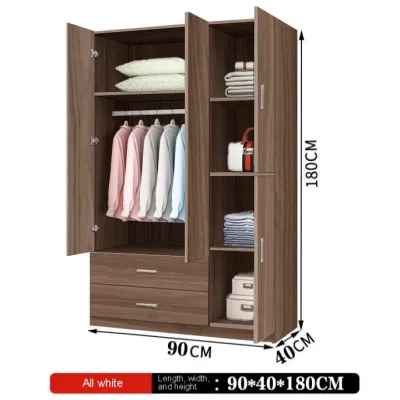
Prices are valid at publication and may change. Please refer to the product page for the latest price.
Determining the maximum allowable depth and width is crucial for maintaining clear walking paths. A standard bedroom layout requires at least 60 to 70 centimeters of clear walkway space between the wardrobe and other furniture, such as the bed. If you choose a model with hinged doors, you must also factor in the door swing clearance. Hinged doors typically require an additional 50 to 60 centimeters of open space in front of the wardrobe to open fully, plus extra room for you to stand comfortably while browsing your clothes.
Finally, measure your ceiling height carefully and check for overhead obstructions. In many Philippine homes, ceiling fans, light fixtures, and split-type air conditioning units are common fixtures. A tall wardrobe must not block the airflow of your air conditioner or come into contact with a spinning ceiling fan. If you plan to assemble the wardrobe flat on the floor and raise it upright, you must also calculate the diagonal height of the wardrobe to ensure it does not scrape or get stuck against the ceiling during the lifting process.
Evaluating Exterior Designs for Space Efficiency
When space is at a premium, the exterior design and door mechanism of your wardrobe play a significant role in both physical and visual room efficiency. Sliding door wardrobes are highly recommended for tight spaces because the doors glide horizontally within the frame’s footprint. This eliminates the need for front clearance, allowing you to place the wardrobe closer to your bed or other furniture. However, sliding door tracks do require a bit of extra depth within the wardrobe frame itself, which is a trade-off to consider if your overall room depth is extremely limited.

Hinged doors, on the other hand, offer the advantage of full access to the entire wardrobe interior at once. When you open both doors, you can see your entire clothing collection immediately. This style is often slightly shallower than sliding door models because it does not require a track system. However, the necessity of front clearance makes hinged doors less suitable for narrow walkways or tight corners where an open door would completely block traffic.
The visual impact of the wardrobe’s finish is another important factor in small bedrooms. Wardrobes featuring mirrored doors or high-gloss finishes can make a compact room feel significantly larger and brighter. Mirrors reflect both natural light from windows and artificial light from fixtures, creating an illusion of depth that opens up the space. If you prefer a wood finish, opting for lighter wood tones can prevent the wardrobe from looking like a heavy, dominating block in a small room.
Wardrobe depth options should be evaluated based on your storage needs. Standard wardrobes are typically 60 centimeters deep, which allows standard clothes hangers to hang straight without touching the back panel or the doors. If your bedroom cannot accommodate a 60-centimeter-deep unit, look for shallow wardrobe options around 40 to 45 centimeters deep. These compact models utilize pull-out clothes rails that run from back to front rather than side to side, allowing you to hang clothes facing forward and saving valuable floor space.
Maximizing Capacity with Internal Storage Systems
A compact wardrobe can still offer substantial storage capacity if you select an internal layout tailored to your specific clothing collection. In the tropical climate of the Philippines, daily wear often consists of lightweight garments, t-shirts, shorts, and casual wear. These items are highly suited for folded storage rather than hanging. Analyze your wardrobe composition to determine the ideal ratio of hanging space to shelving. If you wear mostly casual attire, prioritize adjustable shelves and drawers over large hanging sections.
For items that must be hung, such as formal wear, dresses, or collared shirts, look for space-saving internal accessories. Pull-out trouser racks allow you to store multiple pairs of pants neatly in a compact horizontal space, preventing creases while maximizing vertical room. Valet rods, which extend outward from the wardrobe frame, provide a temporary spot to hang outfits for the next day without cluttering your main hanging rail. Tiered shelving and shallow drawers are also excellent for organizing smaller items like accessories, socks, and undergarments.
Maximizing vertical space is essential in a small bedroom. Plan your internal layout so that the highest shelves, which are more difficult to reach, are reserved for seasonal items, extra bed linens, or travel bags. Keep your daily-use clothing at eye level and within easy reach. The bottom section of the wardrobe is ideal for drawers or pull-out baskets, which can hold heavier items like jeans or folded sweaters. Utilizing clear storage bins on upper shelves can also help you identify stored items quickly while keeping dust away.
Pre-Purchase Verification and Installation Checks
Before finalizing your purchase, it is essential to cross-reference the official manufacturer dimensions of the Exinhome wardrobe with your measured space. Do not assume that a model labeled “compact” or “small” will automatically fit your room. Check the exact width, depth, and height specifications online. Always allow for a small assembly clearance buffer of at least 2 to 3 centimeters on all sides to ensure the unit can be put together and positioned without damaging your walls or ceiling.
Delivery logistics are another critical consideration, especially for those living in high-rise condominiums or tight townhouse developments. Verify the access routes into your home before ordering. Measure the height and width of your building’s elevator doors, the interior dimensions of the elevator cabin, and the clearance of any tight corners in stairwells and hallways. A large wardrobe flat-pack box can easily get stuck in a narrow stairwell or fail to fit inside a standard residential lift, leading to delivery complications.
Structural safety must never be overlooked when installing tall furniture. Tall wardrobes are top-heavy and pose a serious tip-over hazard, particularly in earthquake-prone regions. Ensure that the wardrobe can be securely anchored to your wall. If you have concrete or hollow-block walls, you will need appropriate masonry wall plugs and heavy-duty screws. For drywall, locate the wooden or metal studs to secure the anchoring brackets. Finally, review the manufacturer’s warranty terms regarding assembly; some warranties may only remain valid if the unit is installed by certified professional assemblers.
Frequently Asked Questions (FAQ)
How do I maintain sliding door tracks in a dusty environment?
To keep sliding door mechanisms operating smoothly in dusty or humid environments, establish a regular cleaning routine. Use a vacuum cleaner with a narrow crevice tool attachment to remove loose dust, lint, and hair from the bottom tracks at least once a week. Wipe the tracks down with a damp microfiber cloth to remove stubborn grime. Avoid using heavy oils or WD-40 on the tracks, as these substances can attract more dust and create a sticky buildup. If lubrication is necessary, use a dry silicone spray sparingly according to the manufacturer’s instructions.
Can I customize the internal layout of a pre-assembled wardrobe?
Many Exinhome wardrobes feature modular designs with pre-drilled holes along the interior side panels. These holes allow you to adjust the height of shelves and hanging rails easily to suit your changing storage needs. Before purchasing aftermarket accessories like extra drawers, wire baskets, or pull-out racks, measure the internal width and depth of your specific wardrobe compartment. Ensure that any third-party accessories are compatible with the pre-drilled hole spacing and do not obstruct the closing mechanism of the wardrobe doors.
What should I do if the wardrobe dimensions slightly exceed my measured space?
If you discover that your preferred wardrobe model is slightly too large for your allocated space, do not attempt to force the fit or shave down the wardrobe panels, as this can compromise structural integrity and void the warranty. Instead, explore alternative configurations within the same product line, such as choosing a narrower modular section or a shallower model. You can also review the retailer’s return and exchange policies to see if you can swap the unit for a more suitable size. If a minor adjustment is needed, consult a professional carpenter to discuss safe, custom trim options that do not affect the wardrobe’s stability.

Community discussion
Share your experience or ask a question. Comments are reviewed before publication.