
Finding the perfect storage solution for your footwear collection requires more than just counting your shoes and picking a stylish box. To choose the right foldable shoe organizer size, you must carefully balance the physical dimensions of your closet with the specific measurements of your footwear, while leaving enough clearance for daily access. In tropical environments like the Philippines, where high humidity can accelerate mold growth on leather and canvas, selecting the correct organizer size also plays a vital role in maintaining proper air circulation around your shoes. By taking precise measurements and matching them to your storage habits, you can maximize your wardrobe space without damaging your favorite pairs.
Measure Your Available Closet Space
Before browsing online marketplaces or local home improvement stores, you must establish the exact physical boundaries of your storage area. Use a reliable metal measuring tape to record the width, depth, and height of the specific zone where the organizer will sit, whether that is a built-in shelf, the closet floor, or a hanging rod. Write these numbers down clearly, as even a small discrepancy can prevent a foldable unit from expanding fully or cause a closet door to jam.
When measuring the floor area or lower shelves, pay close attention to physical obstructions that might not be immediately obvious. Baseboards, sliding door tracks, protruding hinges, and low-hanging garments can significantly reduce your usable space. If you plan to place the organizer beneath hanging clothes, measure the distance from the floor to the hem of your longest shirts or dresses to ensure your shoes do not end up crushed under fabric.
Products mentioned in this guide
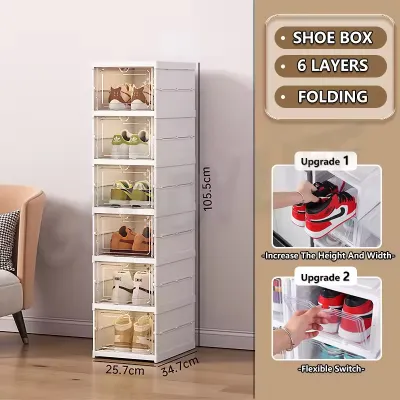
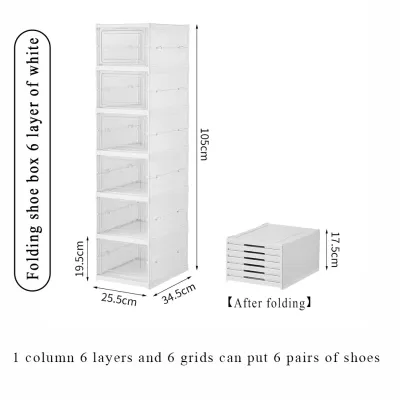
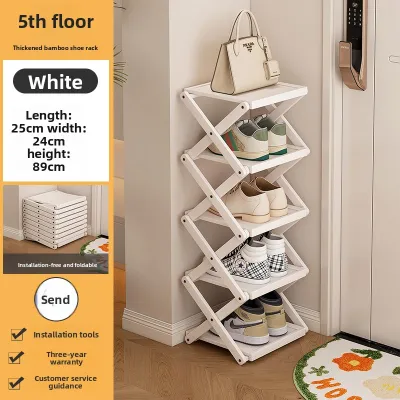
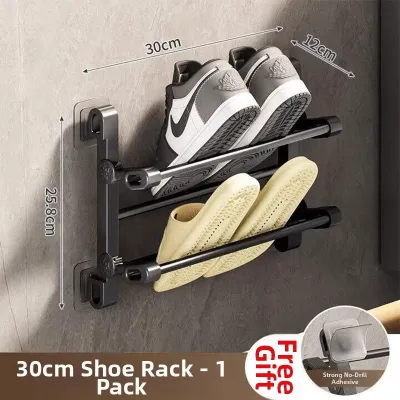
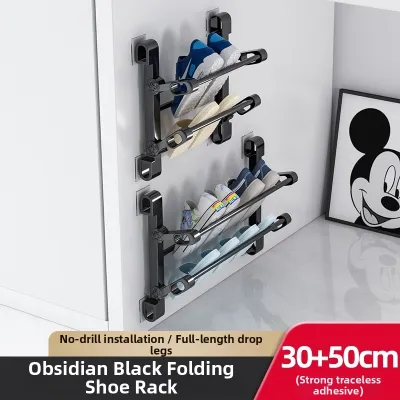
Prices are valid at publication and may change. Please refer to the product page for the latest price.
Foldable organizers require operational clearance to expand from their flat-packed state into their functional three-dimensional shapes. Some designs expand vertically like an accordion, while others require side-to-side clearance to lock their structural panels into place. Always check the manufacturer’s specifications for both the folded and fully deployed dimensions to ensure you have enough room to assemble and position the unit inside your wardrobe.
In humid tropical climates, packing an organizer tightly against the back wall of a wooden closet is a recipe for moisture buildup. Plan to leave a clearance gap of at least one to two inches between the back of the organizer and the closet wall, as well as on the sides. This small pocket of empty space encourages natural airflow, helping to protect your shoes from dampness and musty odors.
Match Organizer Dimensions to Your Shoe Collection
Not all shoes are created equal, and a standard compartment size will not accommodate every type of footwear in your collection. Measure the height, width, and depth of your most frequently worn pairs, keeping in mind that high-top sneakers, platform heels, and ankle boots require significantly more vertical space than flat sandals, step-ins, or school shoes. Group your footwear by style so you can determine how many compartments of each size you actually need.

To calculate the total capacity required, count the number of pairs you intend to store in this specific organizer. Foldable organizers typically come in configurations ranging from three-tier units for small entryways to ten-tier towers designed for walk-in closets. If your collection consists of a mix of bulky athletic shoes and slim flats, look for organizers that offer adjustable internal dividers or modular compartments that can be customized to fit different heights.
Keep in mind that shoe sizes vary by brand and style, so relying solely on your shoe size can lead to sizing errors. A bulky running shoe with a thick sole will take up more physical volume than a leather loafer of the exact same size. Physically measuring the widest part of your shoes’ soles and the highest point of their collars will give you the most accurate basis for choosing compartment dimensions.
If you own a diverse collection, a single-size compartment organizer might leave you with wasted vertical space above your flats and insufficient room for your boots. In such cases, choosing a modular foldable system allows you to stack different compartment sizes together. This ensures that every square inch of your closet is utilized efficiently, with larger slots dedicated to heavy footwear and smaller slots reserved for lightweight slippers.
Evaluate Foldable Configurations for Your Layout
Foldable shoe organizers are available in several distinct configurations, each suited to different closet layouts and user habits. Vertical stacking organizers are excellent for utilizing unused floor space or deep shelves, as they build storage upward without expanding the horizontal footprint. These units often feature rigid plastic or reinforced fabric frames that lock together to maintain stability.
Hanging organizers, which attach directly to your closet rod using heavy-duty hook-and-loop fasteners or metal hooks, are ideal if you have ample hanging space but limited floor area. These soft-sided fabric organizers utilize vertical space efficiently but can sway or sag if overloaded. Over-the-door foldable organizers are another space-saving alternative, though they require a sturdy door frame and sufficient clearance between the door and the frame to close properly.
Before deciding on a configuration, analyze how the organizer will interact with your daily closet routine. If you have sliding doors, a deep stacking organizer might block access to adjacent shelves when one side of the door is open. For walk-in closets with narrow walkways, over-the-door or shallow hanging models are often preferred because they keep the floor clear and maintain an unobstructed path.
Another advantage of foldable designs is their ability to collapse flat when not in use, which is highly practical for seasonal rotation or temporary guest storage. Review the folded footprint of the organizer to ensure it can be easily tucked away in a drawer or under a bed when your storage needs change. A high-quality foldable unit should transition smoothly between its collapsed and expanded states without losing its structural integrity over time.
Verify Clearance, Accessibility, and Weight Limits
A shoe organizer is only useful if you can easily retrieve and replace your footwear on a daily basis. Ensure there is adequate pull-out or reach-in space in front of the organizer so you do not hit adjacent walls, open doors, or other furniture when accessing your shoes. If the organizer features pull-out drawers or drop-front doors, measure the additional depth required when these compartments are fully opened.
Weight capacity is a critical safety factor, especially for lightweight foldable models made of fabric, thin plastic, or wire mesh. Check the manufacturer’s specifications for the maximum weight limit per tier as well as the overall weight capacity of the entire unit. Exceeding these limits can cause the shelves to sag, the joints to buckle, or fabric seams to tear, potentially damaging your shoes or creating a safety hazard.
To maintain stability and prolong the lifespan of your organizer, plan for even weight distribution. Always place your heaviest footwear, such as work boots, thick-soled sneakers, and leather dress shoes, on the bottom tiers of the organizer. Lighter items like sandals, slippers, and canvas flats should go on the upper shelves to keep the unit’s center of gravity low and prevent tipping.
Common Sizing Mistakes to Avoid
One of the most common mistakes when choosing a foldable shoe organizer is failing to account for the fully loaded, expanded depth of the unit. Fabric organizers can bulge outward when stuffed with bulky shoes, extending several inches beyond their nominal measurements and preventing closet doors from closing. Always add a small buffer to your depth measurements to accommodate this natural expansion.
Another frequent error is assuming that a standard organizer will comfortably hold any shoe type. Capacity ratings are often based on standard flat shoes or small sizes; high-tops, wide-soled sneakers, and heels will quickly reduce the actual capacity. Always calculate your space requirements based on your largest and bulkiest shoes rather than your smallest ones.
Lastly, do not forget to measure the clearance of your door frames and hinges if you are opting for hanging or door-mounted styles. A door-mounted organizer that is too wide can strike the door jamb when you open or close the closet, causing scratches to your woodwork and wear to the organizer itself. Ensuring a clear path for all moving parts will save you from frustration and unnecessary wear on your home furniture.
Frequently Asked Questions (FAQ)
Can I stack multiple foldable shoe organizers on top of each other?
Stacking multiple foldable shoe organizers is possible, but it depends heavily on the manufacturer’s design and the materials used. Many rigid plastic or metal-framed foldable units feature interlocking joints, pegs, or grooves specifically designed to secure stacked modules. You must verify that the manufacturer explicitly supports stacking for that model before attempting to build a vertical tower.
Never stack soft-sided fabric organizers or units that lack secure interlocking mechanisms, as they can easily slide, sag, or topple over under the weight of your shoes. Ensure the bottom organizer rests on a completely flat, stable surface, and keep the overall height within safe limits to prevent tipping hazards in your closet.
How do I measure shoe depth for a foldable fabric organizer?
To measure shoe depth accurately for a flexible fabric organizer, place your longest pair of shoes flat on a table. Measure from the back of the heel to the tip of the toe using a ruler or measuring tape, keeping the tape parallel to the sole. For shoes with pointed toes or extended heels, make sure to measure the absolute longest points.
Once you have this measurement, add a margin of at least half an inch to one inch. This extra space accounts for the thickness of the organizer’s fabric seams and ensures you can slide your shoes in and out easily without stretching or tearing the pockets over time.

Community discussion
Share your experience or ask a question. Comments are reviewed before publication.