
To determine what size folding bed actually fits in a small condo bedroom, you must look beyond the mattress dimensions and calculate the total footprint of the fully deployed frame alongside a mandatory clearance zone. In typical compact studio or one-bedroom units in the Philippines, a single (36″ x 75″) or twin (39″ x 75″) folding bed is the most practical choice, as it preserves essential walkway space. While a double (54″ x 75″) can sometimes be accommodated, it requires a highly strategic layout and often forces you to sacrifice secondary furniture like desks or bedside tables.
Selecting the wrong size can quickly turn a promising space-saving solution into a daily physical obstacle. To avoid blocking doors, windows, or vital air circulation paths, you must systematically evaluate your room’s physical boundaries, the bed’s folding mechanism, and the transit paths leading into your high-rise home.
Baseline Space Rules for Folding Beds
Before purchasing any folding bed, you must establish the absolute minimum clear floor space required for both its open and closed states. A common mistake is measuring only the flat mattress area while ignoring the metal frame, legs, and headboard mechanisms that extend past the fabric. When fully deployed, the bed assembly requires its entire length and width to sit completely flat on the floor without pressing against baseboards or walls.
Products mentioned in this guide
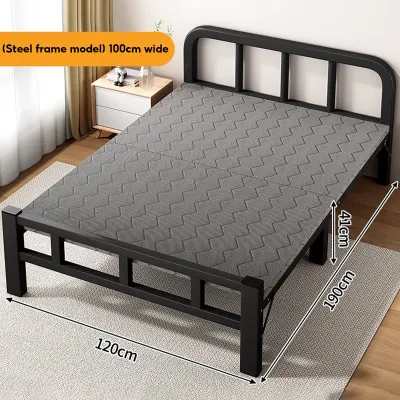
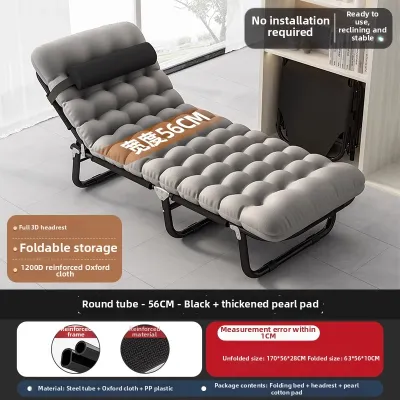


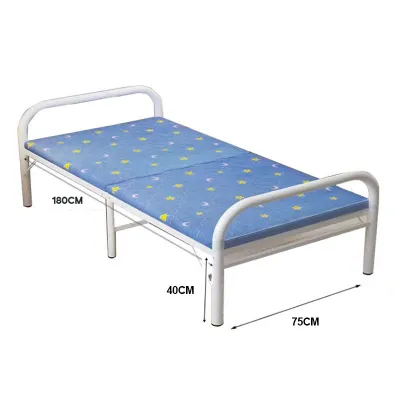
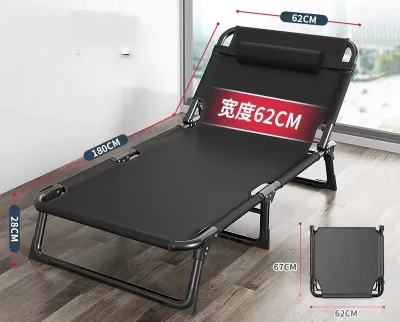


Prices are valid at publication and may change. Please refer to the product page for the latest price.
Walkway and door-swing clearances must remain unobstructed to maintain a safe and comfortable living environment. As a general rule, you should preserve a clear path of at least 60 centimeters around the open sides of the bed. This space allows you to stand, lie down, and make the bed without feeling cramped. Furthermore, you must verify that the bedroom entry door, wardrobe doors, and any en-suite bathroom doors can swing open fully without colliding with the bed frame.
Finally, you must evaluate the folded footprint of the unit. When stored, the bed’s thickness and height become its primary dimensions. A rollaway bed that is 40 centimeters deep when folded might seem slim, but when placed against a wall in a narrow room, it can significantly restrict movement. Compare these folded dimensions against your available wall space, recessed niches, or closet depths to ensure the unit can be tucked away neatly when not in use.
How to Measure Your Bedroom for a Folding Bed
Measuring a small condo bedroom requires a systematic approach that goes beyond a simple wall-to-wall distance check. To create an accurate floor plan map, use a reliable steel tape measure and record the distances from baseboard to baseboard rather than wall to wall. Baseboards, wall moldings, and electrical trunking can reduce your usable floor space by several centimeters, which can prevent a tight-fitting bed frame from opening smoothly.

During your mapping process, plot every permanent fixture in the room. This includes built-in wardrobes, columns, window sills, and low-hanging curtain rods. Window sills that protrude from the wall can block a folding bed from sitting flush against the vertical surface when stored. Additionally, take note of the height of window openings; a tall folding bed stored vertically might block natural light or interfere with window latches.
Next, you must measure the transit path from the building’s entrance to your bedroom. Many condo dwellers purchase a folding bed only to find it cannot clear the building’s service elevator, tight hallway corners, or their own front door frame. Measure the height and width of all doorways, elevator cabins, and stairwell turns. If the bed is delivered fully assembled, these dimensions are critical; if it arrives flat-packed, ensure the box dimensions can navigate these tight spaces.
Lastly, identify all wall-mounted obstacles that could interfere with the bed’s placement or deployment. Look for electrical outlets, light switches, internet ports, and wall-mounted air conditioning units. A folding bed must not cover light switches or block access to outlets that you need daily. Furthermore, if you are considering a wall-mounted folding bed, ensure it does not sit directly beneath a split-type air conditioner where condensation leaks could damage the mattress or frame.
Matching Bed Sizes to Small Room Layouts
Selecting the right bed size is a balancing act between sleeping comfort and daily room functionality. Each standard bed size imposes different spatial demands on a typical condo layout.
Single or Twin Folding Beds
Single (36″ x 75″) and twin (39″ x 75″) folding beds are the most forgiving options for micro-condos and studio units. These sizes require minimal deployment space, making them highly compatible with multi-purpose rooms that serve as a home office by day and a bedroom by night. The primary spatial trade-off is sleeping capacity, as these beds only accommodate one person. However, they allow you to maintain generous walkways and leave ample room for a study desk, wardrobe, and comfortable desk chair.
Double or Full Folding Beds
Double (54″ x 75″) folding beds offer a middle ground for couples or solo sleepers who require more room to move. To accommodate a double folding bed, your bedroom should have a minimum width of at least 2.7 meters. This width ensures that even when the bed is fully open, you still have enough space on at least one side to walk comfortably. The main trade-off is the impact on secondary furniture; you may need to opt for sliding wardrobe doors instead of swing doors, or use a folding wall desk that can be tucked away before the bed is lowered.
Queen Folding Beds
Queen (60″ x 80″) folding beds demand strict spatial conditions and are generally difficult to integrate into small condo bedrooms. A queen bed requires a long deployment path, which can easily consume the entire length of a standard compact room. Before choosing a queen size, you must perform a structural check. Many queen-sized folding beds, especially wall-mounted Murphy styles, are heavy and require secure anchoring. You must verify if your condo walls are made of solid concrete or hollow blocks, as lightweight gypsum board partitions cannot safely support the weight and leverage of a queen-sized folding mechanism.
Clearance and Movement Guidelines for Daily Use
Daily life in a condo requires smooth, unhindered movement. When a folding bed is deployed, it should not turn your bedroom into a physical obstacle course. You must maintain standard clearance distances for your daily routines. For example, ensure there is at least 60 to 70 centimeters of space between the edge of the open bed and your wardrobe. This space is necessary to stand comfortably while opening drawers or selecting clothes.
You must also evaluate the deployment mechanism’s swing radius. As a folding bed transitions from vertical storage to a horizontal sleeping position, it sweeps through an arc of space. This means the area directly above and in front of the storage position must remain completely clear of low-hanging light fixtures, ceiling fans, and wall art. Check the manufacturer’s specifications for the exact overhead clearance required during the folding motion.
In shared or open-plan condo spaces, pay close attention to critical pathways. The bed must never block the direct path to an en-suite bathroom, the main exit, or the balcony door. In tropical climates, keeping the balcony door accessible is not just a matter of convenience; it is essential for natural ventilation and emergency egress. If the open bed blocks these doors, you will be forced to fold the bed away every time you need to access these areas, which quickly becomes tiresome.
Common Sizing and Placement Mistakes to Avoid
Many spatial issues arise from simple oversight during the planning phase. One of the most frequent mistakes is forgetting to measure the bed’s dimensions when it is partially folded or in transit. A rollaway bed might fit perfectly when flat and when fully upright, but during the folding process, the frame’s hinges may bow outward, temporarily requiring extra lateral clearance. Always check the maximum width of the frame at its widest point during transition.
Another common error is ignoring the thickness of the mattress and bedding when calculating folded depth. Many manufacturers list the folded depth of the frame alone. Once you add a comfortable mattress, pillows, and a thick blanket, the folded unit can easily protrude an extra 10 to 20 centimeters into your walkway. If you plan to store the bed with the bedding attached, verify that the frame’s locking straps are long enough to secure the extra bulk without straining the hinges.
Finally, do not overlook floor unevenness and rug thickness. High-rise condos can sometimes have minor floor slopes or uneven tile grout lines. If your folding bed relies on caster wheels for mobility, an uneven floor can cause the bed to roll unexpectedly or sit at an angle, affecting your sleeping comfort. Thick area rugs can also jam small caster wheels or interfere with the fold-down legs of the bed. Ensure the path where the wheels roll is flat, stable, and free of thick floor coverings that could compromise the bed’s stability.
Frequently Asked Questions (FAQ)
Can I use a folding bed every night in a small condo?
Yes, you can use a folding bed every night, but you must carefully verify the frame’s build quality and mattress support before committing. Look for product labels that specify heavy-duty steel construction, reinforced joints, and robust support systems rather than thin wire mesh. Keep in mind that folding and unfolding a bed daily requires physical effort and can accelerate wear on the hinges and locking mechanisms. If you plan to use it daily, choose a model with high-quality gas struts or spring-assisted mechanisms to make the daily transition easier on your back.
Do I need to anchor a folding bed to the wall?
Whether you need to anchor the bed depends entirely on the design of the folding bed. Freestanding rollaway beds do not require wall anchoring because they are designed to stand on their own wheels and legs. However, wall-mounted folding beds, such as Murphy beds, must be securely anchored to the wall to prevent them from tipping over during deployment. Always consult the manufacturer’s installation manual and hire a qualified professional to assess your wall structure, especially when mounting heavy frames to condo partition walls.

Community discussion
Share your experience or ask a question. Comments are reviewed before publication.