
Finding the right folding table for a compact home office requires balancing limited floor space with the physical demands of your daily work. The most suitable solution is not a one-size-fits-all product, but rather a calculated match between your room’s physical clearance, your equipment weight, and how often you intend to fold the desk away. By evaluating folding mechanisms, structural stability, and spatial constraints, you can establish a highly functional workstation that preserves your living area when the workday ends.
Assessing Your Available Space and Workflow Needs
Before browsing online marketplaces for tables folding sale options, you must establish the exact physical boundaries of your designated work area. Use a metal measuring tape to map out the available floor space, ensuring you account for baseboards, door swings, and the clearance of nearby furniture. In tight apartments or shared bedrooms, a desk that looks compact on screen can easily block a vital walkway or prevent a wardrobe door from opening fully.
Your daily workflow dictates the minimum surface area and structural support your desk must provide. A professional who only uses a lightweight laptop requires far less depth and weight capacity than someone operating a dual-monitor setup with external hard drives, a mechanical keyboard, and heavy reference books. Write down your essential equipment list and measure their combined footprint to ensure your chosen table surface can accommodate them without crowding.
Products mentioned in this guide
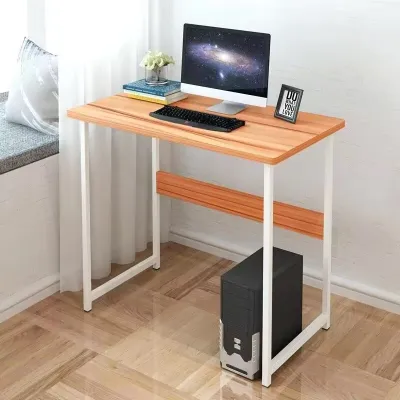
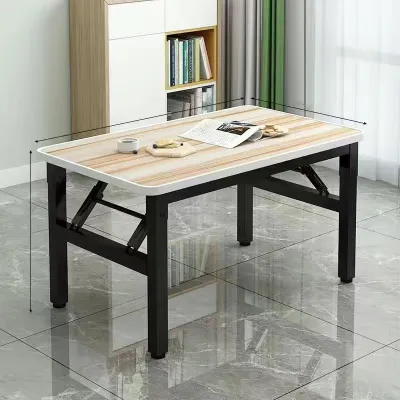
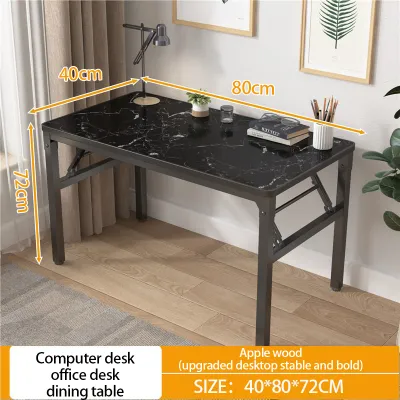
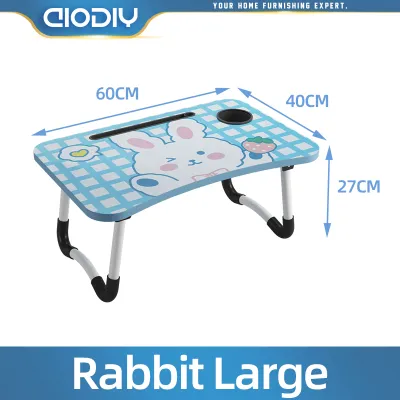
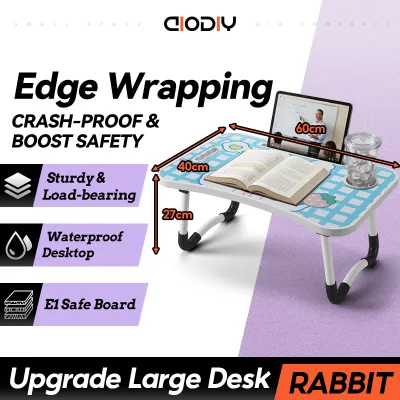
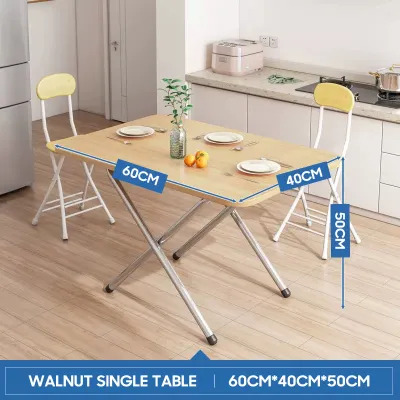
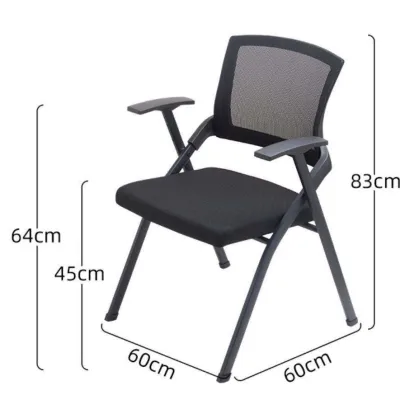
Prices are valid at publication and may change. Please refer to the product page for the latest price.
Consider how often you will actually fold and store the table. If your home office must revert to a living room or dining area every evening, you need a lightweight, highly intuitive folding mechanism that can be operated single-handedly. If you only plan to fold the desk when guests visit or during holiday seasons, a sturdier, semi-permanent folding frame with manual locking pins may be more appropriate.
Comparing Folding Table Designs for Compact Rooms
Folding tables generally fall into two main design categories based on whether they utilize wall space or floor space. Each configuration offers distinct spatial trade-offs, affecting how much permanent room volume the desk consumes and how easily you can rearrange your layout.

Wall-Mounted and Drop-Leaf Options
Wall-mounted desks and drop-leaf tables are highly effective for preserving precious floor space because they fold flat against the wall when not in use. This design completely clears the ground beneath the desk, allowing for easier cleaning and maintaining an open, uncluttered visual flow in small rooms.
However, these systems require careful installation and structural verification. You must locate solid wall studs or secure concrete anchors, as drywall alone cannot support the combined weight of the desk, your equipment, and the downward pressure of your arms while typing. Always check the manufacturer’s installation guidelines and verify that you have the correct masonry drill bits and heavy-duty wall plugs before mounting.
The primary trade-off of a wall-mounted unit is its permanent location. Once installed, you cannot easily shift your workspace to chase better natural light or escape household noise, making initial placement planning critical.
Freestanding Foldable and Z-Frame Designs
Freestanding folding tables, including classic fold-in-half models, Z-frame desks, and X-frame structures, offer significant layout flexibility. These tables require absolutely no wall installation, allowing you to set up your workspace anywhere in the room and move it as your household needs change.
While highly portable, these designs require you to allocate dedicated storage space when they are folded down. You must measure your closets, the gap behind your wardrobe, or the clearance under your bed to ensure the folded frame can be tucked away completely out of sight.
Additionally, pay close attention to the leg configuration of freestanding models. Some X-frame or cross-braced designs can severely restrict your legroom or prevent you from pulling your office chair close to the desk, which can lead to poor posture during long working hours.
Checking Dimensions, Clearances, and Ergonomics
Ergonomic comfort should never be sacrificed for space-saving convenience. Standard desk heights typically range between 70 and 76 centimeters, which should align comfortably with your seating height so your elbows rest at a 90-degree angle while typing. Before purchasing, verify that your existing office chair—especially if it has fixed armrests—can slide smoothly under the table surface.
Beyond the physical footprint of the table itself, you must calculate the active clearance zones required for daily use. A functional workspace needs at least 75 to 90 centimeters of clear space behind the desk to allow you to push back your chair, stand up comfortably, and walk behind the workstation without bumping into walls or delicate home decor.
Finally, cross-reference the table’s folded dimensions with your intended storage area. If you plan to slide the table under a bed, measure the vertical clearance from the floor to the bottom of the bed frame, accounting for any center support legs or rug thickness. For closet storage, ensure the folded width does not exceed the depth of the closet door opening.
Verifying Stability, Weight Limits, and Surface Materials
A folding table must be structurally sound enough to protect your expensive work equipment. Always check the manufacturer’s specified weight capacity, keeping in mind that static weight limits do not account for the dynamic force of typing, leaning, or accidentally bumping into the desk. If your setup includes heavy monitors or a desktop tower, look for frames constructed from powder-coated steel with reinforced joints.
Frame stability is heavily influenced by the presence of cross-bracing and the thickness of the legs. A table with thin, unbraced legs is highly prone to lateral wobbling, which can cause screen shake and physical fatigue over a long workday. Prioritize models that feature locking hinge mechanisms or horizontal support bars near the base to minimize movement.
In humid tropical climates, surface material selection is critical for long-term durability. Standard particleboard can swell, warp, or peel at the edges if exposed to high humidity or accidental spills from your morning coffee. Review the care instructions for the tabletop material, and inspect the quality of the edge banding to ensure moisture cannot easily penetrate the inner core of the panel.
Common Space-Matching Mistakes to Avoid
One of the most common errors is failing to account for the physical environment surrounding the desk. Always check the location of power outlets, internet ports, and window swings before finalizing your desk placement. Blocking a vital wall outlet or preventing a window from opening to let in a breeze can make your workspace highly impractical.
Do not assume that all folding tables are lightweight and easy to carry. Some heavy-duty wooden or steel-framed models can weigh over 15 kilograms, making them difficult to fold, unfold, and transport single-handedly on a daily basis. If you have physical limitations or need to move the desk frequently, prioritize lightweight aluminum frames or models equipped with lockable caster wheels.
When shopping for tables folding sale options on online marketplaces, always verify the seller’s return policy and shipping dimensions. A package that is too large to fit through your apartment doorway or up a narrow condominium stairwell can cause significant delivery headaches. Checking these logistical details beforehand ensures a smooth setup process from the moment the box arrives.
Frequently Asked Questions (FAQ)
Can I use a folding table for a dual-monitor setup?
Yes, but you must carefully calculate the combined weight of your monitors, stands, or clamp-on mounting arms to ensure they do not exceed the table’s weight limit. Additionally, ensure the table surface is deep enough (ideally at least 60 centimeters) to prevent the screens from sitting too close to your eyes or causing the table to tip backward due to uneven weight distribution.
How do I prevent a freestanding folding table from wobbling?
To improve stability, look for folding tables equipped with adjustable screw-in foot pads that allow you to level the desk on uneven tile or wooden floors. Positioning the table directly against a solid wall can also significantly reduce lateral movement, and using anti-slip rubber mats under the legs can prevent the desk from sliding on smooth surfaces. If the frame joints or locking pins show signs of wear or structural compromise, stop using the table immediately to prevent equipment damage.

Community discussion
Share your experience or ask a question. Comments are reviewed before publication.